
By Stephen S. Roach
Published: September 30, 2026
Location: New Haven, Connecticut
Introduction: The Illusion of Progress
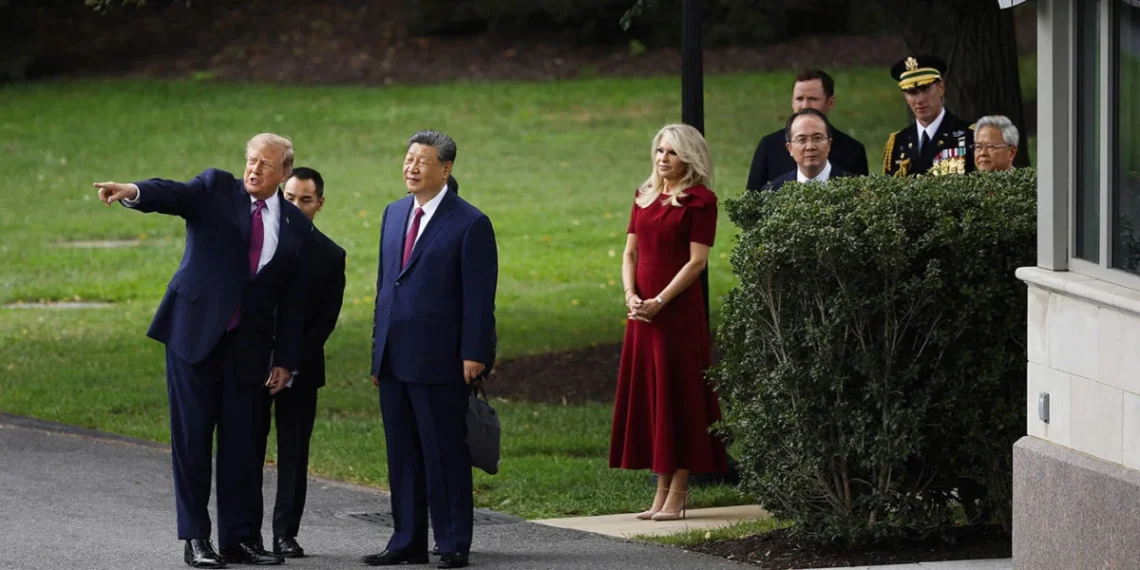
While expectations for the high-stakes summit between US President Donald Trump and Chinese President Xi Jinping were exceptionally low heading into the meeting, the reality of the encounter still managed to disappoint. Rather than tackling the structural friction points defining the world’s most consequential bilateral relationship, the two leaders prioritized theatrical pageantry over substantive diplomacy.
Trump’s public declarations of heartfelt admiration for Xi were not only diplomatically unorthodox but also revealing. They reflected his persistent tendency to mistake the trappings of power for power itself.
Long on ceremony and profoundly short on substance, the summit ultimately offered little more than cosmetic diplomacy. While diplomatic engagement is perpetually preferable to an absolute freeze in communications, the inability—or unwillingness—of both administrations to produce tangible outcomes on critical flashpoints leaves the global order as precarious as ever. From trade tariffs and artificial intelligence governance to the sovereignty of Taiwan and Beijing’s implicit alignment in ongoing geopolitical conflicts, the summit sidestepped the heavy lifting required to stabilize US-China ties. Instead, ceremonial flourishes substituted for policy breakthroughs, unmasking the event as yet another vanity project designed more for domestic optics than international resolution.
Main Facts
The summit, convened in late September 2026, brought together the leaders of the world’s two largest economies against a backdrop of prolonged systemic rivalry. Despite months of back-channel preparations by trade representatives and diplomatic envoys, the meeting yielded no major treaties, joint frameworks, or relaxation of existing punitive measures.
- The Core Flashpoints: The agenda ostensibly covered structural trade imbalances, intellectual property protections, cutting-edge technology restrictions (specifically regarding artificial intelligence), regional security concerns surrounding Taiwan, and geopolitical flashpoints in Europe and the Middle East.
- The Outcome: On every front, progress was negligible. Existing tariff regimes remain fully intact, technology export controls show no signs of loosening, and Beijing’s diplomatic and economic cushioning of US adversaries remains a point of acute contention in Washington.
- The Dynamic: The prevailing characteristic of the meeting was personalistic diplomacy. Trump’s fixation on staging a grand spectacle overshadowed the imperative for rigorous, policy-driven negotiations, rendering the summit a masterclass in diplomatic optics devoid of actionable policy.
Chronology of the Summit and Pre-Summit Escalations
To understand how a meeting billed as a potential turning point devolved into an exercise in political theater, it is necessary to examine the timeline leading up to the leaders’ encounter.
Phase 1: Months of Pre-Summit Posturing (June – August 2026)
- The Economic Squeeze: Throughout the summer of 2026, the US Department of Commerce tightened restrictions on the export of advanced semiconductor manufacturing equipment to China. Concurrently, Beijing signaled its intent to retaliate against critical mineral supply chains, specifically targeting rare earth elements essential for green energy technologies.
- The Diplomatic Warm-Up: Mid-level delegations met in neutral third-party locations to hammer out an agenda. However, deep-seated distrust and incompatible baseline demands—such as Washington demanding unilateral Chinese concessions on market access versus Beijing demanding the complete revocation of US tech sanctions—stalled negotiations.
Phase 2: The Week of the Summit (Late September 2026)
- Arrivals and Red Carpet Diplomacy: Upon arrival, the tone was immediately set by elaborate welcoming ceremonies. Media coverage was dominated by choreographed handshakes, lavish banquets, and carefully curated photo-ops designed to project mutual respect.
- Closed-Door Sessions: Behind closed doors, the substance of the meetings quickly bogged down. Sources familiar with the negotiations indicated that discussions on AI governance and regional security hit immediate impasses, with neither side willing to compromise on core strategic red lines.
Phase 3: The Post-Summit Fallout (September 30, 2026)
- The Joint Press Vacuum: The summit concluded without a joint communiqué—a traditional indicator of diplomatic alignment or, at minimum, shared next steps. Instead, both sides issued separate, heavily curated statements framing the talks through their respective domestic political lenses.
- Market and Analyst Reactions: Global financial markets, which had briefly rallied on the mere announcement of the summit, plateaued as details of the hollowed-out agreements emerged. Analysts universally noted the stark absence of any roadmap to de-escalate ongoing trade and technological frictions.
Supporting Data and Economic Realities
The dissonance between the summit’s theatrical success and its policy failure is best understood through the lens of hard economic and geopolitical data.
1. Bilateral Trade and Tariff Stagnation
Despite years of decoupling rhetoric and aggressive trade barriers, the structural interdependence of the US and Chinese economies persists, albeit under heavily strained conditions.
- Trade Volumes: While direct bilateral trade has seen marginal shifts toward third-party nations (such as Vietnam and Mexico) serving as transshipment hubs, the total exposure remains massive, exceeding hundreds of billions of dollars annually.
- Tariff Persistence: The sweeping tariffs implemented during Trump’s first term and largely maintained and expanded by subsequent administrations continue to impose a hidden tax on consumers and corporations in both nations. The summit offered zero relief, locking businesses into a permanent state of high uncertainty.
2. The Technology and AI Divide
Artificial intelligence has rapidly replaced traditional manufacturing as the central arena of the US-China Cold War.
- Compute Power and Semiconductors: US export controls have severely constrained China’s access to advanced NVIDIA and AMD processors required to train frontier AI models. Conversely, China has accelerated indigenous semiconductor research while tightening controls over the export of gallium, germanium, and other legacy tech components.
- The Regulatory Void: Rather than establishing bilateral guardrails for AI safety, autonomous weapons systems, or algorithmic market manipulation—areas where unregulated competition could spark catastrophic misunderstandings—the leaders’ summit ignored technical parameters entirely in favor of broad, non-binding pleasantries.
3. Geopolitical Alignment Metrics
Washington entered the summit with pressing demands regarding China’s implicit support for actors challenging Western security architectures in Eastern Europe and the Middle East.
- Economic Lifelines: Data from international trade monitors indicates that Chinese exports of dual-use industrial goods, microelectronics, and non-sanctioned financial transactions have provided a vital cushion for sanctioned economies, blunting the impact of Western sanctions.
- Strategic Stalemate: Xi’s refusal to alter Beijing’s calculated neutrality—which heavily favors Washington’s adversaries—demonstrated the limits of personal flattery in shifting sovereign geopolitical calculations.
Official Responses and Domestic Political Fallout
Reactions to the summit varied wildly depending on the political geography, reflecting how deeply polarized domestic considerations dictate foreign policy posture in both capitals.
Washington: Bipartisan Frustration
In Washington, the summit was greeted with a mixture of skepticism and outright condemnation from both sides of the aisle.
- Congressional Critique: Lawmakers specializing in national security and foreign affairs expressed alarm over what they termed "naive appeasement." Critics argued that Trump’s public praise of Xi undermined the administration’s own official characterization of China as a systemic adversary and existential threat.
- Business Community Fatigue: American chambers of commerce and multinational corporate leaders voiced deep disappointment. Having hoped for predictable regulatory pathways and a rollback of arbitrary trade barriers, the corporate sector was left facing an extended horizon of unpredictability and risk.
Beijing: Framing Strength and Stability
In Beijing, state media and official spokespeople painted a vastly different picture, leveraging the imagery of the summit for domestic consumption.
- Narrative of Equality: Chinese state outlets emphasized the summit as proof of Beijing’s status as an equal global superpower capable of engaging the United States on its own terms. The pageantry was broadcasted extensively to reinforce the narrative of Xi as a statesman commanding global respect.
- Calculated Silence on Concessions: Official readouts from Beijing glossed over the lack of policy deliverables, instead highlighting broad agreements to "maintain communication channels" and "manage differences constructively"—diplomatic code for agreeing to disagree while avoiding outright military conflict.
Implications for the Global Order
The failure of the Trump-Xi summit to deliver substantive outcomes carries profound long-term implications for international stability, global economic growth, and the governance of emerging technologies.
1. Institutionalized Instability
When the world’s two largest superpowers reduce diplomacy to periodic, high-profile photo-ops devoid of foundational agreements, the international system drifts without a rudder. Without structured guardrails to manage crises—such as accidental military encounters in the South China Sea or rapid escalations in cyberspace—the risk of miscalculation grows exponentially. The summit proved that personal chemistry between leaders is an inadequate substitute for institutionalized, bureaucratic diplomacy.
2. Accelerated Tech and Economic Bifurcation
The absence of any diplomatic breakthrough regarding trade and technology all but guarantees the acceleration of global economic fragmentation.
- The Splintered Internet and AI Ecosystem: As long as technological decoupling remains official US policy and indigenous self-reliance remains Beijing’s counter-strategy, the world is hurtling toward a bifurcated technological ecosystem. Nations across the Global South will increasingly find themselves forced to choose between incompatible standards, supply chains, and digital infrastructures.
- Supply Chain Redundancy Costs: Multinational corporations will continue to incur massive capital expenditures to build redundant, resilient supply chains, permanently embedding higher costs into the global economy and acting as an ongoing driver of structural inflation.
3. The Future of Multilateral Governance
With Washington and Beijing deadlocked on core global issues, broader multilateral institutions—including the United Nations, the World Trade Organization, and global financial bodies—will remain paralyzed. When the bilateral axis at the heart of the global economy is dysfunctional, cooperative problem-solving on transnational challenges, ranging from climate change to global health security, becomes virtually impossible.
Conclusion: Substance Over Spectacle
The late September 2026 summit between Donald Trump and Xi Jinping will be remembered not as a turning point toward peace and cooperation, but as a cautionary tale of diplomatic malpractice. By substituting substance with pageantry and confusing the performative elements of power with actual geopolitical leverage, the two leaders squandered a valuable opportunity to stabilize a dangerous relationship.
Until Washington and Beijing move past vanity projects and engage in the grueling, unglamorous work of structural negotiation, the world will remain hostage to an unpredictable rivalry—one where the flashpoints of trade, technology, and regional security burn hotter by the day.