By Automotive News Desk
Published: Late May 2026
Main Facts: A Rare Praise From Maranello
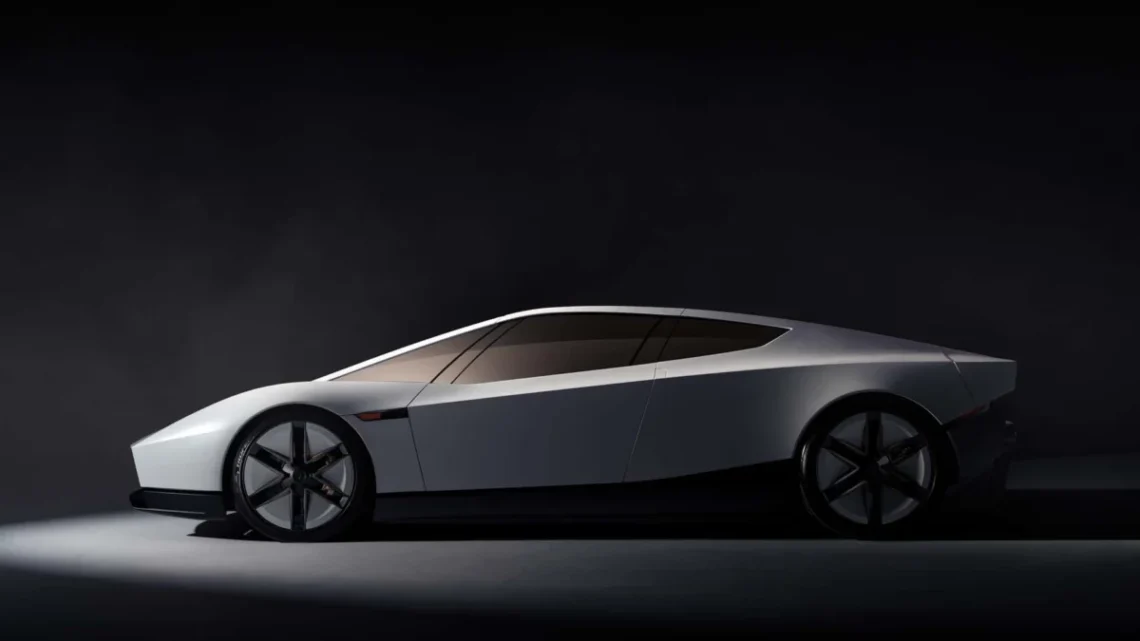
In an unexpected display of cross-brand camaraderie, Ferrari Chief Executive Officer Benedetto Vigna has awarded Tesla’s heavily redesigned next-generation Roadster a flawless 10 out of 10 rating. Vigna handed down the double-perfect score—evaluating both the car’s advanced technological underpinnings and its breathtaking public presentation—during an insightful interview at a Quattroruote automotive conference in Europe.
The CEO’s glowing remarks arrived mere days after Tesla staged a high-octane spectacle to showcase the updated Roadster’s reworked architecture at SpaceX’s rocket test facility in McGregor, Texas. Vigna’s assessment, which initially came to light via Reuters, felt almost like a letter of gratitude addressed directly to Elon Musk’s engineering team.
"As a European, thank you for showing us how that, even in an old world, you can still innovate and dare," Vigna remarked during the conference. He framed the dramatic Roadster unveiling as indisputable proof that the global automotive industry has not run out of fresh ideas, even as legacy manufacturers navigate a complex and often turbulent transition toward electrification.
Chronology of Events: From Texas Spectacle to European Acclaim
To fully understand the gravity of Vigna’s comments, it is essential to trace the sequence of events that brought the modern automotive landscape to this juncture.
- May 2026 (Early): Ferrari introduces its first-ever fully electric vehicle, dubbed the "Luce," styled in collaboration with Jony Ive’s renowned design studio, LoveFrom. The debut triggers a dip in Ferrari’s stock value, opening up heavy debates among automotive analysts and purists regarding the iconic Italian marque’s all-electric future.
- Mid-May 2026: Tesla hosts a radical, high-production-value unveiling for its reworked next-generation Roadster at SpaceX’s McGregor, Texas facility. The event features jaw-dropping demonstrations, including suction-fan physics-defying stunts and compressed-gas thruster systems.
- Late May 2026: During the Quattroruote automotive conference, Ferrari CEO Benedetto Vigna evaluates the Tesla Roadster, awarding it dual 10-out-of-10 scores for technology and staging, while praising Tesla’s bold approach to corporate risk-taking.
Supporting Data & Spectacle: The McGregor Reveal
Tesla’s Texas showcase was designed explicitly to leave spectators breathless, leaning heavily into Hollywood-style production values blended with aerospace engineering.
The demonstration featured the upcoming Roadster—widely targeted for a 2028 production launch, a timeline that continues to face scrutiny given previous delays—performing feats previously thought impossible for a road-legal vehicle. In one viral moment, the car drove up a specialized ramp, adhered itself upside down via a powerful suction-fan system, and subsequently launched off the structure, executing a controlled mid-air rotation before landing smoothly with the assistance of compressed-gas thrusters derived directly from SpaceX hardware.
While industry pundits immediately began crunching numbers, debating delivery dates, and dissecting the financial realities of building a vehicle capable of such performance (including murmurs of an astonishing 330 mph top speed), Vigna chose to look past the spreadsheets. He focused exclusively on the execution: the raw engineering, the theatrical staging, and the sheer audacity of the vision.
"It certainly shows that also in the automotive world there is still a lot to be done," Vigna noted. "We have to keep dreaming."
Official Responses and Cross-Industry Reflections: The Power of External Collaboration
Beyond the pyrotechnics and stunts, Vigna highlighted a subtle yet crucial aspect of Tesla’s development process: the decision to incorporate external expertise. He pointed out that bringing in an outside design studio pushed the Roadster project into creative territories that Tesla’s internal teams might not have reached on their own.
This philosophy hits close to home for Ferrari. Vigna drew a direct parallel to Ferrari’s own development cycle for the Luce, the brand’s pioneering battery-electric vehicle.
"If we had worked on our own, we would not have done what we did," Vigna admitted, reflecting on how external perspectives forced Ferrari to confront unfamiliar challenges and design paradigms. Ferrari’s collaboration with Jony Ive’s LoveFrom studio was instrumental in shaping the Luce, a vehicle that has faced intense public scrutiny and mixed initial market reactions since its debut.
Despite market turbulence—including a dip in Ferrari’s stock following the Luce reveal—Vigna has consistently defended the brand’s strategic pivot. Ferrari’s current corporate roadmap involves a simultaneous push into battery-electric models and a renewed investment in sustainable biofuels, proving that heritage brands are actively experimenting on multiple fronts to survive the next century.
Industry Implications: Embracing Risk in an Aging World
Vigna’s public endorsement of a rival automaker’s flagship project carries profound implications for the global automotive sector. Legacy automakers have historically operated within rigid silos, viewing competitors through a lens of defensive isolationism.
By openly thanking Tesla for "daring to innovate," Vigna is signaling a cultural shift among traditional executives. The modern automotive landscape is no longer simply about horsepower, displacement, and mechanical heritage; it is about psychological risk tolerance, cross-industry collaborations (such as automotive engineering meeting aerospace thrusters), and the courage to stage public spectacles that capture the imagination of a younger generation.
As Tesla marches toward its ambitious 2028 production target for the Roadster—complete with talks of autonomous stunt capabilities and revolutionary pop-up aesthetics—and as Ferrari refines its electric and bio-fueled portfolio, the boundary lines between Silicon Valley tech giants and European supercar artisans are blurring.
Ultimately, Vigna’s 10/10 rating is more than just a compliment; it is a rallying cry for an industry at a crossroads. By acknowledging that inspiration can come from unexpected quarters, Ferrari’s CEO has reminded the world that whether you are building a carbon-fiber hypercar in Maranello or a rocket-assisted EV in Texas, the primary engine of progress remains the willingness to dream big and take bold, uncalculated risks.