Today, Mercedes-AMG stands proudly as the fully integrated, high-performance crown jewel of Mercedes-Benz AG. From its sprawling headquarters in Affalterbach, the division churns out thousands of twin-turbocharged V8s, high-output hybrids, and blistering electric vehicles on an industrial scale.
However, the history of AMG was not always so corporate. Decades before it was absorbed by Daimler, AMG operated as an independent tuning house—a rogue band of engineering purists willing to shove oversized powerplants into unassuming executive sedans to create terrifyingly fast, limited-edition machinery.
Among the legendary creations to emerge from this renegade era, none holds a more mythic status than The Hammer.
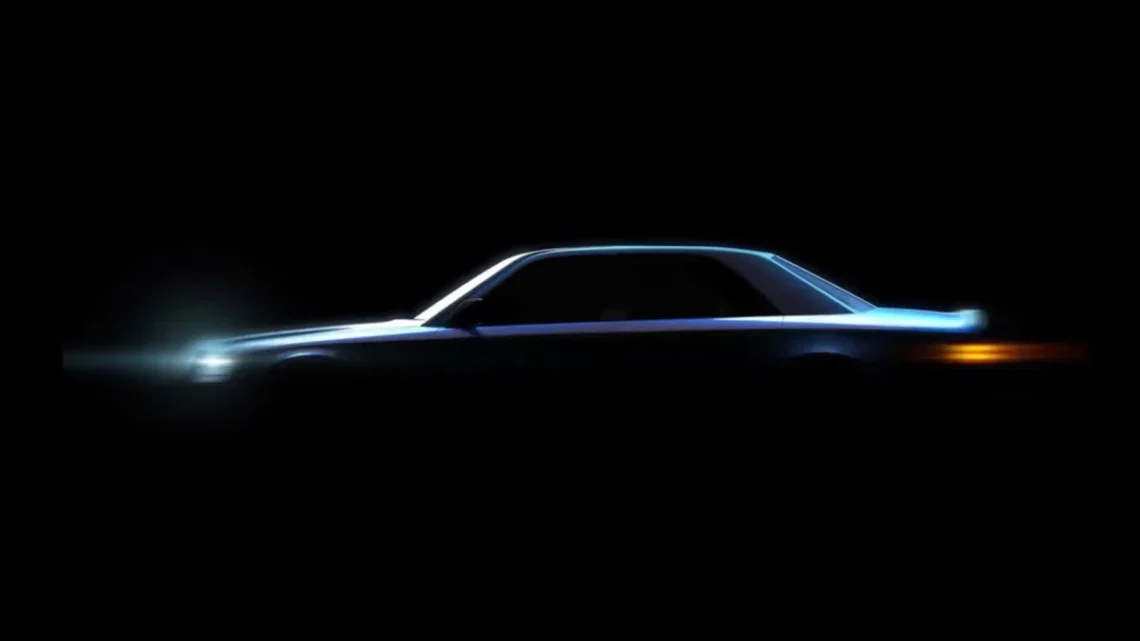
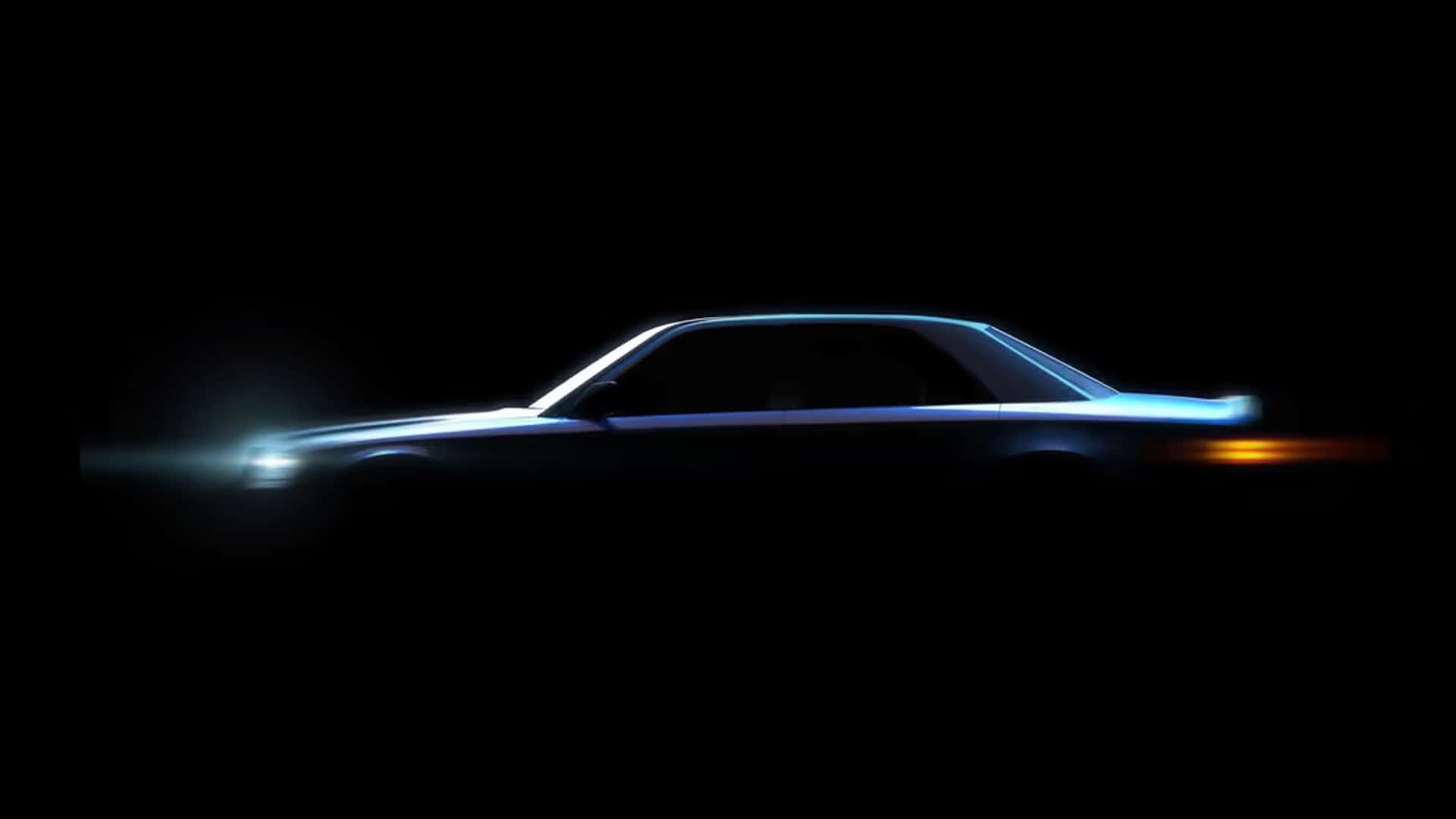
Now, decades after the W124-generation masterpiece put AMG on the global automotive map, rumors and teasers suggest the Hammer is making a comeback. But this revival is not coming from Mercedes-Benz’s internal skunkworks. Instead, German engineering powerhouse HWA AG—founded by the very man who helped birth AMG—has dropped heavy hints that a modern Hammer restomod is in the works. Given HWA’s recent track record with radical high-end restomods like the HWA Evo, the automotive world is holding its breath for what promises to be an engineering tour de force.
Main Facts: The Anatomy of a Modern Retro-Supercar
To understand why an HWA Hammer restomod is causing such a seismic tremor in enthusiast circles, one must examine the players involved and the sheer ambition required for such a project.
- The Visionary Origin: HWA AG is no ordinary garage. Founded in 1998 by Hans Werner Aufrecht (the "AH" and "A" in HWA, and co-founder of AMG), the firm has deep-rooted ties to top-tier motorsport, particularly DTM (Deutsche Tourenwagen Masters), and a history of engineering extreme street-legal machines based on classic Mercedes-Benz architectures.
- The Inspiration: The original 1986 AMG Hammer took a standard Mercedes-Benz 300E (W124 chassis) and transformed it into an autobahn-storming monster by dropping in a heavily modified V8 engine capable of reaching 186 mph.
- The Teaser: HWA recently released silhouette imagery and design hints clearly pointing to a W124-based restomod project. While performance specifications remain under wraps, expectations are set for bleeding-edge materials, modern chassis dynamics, and a naturally aspirated or forced-induction V8 powerplant.
- The Precedent: HWA has already proven its capability to reimagine classic Mercedes icons with the HWA Evo—a heavily modernized, coachbuilt homage to the legendary Mercedes-Benz 190E 2.5-16 Evolution II, which commanded multi-million-dollar attention and sold out rapidly.
Chronology: From Independent Rebel to Corporate Powerhouse and Restomod Royalty
The 1980s: The Wild West of Tuning and the Birth of the Hammer
In the mid-1980s, AMG was an independent engineering firm specializing in extracting maximum performance from Mercedes-Benz passenger cars. Mercedes built comfortable, robust, and dignified executive transports, but AMG wanted speed that could humble contemporary supercars.
In 1986, AMG engineers turned their attention to the mid-size W124 E-Class sedan (specifically the 300E). Recognizing that the standard inline-six engines were insufficient for their lofty goals, they pulled out the factory motor and shoehorned in a massive 5.5-liter (and later 6.0-liter) V8 engine sourced from Mercedes’ larger S-Class and SL lineups.
The result was the AMG Hammer. It wasn’t just an engine swap; it was a comprehensive engineering overhaul. The V8 was meticulously polished, balanced, and upgraded with custom cylinder heads and four-valve technology. Pushing out 355 horsepower and 388 lb-ft of torque, the Hammer could accelerate from 0 to 60 mph in around 5 seconds and top out at an astonishing 186 mph—making it, for a brief moment, the fastest passenger sedan in the world.
1998: Hans Werner Aufrecht Establishes HWA
As AMG’s success snowballed, Daimler-Benz gradually acquired a controlling stake in the tuning company, culminating in a full buyout by 2005 to form Mercedes-AMG.
Anticipating this corporate shift, Hans Werner Aufrecht departed from day-to-day operations at AMG to establish HWA AG in 1998. Named entirely after its founder, HWA took over Mercedes’ official motorsport involvement, dominating the DTM championship for decades while also engineering hyper-exclusive vehicles, such as the ultra-rare CLK GTR road car.
The 2020s: The Era of High-End Restomods
As the automotive industry transitions rapidly toward electrification, enthusiasts and boutique manufacturers have turned their gaze backward, fueling a massive boom in high-end restomods. Companies like Singer (Porsche) and Alfaholics (Alfa Romeo) redefined what classic car restoration could be.
HWA entered this arena with a definitive statement: the HWA Evo. Based on the iconic 190E 2.5-16 Evolution II race car of the early 1990s, the HWA Evo blended vintage DTM aesthetics with modern carbon-fiber body panels, high-performance braking systems, modern aerodynamics, and a twin-turbo V6 engine pushing upwards of 500 horsepower. With production limited to just 100 units priced at over $700,000 each, the Evo proved that HWA possessed the engineering chops to modernize classic Mercedes platforms without sacrificing their soul.
The Present Day: HWA Teases the Hammer
Building on the triumphant reception of the HWA Evo—including its headline-grabbing debuts at elite automotive gatherings like the Goodwood Festival of Speed—HWA has shifted its focus to the next logical milestone in Mercedes tuning history: the W124 Hammer. Teaser campaigns have begun circulating within the industry, signaling that HWA’s next ultra-exclusive restomod will pay homage to the car that put Affalterbach on the map.
Supporting Data: By the Numbers
To truly appreciate the engineering leap of the original Hammer—and the daunting benchmark HWA faces with its upcoming restomod—we can examine the technical metrics across eras:
| Metric | 1986 AMG Hammer (W124) | HWA Evo (190E Restomod Benchmark) | Expected HWA Hammer Restomod (Projected) |
|---|---|---|---|
| Engine Type | 5.5L / 6.0L Naturally Aspirated V8 | 3.0L Twin-Turbocharged V6 | High-Performance V8 (Forced Induction/NA) |
| Horsepower | 355 hp – 385 hp | 500 hp | 500+ hp |
| Torque | 388 lb-ft (526 Nm) | 405 lb-ft (550 Nm) | 500+ lb-ft |
| Transmission | 4-Speed Automatic | 6-Speed Manual | Modern High-Performance Automatic/Manual |
| 0–60 mph Time | ~5.0 seconds | ~3.5 seconds (estimated) | Sub-4.0 seconds |
| Top Speed | 186 mph (299 km/h) | 190+ mph | 200+ mph |
| Chassis Construction | Steel Unibody (AMG Modified) | Carbon-Fiber Reinforced Composite & Steel | Carbon-Fiber Body Panels over Reinforced W124 Chassis |
| Production Run | Est. ~30 units worldwide | 100 units | Extremely Limited / Sold-Out Allocation Expected |
Official Responses and Industry Perspectives
While HWA has kept full technical disclosures under wraps during the early teaser phase, statements from company executives and industry analysts shed light on the philosophy guiding the project.
In previous discussions regarding HWA’s restomod philosophy, company representatives emphasized that modernizing a classic Mercedes requires an obsessive, uncompromised commitment to engineering integrity. HWA does not simply bolt aftermarket parts onto old chassis; they completely blueprint, rebuild, and re-engineer vehicles to contemporary supercar standards while preserving the distinct character that made the original cars icons.
Industry analysts have noted that the market for ultra-luxury restomods is booming among collectors who value analog mechanical engagement combined with modern reliability and safety.
"HWA is uniquely positioned to pull this off," noted one European automotive market analyst. "They aren’t just a design house; they are a championship-winning motorsport engineering firm. When Hans Werner Aufrecht’s name is tied to a W124 Hammer project, it carries absolute authenticity. This isn’t a tribute built by outsiders—it is engineered by the people who wrote the original rulebook."
Implications: What an HWA Hammer Means for Collectors and Enthusiasts
The arrival of an HWA-engineered Hammer restomod carries profound implications for the collector car market, the legacy of Mercedes tuning, and the future of high-end restomod culture.
1. Skyrocketing Interest in Original W124 Platforms
Just as the announcement of the HWA Evo drove a surge in appreciation (and market values) for standard Mercedes-Benz 190E models, the confirmation of an HWA Hammer restomod will likely shine a bright spotlight on clean, rust-free W124 chassis—particularly older 300E sedans, coupes, and wagons. Finding a pristine donor car is about to become significantly harder and more expensive for independent collectors.
2. Redefining the Restomod Benchmark
While companies like Singer redefined air-cooled Porsche 911s, HWA is carving out a distinct niche for late-20th-century German touring and executive cars. By applying top-tier DTM engineering, carbon-fiber manufacturing techniques, and modern suspension geometry to vintage luxury sedans, HWA is proving that the golden era of Mercedes-Benz mechanical over-engineering can be successfully merged with modern track performance.
3. Exclusivity and Extreme Pricing
Given that the HWA Evo commands prices north of $700,000 and production is capped at a strict 100 units, the upcoming HWA Hammer restomod is expected to be an equally exclusive affair. It will likely cater exclusively to elite collectors, ultra-high-net-worth enthusiasts, and die-hard fans of Mercedes-Benz history. For the rest of us, it will remain a rolling work of art to admire from afar.
Conclusion
The original AMG Hammer was an act of automotive defiance—a subtle, executive four-door capable of terrifying supercars on the autobahn. By teasing a modern restomod of this legendary machine, HWA is not merely looking backward into the archives of automotive history; it is re-igniting the rebellious spirit of Affalterbach’s wild years. If HWA’s past masterpieces are any indication, the world is about to witness the rebirth of a true hammer—one forged with modern precision, motorsport DNA, and uncompromising performance.