LOS ANGELES — In a wide-ranging and candid interview with Wired’s Steven Levy, newly appointed Apple CEO John Ternus has directly addressed mounting criticisms that the technology titan has fallen behind the artificial intelligence curve. Following a series of transitional milestones—including the much-delayed summer rollout of the next-generation Siri and his own ascension to the chief executive role in September—Ternus made it clear that Apple is navigating the AI revolution on its own terms, rejecting the "AI for AI’s sake" philosophy that has gripped much of Silicon Valley.
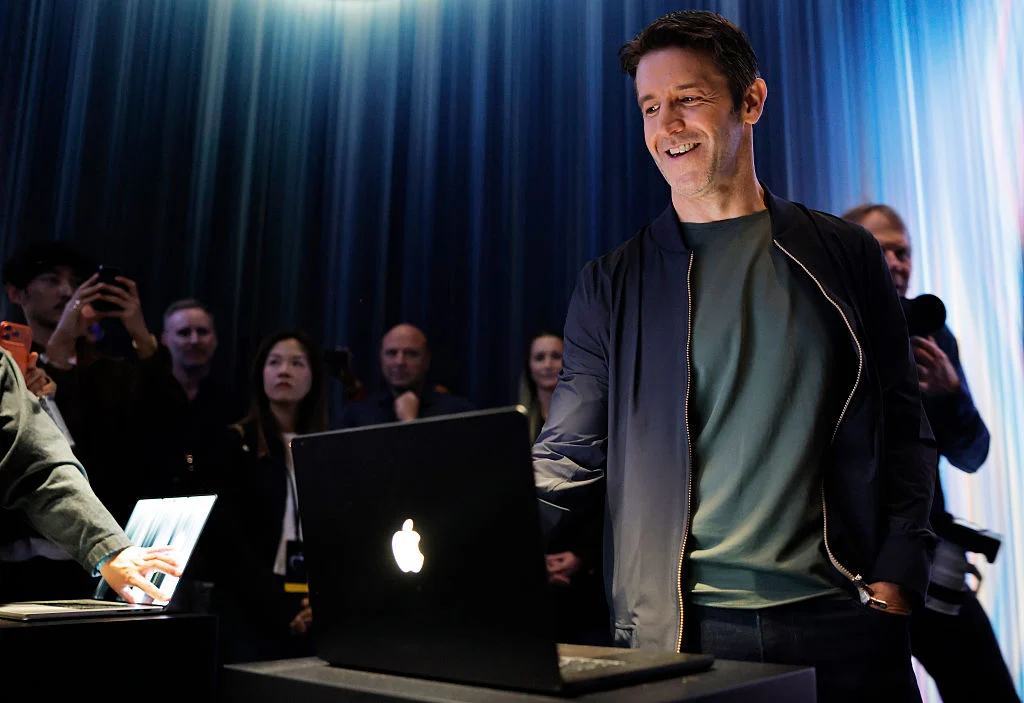
The remarks arrive at a critical inflection point for Apple. As competitors scramble to flood the market with generative AI tools, autonomous agents, and flashy feature sets, Apple has faced continuous scrutiny from analysts and consumers alike for perceived sluggishness in deployment. However, speaking against the backdrop of Apple’s recent high-profile product showcase in Los Angeles, Ternus projected unwavering confidence in the company’s trajectory and overarching vision.
Main Facts
The Leadership Transition: John Ternus officially assumed the role of Apple CEO on September 1, 2026, stepping into the position after years of leading hardware engineering.
The AI Critique: For the past two years, Apple has faced persistent market narratives that it is lagging behind competitors in artificial intelligence, exacerbated by repeated delays to its advanced Siri overhaul.
The Summer Rollout: Apple finally released its upgraded, more powerful version of Siri to the public this past summer, drawing mixed reactions regarding whether the release lived up to the prolonged anticipation.
Ternus’s Stance: In his interview with Wired, Ternus acknowledged public skepticism ("everyone has an opinion") but forcefully defended Apple’s current standing, stating, "I really like where we’re at."
Product Philosophy: Ternus emphasized that Apple refuses to integrate AI simply for the sake of marketing hype. Instead, the company aims to embed intelligence seamlessly so users experience fluid utility rather than distinct "AI" mechanisms.
The Future of Apps: When questioned about the potential threat of autonomous AI agents bypassing traditional app ecosystems altogether, Ternus defended the human-centric and deeply personal nature of building physical and digital products.
Chronology of Apple’s AI Evolution and Leadership Shift
To fully understand Ternus’s defensive yet optimistic stance, it is necessary to examine the timeline of events that have defined Apple’s recent trajectory:
Late 2024 to 2025: The Narrative of the Laggard
As generative AI dominated the tech landscape, rivals such as OpenAI, Google, Microsoft, and Meta rapidly deployed standalone AI applications and deep operating system integrations. During this window, Apple announced "Apple Intelligence," its suite of AI features, but stumbled against engineering hurdles. Delays plagued the rollout of a truly conversational, context-aware Siri, leading industry analysts to speculate that Apple’s famously meticulous development pipeline was buckling under the speed required in the modern AI race.
Summer 2026: The Long-Awaited Siri Upgrade
After months of anticipation and lowered expectations, Apple finally pushed out its major, long-promised Siri overhaul. While tech reviewers noted the technical improvements—such as deeper on-screen awareness and cross-app functionality—some critics questioned whether the update felt anticlimactic given the multi-year wait and the staggering pace of external AI advancements.
September 1, 2026: A New Era Under John Ternus
In a major corporate shakeup, John Ternus—previously Senior Vice President of Hardware Engineering—officially stepped up as Apple’s Chief Executive Officer. Wasting no time, Ternus issued an internal memo hyping a massive product pipeline and signaling a transition into his leadership era. His early public appearances have been closely scrutinized for hints of how his hardware-centric background will steer Apple’s software and AI strategies.
Late October 2026: The Los Angeles Showcase and the Wired Interview
The latest chapter in this saga unfolded during Apple’s product event in Los Angeles, capped off by Ternus’s sit-down with Steven Levy. In this interview, Ternus confronted the AI narrative head-on, addressing the cultural tension between Silicon Valley’s hyper-aggressive AI deployment and Apple’s historical emphasis on user experience, privacy, and polish.
Supporting Data and Market Context
The pressure on Apple is not occurring in a vacuum. Financial markets and consumer tech spaces have undergone a dramatic paradigm shift over the past three years.
R&D and Capital Expenditure: Competitors have poured tens of billions of dollars into massive data centers and LLM (Large Language Model) training. Apple, true to form, has pursued a hybrid approach—combining on-device processing via custom Apple Silicon neural engines with private cloud compute architecture (Private Cloud Compute), prioritizing user data privacy over massive cloud harvesting.
Consumer Expectations: According to recent tech industry surveys, over 65% of smartphone purchasers now consider AI capabilities a primary purchasing factor. This consumer shift explains why delays to features like the advanced Siri caused temporary dips in sentiment among early adopters, even as Apple’s overall hardware sales remained resilient due to its fiercely loyal ecosystem base.
App Store Economics: The Apple App Store remains a multi-billion-dollar economic engine. The rise of AI "agents"—autonomous software that can execute complex multi-step tasks across the web without opening traditional apps—presents both an opportunity and an existential threat to the traditional app paradigm that Apple helped pioneer.
Official Responses and Strategic Philosophy
During his conversation with Steven Levy, Ternus sought to reframe the conversation away from feature checklists and toward human utility. His quotes reveal a deliberate strategy to distance Apple from the breathless hype cycle of competitors.
"We’re absolutely going to leverage AI in our new products. But we don’t want to ship AI for AI’s sake. When we’re doing it right, people won’t have to think about whether it was AI that made this happen or more traditional software. What matters is, did we build something that they really love?"
This philosophy mirrors Apple’s historical playbook with technologies like touchscreens, graphical user interfaces, and biometric authentication. Apple rarely invents the underlying concept first; instead, it waits until hardware capabilities, privacy frameworks, and user interfaces align to make the technology feel invisible and natural.
When Levy pressed Ternus on the existential threat of AI agents potentially rendering the traditional app ecosystem obsolete—a future where users simply tell an agent to "book a vacation" or "buy groceries" rather than opening specific apps—Ternus offered a measured, philosophical defense of craftsmanship:
"That could make life really easy, I suppose, but the creation of products is a deeply human and personal thing, something that we love to do."
This perspective highlights Apple’s dual identity: a company deeply invested in computational efficiency, yet fundamentally tied to the physical and experiential joy of hardware-software integration.
Implications for the Future of Tech
Ternus’s defense of Apple’s AI posture carries profound implications for the broader technology industry, Apple shareholders, and everyday consumers.
1. The Redefinition of "Winning" in AI
For months, the tech media has measured AI success by model parameters, training speeds, and chatbot versatility. Ternus is signaling that Apple intends to measure success by integration and utility. If Apple can make a device feel inherently smarter without forcing users to interact with clunky prompt bars or unreliable conversational bots, it may successfully shift consumer expectations away from raw model metrics and back toward holistic product experience.
2. The Agentic Threat and App Store Dynamics
The debate over AI agents bypassing apps is perhaps the most critical long-term structural challenge Apple faces. If autonomous agents handle services directly, the commission-based App Store model could face disruption. Ternus’s defense of "human creation and personal product design" suggests that Apple believes physical hardware, curated software experiences, and trusted ecosystems will still be required to anchor these agents, keeping users tethered to devices like the iPhone, iPad, and Mac.
3. Stability Under New Leadership
As Ternus navigates his opening months as CEO, establishing a clear narrative is vital. By leaning into Apple’s traditional values—patience, design focus, privacy, and functional integration—he is reassuring investors that the leadership transition will not cause the company to lose its identity in a panicked race to match competitors feature-for-feature.
Conclusion
Apple under John Ternus is betting that consumer fatigue with rushed, gimmick-driven artificial intelligence will ultimately play into its hands. While the company has undeniably faced friction adapting to the generative AI boom, Ternus’s message is clear: Apple is not interested in winning the sprint of shipping hasty features; it intends to win the marathon of redefining how human beings interact with technology. Whether consumers and markets will continue to exercise that same patience remains the defining question of the Ternus era.