
CAMBRIDGE — Roughly a year ago, the notion that an overheated market had birthed a colossal "Artificial Intelligence bubble" began to transition from a contrarian hypothesis into conventional wisdom on Wall Street and in Silicon Valley. Today, with trillions of dollars in market capitalization tied to the promise of generative AI, large language models, and autonomous agents, the anxiety gripping financial markets is no longer a question of if the speculative fervor will correct, but when.
Yet, economic history offers a paradoxical lesson regarding such speculative frenzies: while the investors who finance the initial wave of infrastructure almost invariably lose their shirts when valuations collapse, the physical and digital infrastructure they leave behind often serves as the bedrock for decades of subsequent, genuine economic growth.
The critical variable in the current AI boom, however, is not merely the presence of a bubble, but the unprecedented and growing reliance on borrowed money. As the capital expenditure (CapEx) required to train and deploy frontier models reaches astronomical heights, the industry’s deepening entanglement with debt markets raises the terrifying prospect of a systemic financial crisis. Such a crisis could strike long before the transformative, world-beating applications promised by AI enthusiasts have time to mature and commercialize.
Main Facts
The current landscape of the artificial intelligence sector is defined by a massive divergence between speculative capital deployment and near-term revenue generation.
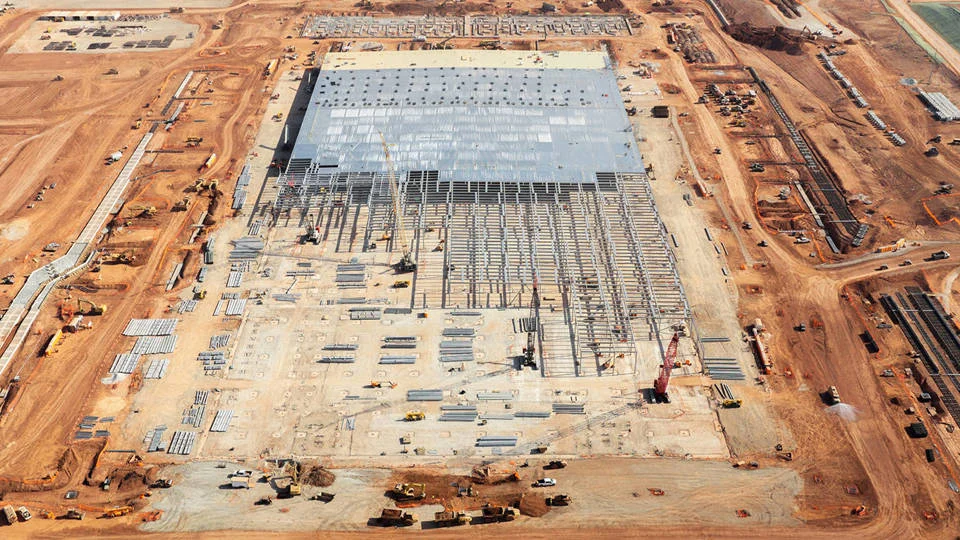
- The CapEx Super-Cycle: Hyperscale cloud providers, enterprise software giants, and specialized AI startups are pouring hundreds of billions of dollars into data centers, specialized silicon (such as advanced GPUs and TPUs), and high-capacity electrical power grids.
- The Revenue Gap: While foundational model developers and hardware manufacturers are recording record top-line growth, the broader enterprise ecosystem is struggling to demonstrate a clear, immediate return on investment (ROI) that justifies the multi-billion-dollar outlays required to run and maintain these systems.
- The Leverage Shift: Unlike previous tech booms that were largely funded by venture capital equity and cash reserves, the current AI buildout is increasingly dependent on debt financing, corporate bond issuance, and complex structured financial instruments. This reliance on leverage transfers the risk of a market correction from deep-pocketed tech balance sheets directly into the broader credit markets.
- The Infrastructure Legacy: History suggests that whether the current equity valuations survive or plummet, the physical assets being constructed today—fiber-optic networks, next-generation data centers, and specialized semiconductor fabs—will endure, eventually powering a sustainable, highly productive technological paradigm.
Chronology: The Evolution of the AI Investment Boom
To understand how the artificial intelligence sector arrived at its current precarious juncture, it is necessary to trace the rapid acceleration of capital and technological milestones over the past decade.
2017–2022: The Academic and Foundational Era
- December 2017: Researchers at Google publish the landmark paper "Attention Is All You Need," introducing the Transformer architecture, which becomes the foundational blueprint for modern generative AI.
- November 2022: OpenAI launches ChatGPT to the public, igniting a viral consumer phenomenon and proving the commercial viability of large language models. This moment serves as the "Big Bang" for the current speculative cycle.
2023–2024: The Gold Rush and Valuation Expansion
- Early 2023: Venture capital and corporate venture arms pivot aggressively. Funding dries up for non-AI tech sectors while AI startups command unprecedented pre-revenue valuations.
- Late 2023: Major cloud providers (Microsoft, Google, Amazon, Meta) announce massive, upwardly revised capital expenditure plans dedicated almost entirely to AI infrastructure procurement.
- Mid-2024: Market analysts begin drawing direct parallels between the current AI boom and the late-1990s telecommunications bubble, noting the exponential rise in semiconductor demand and data center construction.
- Late 2024: Whispers of an "AI bubble" harden into consensus as institutional investors begin questioning the timeline for enterprise monetization.
2025–2026: The Financialization and Debt Turn
- 2025: Facing staggering compute costs, AI labs and infrastructure providers begin turning to debt markets, issuing high-yield corporate bonds and leveraging asset-backed financing to fund continuous cluster expansions.
- October 2026: Market commentators and economists warn that the combination of sky-high valuations, slowing consumer adoption curves, and mounting debt servicing obligations creates a dangerous cocktail for systemic financial stability.
Supporting Data and Historical Parallels
To evaluate the risks facing the AI sector, economists frequently look to past technological revolutions—most notably the railroad booms of the 19th century and the telecommunications and dot-com bubble of the late 1990s.
The Telecommunications Analogy
During the late 1990s telecommunications boom, speculative investors poured hundreds of billions of dollars into laying transoceanic and continental fiber-optic cables. When the dot-com bubble burst in 2000, telecommunications companies went bankrupt en masse, wiping out equity holders and devastating bondholders.
However, the physical infrastructure did not vanish. The glut of cheap, dark fiber laid during the bubble years drastically reduced the marginal cost of data transmission, laying the essential groundwork for the modern streaming, cloud computing, and social media economies of the 2010s.
"Speculative bubbles routinely subsidize the future," economic historians note. "The investors lose their capital, but society inherits a radically upgraded productive capacity."
The AI Capital Expenditure Math
The current AI cycle differs in one critical, alarming metric: the upfront cost per unit of compute versus immediate economic utility.
| Metric / Era | 1990s Dot-Com / Telecom Boom | Current AI Boom (2024–2026) |
|---|---|---|
| Primary Asset | Fiber-optic cables, routers, switches | Advanced GPUs, custom TPUs, massive data centers |
| Financing Mechanism | Initial Public Offerings (IPOs) & high-yield debt | Corporate cash, private equity, and structured credit |
| Energy Footprint | Moderate relative to grid capacity | Extreme (megawatt-to-gigawatt scale requirements) |
| Monetization Timeline | Years to decades (e.g., e-commerce adoption) | Pressured by high recurring operational and inference costs |
Industry estimates suggest that the combined CapEx of the top four technology firms dedicated to AI infrastructure will exceed hundreds of billions of dollars annually. Yet, surveys of enterprise adoption indicate that a significant percentage of Fortune 500 companies are still in the proof-of-concept phase, struggling to calculate a positive ROI on their AI deployments.
Official Responses and Industry Perspectives
The tension between exponential technological promise and immediate financial reality has elicited starkly contrasting responses from industry leaders, central bankers, and financial regulators.
Silicon Valley Optimism
Tech executives and venture capitalists defend the unprecedented spending spree as an existential necessity, arguing that under-investing poses a far greater risk than over-investing.
- Foundational View: Leaders of major AI labs argue that scaling laws—the empirical observation that model performance improves predictably as a function of compute, data, and parameter size—have not yet plateaued.
- The "Build It and They Will Come" Defense: Executives maintain that once artificial general intelligence (AGI) or highly autonomous agentic workflows are achieved, the utility will be so absolute that current infrastructure costs will look negligible in hindsight. As one prominent tech CEO remarked: "You cannot afford to miss the transition to the next economic paradigm, regardless of short-term market volatility."
Wall Street and Regulatory Caution
Conversely, central bankers and institutional risk managers are sounding alarms over the systemic financial implications of tech sector leverage.
- Systemic Risk Warnings: Financial stability reports from international economic bodies have begun highlighting the concentration risk inherent in a market where a handful of mega-cap technology firms drive a disproportionate share of global equity indices and corporate debt issuance.
- Credit Market Vulnerabilities: Fixed-income analysts warn that if AI monetization timelines slip past the point where corporate balance sheets can comfortably service their debt, credit spreads could widen rapidly, triggering contagion across commercial banking sectors deeply exposed to tech lending.
Implications: Navigating the Coming Correction
As the artificial intelligence sector matures past its initial unbridled enthusiasm, several profound implications emerge for investors, policymakers, and technologists alike.
1. The Inevitability of Market Rationalization
A valuation correction or a localized financial shakeout in the AI sector is increasingly viewed as a mathematical certainty rather than a remote risk. Weaker startups unable to secure proprietary data or differentiate their offerings will face consolidation or bankruptcy. Similarly, secondary infrastructure providers dependent on speculative venture funding will face severe liquidity crunches.
2. The Resilience of Physical Infrastructure
Just as the railway panics and the telecom crash did not destroy the utility of rails and fiber, a bursting AI bubble will not erase the data centers, power grids, and silicon manufacturing plants built during this cycle. Once asset valuations reset to realistic levels, these physical assets will pass into stronger, more patient hands, providing the low-cost computational substrate required for the next generation of software innovation.
3. The Danger of Premature Systemic Shock
The true hazard lies in the timing mismatch. If financial markets panic and tighten credit conditions before foundational AI applications have fully embedded themselves into the productive economy, the resulting credit crunch could starve legitimate, value-creating technological projects of necessary capital.
Conclusion
The artificial intelligence revolution is caught in a classic historical tension: the race to build tomorrow’s infrastructure using yesterday’s speculative financial instruments. While the financial casualties of this exuberance may be substantial, the long-term arc of technological progress ensures that the computational foundation being laid today will ultimately reshape the global economy—long after the current crop of speculative investors has exited the stage.