SAN FRANCISCO — As the United States navigates a turbulent political landscape following the high-stakes midterm elections, the artificial intelligence industry is bracing for a seismic shift in public perception and regulatory oversight. Leading the charge is OpenAI, which is reportedly mapping out a massive public relations and policy blitz designed to reshape how the American public—and lawmakers—view the sprawling physical footprint of the artificial intelligence revolution.
At the center of this strategy is a recognition that the foundational infrastructure of the AI boom, namely the massive server farms housing the world’s most powerful models, has a severe image problem. To combat growing community pushback, resource strain, and political skepticism, OpenAI and its high-powered lobbyists are looking to rebrand these facilities from mundane "data centers" into high-tech, community-integrated "AI compute campuses."
With the 2028 presidential election already looming on the horizon, the battle lines for the future of American technological dominance are being drawn not just in Silicon Valley codebases, but in local town halls, congressional hearing rooms, and suburban neighborhoods across the country.
Main Facts
The core of the unfolding narrative involves a multi-pronged strategy by OpenAI to preemptively address mounting public and political friction over AI infrastructure, energy consumption, and regulatory standards.
According to reports detailing statements from OpenAI’s Chief Global Affairs Officer, Chris Lehane, the company is preparing for an aggressive post-midterm policy offensive. This strategy arrives at a time when Democrats have made significant gains, recapturing the House of Representatives and potentially shifting the balance of power in the Senate as well.
The primary pillars of OpenAI’s upcoming policy and PR push include:
The Infrastructure Rebrand: Seeking to neutralize deep-seated community opposition to industrial-scale server farms—which are frequently criticized for their massive water usage, grid-straining power demands, and aesthetic impact—OpenAI is pioneering the terminology shift from "data centers" to "AI compute campuses."
Proactive Policy Guardrails: The company is entertaining proposals for AI "speed limits," looking to establish structured pacing mechanisms for frontier model development to reassure both regulators and the public.
Global Standard Leadership: OpenAI intends to lobby heavily for the United States to spearhead international AI governance and standards, framing domestic compute power as a matter of national security and geopolitical sovereignty.
Empowerment Narratives: A coordinated communications effort is underway to pivot public discourse away from job displacement and energy hoarding toward how AI directly empowers individuals in their everyday lives.
Acknowledging Local Friction: While pushing for expansion, OpenAI leadership has publicly validated the intense local resistance faced by tech giants, describing the fierce negotiations over zoning and energy as a "good and healthy" democratic stress-test.
Chronology: The Road to the 2026 Midterms and Beyond
The friction between local communities and big tech’s infrastructure ambitions did not happen overnight. It is the culmination of a multi-year trajectory defined by explosive model scaling, unprecedented energy demands, and a sudden, fierce grassroots backlash.
Early to Mid-2024: The generative AI boom hits a fever pitch. Major technology firms—including Microsoft, Google, Amazon, and Meta—scramble to lock down real estate, water rights, and power purchase agreements to build out the next generation of training clusters. Little public resistance exists outside of niche environmental circles.
Late 2025: The physical reality of the AI transition begins to hit ordinary Americans. Municipalities from rural Virginia to the suburbs of Manitoba and Vancouver face sudden proposals for multi-gigawatt server farms. Citizens express growing alarm over grid reliability, skyrocketing local utility bills, and the transformation of agrarian or natural landscapes into humming fortresses of silicon.
June 2026: Protests against AI infrastructure intensify visibly. Demonstrations crop up in regions like British Columbia and Manitoba, signaling that Canadians—and by extension, North Americans at large—are not universally sold on the concept of unbridled sovereign compute development.
September 2026: Competitors and industry leaders begin reacting to the mounting political and social blowback. Anthropic CEO Dario Amodei outlines a comprehensive framework to "pace the frontier," attempting to address safety and capacity concerns head-on. Concurrently, public discourse reaches a fever pitch, with analysts noting that data centers have rapidly become "deeply unpopular."
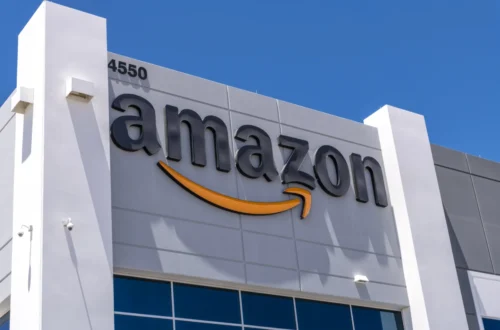
October 2026: Public pressure forces transparency concessions from corporate giants. In an unprecedented move, Amazon and Microsoft announce they will no longer utilize Non-Disclosure Agreements (NDAs) in their negotiations with local governments, yielding to demands for open, transparent community dialogue.
November 1, 2026 (Post-Midterms): Following a midterm election cycle that sees Democrats regain control of the House and potentially challenge the Senate, OpenAI signals its imminent PR and policy blitz. Chris Lehane drops key details of OpenAI’s long-game strategy, framing the midterms as a mere "movie trailer" for the monumental political battles destined to define the 2028 presidential race.
Supporting Data and Environmental Realities
To understand why OpenAI is launching a preemptive charm offensive, one must examine the staggering physical metrics driving the modern AI economy. The friction between tech companies and local communities is rooted in hard numbers:
Power Demands: Modern frontier training clusters require hundreds of megawatts—and increasingly, gigawatts—of continuous electricity. This has forced tech companies to aggressively seek out aging coal plants, natural gas pipelines, and even restart dormant nuclear facilities (such as Microsoft’s partnership surrounding Three Mile Island) just to keep pace.
Grid Strain: According to regional transmission organizations, data center load growth is pushing electrical grids to their absolute limits, raising legitimate concerns about rolling blackouts and surging electricity costs for residential ratepayers.
Water Consumption: Liquid-cooling systems and evaporative cooling towers utilized by massive compute facilities consume millions of gallons of water daily, drawing intense scrutiny from drought-prone regions across the American West and Southwest.
Public Sentiment Shift: Polling and local zoning board attendance figures throughout 2025 and 2026 reflect a steep decline in public trust. What was once welcomed as "high-tech economic development" is increasingly viewed by local residents as an extractive industry that offers minimal local employment while imposing heavy environmental and infrastructural burdens.
Official Responses and Industry Stakeholder Perspectives
The corporate response to the data center backlash has evolved from defensive stonewalling to a nuanced acknowledgment that public license to operate is no longer guaranteed.
OpenAI’s Chris Lehane captured this shifting ethos in his post-midterm assessment, noting that the robust pushback from local communities is ultimately a "good and healthy" phenomenon.
"Communities should hold companies responsible and accountable so they really and truly get a transformative benefit from these projects," Lehane stated during recent policy briefings.
This philosophy represents a stark departure from the traditional Silicon Valley playbook of moving fast and breaking things—at least when it comes to physical geography. By welcoming accountability, OpenAI hopes to position itself as a responsible corporate citizen distinct from competitors who spent years hiding behind closed-door negotiations and restrictive NDAs.
Competitors are likewise recalibrating. Anthropic’s push for structured "speed limits" on frontier development aligns with a growing consensus within the artificial intelligence research community that unchecked scaling could trigger severe regulatory blowback if societal safeguards are ignored.
Furthermore, the decisions by Amazon and Microsoft to abandon the use of NDAs in municipal talks signal that the era of secretive, fast-tracked zoning approvals is over. Local governments are now empowered to demand community benefit agreements, tax contributions, and sustainable energy commitments before a single shovel breaks ground.
Implications: The Road to the 2028 Presidential Election
As the dust settles from the midterm elections, the political landscape of the United States is rapidly pivoting toward the artificial intelligence frontier. Chris Lehane’s assertion that the 2026 midterms are a "movie trailer" for 2028 underscores the reality that AI policy is transforming from a niche technocratic debate into a defining wedge issue of American politics.
The Geopolitical Imperative vs. Local NIMBYism
The central tension of the coming years will be the collision between national sovereignty and local pushback. On one hand, federal policymakers across the aisle recognize that winning the global AI race against geopolitical rivals like China requires massive domestic compute capacity. Without sovereign infrastructure, the U.S. risks ceding economic and military dominance.
On the other hand, the "Not In My Backyard" (NIMBY) sentiment regarding power plants, humming server yards, and water usage is localized, visceral, and politically potent. Local politicians seeking reelection cannot easily ignore constituents facing flickering lights or rising utility bills.
The Rebranding Gamble
OpenAI’s pivot from "data centers" to "AI compute campuses" is a calculated attempt to bridge this gap. By consciously choosing vocabulary that evokes academic rigor, innovation, and community integration—reminiscent of university research parks rather than industrial warehouses—the company hopes to soften the blow of physical expansion.
However, whether a name change alone can alter public perception remains to be seen. Critics and environmental watchdogs are likely to view the rebrand as semantic window dressing unless accompanied by verifiable commitments to 100% renewable energy usage, net-zero water footprints, and tangible economic investments in the host municipalities.
Regulatory Horizons
As a newly empowered Democratic House—and potentially Senate—takes up the legislative reins, OpenAI’s proactive posture is designed to shape the contours of future federal legislation. By bringing proposals for safety guardrails and international standard-setting to the table before lawmakers mandate them, OpenAI aims to cement its status as a trusted architect of public policy.
Ultimately, the success of OpenAI’s post-midterm strategy will not be decided in high-level strategy sessions in San Francisco or Washington, D.C. It will be decided block by block, community by community, as ordinary citizens weigh the promise of an AI-driven future against the hum of the cooling towers humming in their backyards.