Welcome to Rebooked, Condé Nast Traveler’s column where we share the properties our editors and contributors loved so much, they’ve booked them over and over (and over!) again. Travel journalists have their pick of the litter—so you know these are something special.
Main Facts: A Spanish Renaissance Masterpiece in the Clouds
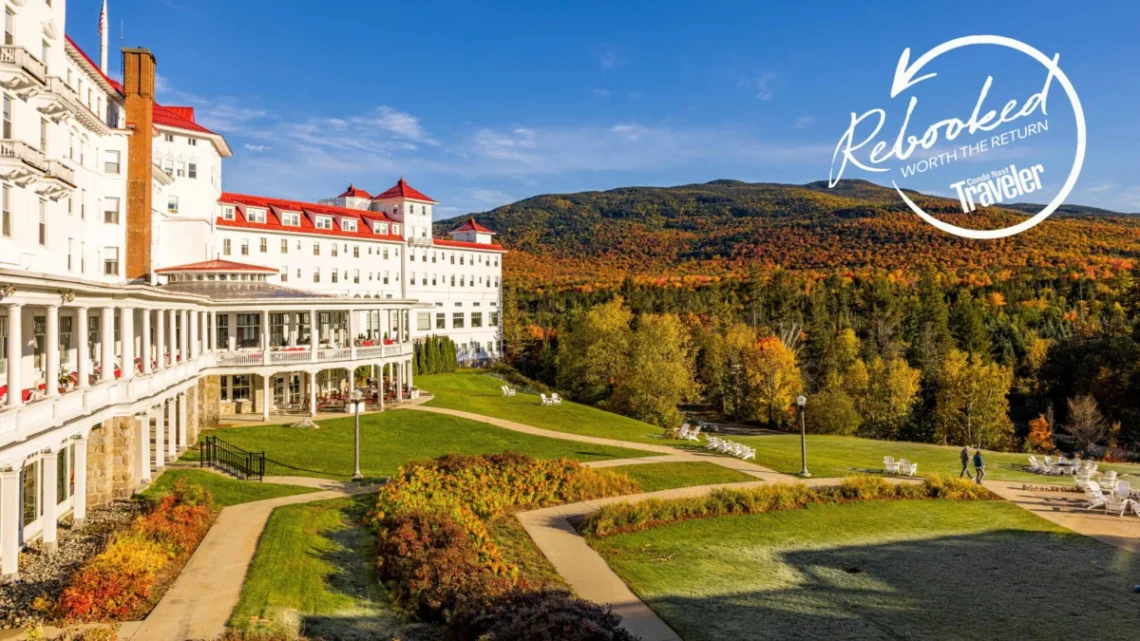
Standing as a gleaming white sentinel against the jagged, granite-strewn backdrop of the Presidential Range, the Omni Mount Washington Resort is more than just a hotel; it is an architectural landmark of the American Northeast. Completed in 1902 by railroad tycoon Joseph Stickney, the resort was designed to offer the Gilded Age elite a sanctuary of opulence in the heart of the New Hampshire wilderness.
The property spans 2,600 acres, dominated by its iconic red-tiled roof and Spanish Renaissance Revival architecture. With 269 guest rooms and suites, the resort manages the rare feat of maintaining a sense of intimate hospitality despite its massive physical footprint. It sits at the foot of Mount Washington—the highest peak in the northeastern United States at 6,288 feet—a location that provides unparalleled access to the rugged beauty of the White Mountain National Forest. Whether blanketed in the crystalline snows of winter or ignited by the fiery hues of a New England autumn, the resort remains a masterclass in grand, historic hospitality.

Chronology: A Legacy of Luxury
The history of the Omni Mount Washington is as layered as the mountain range it overlooks.
- 1902: The resort opens its doors after two years of construction, employing 250 Italian craftsmen who utilized native granite and stucco to create a structure that could withstand the harshest alpine winters.
- 1944: The hotel earned its place in global history as the site of the Bretton Woods International Monetary Conference. Delegates from 44 nations gathered here to establish the post-WWII economic order, leading to the creation of the International Monetary Fund (IMF) and the World Bank.
- 2009: The property underwent significant modernization under the Omni umbrella, ensuring that the historic charm was balanced with contemporary luxury expectations.
- 2021: The resort unveiled the new "Presidential Wing," adding 69 modern, high-end guest rooms that bridge the gap between traditional mountain lodge aesthetics and modern comfort.
- 2026: A comprehensive renovation of the historic wing was completed, refreshing the original 1902 structure while preserving the ornate woodwork and period details that define the property’s character.
The Seasonal Migration: A Ritual of Return
For many, including this contributor, the resort is a seasonal touchstone. The annual pilgrimage from the concrete corridors of New York City to the winding mountain passes of New Hampshire is a rite of passage. The six-hour drive serves as a meditative transition, shedding the frenetic energy of the city in favor of the rolling hills and quiet, historic towns that dot the landscape.
Upon arrival in the village of Bretton Woods, the sight of the resort—a white, sprawling palace emerging from the treeline—triggers a familiar, visceral sense of relief. It is the combination of the crisp, high-altitude air and the promise of quiet luxury that keeps guests returning. The lobby, with its vaulted ceilings and fireplace, acts as the heartbeat of the hotel, where guests trade stories of the day’s mountain exploits over glasses of hot cider.

Supporting Data: Infrastructure and Amenities
To understand the resort’s longevity, one must look at the sheer breadth of its amenities. The property is designed to be a self-contained ecosystem of recreation and relaxation:
- Outdoor Recreation: The Bretton Woods Ski Area features over 60 trails, making it the largest in the state. In the warmer months, this infrastructure is repurposed for scenic gondola rides, mountain biking, and extensive guided hiking trails.
- Wellness: The 25,000-square-foot spa is a destination in its own right, offering treatments that utilize local botanicals and stone therapies.
- Dining Diversity: Beyond the fine-dining experience at Stickney’s—where the menu highlights seasonal regional ingredients—the resort offers the rustic, historic charm of Fabyan’s Station. For a more clandestine experience, The Cave serves as a living museum of the Prohibition era, offering cocktails in a space that once served as an illicit speakeasy.
- The Presidential Wing: This expansion is critical to the guest experience, providing deep soaking tubs, balconies with panoramic views, and bath-salt amenities that cater specifically to the post-adventure traveler.
Official Responses and Strategic Vision
Management at the Omni Mount Washington emphasizes that their strategy is built on the philosophy of "Evolution through Preservation." During recent updates to the historic wing, the focus remained on upgrading climate control and smart-room technology while meticulously restoring the original plasterwork and hardwood floors.
"The goal," notes a spokesperson for the resort, "is to ensure that a guest returning after twenty years feels the same comfort they remember, while a first-time guest feels the modernity of a world-class resort." This balance is evident in the curated events calendar, such as "Cosmos in The Cave," which marries the resort’s history with educational engagement, reflecting a broader shift toward experiential luxury.

Implications: The Future of Mountain Tourism
The success of the Omni Mount Washington provides a blueprint for how historic properties can remain relevant in an era of hyper-modern boutique hotels. By leveraging its geographic isolation as a luxury asset rather than a drawback, the resort has secured its status as a premier destination for "slow travel."
The implication for the broader hospitality sector is clear: travelers are increasingly seeking properties that offer a narrative. Whether it is the history of the Bretton Woods Conference or the simple joy of an outdoor firepit overlooking a 6,000-foot peak, the resort sells a connection to a place and time that feels increasingly rare.
A Final Reflection on the Experience
There is a distinct, lingering magic to the Omni Mount Washington that defies simple description. It is found in the silence of the veranda at dawn, the smell of woodsmoke drifting from the firepits on a chilly October evening, and the sight of the mountains—the true, eternal occupants of this land—shifting colors as the sun dips below the horizon.

For those who have been visiting since childhood, the hotel is a repository of memories. For those discovering it for the first time, it is a grand, welcoming introduction to the wild, rugged, and refined spirit of New England. It is a place that understands a fundamental truth about travel: we return to places not just for the amenities, but for the way they make us feel—anchored, inspired, and, in the case of the Omni Mount Washington, entirely at home.
Whether you are seeking the adrenaline of a ski slope, the quiet contemplation of a spa retreat, or a walk through the pages of American history, this resort remains an unparalleled anchor in the landscape of the White Mountains. As I pack my bags for yet another visit, I am reminded that while the world outside changes, the mountain remains—and at its foot, the doors of the Omni will always be open.