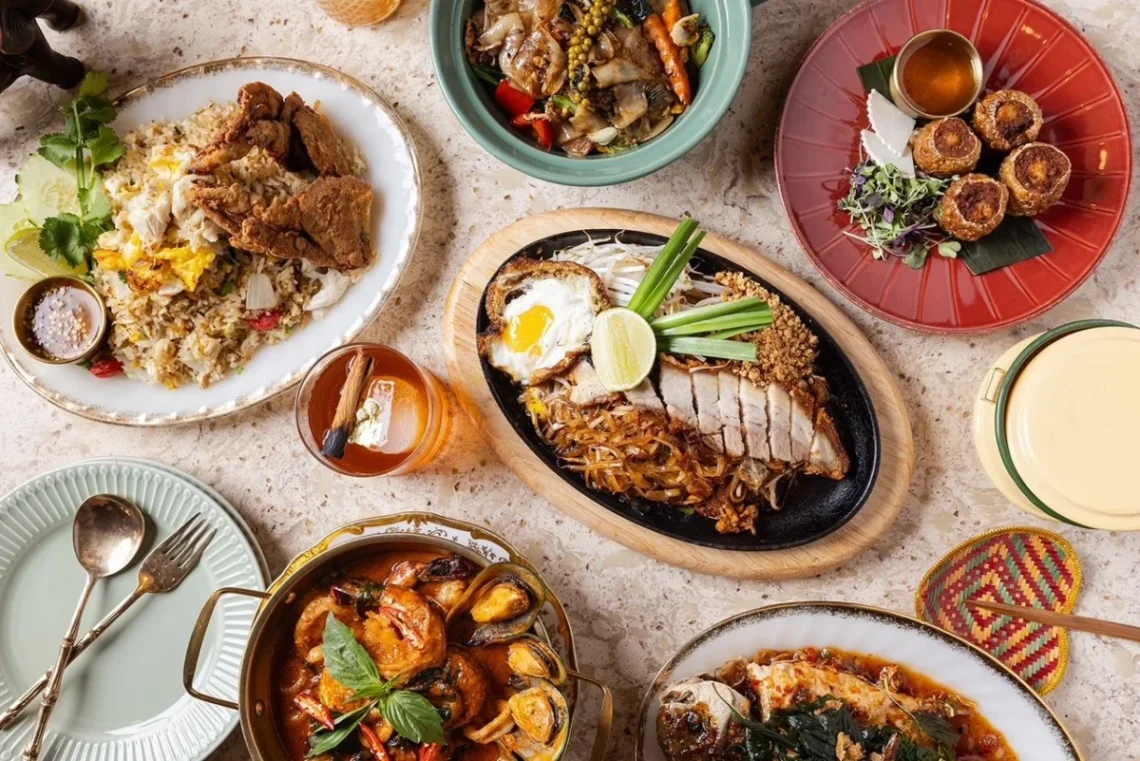
To understand the evolution of Thai cuisine in New York City, one must first master a specific vocabulary. In the Thai lexicon, aroy is the standard for "delicious," and aroy mak elevates that to "very delicious." But for those who truly know the soul of the cuisine, there is a more visceral descriptor: zaab (or zabb). Rooted in the Isan region of northeastern Thailand, zaab is not just a taste—it is a sensation. It describes a bold, electrifying deliciousness, a symphony of spice, acid, salt, and umami that often manifests as a lingering, exhilarating heat.
For the last several years, New York City has been in the midst of a "Golden Age" of Thai food. We are no longer limited to the sanitized, sweet-leaning versions of pad thai that defined the American interpretation of the cuisine for decades. Instead, a new generation of chefs is reclaiming regional identities, honoring specific provincial lineages, and refusing to dampen the fires of authentic flavor.

The Evolution of a Culinary Heritage: A Chronology of Change
The story of Thai food in New York is one of a transition from assimilation to unabashed authenticity. For decades, the industry standard was driven by high-volume, delivery-friendly staples designed to appeal to the broadest possible Western palate.
In the late 20th century, neighborhoods like Elmhurst, Queens, began to serve as the heartbeat of the Thai community. Institutions like SriPraPhai, which opened in 1990, became the gold standard for "old-school auntie energy"—a sprawling, encyclopedic menu that allowed diners to venture beyond the basics and sample the fried meats, papaya salads, and complex curries of the homeland.

However, the last five years have seen a tectonic shift. As a new generation of chefs and restaurateurs began taking the helm, the focus moved toward regional specificity and elevated, sometimes even avant-garde, dining experiences. This transition was marked by the emergence of "specialty" shops—restaurants like Eim Khao Mun Kai in Elmhurst, which focuses almost exclusively on the Thai version of Hainanese chicken rice. By mastering a single dish, these establishments have signaled a move away from the "everything-for-everyone" menu model toward a more curated, expert-led approach.
The Pillars of the New Era: Where to Dine
The current landscape of Thai dining in New York is characterized by a balance between the high-octane spice of the North and the refined, complex flavors of the Royal Court.

1. The Bold and the Fiery
For those seeking the true definition of zaab, Ugly Baby in Williamsburg stands as a defiant monument to heat. Last year, when the restaurant briefly closed, the collective grief of the Thai community was palpable; its return was celebrated with religious fervor. The menu, which ranks dishes from "the laughs" to "the ugly," is a masterclass in Southern Thai and Isan heat. It is a space where the waiters are perpetually prepared to refill water glasses for diners whose foreheads are glistening, offering an uncompromising look at how Thai food is intended to be eaten.
Similarly, Zaab Zaab (with locations in Elmhurst and Williamsburg) has become a destination for those seeking the authentic flavors of owner Bryan Chunton and chef Aniwat Khotsopa’s home region. Their larb ped udon—a ground duck salad packed with herbs, fried liver, and crispy skin—is a testament to the fact that texture and acidity are just as vital as spice.

2. Modernity and Refinement
On the opposite end of the spectrum is the rise of the upscale Thai supper club. Bangkok Supper Club in the Meatpacking District is at the forefront of this movement. With executive chef Max Wittawat at the helm, the restaurant treats Thai cuisine with the same reverence as French or fine-dining Japanese. The menu, paired with an award-winning cocktail program, is sophisticated; the pork jowl, served over garlic-baked rice, is a dish that elevates humble ingredients to a level of profound elegance.
Hommali in the West Village similarly brings a "design-forward" pedigree to the table. With a menu curated by Benz Khajornchaisan, a veteran of the legendary Eleven Madison Park, the space feels like a temple to modern gastronomy. Dishes like the panang curry beef cheek and the dry-aged duck demonstrate that Thai food can hold its own in the most competitive fine-dining neighborhoods in the world.

3. Concept and Narrative
The most successful modern Thai restaurants in NYC are those that tell a story. Kru in Williamsburg, for instance, translates to "mentor." Chef Ohm Suansilphong uses his menu to honor the teachers who shaped his career, reimagining historical recipes through a contemporary lens. The lamb massaman curry pot pie is a perfect example of this philosophy—a dish that acknowledges Thai tradition while embracing the creative freedom afforded by New York’s diverse culinary scene.
Thai Diner in Nolita remains the ultimate "fun" destination. It is a place that feels like a tropical, high-energy dive bar. By reimagining diner classics—such as their Thai Disco Fries, smothered in peanut-heavy massaman curry—the owners have created a space that is as much about the vibrant, chaotic spirit of NYC as it is about the culinary heritage of Thailand.

Supporting Data: The Balancing Act
What makes these establishments "compelling" is their adherence to the "Great Balancing Act." Every chef interviewed across these 14 institutions emphasizes the same five pillars: spice, acid, salt, sweetness, and umami.
In a city where restaurant real estate is notoriously expensive, these chefs are operating under immense pressure to remain profitable while refusing to "water down" their flavor profiles. The data from recent years suggests that New York diners are not only ready for this shift but are actively seeking it. The success of Soothr, which expanded from the East Village to Long Island City, proves that a focus on high-quality, regional-specific noodle soups can thrive just as well as, if not better than, a generic menu.

Implications for the Future of NYC Dining
The "Golden Age" of Thai food in New York has significant implications for the city’s broader culinary trajectory:
- Regional Specialization: We are likely to see more restaurants focusing on singular provinces, such as the Northern Lanna style or the coastal cuisines of the South, rather than a monolithic "Thai" category.
- The "Cool" Factor: The integration of mixology (as seen at Bangkok Supper Club and Hommali) with regional cooking is shifting the perception of Thai food from "takeout staple" to "night-out destination."
- Sustainability and Sourcing: As these restaurants move away from mass-market ingredients, the focus is shifting toward higher-quality proteins and produce, justifying higher price points and cementing Thai food as a premium dining category.
Conclusion: An Invitation to Explore
The beauty of the current Thai food scene in New York City is that it is no longer static. It is a living, breathing, and occasionally breathing-fire entity. Whether you are sitting in the unassuming, wood-accented dining room of SriPraPhai in Woodside, sipping a fish-sauce-based cocktail at Bangkok Supper Club, or tearing into a massaman curry pot pie at Kru, you are participating in a global conversation.

For the adventurous diner, there has never been a better time to be in New York. The city’s Thai restaurants have moved beyond the shadows of their predecessors, establishing a new, confident identity that is as complex, layered, and ultimately zaab as the culture that inspired it. If you want to understand the heartbeat of modern New York, you don’t just go to a steakhouse or a bistro—you go to the places where the curry is bubbling, the herbs are fresh, and the flavors are absolutely, unapologetically bold.