
Main Facts
Audemars Piguet has once again demonstrated its mastery of haute horlogerie acoustics, expanding its elite lineup of high-complication chiming watches with three striking new Supersonnerie creations. The prestigious Swiss manufacture has introduced a trio of timepieces that marry cutting-edge acoustic engineering with exquisite artisanal finishing: two variations of the iconic Royal Oak Minute Repeater Supersonnerie and a deeply contemporary iteration of the Code 11.59 by Audemars Piguet Minute Repeater Supersonnerie.
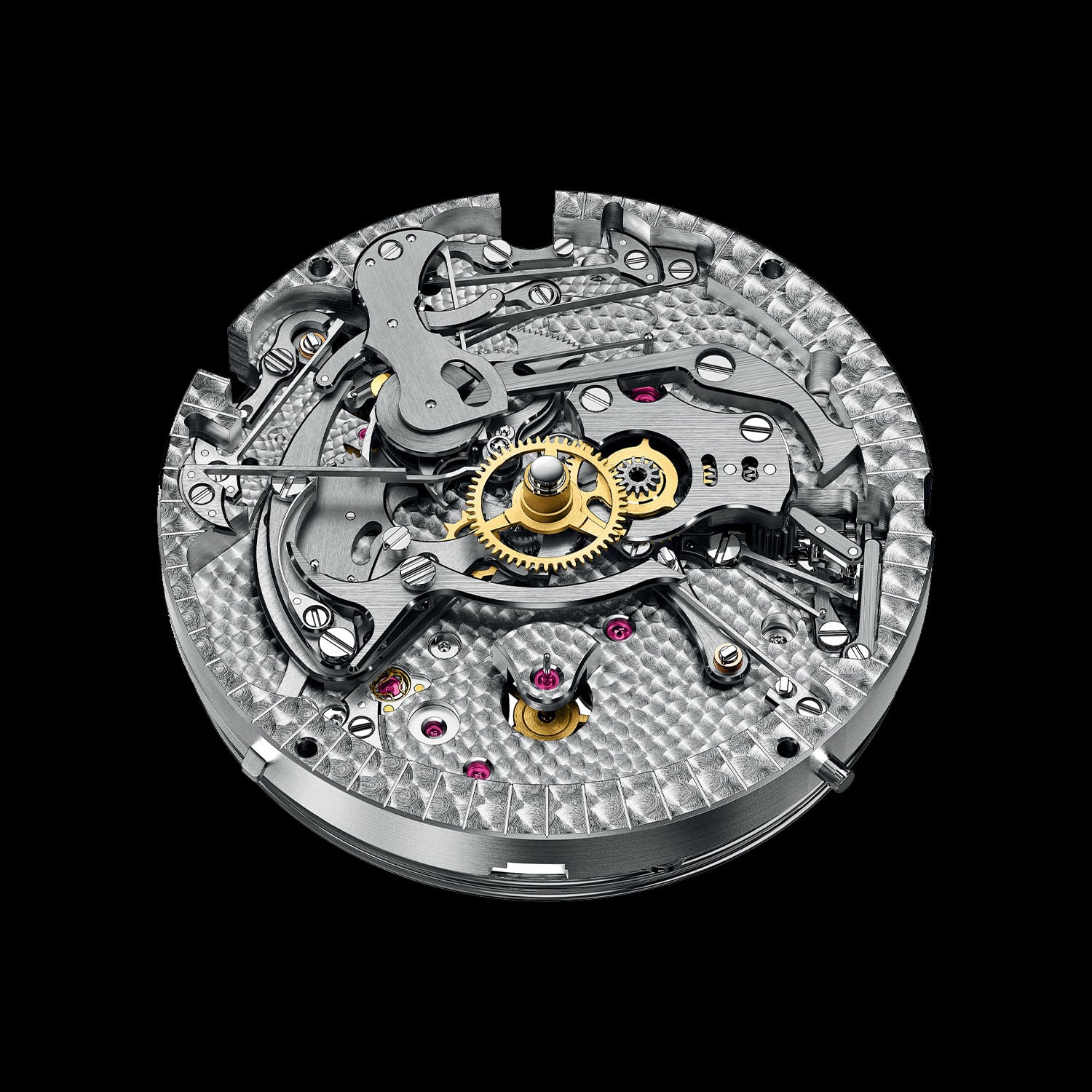
At the heart of all three timepieces beats the formidable Manually Wound Calibre 2953. Comprising 362 meticulously hand-finished components, this high-end movement operates at a traditional frequency of 21,600 vibrations per hour (3 Hz) and yields an impressive 72-hour power reserve. However, the true hallmark of these releases lies in Audemars Piguet’s patented Supersonnerie technology. First commercialized in 2016 following eight years of exhaustive acoustic research, the system fundamentally transforms how a wristwatch minute repeater generates and projects sound.
The collection comprises:
- The Royal Oak Minute Repeater Supersonnerie Titanium (Ref. 26591TI): Featuring a 42mm by 14mm titanium case, paired with a captivating smoked green sunburst dial.
- The Royal Oak Minute Repeater Supersonnerie Pink Gold (Ref. 26591OR): Marking a historic first for this specific lineage, cast in 18-carat pink gold and complemented by a rich brown Grande Tapisserie dial.
- The Code 11.59 by Audemars Piguet Minute Repeater Supersonnerie (Ref. 26395BC): Housed in an 18-carat white gold 41mm case with a translucent smoked sapphire dial that lays bare the mechanical wizardry beneath.
While pricing remains strictly upon application—with market expectations placing each piece comfortably north of CHF 350,000—these releases underscore AP’s relentless commitment to pushing the boundaries of mechanical and sonic purity.

Chronology: The Genesis and Evolution of AP’s Supersonnerie
To understand the weight of these three new releases, one must trace the evolutionary timeline of Audemars Piguet’s acoustic research, a journey that bridged the worlds of classical music, academic science, and traditional watchmaking.
The Acoustic Dilemma of Traditional Watchmaking
For centuries, minute repeaters have been revered as the pinnacle of watchmaking complexity. Yet, they suffered from an inherent physical limitation: water-resistance requirements, thick case constructions, and dampening movements often muffled the acoustic chime. When the hammers struck the gongs, the resulting sound was frequently muted, trapped inside the case, or distorted by mechanical background noise from the regulator.
2006–2016: The Acoustic Research (RD#1) Project
In 2006, Audemars Piguet embarked on an ambitious eight-year R&D initiative. The manufacture teamed up with the Swiss Federal Institute of Technology Lausanne (EPFL), alongside a collective of professional musicians, sound specialists, and watchmakers. Their collective objective was to scientifically decode what makes a minute repeater sound "pure" and how to project that sound clearly from a wristwatch.
The breakthrough materialized in January 2015 at the Salon International de la Haute Horlogerie (SIHH) with the introduction of the Royal Oak Concept RD#1 Acoustic Research Minute Repeater. The prototype stunned the horological world with its unprecedented volume, clarity, and harmonic resonance.

2016–Present: Commercialization and Expansion
Buoyant from the success of the RD#1 concept, AP commercialized the technology in 2016, introducing the first production-ready Supersonnerie models. Over the subsequent years, the technology migrated from experimental avant-garde concepts into the pillars of the brand’s catalog, including iterations in titanium, platinum, and the controversial yet architecturally brilliant Code 11.59 collection.
The current release represents the latest chapter in this ongoing timeline—refining the aesthetic palette of the Royal Oak variants while continuing to evolve the daring, architecture-forward Code 11.59 line.
Supporting Data & Technical Architecture
The technical brilliance of the new Supersonnerie releases goes far beyond superficial dial changes. It relies on a trio of patented innovations that solve the historic acoustic bottlenecks of chiming watches.
The Soundboard Innovation
The cornerstone of the Supersonnerie system is a specialized soundboard positioned directly between the movement and the caseback. Unlike traditional watch designs where gongs are attached directly to the mainplate (which dampens vibrations), AP’s gongs are mounted onto this resonating soundboard. When the hammers strike, the soundboard vibrates in tandem, effectively transforming the caseback into a high-efficiency acoustic speaker that projects sound outward through discreetly engineered apertures in the caseback.

[ Traditional Watch ]
Gong struck ➔ Movement absorbs vibration ➔ Muted sound output

[ Supersonnerie System ]
Gong struck ➔ Soundboard resonates ➔ Sound projected via caseback apertures ➔ High-volume, crystal-clear chime
The Silent Regulator
A common annoyance in traditional repeaters is the whirring noise of the anchor-governed inertial regulator, which can mask the delicate chime of the hours, quarters, and minutes. AP redesigned this regulator using an anchor system featuring flexible arms. This clever mechanical absorption dampens the friction noise, ensuring absolute silence between strikes so the listener hears nothing save for the pure, unadulterated notes of the gongs.
Detailed Model Specifications
| Specification | Royal Oak Titanium (26591TI) | Royal Oak Pink Gold (26591OR) | Code 11.59 White Gold (26395BC) |
|---|---|---|---|
| Case Material | Titanium | 18-carat Pink Gold | 18-carat White Gold (Polished middle) |
| Case Dimensions | 42mm x 14mm | 42mm x 14mm | 41mm x 13.6mm |
| Dial Design | Smoked green, sunburst finish | Brown Grande Tapisserie | Smoked sapphire, silver-toned inner bezel |
| Water Resistance | 20 meters | 20 meters | 20 meters |
| Strap / Bracelet | Integrated Titanium Bracelet | Integrated Pink Gold Bracelet | Grey Alligator Strap with AP Folding Clasp |
| Movement | Calibre 2953 (Manual) | Calibre 2953 (Manual) | Calibre 2953 (Manual) |
| Power Reserve | 72 Hours | 72 Hours | 72 Hours |
| Vibration Frequency | 21,600 vph (3 Hz) | 21,600 vph (3 Hz) | 21,600 vph (3 Hz) |
Official Responses and Curatorial Perspectives
While luxury watch manufacturers rarely issue verbose public PR statements for individual rolling updates, representatives from Audemars Piguet’s product development and heritage divisions have consistently emphasized that acoustic complication watchmaking is an art form rooted in human emotion.
Speaking on the philosophy behind the Supersonnerie project, AP’s product directors have frequently reiterated that technical specs alone do not define a great chiming watch. "A minute repeater must touch the soul before it impresses the mind," notes an internal design brief. By partnering with musicians and acousticians from the EPFL, AP sought to bridge subjective musical beauty with hard empirical science.
Independent horological critics and curators have responded warmly to the latest triad. Market observers note that while the titanium and white gold variants build upon established platforms, the introduction of an 18-carat pink gold Royal Oak Supersonnerie (Ref. 26591OR) fills a long-standing gap in the catalog. Collectors who prefer the warm, opulent tones of pink gold combined with the rich texture of a brown Grande Tapisserie dial now have an acoustic flagship tailored explicitly to their tastes.

Furthermore, the continued integration of the Code 11.59 platform into high-complication tiering demonstrates AP’s institutional belief in the controversial model’s long-term design language. By exposing the calibre 2953 through a smoked sapphire crystal, the Le Brassus manufacture challenges purists to look past traditional closed dials and appreciate the kinetic sculpture of micro-mechanics in action.
Implications for the Haute Horlogerie Market
The release of these three Supersonnerie timepieces carries several distinct implications for the high-end luxury watch market, collectors, and Audemars Piguet’s corporate positioning:
1. Cementing Complication Leadership
In an industry where steel sports watches often dominate public discourse and secondary market speculation, releases of this caliber serve as a vital reminder of Audemars Piguet’s true manufacturing pedigree. As a Grande Maison capable of producing grand complications entirely in-house, AP uses platforms like the Supersonnerie to justify its lofty standing alongside historic pillars like Patek Philippe and Vacheron Constantin.
2. The Niche Appeal of Acoustic Masterpieces
Minute repeaters have always represented an ultra-exclusive apex of collecting. Because hand-tuning a chiming watch requires rare artisan skill—often taking weeks of painstaking filing by a single master watchmaker to achieve the desired chord and resonance—production numbers are inherently micro-scale. These three new models will be manufactured in strictly limited quantities, ensuring long-term desirability among VVIP collectors and museum-grade archives.
3. Broadening Aesthetic Horizons for High Complications
Historically, ultra-complications were presented in conservative, dress-watch formats. By executing its pinnacle chiming movement inside an integrated-bracelet titanium sports watch, a precious-metal luxury daily wearer, and a daringly modern architectural dress piece (Code 11.59), Audemars Piguet proves that acoustic mastery does not need to be confined to the boardroom. It can be worn on a weekend hike in titanium, elegantly paired with evening wear in pink gold, or admired in raw mechanical transparency through smoked sapphire.
Ultimately, these three new Audemars Piguet Supersonnerie models stand as monuments to cross-disciplinary innovation—proving that even a centuries-old tradition like the minute repeater can be radically reinvented when art, science, and uncompromising craftsmanship collide.