By the Automotive News Desk
For nearly six decades, the iconic orange track and the heavy, satisfying heft of a 1:64-scale die-cast metal car have been a universal childhood touchstone. Generations of automotive enthusiasts built their earliest car culture memories pushing iconic Hot Wheels vehicles across carpets, through loop-de-loops, and down makeshift ramps. Now, Mattel is reimagining its most famous property for a new era.
Merging the instant gratification of traditional die-cast collecting with the immersive, hands-on satisfaction of construction toys, Mattel has officially announced the Hot Wheels Brick Shop Racer Series. Blurring the lines between model-building and toy car collecting, this new lineup transforms some of the world’s most recognizable automotive nameplates into miniature, brick-built construction sets. Best of all, they promise not to strain the wallet, with an accessible starting price point of just $4.99.
This strategic rollout is far more than a simple novelty; it represents a calculated challenge to the dominance of construction toy giants like Lego, while opening up an entirely new revenue stream that bridges two massive hobbies.
Main Facts: What is the Hot Wheels Brick Shop Racer Series?
At its core, the Brick Shop Racer Series is a collection of miniature building sets designed to replicate real-world vehicles and classic Hot Wheels originals at the traditional 1:64 scale.
- The Scale: By maintaining the classic 1:64 scale that has defined Hot Wheels for nearly 60 years, the finished models match the exact footprint of conventional die-cast cars. This design choice ensures that builders can seamlessly integrate their brick creations into existing Hot Wheels display cases, storage boxes, and track setups.
- The Launch Timeline: Mattel will debut the first wave of six models in January. The company has ambitious growth plans, confirming that the lineup will expand to a total of 20 collectible vehicles by the end of 2027.
- Pricing and Accessibility: With an MSRP starting at $4.99, these sets are designed for impulse purchases and broad accessibility, positioning them well below the cost of larger, more complex building sets on the market.
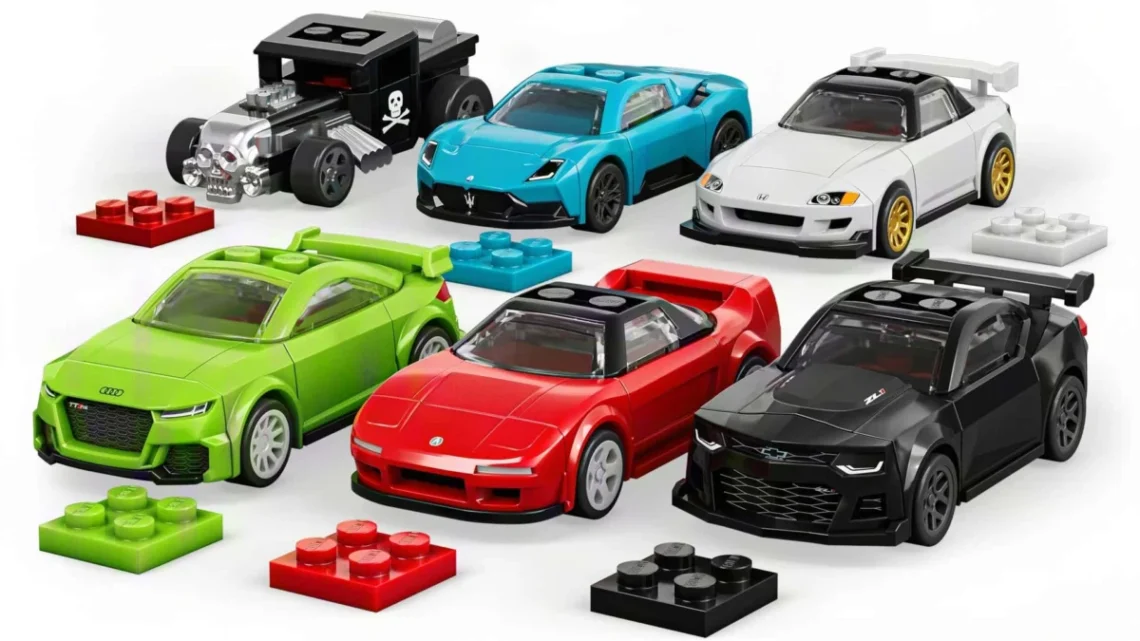
- The Initial Lineup: The opening salvo covers a diverse cross-section of automotive tastes, featuring everything from modern supercars and track-day heroes to classic Japanese sports cars and custom hot rods:
- 2024 Chevrolet Camaro ZL1
- 2018 Audi TT RS
- Maserati MCPura
- 1991 Acura NSX
- 1999 Honda S2000
- Bone Shaker (a beloved Hot Wheels original featuring classic hot rod styling)
Chronology of Development: From Large-Scale Sets to Micro-Builds
To understand how Mattel arrived at the $4.99 1:64 brick car, it is helpful to look at the timeline of the company’s broader push into the construction toy market.
Phase 1: Entering the Brick Space
Over the past several years, Mattel recognized that adult collectors and younger hobbyists alike possessed an insatiable appetite for building blocks. While competitors—most notably the Lego Group—had cornered the market on licensed vehicle partnerships, Mattel possessed an unmatched portfolio of proprietary automotive IP, headlined by Hot Wheels and Matchbox.
Phase 2: The Launch of Mattel Brick Shop
Last year, Mattel laid the groundwork for its construction ambitions by introducing the broader Mattel Brick Shop range. These initial offerings leaned heavily toward elaborate, highly customizable building sets scaled at 1:12, 1:16, and 1:32. While these larger kits appealed to dedicated builders and older enthusiasts, they required a significant investment of both time and money, operating in a similar tier to premium collector sets.
Phase 3: Scaling Down for the Masses
Recognizing a gap between traditional die-cast cars and large-scale brick models, Mattel’s engineers and designers focused on a monumental challenge: how to distill the unmistakable silhouette of a car into fewer than 30 bricks while retaining functionality, durability, and a recognizable aesthetic at 1:64 scale. The result is the Racer Series—a distillation of the Brick Shop ethos into a pocket-sized, highly affordable format.
Phase 4: The 2026–2027 Rollout
- January: Official commercial launch of the first six vehicles (Camaro, Audi, Maserati, Acura, Honda, and Bone Shaker).
- Throughout 2026–2027: Continuous expansion of the product ecosystem, scaling the catalog up to 20 unique models by the end of 2027.
Supporting Data & Engineering: More Than Just Static Display Pieces
Building a car out of 27 to 29 plastic bricks at a micro-scale sounds simple on paper, but engineering a functional toy that withstands play is another matter entirely. Mattel’s design team went to great lengths to ensure these are not merely static brick models destined to sit on a shelf.
Piece Counts by Model
Depending on the specific vehicle architecture, the part counts remain remarkably lean, making assembly approachable even for younger builders:
- 2024 Chevrolet Camaro ZL1: 29 pieces
- 2018 Audi TT RS: 29 pieces
- 1991 Acura NSX: 29 pieces
- 1999 Honda S2000: 29 pieces
- Bone Shaker: 28 pieces
- Maserati MCPura: 27 pieces (the most streamlined build in the initial wave)
Mechanical and Material Highlights
Rather than relying purely on plastic bricks for the chassis and running gear, Mattel integrated key mechanical components to preserve the core Hot Wheels DNA:
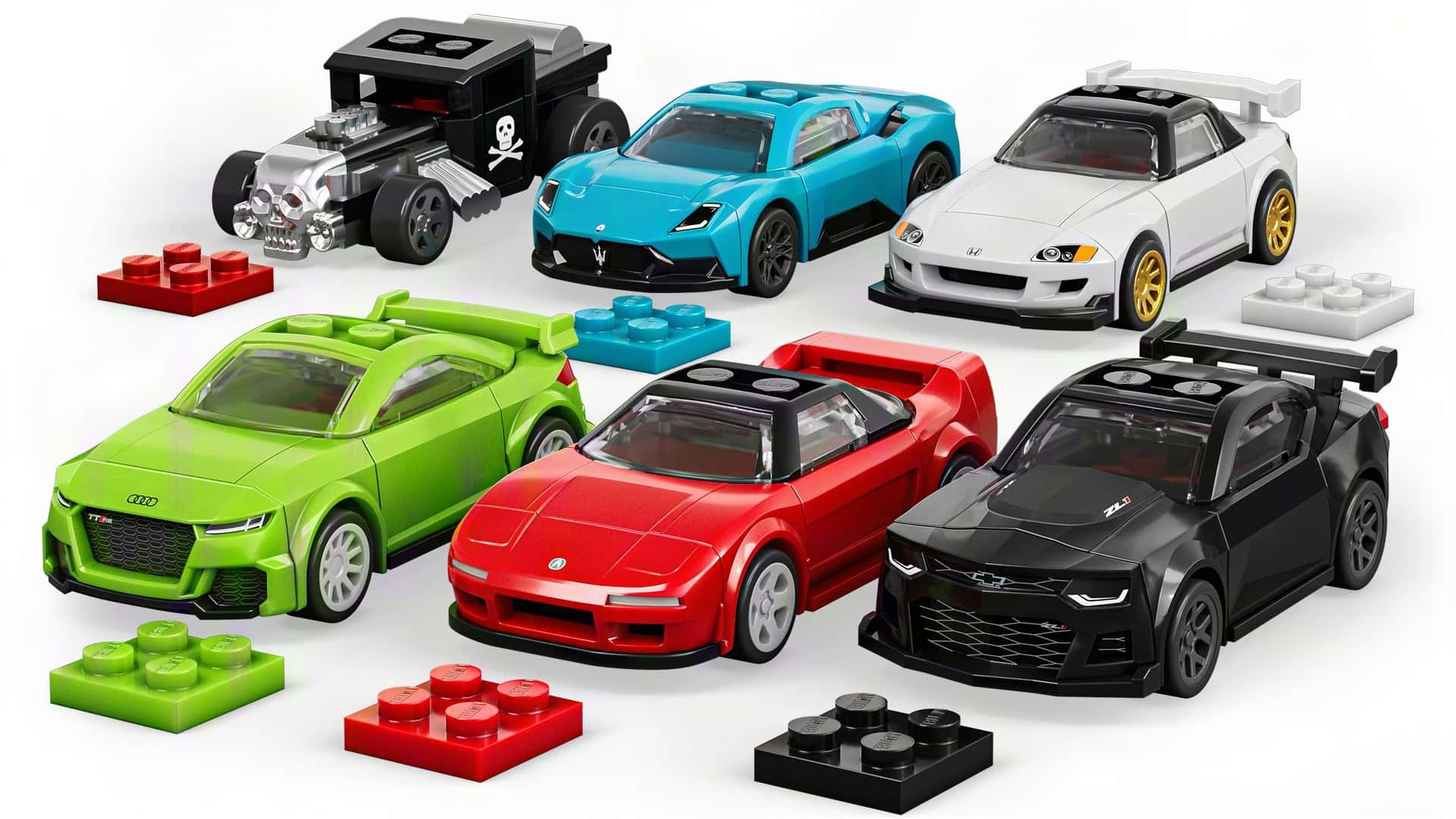
- Metal Base Plates: Giving the cars a satisfying weight in the hand, each model features a sturdy metal foundation.
- Functional Metal Axles & Rolling Wheels: True to the spirit of Hot Wheels, these brick-built cars are fully capable of rolling smoothly across flat surfaces.
- Rubber-esque Tires: Replacing hard plastic wheels with flexible, rubber-like compounds ensures better traction and an authentic tactile feel.
- Specialized Resin Bricks: To capture the sweeping curves of modern supercars like the Maserati MCPura and Audi TT RS, Mattel developed custom-molded specialty pieces that snap together with smooth resin bricks, avoiding the blocky appearance typical of micro-scale construction toys.
Rated for builders aged six and up, each kit includes clear, step-by-step instructions designed to foster fine motor skills and spatial reasoning in younger fans while offering a quick, satisfying puzzle for adults.
Official Responses and Strategic Vision
Mattel’s executive leadership has made no secret of the fact that the company aims to capture a much larger slice of the lucrative construction-toy market. For decades, the Danish toy titan Lego has enjoyed near-monopoly status in the brick-building space, frequently partnering with high-end automotive brands like Porsche, Ferrari, and Bugatti.
By leveraging its own proprietary crown jewel—Hot Wheels—Mattel is executing a clever flanking maneuver.
"Mattel has always thrived on making desirable cars accessible to just about everyone, regardless of age or budget," notes internal product strategy material. "Now, we are applying that same philosophy to the building-block world. Rather than asking buyers to commit to an expensive, time-consuming project, the Racer Series offers an inexpensive entry point."
Industry analysts point out that this strategy capitalizes on a unique psychological sweet spot. Conventional Hot Wheels collectors are notoriously completionist, often purchasing multiple versions of casting variants. By introducing a brick-building variant at a sub-$5 price point, Mattel lowers the barrier to entry so drastically that casual buyers may find it trivial to purchase an entire wave on a whim.
Market Implications: Crossover Hobbies and the Battle for Shelf Space
The launch of the Hot Wheels Brick Shop Racer Series carries several profound implications for the toy and collectibles industries:
1. Bridging Two Distinct Communities
Historically, die-cast collectors and brick-building hobbyists occupied overlapping but distinct demographic circles. Die-cast enthusiasts valued factory-finished detailing, tampo prints, and mint-in-box preservation, while brick builders embraced customization, deconstruction, and creative rebuilding. By merging the two—offering a licensed car that you build yourself out of metal and plastic—Mattel is actively tempting die-cast purists to try construction, while inviting Lego and brick fans into the automotive fold.
2. Escalating the War on Retail Shelf Space
Major retailers like Target, Walmart, and specialty hobby shops have finite pegboard space. By offering a product that can hang on traditional Hot Wheels peg hooks while appealing to the construction toy aisle, Mattel effectively doubles its real estate potential. A parent shopping for a quick $5 toy for their child now has to choose between a standard metal casting and a build-it-yourself Racer Series kit.
3. Expanding the Collector Ecosystem
With plans to scale the lineup to 20 models by the end of 2027, Mattel is laying the groundwork for a long-term collecting phenomenon. If the initial wave of six cars proves successful, subsequent waves could introduce legendary tuning cars, historic motorsport icons, and cinematic vehicles into the 1:64 brick ecosystem.
Conclusion
The intersection of automotive culture and toy manufacturing has always been defined by innovation, nostalgia, and accessibility. With the introduction of the Hot Wheels Brick Shop Racer Series, Mattel has cleverly synthesized its greatest strengths.
By taking the beloved 1:64 scale of Hot Wheels, adding the tactile engagement of metal-and-brick construction, and pricing the kits at an impulse-friendly $4.99, Mattel has created a product destined for countless desk displays, toy boxes, and collector shelves. As the lineup expands toward its 20-car goal by late 2027, brick builders and car enthusiasts alike will have plenty of new reasons to clear space on their shelves—and keep a few spare dollars handy.