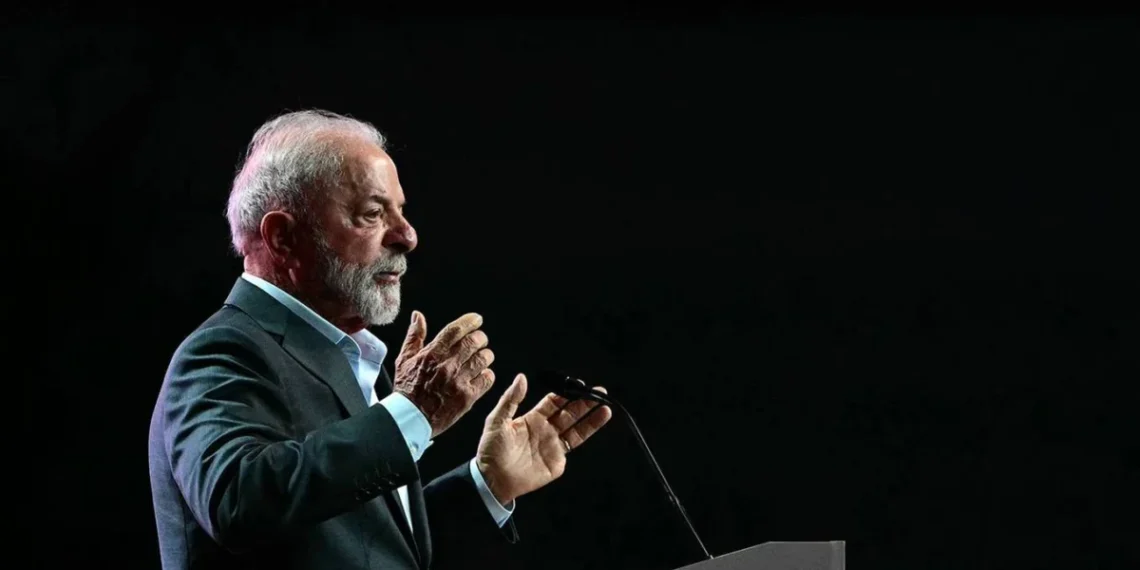
LONDON — Recent electoral outcomes in the Western Hemisphere have provided progressives with moments of profound relief. In Brazil, veteran leader Luiz Inácio Lula da Silva
triumphed over the far-right incumbent Jair Bolsonaro, a victory heralded by international observers as a triumph for democratic norms. Thousands of miles to the north, the United States midterm elections defied historical precedent, as Democrats and their allies successfully staved off a predicted "red wave," dealing a stinging rebuke to Donald Trump’s MAGA movement.
Yet, beneath the surface of these celebrated victories lies a stark, unsettling reality. According to political analysts and international commentators, neither the US Democratic Party nor Lula’s Workers’ Party (PT) is offering a transformative vision capable of inspiring a weary electorate. Crucially, the central lesson that progressives in both nations cannot afford to ignore is that these recent electoral outcomes do not amount to a popular mandate.
As the euphoria of defeating the populist right fades, both movements face an existential reckoning: surviving a populist onslaught is not the same as winning the future.
Main Facts
The political landscapes of both the United States and Brazil are currently defined by high-stakes polarization, institutional fragility, and economic anxiety. In late 2022, Luiz Inácio Lula da Silva secured a historic third presidential term in Brazil, narrowly defeating Jair Bolsonaro in a runoff that exposed a deeply fractured nation. Bolsonaro, who subsequently faced mounting legal scrutiny and fled the country, left behind an entrenched far-right legislative bloc and a society deeply divided along cultural, economic, and geographic lines.
In the United States, the 2022 midterm elections yielded a surprisingly resilient performance for the incumbent Democratic Party. Despite persistent inflation, low approval ratings for President Joe Biden, and historical trends favoring the opposition party during midterms, Democrats retained control of the US Senate and minimized losses in the House of Representatives.
However, political scientists emphasize that these outcomes were fundamentally defensive victories. Voters in both countries mobilized not out of enthusiastic alignment with progressive economic or social platforms, but out of an urgent desire to preserve democratic institutions and check the advance of authoritarian-leaning populism.
- The Core Paradox: Electoral survival has been mistaken for ideological endorsement.
- The Policy Gap: Both the US Democrats and Brazil’s Workers’ Party struggle to articulate a forward-looking economic agenda that addresses the root causes of working-class disenfranchisement.
- The Electoral Vulnerability: Because these victories relied heavily on negative polarization—voting against a worse alternative—they remain fragile and susceptible to rapid reversals at the ballot box.
Chronology of Events
To understand how both nations arrived at this precarious juncture, it is necessary to examine the timeline of events leading up to and immediately following these pivotal elections.
Brazil: From Impeachment to Polarization (2016–2023)
- August 2016: President Dilma Rousseff of the Workers’ Party is impeached, plunging the party and the Brazilian left into a deep institutional crisis.
- April 2018: Lula da Silva is imprisoned on corruption charges, sidelining him from the upcoming presidential race and paving the way for Jair Bolsonaro’s rise.
- October 2018: Jair Bolsonaro wins the presidency, ushering in four years of populist governance characterized by environmental deregulation, populist rhetoric, and skepticism toward democratic norms.
- November 2019: The Brazilian Supreme Court annuls Lula’s convictions, restoring his political eligibility.
- October 2022: Lula defeats Bolsonaro in a fiercely contested runoff election, securing 50.9% of the vote.
- January 8, 2023: Thousands of Bolsonaro supporters storm government buildings in Brasília, echoing the January 6 Capitol riot in the US, underscoring the deep polarization facing Lula’s new administration.
United States: The Post-Trump Political Era (2020–2023)
- November 2020: Joe Biden defeats Donald Trump in the US presidential election, but Republicans make unexpected gains in the House and retain significant state-level power.
- January 6, 2021: A mob of Trump supporters attacks the US Capitol, cementing democratic backsliding as a central theme in American politics.
- June 2022: The conservative-majority Supreme Court overturns Roe v. Wade, galvanizing pro-choice voters and energizing the Democratic base ahead of the midterms.
- November 2022: The US midterm elections take place. Contrary to historical norms, Democrats hold the Senate and limit Republican gains in the House, fueled largely by voter anxiety over reproductive rights and democratic norms.
- Throughout 2023: Both the Biden administration and Lula’s government grapple with persistent inflation, legislative gridlock, and the challenge of translating defensive electoral victories into cohesive long-term governance.
Supporting Data
A quantitative examination of recent polling, economic indicators, and voting demographics reveals the precarious foundation upon which current progressive power rests.
Economic Discontent vs. Institutional Defense
In both the US and Brazil, macroeconomic indicators tell a story of disconnect between state-level success and kitchen-table realities.
- Inflation and Cost of Living: In the United States, inflation peaked at 9.1% in mid-2022, deeply impacting working-class households. While job growth remained robust, real wages stagnated for millions. In Brazil, inflation hovered around double digits during the peak of the Bolsonaro administration and remained a central grievance for voters heading into the 2022 election.
- Voter Motivation: Exit polls from the 2022 US midterms highlighted that while voters ranked inflation and the economy as their top concerns, those who prioritized "democracy" and "abortion rights" voted overwhelmingly for Democrats. This split illustrates that the party did not win on its economic platform; it won because cultural and systemic issues overshadowed economic dissatisfaction.
- The Margin of Victory: Lula secured the presidency by a razor-thin margin of roughly 2.1 million votes out of over 118 million cast. Similarly, in the US, control of Congress was decided by a handful of competitive suburban districts where swing voters expressed deep ambivalence toward both major parties.
Comparative Public Opinion Metrics (2022–2023)
| Metric | United States (Democrats) | Brazil (Workers’ Party / Lula) |
|---|---|---|
| Primary Electoral Driver | Defense of democracy & abortion rights | Rejection of Bolsonaro’s governance & social regression |
| Economic Approval | Low to moderate (persistent inflation anxiety) | Polarized (skepticism over fiscal policy) |
| Mandate Strength | Weak (divided legislature, narrow margins) | Weak (deeply split Congress and electorate) |
| Core Vulnerability | Working-class demographic erosion | Resistance from agribusiness and evangelical blocs |
Official Responses
Political leaders, party strategists, and institutional figures have offered contrasting interpretations of these electoral outcomes, reflecting an internal tension between complacency and reform.
The Official Democratic Perspective (United States)
The Biden administration and national Democratic leadership framed the 2022 midterm results as a historic vindication of their legislative achievements and a clear rejection of political extremism.
"The voters spoke, and they sent a clear message: they want to protect our democracy, protect our rights, and keep moving the country forward," President Joe Biden stated following the certification of the midterm results.
Party strategists emphasized landmark legislative packages passed during the first two years of the administration—such as the Bipartisan Infrastructure Law, the CHIPS and Science Act, and the Inflation Reduction Act—as proof of a functioning governing agenda designed to rebuild the American middle class.
The Official Workers’ Party Perspective (Brazil)
In Brasília, President Lula and his allies framed their victory as a democratic rescue mission, emphasizing social inclusion, environmental stewardship, and the restoration of Brazil’s standing on the global stage.
"This was not just a victory for the Workers’ Party, but a victory for democracy over barbarism," Lula declared in his victory speech.
The administration quickly moved to reinstate social welfare programs like Bolsa Família, strengthen Amazon rainforest protections, and re-engage with multilateral international institutions. However, administration officials have privately acknowledged the difficulty of passing reforms through a National Congress where conservative and agro-industrial blocs hold significant leverage.
Critical Dissent Within Progressive Ranks
Despite official optimism, progressive policy analysts and grassroots organizers have offered sharp critiques. Critics argue that mainstream party leaderships are misinterpreting defensive solidarity as enthusiastic endorsement.
Progressive economists in both countries warn that without aggressive structural reforms addressing wealth inequality, housing affordability, and corporate consolidation, the electorate’s patience will inevitably run out, paving the way for a more formidable resurgence of the far right.
Implications
The failure of progressives in both the United States and Brazil to secure genuine, transformative mandates carries profound implications for the future of global democracy.
1. The Danger of Status-Quo Governance
When center-left governments treat an election victory over a far-right opponent as a mandate to maintain the political status quo, they risk alienating the very working-class voters who swung the election in the first place. Stagnant wages, housing crises, and crumbling public infrastructure cannot be countered solely by invoking the threat of the political opposition. Without tangible improvements in daily material conditions, voters grow cynical, creating fertile ground for populist demagogues who promise radical disruption.
2. The Fragility of Negative Polarization
Relying on fear of the alternative is a diminishing political strategy. As polarization deepens, voters become fatigued. If progressive administrations fail to deliver structural change, the energy required to mobilize against an extremist threat will eventually dissipate. Turnout among youth and working-class demographics—crucial blocks for both Democrats and the PT—is notoriously volatile when inspired primarily by opposition rather than hope.
3. Policy Innovation Required
To move beyond defensive victories, progressives in the US and Brazil must reinvent their economic playbooks. This requires moving past incrementalism to address systemic imbalances:
- In the US: Tackling corporate monopolies, expanding healthcare access, and addressing the astronomical cost of housing and education.
- In Brazil: Diversifying the economy beyond commodity exports, reducing deep-seated regional disparities, and formalizing labor markets.
Conclusion
The defeats of Jair Bolsonaro and the MAGA midterm surge proved that democratic institutions in the United States and Brazil possess robust defensive reflexes. However, defeating the far right at the ballot box is merely a temporary reprieve.
If progressives in London, Washington, Brasília, and beyond continue to mistake the rejection of authoritarianism for an endorsement of neoliberal moderation, they will sleepwalk into future defeats. True political security will only arrive when left-of-center parties construct a vibrant, visionary, and materially transformative agenda that voters do not just accept as the lesser of two evils, but embrace as their own.