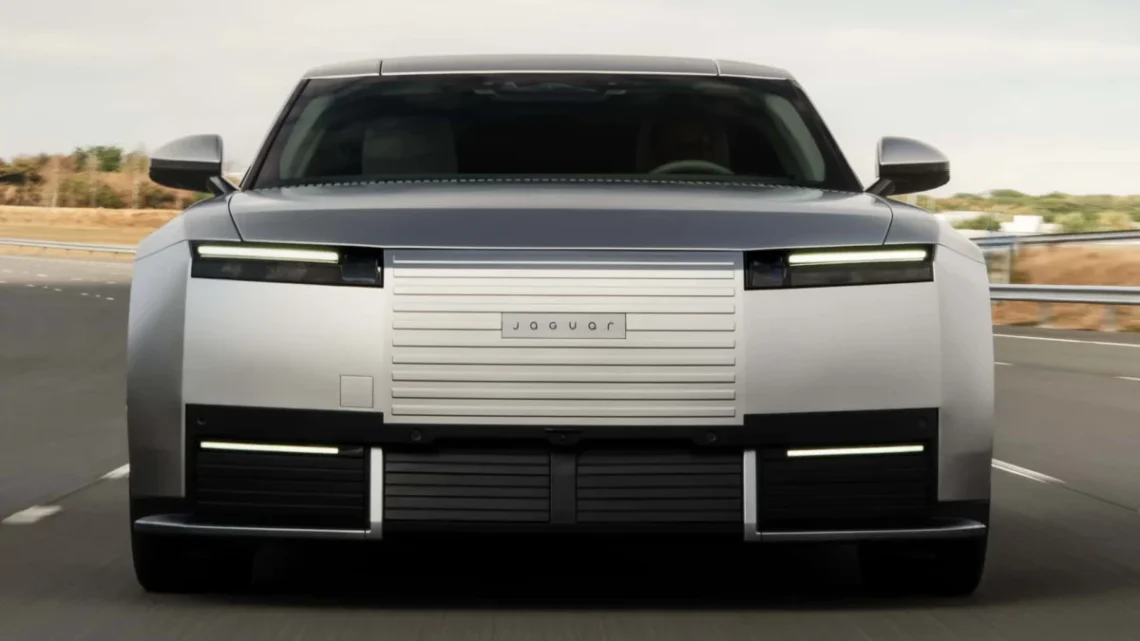
LONDON — Just over a month after Jaguar stunned the global automotive community with the debut of the Type 01—its striking new electric grand tourer—the historic British marque is already mapping out the next chapter of its reinvention. Recent intellectual property filings reveal that Jaguar has set its sights on a successor, signaling that the company’s bold, upmarket transformation is moving at a rapid pace.
As Jaguar transitions away from its volume-selling past to carve out a new niche among ultra-luxury titans, the automotive world is watching closely. With new trademarks, shifting market demands, and a complete philosophical overhaul, Jaguar is staking its survival on a high-risk, high-reward strategy.
Main Facts: The ‘Type 02’ Trademark and Jaguar’s New Direction
The most concrete indicator of Jaguar’s immediate future comes straight from the European Union Intellectual Property Office (EUIPO). Recently uncovered trademark filings reveal that Jaguar has officially secured or applied for the "Type 02" moniker.
This development follows the late-2024 unveiling of the Type 01, a sleek, avant-garde four-door electric grand tourer designed to reset the stylistic and cultural baseline of the brand. While the Type 01 serves as the dramatic curtain-raiser for Jaguar’s new all-electric era, industry analysts and insiders widely expect the subsequent "Type 02" to address a critical commercial reality: the overwhelming global demand for high-riding utility vehicles.
Though Jaguar executives have remained tight-lipped regarding exact body styles, company leadership has strongly hinted that future additions to the portfolio will branch out to capture different segments of the luxury market. Rawdon Glover, Jaguar’s managing director, noted shortly after the Type 01’s debut that upcoming models will deliver "different things for different audiences."
Given consumer preferences, a lucrative luxury crossover or SUV bearing the Type 02 designation is widely anticipated to follow the grand tourer, offering the increased practicality that luxury buyers demand while retaining the minimalist, understated design language introduced by its predecessor.
Chronology: From Volume Player to Ultra-Luxury Revival
To understand where Jaguar is heading, it is essential to look at the timeline of its dramatic corporate pivot under parent company Jaguar Land Rover (JLR):
- Pre-2023: Jaguar attempts to lock horns with mainstream German luxury mainstays (BMW, Mercedes-Benz, Audi) and Japanese competitors (Lexus), offering a broad portfolio of internal combustion engine (ICE) sedans, sports cars, and crossovers, anchored by volume sellers like the Jaguar XF and XE.
- 2023: Jaguar phases out production of several core gas-powered models as part of a sweeping strategy to clear the slate. At this point, the brand’s entry-level model, the XF sedan, started at under $50,000.
- Late 2024: Jaguar officially unveils the Type 01, a radical, low-slung, four-door electric grand tourer that signals an aggressive push upmarket. Deliveries for the Type 01 are slated to commence by the end of 2027, with a projected starting price hovering around $130,000.
- Early 2025: Jaguar files a European Union trademark for Type 02, confirming that product planning is already well underway for the brand’s second wave vehicle.
- Post-2027 (Projected): Following the market launch of the Type 01, the Type 02 (widely suspected to be an SUV or crossover) is expected to debut, eventually followed by a third model—potentially a large executive sedan—rounding out the initial tier of the new vehicle portfolio.
Supporting Data: The Massive Financial and Philosophical Shift
The numbers underlying Jaguar’s reinvention highlight a complete structural break from its recent history. For years, JLR’s management observed that trying to out-volume brands like BMW and Mercedes-Benz was a losing battle for Jaguar, leading to compressed margins and diluted brand equity.
The decision was made to cease chasing volume and instead target a much more exclusive demographic. The financial metrics of this shift are staggering:
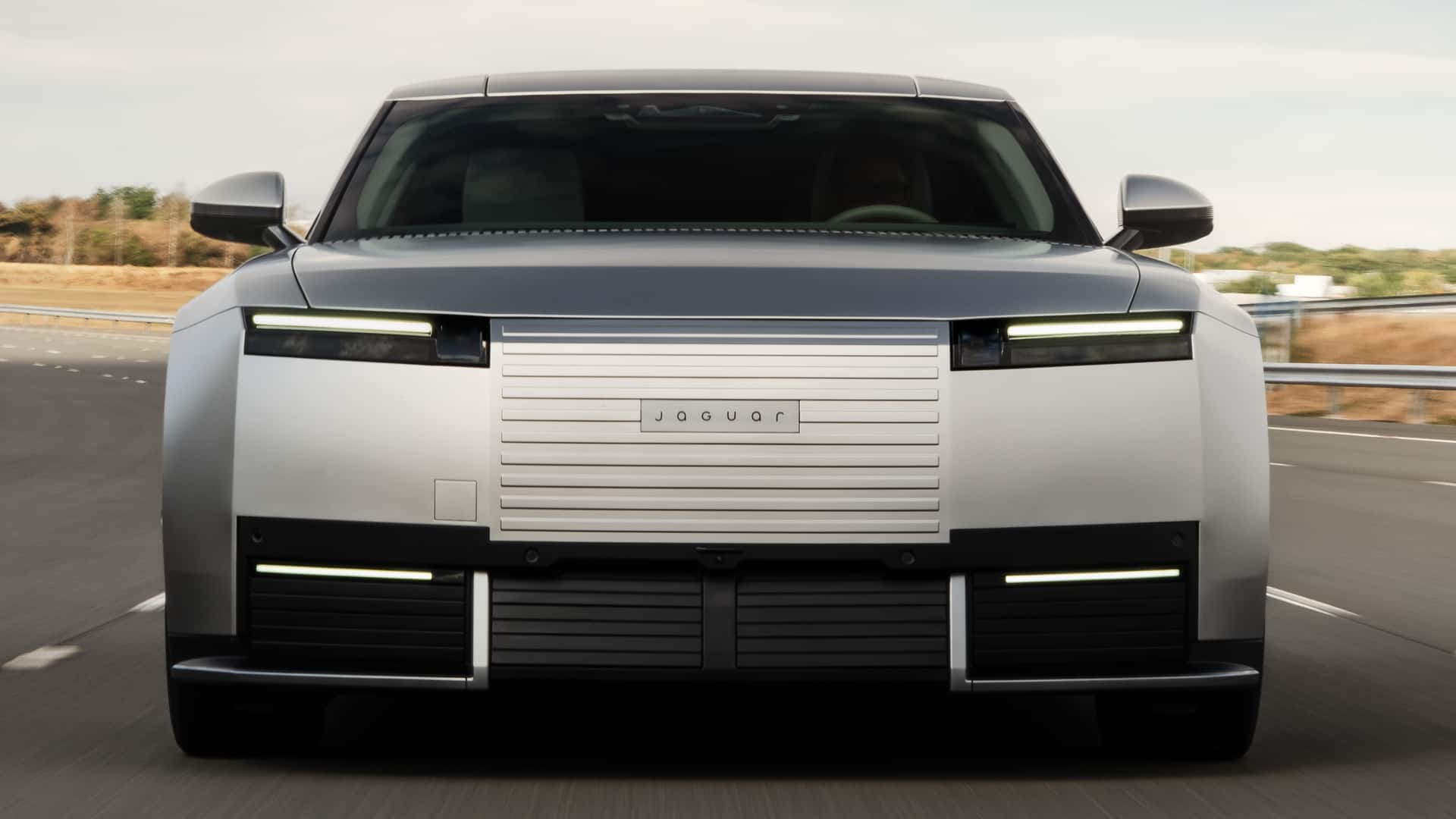
- Price Point Leap: In 2023, a buyer could purchase a brand-new Jaguar XF sedan for under $50,000. The upcoming Type 01 is expected to command a starting price of approximately $130,000—representing an immediate $80,000 barrier-to-entry inflation.
- Competitive Target Shift: Rather than measuring itself against mainstream luxury brands, Jaguar has explicitly positioned its future vehicles to compete alongside ultra-luxury houses such as Aston Martin, Bentley, and Mercedes-Maybach.
- Portfolio Rationalization: By killing off its entire legacy gas-powered lineup, Jaguar temporarily sacrifices short-term sales volume to preserve long-term exclusivity, betting that affluent consumers will embrace a clean-sheet, purely electric British luxury option.
Official Responses and Strategic Vision
Jaguar’s leadership has been transparent about why such a drastic measure was necessary. Company executives have repeatedly pointed out that the brand’s previous strategy of discounting cars to move volume was unsustainable and eroded the prestige associated with the historic "Leaper" badge.
Rawdon Glover and other key JLR decision-makers have emphasized that the brand’s revival cannot rely on a single halo car. While the Type 01 establishes the emotional resonance and design DNA for the new era, long-term viability requires a diversified lineup.
"You can expect different things for different audiences in the portfolio," Glover noted, confirming that while the Type 01 appeals to traditional grand tourer aficionados, subsequent models—such as the vehicle tied to the Type 02 trademark—will be engineered to capture broader, highly profitable luxury segments without sacrificing exclusivity.
Implications: A High-Stakes Gamble for British Motoring
The decision to trademark "Type 02" so soon after the Type 01 reveal underscores the urgency and ambition driving JLR’s boardrooms. However, this strategy carries profound implications for the automotive landscape.
1. The Risk of Alienating Loyalists
By abandoning internal combustion engines entirely and aggressively hiking prices past the $100,000 threshold, Jaguar is effectively cutting ties with its traditional customer base. Enthusiasts who bought affordable sports sedans or practical utility vehicles in the past will find themselves priced out of the new showroom ecosystem.
2. Direct Confrontation with Ultra-Luxury Giants
Competing against Bentley, Aston Martin, and Porsche in the electric vehicle space is a daunting endeavor. These brands possess immense brand equity, fiercely loyal clientele, and vast technological resources. Jaguar must prove that its minimalist design philosophy and bespoke craftsmanship can justify a six-figure price tag to buyers who have historically overlooked the brand in favor of continental rivals.
3. The Crucial Role of the Type 02 SUV
While grand tourers like the Type 01 generate headlines and critical acclaim, luxury crossovers and SUVs generate profit. If the vehicle expected to wear the Type 02 badge misses the mark—either in styling, range, or execution—the entire upmarket experiment could stall. Conversely, a successful luxury electric SUV could secure Jaguar’s financial foundation for decades to come.
As the countdown to the Type 01’s late-2027 delivery window continues, the emergence of the Type 02 trademark proves that Jaguar’s resurrection is not a one-off experiment, but a comprehensive, multi-vehicle crusade to reclaim its place at the pinnacle of British automotive luxury.