For all the strides battery-electric vehicles (BEVs) have made in recent years, a cloud of consumer anxiety continues to loom over showroom floors. While prospective buyers are increasingly comfortable with public charging networks, vehicle reliability, and upfront purchase pricing, a pervasive fear remains: what happens when the battery dies?
The narrative surrounding premature battery failure and the daunting prospect of a multi-thousand-dollar replacement bill has long served as a deterrent for cautious consumers. However, a comprehensive real-world data set released by Ford aims to dismantle these anxieties piece by piece. Examining tens of thousands of early-model electric SUVs, the Blue Oval’s findings indicate that fears of rapid battery degradation are largely overblown—and that modern EV power packs are vastly more resilient than the market gives them credit for.
Main Facts: What the Ford Data Shows
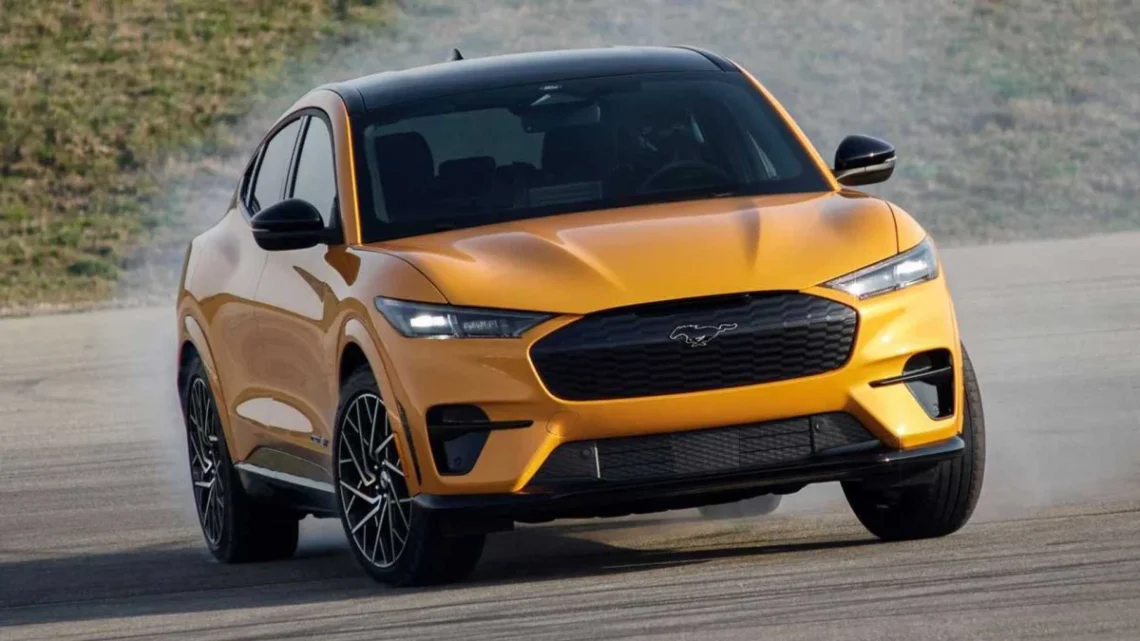
To evaluate the real-world health of its electric vehicle fleet, Ford analyzed the battery telemetry of approximately 36,000 first-year Mustang Mach-E SUVs from the 2021 model year. The results offer a surprisingly optimistic glimpse into long-term battery longevity.
According to Ford’s data:
- The Average Health: A staggering 95 percent of the analyzed 2021 Mustang Mach-Es retained between 87 percent and 97 percent of their original battery capacity.
- The Fleet Mean: Across the entire cohort of 36,000 vehicles, the average remaining battery health sat at an impressive 92 percent.
- High-Mileage Resilience: Ford originally engineered its EV battery systems to retain at least 90 percent of their health after 10 years or 100,000 miles. Real-world data confirms this benchmark is not merely theoretical. Among more than 2,000 Mustang Mach-Es that have pushed past the 100,000-mile threshold, the average battery health remains above 91 percent.
- The Hyper-Milers: More than 30 individual 2021 Mach-E units have crossed the 200,000-mile mark. Even among these high-mileage workhorses, the average remaining battery health sits comfortably at 88 percent.
It is worth noting that the vehicles compiled in this specific data set utilized nickel-cobalt-manganese (NCM) chemistry. While Ford and other automakers have increasingly integrated lithium iron phosphate (LFP) chemistry into newer vehicle lineups, the NCM data provides a foundational understanding of how modern EV packs withstand the test of time and high mileage.
Chronology: The Evolution of EV Battery Longevity Concerns
Understanding how the industry reached this point requires looking at how public perception and battery technology have evolved over the past decade and a half.
- Early 2010s — The Pioneer Era: When modern mass-market electric vehicles like the Nissan Leaf first hit the market, early adopters faced legitimate hurdles regarding thermal management. Without advanced liquid-cooling systems, early battery packs suffered from noticeable capacity loss in extreme climates, cementing an early reputation that batteries degrade rapidly.
- Mid 2010s — The Introduction of Active Management: Automakers quickly realized that passive air cooling was insufficient. The industry shifted universally to active liquid-thermal management systems, drastically reducing degradation rates and laying the groundwork for dependable long-term performance.
- 2021 — The Launch of Next-Gen Platforms: Ford launched the Mustang Mach-E, representing a new wave of dedicated, high-volume electric architectures built on sophisticated battery management software and robust chemical formulations designed to last the typical lifetime of an automobile.
- Present Day — Empirical Data Emergence: As the first generation of these dedicated EVs reach high odometer readings (100,000 to over 200,000 miles), automakers and independent researchers finally have the empirical telemetry needed to evaluate long-term health accurately. Studies consistently show that real-world degradation follows a predictable, flattened curve rather than a sudden drop-off.
Supporting Data: Broader Industry Trends
Ford’s findings are not an isolated anomaly. Across the broader automotive and tech research sectors, independent studies have continually echoed the same conclusion: modern EV batteries age gracefully.
Recent industry data reveals that electric vehicles with more than 150,000 miles on the odometer typically retain anywhere between 81 percent and 91 percent of their original energy storage capacity. Intriguingly, researchers have discovered that total vehicle mileage exerts a much smaller influence on battery longevity than day-to-day charging habits and environmental exposure.

Furthermore, the diversification of battery chemistries is changing the game. Lithium iron phosphate (LFP) packs—increasingly favored by manufacturers for entry-level and standard-range models—are structurally more robust and tend to exhibit exceptional longevity. Though LFP batteries possess lower energy density than their NCM counterparts and can experience temporary performance slowdowns in freezing winter weather, their cycle life makes them virtually bulletproof over years of daily commuting.
Official Responses and Manufacturer Recommendations
Automakers are well aware that consumer confidence hinges on battery transparency. By releasing detailed health data, Ford aims to demystify the technology and provide actionable advice for owners looking to maximize the lifespan of their investments.
According to Ford engineers, maximizing EV battery health comes down to intelligent thermal and charging management. The company outlines several core best practices for EV owners:
- Combat Extreme Temperatures: Temperature extremes remain one of the primary catalysts for accelerated battery wear. Ford recommends that owners precondition their vehicles—warming or cooling the cabin and battery pack while the vehicle is still plugged into a charger—to ensure the battery is at an optimal temperature before hitting the road. During scorching summer months, owners are advised to park in shaded areas or garages whenever possible.
- Prioritize Level 2 Charging: While DC fast chargers are indispensable for long-distance road trips, relying on them exclusively for daily charging can introduce unnecessary thermal stress to the pack. Ford suggests that owners primarily utilize Level 2 home or destination chargers for routine top-ups, reserving DC fast charging for when it is genuinely necessary.
- Leverage Smart Software: Modern EVs are packed with intelligent diagnostic tools. Ford encourages owners to utilize the Ford smartphone application, which delivers personalized charge-level recommendations tailored to the specific driving habits and battery health of their vehicle.
Implications: What This Means for the Future of the EV Market
The revelation that Ford’s Mustang Mach-E batteries retain over 90 percent of their health past 100,000 miles carries profound implications for the automotive landscape, particularly regarding the secondary market.
Transforming the Used EV Market
For years, residual values for used electric vehicles suffered because buyers feared buying a "lemon" with a degraded battery. If a used EV required a $15,000 battery replacement shortly after purchase, any upfront savings would instantly evaporate.
However, with real-world data proving that batteries outlast the typical mechanical lifespan of many traditional components—often retaining nearly 90 percent health even after 200,000 miles—used EV buyers can shop with newfound confidence. Recent sales trends, such as Ford F-150 Lightning owners reselling their trucks close to their original purchase prices, indicate that market perceptions are beginning to shift. Residual values are stabilizing as buyers realize that EV batteries do not have an expiration date stamped on the odometer.
Redefining Total Cost of Ownership
The economic calculus of owning an electric vehicle shifts dramatically when expensive battery replacements are removed from the hypothetical ledger. Without routine oil changes, spark plug replacements, timing belts, and exhaust repairs, an EV with a resilient battery boasts a remarkably low total cost of ownership over its lifetime.
As manufacturers continue to refine thermal management software, introduce durable chemistries like LFP, and back their hardware with robust warranties (typically 8 years or 100,000 miles), the specter of battery anxiety is slowly being laid to rest. The data is clear: modern electric vehicle batteries are not fragile electronics destined for an early grave; they are robust, automotive-grade power units engineered to go the distance.