Few regions on Earth possess the power to command the human imagination quite like the Congo Basin. Spanning a vast expanse of Central Africa, this thick, verdant quilt of forest and river systems—roughly the size of India—functions as one of the planet’s most vital ecological lungs. Yet, it remains an enigma: a place of profound scientific importance, staggering biodiversity, and a complex, often painful, human history. While the world frequently looks to the Amazon as the primary focus of climate discourse, the Congo Basin remains a largely under-researched, under-funded, and deeply misunderstood frontier.
A Legacy of Myth and Misery
The modern Western perception of the Congo Basin was largely forged in the crucible of the late 19th century. During the height of the "Scramble for Africa," explorers like the Welsh-born Henry Morton Stanley ventured into these depths, documenting a "region of fable and mystery." For those who followed, the Basin represented a blank space on the map, a tabula rasa upon which to project ambitions of glory, extraction, and imperial conquest.

Among these travelers was a young Polish sailor named Józef Korzeniowski. Haunted by the empty white spaces of the African interior, he felt a magnetic pull toward the continent. When he finally navigated the Congo River as a steamboat captain, he did not find the romanticized landscape of his childhood dreams. Instead, he witnessed the industrial-scale depravity of the Belgian trading companies—a system of colonization built on blood, rubber, and the systematic erosion of human dignity.
Korzeniowski, who would later reinvent himself as the novelist Joseph Conrad, poured this horror into Heart of Darkness. His transformation of the "upcountry agent" Mr. Klein into the infamous Mr. Kurtz turned the Congo into a literary archetype for the moral abyss of colonialism. However, as modern observers are beginning to realize, the "darkness" Conrad described was not inherent to the forest; it was a shadow cast by the greed of men who viewed the land merely as a resource to be plundered.

Chronology of a Changing Frontier
The trajectory of the Congo Basin has shifted from an age of imperial exploitation to one of precarious modern observation.
- 1874–1877: Henry Morton Stanley completes his landmark traverse, cementing the river’s role as a primary artery for colonial penetration.
- 1890s: The height of the Congo Free State’s brutal extraction practices, which decimated local populations and scarred the region’s social fabric.
- Late 20th Century: The emergence of modern conservation science begins to highlight the Basin’s role as a critical carbon sink, even as political instability limits consistent research.
- 2020s: The rise of digital-age exploration. Travel influencers and "extreme athletes" begin to document their journeys on platforms like TikTok, bringing a new, albeit sometimes superficial, form of visibility to the region.
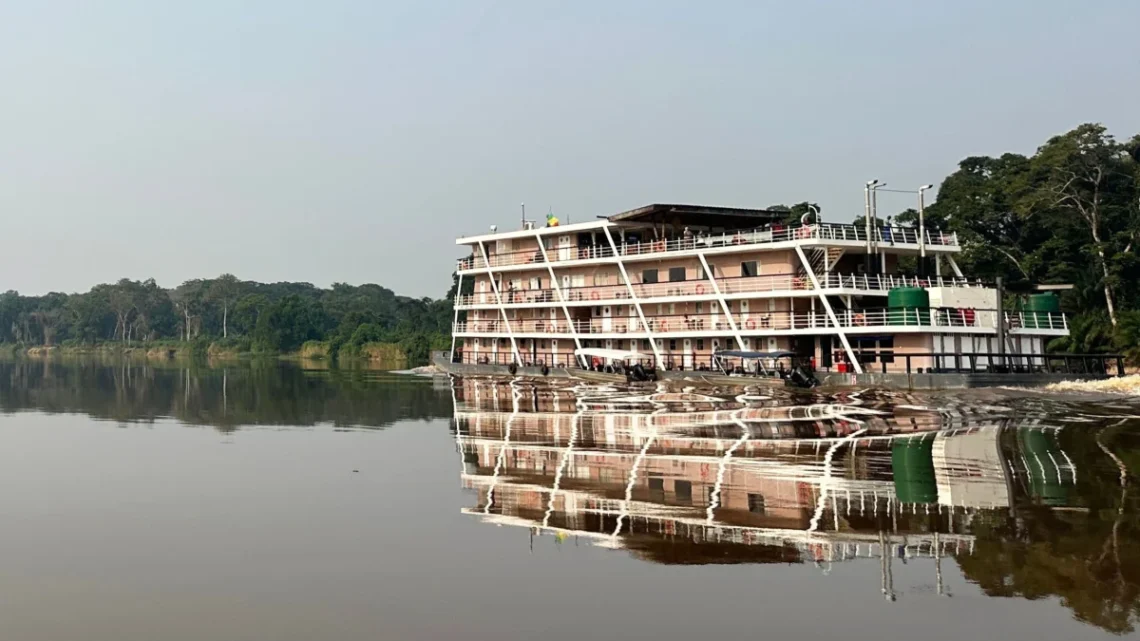
- Present Day: The debut of specialized, low-impact tourism, such as the Princesse Ngalessa cruises, marks a shift toward sustainable, respectful engagement with the Basin’s communities.
The Spectacle vs. The Reality
The recent trend of social media influencers venturing into the Congo Basin has sparked a debate regarding the ethics of adventure travel. Individuals like Ash Dykes have garnered millions of views by documenting their paddling expeditions down tributaries like the Sangha River. While these videos offer a window into the remote interior, critics argue they often rely on performative anxiety, inflating the "danger" of the journey to satisfy an algorithm.

In reality, the river is not a hostile monolith to be conquered; it is a living, breathing thoroughfare. While the influencer may appear bewildered in a high-tech inflatable boat, they are frequently surrounded by local populations who navigate the same waters with a grace and ease born of generations of intimacy with the environment. The true "extreme" nature of the region is not found in a lack of safety gear, but in the profound isolation and the intricate, delicate social structures of the people who call the forest home.
Supporting Data: An Ecological Titan
The Congo Basin is a staggering ecological force, covering approximately 500 million acres. Its significance cannot be overstated:

- Carbon Sequestration: The Basin is one of the world’s most significant carbon sinks. However, recent data from New Scientist indicates that parts of Africa’s forests are beginning to emit more carbon dioxide than they absorb, largely due to degradation and land-use changes.
- Biodiversity: Home to over 150 distinct ethnic groups and a vast array of endemic species—including Western lowland gorillas and forest elephants—the region is a biological reservoir of global importance.
- Research Deficit: Despite its size and ecological utility, funding for scientific research in the Congo remains alarmingly low compared to other major tropical forest regions. Conservation efforts are often fragmented, struggling against the dual pressures of local economic necessity and international neglect.
Official Responses and Conservation Mandates
International bodies, including the Congo Basin Forest Partnership (CBFP), have long advocated for increased investment in the region. The central challenge, however, remains the "protection paradox." Many conservation models have historically excluded the Indigenous populations—such as the Ba’aka people—who have managed these lands sustainably for millennia.
Recent shifts in policy suggest a move toward "community-led conservation." By integrating traditional ecological knowledge with modern scientific oversight, organizations are beginning to see that the most effective guardians of the forest are those who depend on it for their survival. As one local guide noted during a recent expedition, the goal is not to "protect the forest from the people," but to ensure the people have the agency to protect their own ancestral lands from industrial encroachment.

Implications: Humanity’s Mirror
Traveling through the Congo today, via the Princesse Ngalessa or by traditional pirogue, one realizes that the "heart of darkness" was a misnomer. The region is, in fact, a place of immense vitality. To observe the Ba’aka people as they coordinate a hunt—their senses attuned to every rustle of the canopy—is to witness a version of humanity that remains unsevered from the natural world.
The implications for the modern traveler are significant. There is a moral imperative to move away from the "conqueror" narrative. The Basin is not a prize to be checked off a bucket list; it is a complex, living system that deserves our reverence, not our exploitation.

As the sun sets over the Alima River, the air thick with the scent of damp earth and the distant, rhythmic pulse of drums, one is struck by a singular, clarifying thought: this place does not need to be saved by the world as much as the world needs to learn from it. The forests of the Congo remind us of a time before the digital, before the industrial, and before the alienation of the human spirit.
Ultimately, the Basin remains, as it has always been, a place of profound challenge. It challenges our assumptions about "progress," it challenges our history of exploitation, and most importantly, it challenges us to consider what it means to be truly human in a world that is rapidly losing its wild places. To visit is to be changed—not by the "triumph" of the journey, but by the quiet realization of our own small, interconnected place in a much larger, older, and more resilient story.