Main Facts
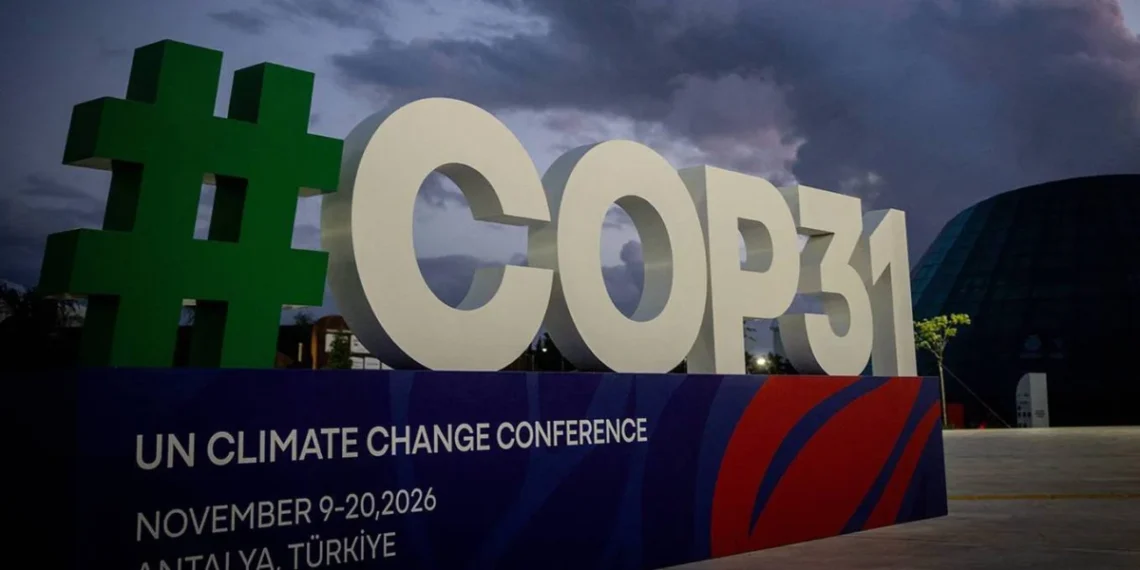
The architecture of global climate diplomacy is facing an existential reckoning. Following a contentious two-week summit in Antalya, Turkey, this year’s United Nations climate talks (COP31) collapsed without a final agreement. For the second consecutive year—following a similar impasse at COP30 in Belém, Brazil—nearly 200 nations failed to adopt a roadmap explicitly calling for the phase-out of fossil fuels.
The core structural flaws of the traditional UN Conference of the Parties (COP) process were once again laid bare. Bound by a consensus-driven framework, the UN climate apparatus grants any single nation or coalition—particularly those heavily dependent on hydrocarbon revenues—an effective veto over the final text. As a result, negotiations routinely default to the lowest common denominator, focusing heavily on emissions targets and national carbon accounting while sidestepping the root cause of global heating: the continued extraction, production, and supply of coal, oil, and natural gas.
Yet, outside the conference halls of Antalya, the global energy transition is hurtling forward at an unprecedented, if still insufficient, pace. Propelled by staggering cost reductions in green technology and shifting consumer preferences, market forces are achieving what consensus diplomacy has failed to deliver. Solar photovoltaic costs have plummeted by roughly 90% over the past decade, onshore wind expenses are down by some 70%, and battery storage technology has seen price drops exceeding 90%. Global clean-energy investment now consistently tops $2 trillion annually.
Recognizing these structural limitations, a "coalition of the willing" is beginning to bypass the UN bottleneck entirely. Eschewing the veto-plagued COP format, an emerging bloc of forward-leaning nations is pivoting toward a supply-side strategy. Modeled after historical minilateral frameworks like the Ottawa Treaty on landmines and the Oslo Process on cluster munitions, these countries are seeking to establish binding norms outside the UN umbrella. The central question for the global economy is no longer whether fossil fuels will be phased out—that outcome is increasingly viewed as an economic inevitability—but whether targeted policy coordination can accelerate this transition quickly enough to avert catastrophic climate tipping points.
Chronology of a Breakdown and the Rise of "Minilateralism"
The systemic paralysis visible at Antalya is the culmination of decades of diplomatic friction, punctuated by distinct milestones that highlight the widening gap between UN consensus and grassroots climate action.
- 1997 (The Precedent): Demonstrating that global norms can be established outside UN unanimity, Canada leads over 120 nations to sign the Ottawa Treaty banning anti-personnel landmines, successfully bypassing the UN disarmament forum where major powers routinely wielded vetoes.
- 2008 (The Playbook Repeated): The Norway-led Oslo Process yields the Convention on Cluster Munitions, further proving that minilateral treaties can constrain non-signatories and establish new international standards without universal initial buy-in.
- Late 2020s (The Belém Impasse): COP30 in Belém, Brazil, concludes without a definitive fossil-fuel roadmap, signaling deep fractures among developing and developed oil-producing nations over the timeline of a managed decline.
- April 2026 (The Turning Point): The First Conference on Transitioning Away from Fossil Fuels convenes in Santa Marta, Colombia, co-hosted by the Netherlands. Fifty-seven countries, representing roughly one-third of the global economy, assemble to discuss supply-side restrictions rather than merely debating end-use emissions targets.
- November 2026 (The Antalya Collapse): COP31 in Antalya, Turkey, breaks up on Sunday after a fortnight of gridlock. Delegations spend weeks arguing over whether the final text can even acknowledge the necessity of phasing out fossil fuels, ultimately resulting in a complete breakdown of consensus.
- Upcoming 2027 (The Next Frontier): The Santa Marta forum is scheduled to reconvene in Tuvalu, co-hosted with Ireland. In a profoundly symbolic move, a low-lying Pacific atoll nation directly threatened by rising sea levels will host a major international summit dedicated to dismantling the very industries driving its existential crisis.
Supporting Data and Economic Realities
The persistence of official diplomatic stalling contrasts sharply with macroeconomic and technological data. The energy transition is no longer driven purely by moral imperative or regulatory mandates; it is being dictated by the immutable laws of technological superiority and cost efficiency.
Technology Cost Reductions (Past Decade)
- Solar Photovoltaics: Down by approximately 90% globally.
- Onshore Wind: Down by approximately 70%.
- Battery Storage: Down by over 90%.
- Global Clean-Energy Investment: Surpassing $2 trillion annually.
The EV Disruption and Oil Demand
Transportation accounts for roughly 60% of global oil demand, with the vast majority consumed by internal combustion engine cars and trucks. Electric vehicles (EVs) represent a fundamentally superior technology: they are mechanically simpler, vastly more efficient, and feature significantly lower operational costs. As upfront purchase parity approaches in markets worldwide, consumer adoption curves are steepening. Market analysts suggest that once saturation hits a critical threshold, global oil demand will not merely plateau—it will experience a precipitous decline, potentially collapsing within the next decade or two.
The Macroeconomic Threat of "Fossilflation"
Geopolitical shocks, such as the recent conflict involving Iran, have brutally exposed the structural vulnerability of economies tethered to globally traded, volatile hydrocarbon commodities. Economists term this phenomenon "fossilflation"—the persistent inflationary pressure that occurs when national budgets, energy prices, and security frameworks are tied to oil and gas markets susceptible to sudden supply disruptions and regional conflicts. The macroeconomic fix for fossilflation is identical to the fix for climate change: an accelerated, orderly departure from fossil fuel dependency.
The Adaptation Finance Deficit
While markets are accelerating mitigation efforts through technological adoption, the financial architecture for adaptation remains severely underfunded. According to the United Nations Environment Programme (UNEP), wealthy nations provided only about $30 billion in public adaptation finance to developing economies in 2024—a negligible increase over the previous year. This shortfall underscores how the failure of comprehensive global agreements disproportionately harms vulnerable populations who lack the capital to buffer against locked-in warming.
Official Responses and Stakeholder Perspectives
The diverging paths of climate action have triggered starkly different reactions from nation-states, fossil-fuel incumbents, and civil society coalitions.
The Pro-Treaty Bloc and Vulnerable Nations
Countries facing existential threats from sea-level rise and extreme weather are leading the charge for legally binding supply-side constraints. Led by a vocal bloc of Pacific island states, alongside nations like Colombia, Pakistan, and the Netherlands, this coalition argues that focusing exclusively on demand-side emissions allows producers to shirk accountability.
"The traditional COP process is structurally incapable of addressing the root cause of our crisis," noted delegates at the Santa Marta forum. By championing a Fossil Fuel Non-Proliferation Treaty, these nations are attempting to shift international law toward treating coal, oil, and gas proliferation much like nuclear or chemical weapons proliferation.
Fossil Fuel Incumbents and Private Sector Pragmatism
Publicly, fossil fuel lobbyists continue to resist binding transition timelines within UN forums. Privately, however, corporate planning departments and major energy firms are already pricing in the end of the hydrocarbon era.
Giants such as ExxonMobil and Saudi Aramco have previously pledged to achieve net-zero emissions from their operational processes by 2050. While corporate rhetoric has occasionally softened amid shifting political winds, the underlying economic reality persists. Norway serves as a prime empirical model: its domestic market is nearly saturated with EVs, and its electrical grid operates entirely on renewable sources. Furthermore, even in Shell’s conservative "Archipelago" scenario—characterized by fragmented, nationalist, and slow-moving global policies—influential corporate forecasters still project the world reaching near-zero emissions by 2100.
Developing Economies and the Just Transition Dilemma
For developing nations dependent on cheap fossil fuels to power industrialization, the transition presents acute structural challenges. Official responses from these capitals emphasize that agreement on a final destination (net-zero) is vastly different from managing the sequence of arrival. Key questions remain unanswered by the current market boom: Who will finance the early retirement of coal-fired power plants? How will indebted nations restructure their balance sheets? And crucially, how will workers in fossil-dependent regions be compensated and retrained?
Implications for the Future of Global Climate Action
The breakdown of COP31 and the simultaneous surge of clean-energy markets signal a profound transition in how humanity tackles global warming. The era of relying exclusively on universal, consensus-bound UN treaties to dictate the pace of decarbonization is drawing to a close.
1. The Rise of Minilateral "Climate Clubs"
In the absence of a global consensus, trade policy and minilateral coalitions will fill the void. Concepts such as William D. Nordhaus’s proposed "climate club"—wherein participating nations enforce harmonized carbon tariffs or supply standards while excluding free-riders—offer a viable template. By uniting economies that account for significant shares of global GDP (such as the 57 nations represented at Santa Marta), a coalition of the willing can establish de facto global standards. Non-signatory nations and multinational corporations will ultimately be forced to comply with these standards simply to maintain market access.
2. Market-Driven Velocity vs. Managed Fairness
While markets will likely deliver a faster overall phase-out of fossil fuels than diplomats could ever negotiate, market forces alone cannot guarantee fairness. Unregulated transitions risk exacerbating global inequalities, leaving developing nations stranded with unpayable debts, abandoned fossil assets, and inadequate adaptation funding. Therefore, the success of future minilateral forums—such as the upcoming 2027 summit in Tuvalu—will depend heavily on their ability to mobilize public finance, sequence asset phase-outs, and institutionalize a genuinely just transition for displaced workers and vulnerable communities.
3. Redefining Diplomatic Success
Ultimately, the collapse in Antalya forces a realistic reappraisal of what international climate summits can achieve. COPs may no longer serve as effective legislative bodies capable of commanding global compliance; instead, they function increasingly as diplomatic barometers, exposing the friction between outdated economic models and unstoppable technological revolutions. As the center of gravity shifts toward coalitions of the willing, the future of climate action will be forged not by unanimous declarations in grand convention centers, but by the combined weight of market economics, strategic minilateral policy, and localized industrial transformation.