JOHANNESBURG — As the international order fragments and severe cracks widen across prevailing global economic blueprints, African nations find themselves squeezed by compounding climate emergencies and historic debt burdens. Multilateral institutions continue to steer the continent toward a traditional, uniform destination: a formal economy driven by industrial employment, steadily rising Gross Domestic Product (GDP), and technology transfer facilitated by foreign partners.
However, critics, economists, and grassroots leaders argue that this long-standing developmental destination was never a neutral or universally accessible path. The historical wealth of advanced economies was built largely upon colonial extraction and systemic exploitation. Today, as the global economy accelerates through green and digital transitions demanding critical African minerals, labor, and data, policymakers risk replicating these historical hierarchies and deepening global inequality.
To break this cycle, analysts assert that Africa cannot overcome its contemporary challenges by applying the same knowledge, economic, and innovation systems that helped create them. Imagining and governing new pathways forward requires three fundamental intellectual ruptures by multilateral development banks, donor agencies, NGOs, and African governments alike.
Main Facts: The Structural Crisis of African Development
The core challenge facing African development today is a profound mismatch between the structural frameworks imposed by international financial institutions and the lived socioeconomic realities of the continent’s populations.
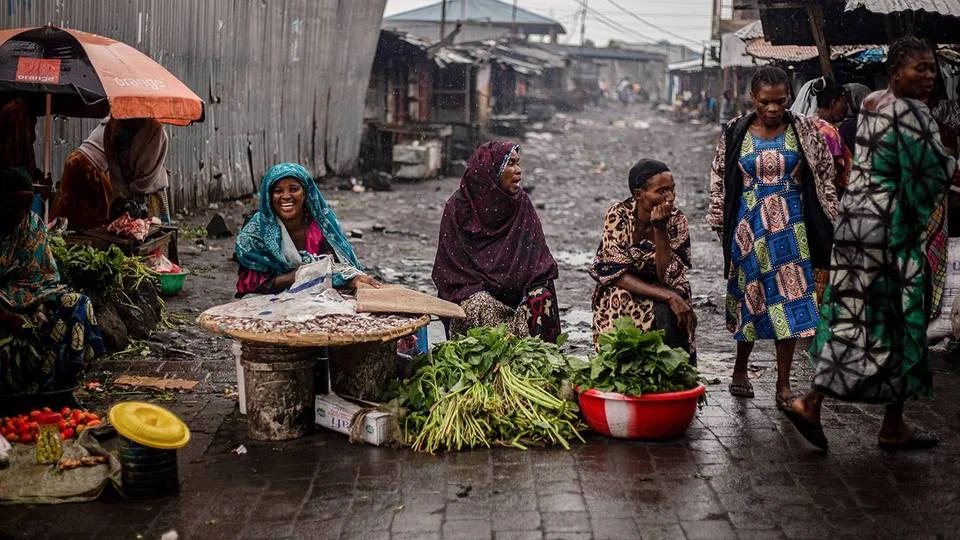
- The Dominance of Informality: In Sub-Saharan Africa, approximately 87.6% of the workforce is informally employed. These workers typically operate without job security, legal protections, or policy recognition, frequently combining wage work with small-scale trading, farming, caregiving, platform gigs, remittances, and communal enterprises.
- Global Inequality Disparities: Wealth concentration remains heavily skewed. Between 2000 and 2024, the richest 1% of the global population captured 41% of all new wealth generated worldwide, while the bottom half of humanity claimed just 1%.
- The Resource Trap: The global push for green technologies and artificial intelligence infrastructure increasingly relies on African raw materials and land. Without systemic changes, these transitions threaten to reproduce colonial models of extraction, leaving local communities with environmental degradation while economic windfalls flow abroad.
- The Three Intellectual Ruptures: Experts argue that overcoming these structural deadlocks requires a radical reimagining of:
- What counts as economic and innovative value.
- Where knowledge and institutional authority reside.
- How institutions act under uncertainty, moving away from rigid "solutionism."
Chronology: The Evolution of Global Development Paradigms in Africa
Understanding how Africa arrived at its current developmental crossroads requires tracing the evolution of economic policy models from the post-independence era to the present day.
1. The Post-Independence Industrialization Era (1960s–1970s)
Following independence from colonial rule, newly formed African governments prioritized state-led industrialization and modernization theories. Influenced by Western economic models, policymakers believed that capital accumulation, infrastructure development, and technology transfer would rapidly transition agrarian societies into modern industrial economies.
2. The Structural Adjustment Era (1980s–1990s)
Facing severe debt crises, African nations turned to the International Monetary Fund (IMF) and the World Bank. The resulting Structural Adjustment Programs (SAPs) imposed strict neoliberal conditions—including privatization, trade liberalization, and deep cuts to public spending. Rather than spurring sustainable growth, these policies frequently eroded state capacity, dismantled social safety nets, and widened economic inequality.
3. The Washington Consensus and the "Africa Rising" Narrative (2000s–2010s)
Entering the 21st century, the global discourse shifted toward poverty reduction strategies, market integration, and digital technology adoption. The mid-2010s saw widespread celebration of the "Africa Rising" narrative, driven by rising commodity prices and foreign direct investment. However, this growth often failed to generate quality formal employment or improve the distribution of wealth, leaving economies vulnerable to external shocks.
4. The Poly-Crisis and the Push for Reform (2020s–Present)
The convergence of the COVID-19 pandemic, escalating climate shocks, debt distress, and geopolitical fragmentation has exposed the limits of standard development models. Multilateral institutions continue to promote traditional industrialization and foreign-backed tech investments, prompting growing calls from African scholars and civil society for a fundamental overhaul of global governance and intellectual frameworks.
Supporting Data and Evidence
Empirical data underscores the deep disconnect between conventional economic metrics and the lived experiences of African populations.
- Informal Labor Statistics: According to International Labour Organization (ILO) data, 87.6% of Sub-Saharan Africa’s workers are engaged in the informal economy. Despite this overwhelming majority, public procurement, development finance, and formal business support mechanisms continue to treat formal registration, tax compliance, and conventional collateral as mandatory prerequisites for participation.
- Wealth Accumulation Trends: Reports from global inequality monitoring bodies highlight that wealth polarization has accelerated in the 21st century. The concentration of 41% of new wealth in the hands of the top 1% globally over a 24-year period demonstrates that current growth models predominantly benefit capital owners in advanced economies and domestic elites, failing to trickle down to informal and working-class populations.
- Infrastructure and Environmental Pressures: The rush to install AI hyperscaler data centers and green-transition mining operations has intensified pressure on local resources. Case studies from South Africa and elsewhere reveal mounting community pushback against data centers over water stress, increased pollution, and rising electricity tariffs—costs borne locally while economic benefits accrue externally.
Official Responses and Perspectives
The International Financial Institutions (IFIs)
Traditional multilateral development banks, donor agencies, and Western governments have historically defended standard economic frameworks, arguing that formalization, regulatory harmonization, and foreign investment are essential for long-term macroeconomic stability and poverty reduction. Proponents of this view maintain that integrating developing nations into global value chains is the most reliable path to sustained GDP growth.
African Civil Society and Grassroots Innovators
In contrast, civil society organizations, community foundations, and local innovators argue that top-down development agendas routinely ignore indigenous organizing logics.
- Sudan’s Emergency Response Rooms: During active conflict, grassroots networks successfully mobilized food distribution, medical care, and local relief operations, proving that operational capacity often resides in flexible, informal networks rather than slow-moving state-centered bureaucracies.
- Community Philanthropy in Kenya and South Africa: Local philanthropic networks have demonstrated that external financial support is most effective when channeled directly to community-led institutions rather than tied to rigid external project templates.
Implications: The Three Intellectual Ruptures in Detail
To move beyond the status quo, experts argue that global institutions and African policymakers must operationalize three fundamental intellectual ruptures.
1. Redefining Economic and Innovative Value
Development institutions must stop treating formal firms and salaried workers as the exclusive norm. While policymakers should avoid romanticizing informality or abandoning industrial policy, they must recognize that informal economic arrangements are permanent, durable survival mechanisms.
- Policy Shift: Rather than attempting to forcibly "formalize" informal workers into institutions designed without them in mind, governments should extend legal and social protections without erasing economic hybridity. Policymakers must evaluate innovations not merely by aggregate growth figures or patent counts, but by asking who owns them, who benefits, and who bears their risks.
2. Redistributing Knowledge and Institutional Authority
Innovation on the continent has never been confined to multinational corporations, university laboratories, and government ministries. It emerges daily through apprenticeships, communal stewardship, repair cultures, civic tech initiatives, and Indigenous knowledge systems.
- Policy Shift: Development institutions must recognize marginalized actors as legitimate knowledge producers. This requires sharing financial resources and decision-making authority directly with community-led innovators and informal networks, preserving local knowledge, and supporting intermediaries who bridge traditional and scientific knowledge systems.
3. Navigating Uncertainty: Beyond Solutionism to Institutional Hospicing
Under the weight of climate change, artificial intelligence disruptions, and geopolitical volatility, the traditional linear economic path from "developing" to "developed" status has proven to be a fiction. Governments are frequently rewarded for importing foreign "best practices" and penalized when local experimentation fails.
- Policy Shift: Institutions must move past rigid "solutionism"—the pursuit of easy, ready-made answers. Responsible governance requires questioning, delaying, or outright rejecting projects (such as resource-intensive data centers) whose public value has not been proven. Conversely, multilateral organizations must be willing to finance high-risk local experiments backed by transparent safeguards and community participation, while practicing "institutional hospicing"—the intentional winding down of harmful or obsolete systems.
Conclusion
The true test of global governance reform is not merely whether African nations secure a larger symbolic voice within existing international institutions, but whether those institutions can meaningfully respond to the continent’s diverse realities. By embracing these three intellectual ruptures—reconsidering sources of value, redistributing authority, and knowing when to experiment and when to let go—policymakers can lay the foundation for equitable, resilient, and truly self-determined development pathways across Africa.