Published: November 25, 2026
Author: TechCrunch News Desk
Category: Artificial Intelligence / Financial Markets
Main Facts
In a surprise development that has sent ripples through both Silicon Valley and Wall Street, S&P Global Ratings announced on November 25, 2026, that it is considering a credit rating downgrade for artificial intelligence titan Nvidia. Despite the chipmaker’s staggering financial performance and undisputed dominance in the generative AI hardware market, one of the world’s premier credit rating agencies is sounding the alarm over corporate governance, executive stability, and succession planning.
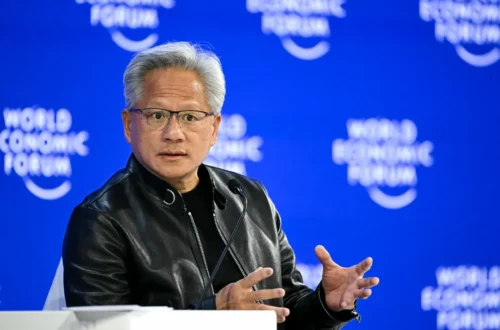
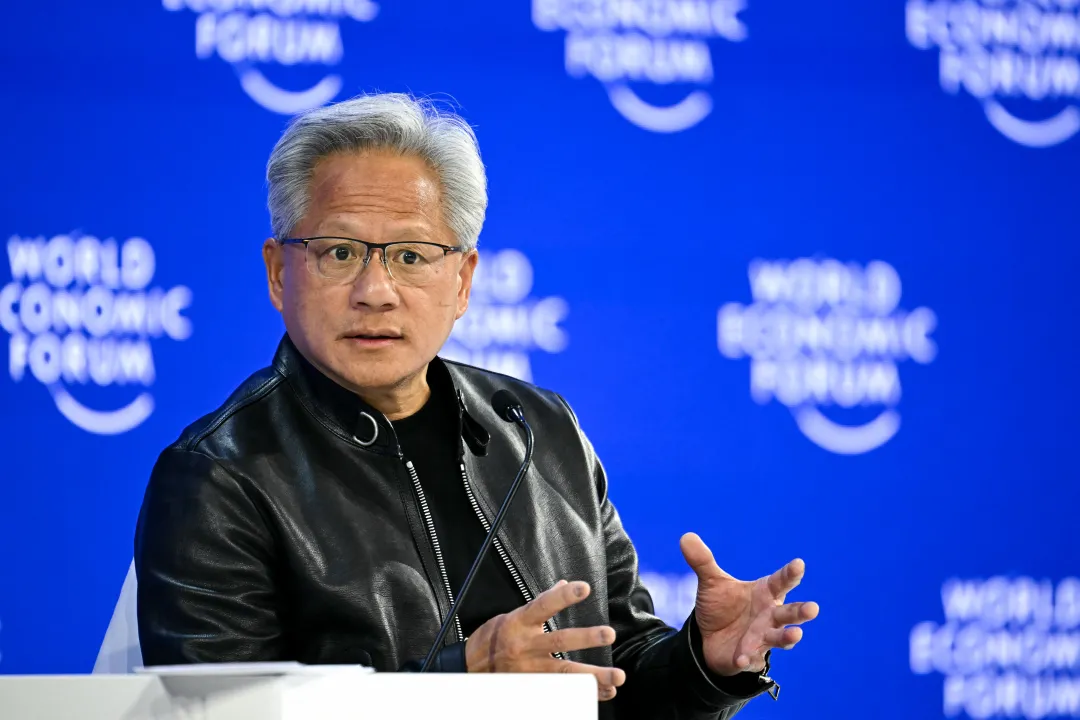
At the heart of S&P’s review is the recent, highly publicized drama surrounding the brief ouster and subsequent reinstatement of Co-founder and CEO Jensen Huang. While Nvidia’s balance sheet remains the envy of the technology sector, the ratings agency highlighted systemic vulnerabilities, specifically pointing to "weak executive oversight and a lack of succession planning." Furthermore, S&P underscored the
profound "key man risk" facing the organization—a heavy reliance on Huang’s singular vision and leadership for its ongoing strategic trajectory.
S&P Global Ratings has indicated that its formal review will conclude within a 90-day window. Should the agency decide to move forward with the downgrade, Nvidia’s credit rating would drop from AA to AA-, which still maintains its investment-grade status as the fourth-highest tier on the agency’s scale. However, even a minor numerical drop in creditworthiness carries sweeping systemic ramifications.
Because Nvidia acts as a crucial financial backstop for a web of emerging "neoclouds" and capital-intensive AI infrastructure providers lacking robust independent credit profiles, any upward pressure on Nvidia’s borrowing costs threatens to cascade across the entire AI ecosystem. Lenders are already reacting to the turbulence, and a finalized downgrade would likely force financial institutions to demand steeper loan guarantees for Nvidia’s ambitious multi-hundred-billion-dollar infrastructure ventures.
Chronology of Events
To understand how one of the world’s most valuable technology companies arrived under the microscope of credit rating agencies, it is necessary to examine the timeline of events leading up to this regulatory and financial juncture.
August 2026: The $500 Billion AI Financing Vision
Nvidia sent shockwaves through global financial markets by announcing an ambitious, sprawling $500 billion financing initiative designed to accelerate the buildout of global artificial intelligence infrastructure. Partnering with six major Wall Street financial institutions—including heavyweights such as Goldman Sachs, Apollo Global Management, and Blackstone—the plan was engineered to ensure that data center operators and cloud providers had continuous capital to purchase Nvidia’s high-end GPUs. Under the initial framework, Nvidia agreed to backstop or guarantee roughly 25% of the total loan pool.
November 12, 2026: Cracks in the Lenders’ Confidence
Even before internal executive disputes boiled over, cracks were forming behind closed doors. Bloomberg reported that lenders partnering with Nvidia on the $500 billion initiative were growing increasingly jittery about their exposure. Financial institutions began applying intense pressure on Nvidia to significantly increase its guarantee commitments, arguing that the underlying risk profile of independent neocloud data center operators was too volatile to justify a mere 25% backstop.
Mid-November 2026: The Huang Leadership Crisis
The underlying governance vulnerabilities that S&P would later cite burst into public view when internal board-level friction led to the sudden ouster of CEO Jensen Huang. Though the ouster was remarkably short-lived—culminating in a rapid reversal and Huang’s reinstatement following massive pushback from internal stakeholders, employees, and institutional investors—the damage to the perception of corporate stability had been done. The incident exposed deep fractures in Nvidia’s internal oversight mechanisms and brought the issue of CEO succession out into the open.
November 25, 2026: S&P Global Ratings Intervenes
Citing the chaotic leadership vacuum and mounting systemic liabilities, S&P Global Ratings officially placed Nvidia on CreditWatch with negative implications. The agency gave itself a 90-day window to thoroughly evaluate Nvidia’s corporate governance structure, risk management protocols, and reliance on key executives before rendering a definitive verdict on the AA credit rating.
Supporting Data and Financial Metrics
To contextualize S&P’s decision, it is vital to analyze the interplay between Nvidia’s stellar operational revenues and its increasingly complex financial liabilities.
The Scale of Nvidia’s Financial Footprint
Nvidia’s fiscal health has historically been characterized by record-breaking profit margins, hyper-growth in data center revenue, and billions in quarterly free cash flow. By traditional standalone metrics—such as debt-to-EBITDA ratios and cash reserves—Nvidia easily qualifies for top-tier credit ratings. However, credit rating agencies evaluate more than just cash on hand; they scrutinize contingent liabilities and off-balance-sheet risks.
The Neocloud Dependency Matrix
In the wake of the generative AI boom, dozens of specialized, independent cloud providers ("neoclouds") emerged, purchasing tens of thousands of Nvidia Blackwell and subsequent architecture GPUs. Many of these startups and mid-tier infrastructure firms rely heavily on debt financing. To keep the hardware pipeline moving, Nvidia has increasingly stepped in as a financial guarantor, backstopping loans that traditional banks would otherwise deem too risky.

The following breakdown illustrates the scale of financial exposure tied to Nvidia’s ecosystem:
- Total Proposed AI Infrastructure Financing: ~$500 Billion
- Number of Core Financial Partners: 6 major institutions (including Goldman Sachs, Apollo, Blackstone)
- Initial Nvidia Guarantee Threshold: 25% of total loan volume (subject to upward revision)
- Current S&P Credit Rating: AA (Under review for potential downgrade to AA-)
The Cost of Borrowing
While a drop from AA to AA- does not push Nvidia into "junk" or speculative territory, it does alter the pricing dynamics of debt issuance. Institutional bondholders demand higher yields from AA- issuers compared to AA issuers to compensate for perceived incremental risk. More importantly, because Nvidia’s credit rating serves as the foundational anchor for its broader ecosystem backstops, a rating downgrade directly impacts the borrowing costs of the very companies purchasing its hardware.
Official Responses and Market Reactions
The announcement by S&P Global Ratings has triggered swift commentary from market analysts, corporate governance watchdogs, and institutional investors.
S&P Global Ratings’ Official Stance
In its formal release, S&P explicitly called out the governance gap exposed by the leadership shakeup:
"The sudden departure and subsequent return of CEO Jensen Huang underscore vulnerabilities in Nvidia’s executive oversight and highlight a distinct lack of institutionalized succession planning. Furthermore, the high degree of strategic dependence on Mr. Huang introduces a structural ‘key man risk’ that is increasingly difficult to reconcile with a pristine AA credit rating, particularly as the company’s financial commitments to external AI infrastructure ventures expand."
Wall Street and Lenders’ Perspective
Banking sources speaking anonymously to financial publications noted that S&P’s warning validates the private anxieties lenders have held for weeks. One senior debt capital markets executive remarked:
"When you are underwriting hundreds of billions of dollars in AI infrastructure loans backed by a single technology manufacturer, stability at the top isn’t just a corporate culture talking point—it’s the core collateral holding the entire financing structure together. If Jensen Huang sneezes, the whole ecosystem catches a cold. Lenders need certainty, and recent events proved that governance can be fragile even at the world’s most valuable companies."
Nvidia’s Position
Nvidia representatives have defended the company’s operational resilience and robust governance framework, emphasizing that the leadership matter was resolved swiftly and harmoniously. Management maintains that the company’s financial fundamentals remain exceptionally strong, and executives are actively engaging with S&P Global Ratings during the 90-day review period to provide clarity on risk management protocols and long-term succession planning strategies.
Implications for the Broader Tech and AI Industry
The potential downgrade of Nvidia’s credit rating goes far beyond corporate governance semantics; it threatens to alter the financial plumbing of the entire artificial intelligence boom.
1. Tightening Credit for Neoclouds
Independent cloud providers are the primary engine driving immediate GPU absorption. If Nvidia’s credit rating is lowered, lenders participating in the $500 billion financing consortium will face stricter regulatory and internal risk-management requirements. To offset a downgraded backstop from Nvidia, financial institutions are expected to demand that Nvidia increase its direct loan guarantees well beyond the initial 25% threshold, or require neoclouds to post significantly higher collateral. This could squeeze smaller AI infrastructure players out of the market, consolidating computing power into Big Tech balance sheets (such as Microsoft, Google, Amazon, and Meta).
2. A Reckoning for Founder-Led Tech Governance
Silicon Valley has long celebrated the "founder-led" model, where charismatic visionaries like Steve Jobs, Elon Musk, and Jensen Huang exercise near-total control over corporate strategy and execution. However, S&P’s action signals a shifting paradigm on Wall Street. As tech companies grow to trillion-dollar macroeconomic pillars, credit agencies and institutional investors are demanding institutional maturity, transparent succession plans, and independent board oversight that can withstand sudden leadership crises without threatening global financial stability.
3. The 90-Day Countdown
As the 90-day review clock ticks down, all eyes will remain fixed on Nvidia’s board of directors. To preserve its credit standing—and by extension, ease the borrowing conditions for its critical client ecosystem—Nvidia may be forced to formally institutionalize structural governance reforms, appoint a clear heir apparent, or restructure its financial backstops with Wall Street lenders.
Whether Nvidia can satisfy S&P’s rigorous governance criteria within this window will serve as a definitive litmus test for how traditional financial institutions police the chaotic, high-stakes world of the artificial intelligence revolution.