DEARBORN, Michigan — The storied legacy of Ford at the 24 Hours of Le Mans is written in blood, sweat, high-octane drama, and checkered flags. From the legendary GT40 sweeping the podium in the 1960s to the emotional GTE Pro class victory in 2016 exactly half a century later, the Blue Oval’s relationship with the world’s most grueling endurance race is foundational to its motorsport identity.
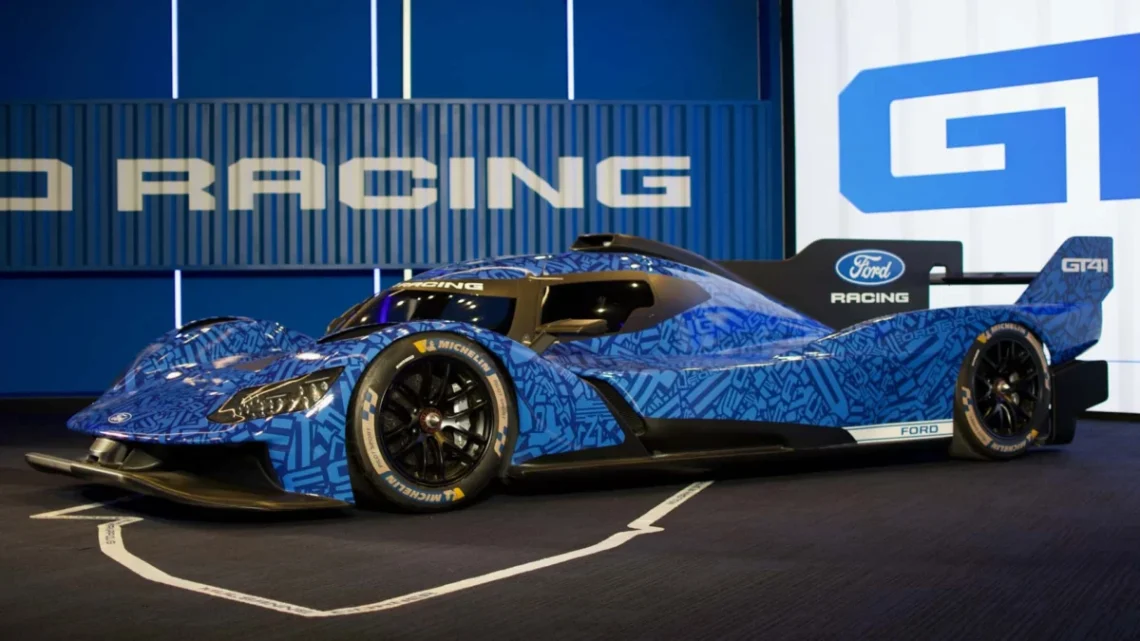
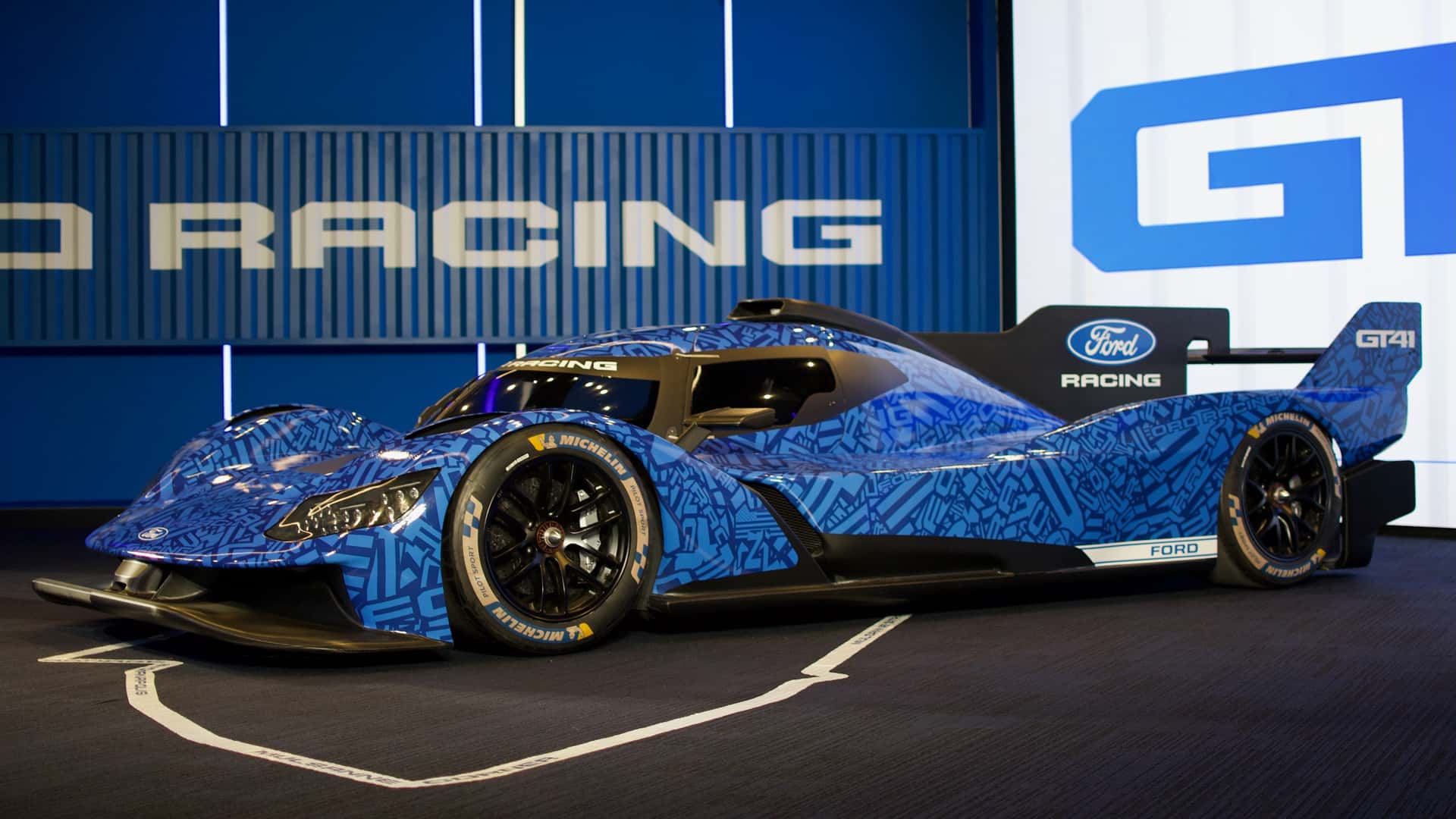
Now, Ford Motor Company is preparing for its most ambitious endurance racing chapter in decades. When the automaker returns to the premier hypercar class of international sports car racing, it will do so with an entirely new weapon: the Ford GT41.
Officially debuting to the public with a high-profile unveiling, the GT41 is named directly in homage to its legendary ancestor, standing precisely 41.0 inches tall—matching the exact roofline height of the original GT40. Beneath its striking aerodynamic bodywork lies a point of immense corporate and engineering pride: a naturally aspirated 5.4-liter hybrid V8 engine developed entirely in-house. Eschewing the outsourced development paths common in modern motorsport, Ford Racing has taken on the massive challenge of designing, building, calibrating, and validating the powertrain completely within its Dearborn facilities.
Main Facts: Anatomy of a Hypercar
The Ford GT41 represents a clean-sheet approach to top-tier endurance racing. Designed to compete in the grueling World Endurance Championship (WEC) and the crown-jewel 24 Hours of Le Mans, the hypercar class demands extreme reliability, incredible efficiency, and relentless performance.
At the heart of the GT41 program is its bespoke powertrain. While many manufacturers lean on pre-existing architectures or collaborative motorsport engineering firms, Ford Racing opted for a purely localized endeavor. The engine begins its life on the standard assembly line as a conventional Coyote block destined for Ford production vehicles. Once selected for race duty, the block is shipped directly to a specialized, unassuming workshop tucked inside Ford’s historic dynamometer laboratory complex in Dearborn.
Key specifications and program highlights include:
- The Name: Derived from its 41.0-inch height, mirroring the iconic GT40.
- The Powertrain: A naturally aspirated 5.4-liter hybrid V8 engine.
- In-House Control: Ford Racing is leading the development of mechanical parts, engine calibration, proprietary software, and low-voltage electrical systems governing ancillary components like lighting and wipers.
- Global Campaign: The GT41 will contest all nine rounds of the 2027 World Endurance Championship, kicking off in Qatar and culminating in Bahrain.
Chronology: The Road to the GT41
The path to the GT41’s debut has been executed at a breathtaking, almost aggressive pace, reflecting the urgency of Ford’s motorsport ambitions.
- Late 2024 to 2025: Conceptualization and preliminary design phases of the hypercar program begin in earnest. Ford Racing makes the pivotal strategic decision to keep engine development, software coding, and systems integration completely in-house.
- Approximately 15 Months Ago: Engineers carve out and establish a compact, 800-square-foot engine build room just steps away from the dynamometer cells in Dearborn. This tight-knit layout intentionally bridges the physical gap between assembly and validation.
- February 2026: The very first completed Ford GT41 race engine is transported down the hall for its initial dynamometer evaluation, marking a critical milestone for the powertrain team.
- December 2026 – January 2027: The program shifts heavily into physical track-testing mode, putting prototype vehicles through punishing durability simulations ahead of the racing season.
- Late November 2026: Official public debut of the GT41, showcased prominently at Ford Field during a Detroit Lions Thanksgiving game, paired with a cinematic commercial directed by Zack Snyder and featuring actor Matt Damon.
- March 2027: The GT41 makes its competitive racing debut at the opening round of the 2027 World Endurance Championship in Qatar.
- June 12, 2027: The ultimate test arrives as the Ford GT41 takes the grid for the historic 24 Hours of Le Mans.
- November 2027: The WEC season concludes in Bahrain, wrapping up the hypercar’s inaugural racing campaign.
Supporting Data: Inside the Labyrinth of Dearborn
To understand how Ford intends to conquer Le Mans once more, one must look inside the unassuming brick buildings of the automaker’s dynamometer laboratory. Constructed originally in 1949 and expanded over the decades, the facility is a sprawling labyrinth of long, identical corridors housing over 100 test cells.
This historic site has hummed with the sounds of internal combustion for generations. Just a dozen feet from where Ford once tested its legendary Le Mans-winning powerplants of the 1960s, a pair of Ford Racing technicians now assemble the GT41 engines inside a modest 800-square-foot room.
The build room itself defies modern expectations of hyper-sterile, high-tech cleanrooms. It is tight and utilitarian: a long counter runs down one side, consuming a third of the floor space. Two engine stands occupy the rear, while rolling parts carts packed with meticulously organized, Ford-built components crowd the entrance. A simple door at the back opens into a narrow storage closet.
Yet, this unpretentious setup is precisely what gives Ford Racing its competitive edge. By keeping the engine builders, software engineers, and test cell operators within the exact same building—a first for Ford’s modern racing initiatives—communication bottlenecks are eliminated. If a technician has a question or an engineer notices an anomaly during a simulated run, the team is right down the hall.
During a media walkthrough of Test Cell 4, a spare GT41 engine was hooked up to simulate a full race simulation. Outside the cell, a large monitor tracked live telemetry data while exhaust headers glowed a brilliant, searing red as the naturally aspirated 5.4-liter V8 wailed, perfectly emulating the brutal throttle loads of the Mulsanne Straight. Notably, this exact dyno cell was recently used to validate the production 795-horsepower supercharged 5.2-liter V8 destined for the Mustang Dark Horse SC—marking the first time a production engine had been validated in that specific bay in over two decades.
Official Responses: "There Is Only Us"
The decision to shun external motorsport engineering houses and handle the hypercar powertrain entirely on home soil was a deliberate, high-stakes gamble. Christian Hertrich, Ford Racing Powertrain Chief Engineer, spoke candidly about the philosophy driving the program.
"We can’t say that for a lot of programs," Hertrich noted, contrasting the GT41 with Ford’s collaborative efforts in GT3, NASCAR, and standard GT racing. For the hypercar program, he emphasized, "There is only us."
Hertrich harbors no illusions about the difficulty of the path ahead, embracing the reality of competitive racing development. "We will succeed, but in the process to succeed, we will fail, and those failures are ours."
This ownership of both the triumphs and the trials fosters a unique engineering culture within the Dearborn labs. By building, calibrating, and testing everything from high-pressure fuel components down to low-voltage software routines for wipers and lighting, Ford Racing retains complete intellectual control over the GT41’s performance profile.
Implications: A New Era for The Blue Oval
The unveiling and subsequent racing debut of the Ford GT41 carry profound implications for the company, both on the racetrack and in the broader automotive landscape.
From a competitive standpoint, entering the WEC hypercar class places Ford directly in the crosshairs of global titans like Ferrari, Porsche, Toyota, and Cadillac. Success at Le Mans is no longer just about raw straight-line speed; it requires intricate energy management, supreme reliability over 24 hours of relentless mechanical stress, and flawless strategic execution. By managing the powertrain end-to-end, Ford Racing ensures that any competitive advantage—or deficiency—rests squarely on its own shoulders.
Culturally and commercially, the GT41 reinforces the bridge between Ford’s rich motorsport heritage and its cutting-edge production vehicle engineering. The technological knowledge gained from developing a high-revving, hybrid V8 racing powertrain inevitably filters down into future high-performance road cars, validating the durability of Dearborn’s engineering methodologies.
As the calendar ticks down toward the opening round in Qatar this March and the ultimate showdown at Le Mans in June 2027, the pressure on the small team in Dearborn is immense. But as the exhaust headers glow red in the test cells and the GT41 prepares to take to the world stage, Ford Racing has made one thing abundantly clear: the Blue Oval is back in the hypercar arena, and it is doing it entirely its own way.