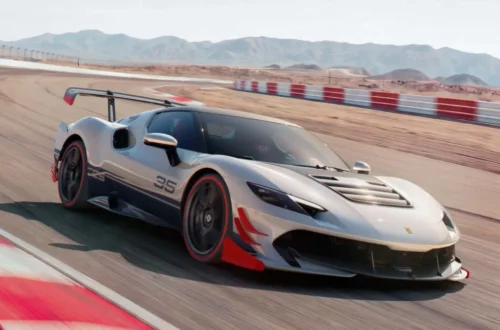
For purists and speed enthusiasts, few automotive monikers carry the evocative weight of the "Stradale" badge. Conjuring images of the legendary 360 Challenge Stradale and the aggressive 430 Scuderia, Ferrari’s lineage of road-legal, track-focused supercars represents the absolute pinnacle of driving dynamics. Now, the legendary Italian marque has introduced its latest iteration: the Ferrari 296 Challenge Stradale. Packing a ferocious 670 horsepower from a pure, non-hybrid internal combustion engine, this hardcore machine strips away excess weight and electrification to deliver an unfiltered, analog-leaning experience for the open road and the circuit alike.
With a starting MSRP of roughly $307,000 before a single option box is ticked, the 296 Challenge Stradale is already an exclusive plaything for the ultra-wealthy. However, true to the brand’s bespoke ethos, few owners will ever take delivery of a standard, factory-spec model. Ferrari has officially launched its online car configurator for the 296 CS, opening up a Pandora’s box of wild, carbon-heavy, and deeply personalized customization options. Spending a half-hour navigating the tool reveals just how far an owner can go—and how quickly the price tag can skyrocket.
Main Facts: The Anatomy of the 296 Challenge Stradale
To understand the context of configuring a 296 Challenge Stradale, one must first understand the machine itself. Unlike its plug-in hybrid sibling, the standard 296 GTB, the Challenge Stradale discards heavy electrical components in pursuit of pure, unadulterated track performance.
- The Powertrain: At its heart beats a twin-turbocharged engine churning out a colossal 670 horsepower, delivered strictly to the rear wheels without the aid of electric motors.
- The Cost of Entry: The base price begins at approximately $307,000. However, because this is Ferrari, the base price merely serves as a blank canvas.
- The Customization Ecosystem: The online configurator offers 35 distinct paint colors, multiple multi-material livery packages, extensive carbon-fiber component upgrades, lightweight Lexan glass replacements, six unique wheel designs, and a multitude of interior trims and seating configurations.
- The Philosophy: Every added option serves a dual purpose—either to maximize aerodynamic and weight-saving performance on the track or to indulge the aesthetic whims of the buyer.
Chronology: From Concept to Configurator
The path to the 296 Challenge Stradale’s digital debut represents the typical, highly calculated product lifecycle of a modern Maranello special-edition model.
Phase 1: The Engineering Shift Away from Hybridization
As emissions regulations tightened, Ferrari mastered hybrid performance with the SF90 and the standard 296 GTB. However, feedback from track-day enthusiasts and racing clients made it clear that a segment of the clientele desired a lighter, simpler, driver-focused machine free of battery weight. Engineers set to work developing a non-hybrid variant that could bridge the gap between pure motorsport machinery (like the 296 Challenge race car) and road legality.
Phase 2: The Physical Reveal and Pricing Announcement
Ferrari officially pulled the covers off the 296 Challenge Stradale, sending shockwaves through the automotive community. Touting 670 horsepower and an aggressive aerodynamic profile, the car was initially priced at a baseline of $307,000. While steep, market analysts immediately recognized that the true financial hurdle would not be the base MSRP, but rather the heavy toll of Ferrari’s "Tailor Made" and optional extras catalog.
Phase 3: The Digital Launch of the Online Configurator
To keep prospective buyers and automotive enthusiasts engaged, Ferrari pushed the official 296 Challenge Stradale configurator live on its global portal. Allowing users to digitally paint, spec, and accessorize the supercar, the tool instantly became a digital playground. Enthusiasts began sharing their ideal builds across social media, sparking intense debates over paint choices, carbon fiber utilization, and interior trim specifications.
Supporting Data: Diving Deep into the Configurator Options
A deep dive into the 296 Challenge Stradale’s digital configuration tool reveals an astonishing array of ways to tailor the supercar. The options are systematically split into exterior aesthetics, aerodynamic enhancements, rolling stock, and interior personalization.
Paint Options Aplenty: 35 Shades of Maranello
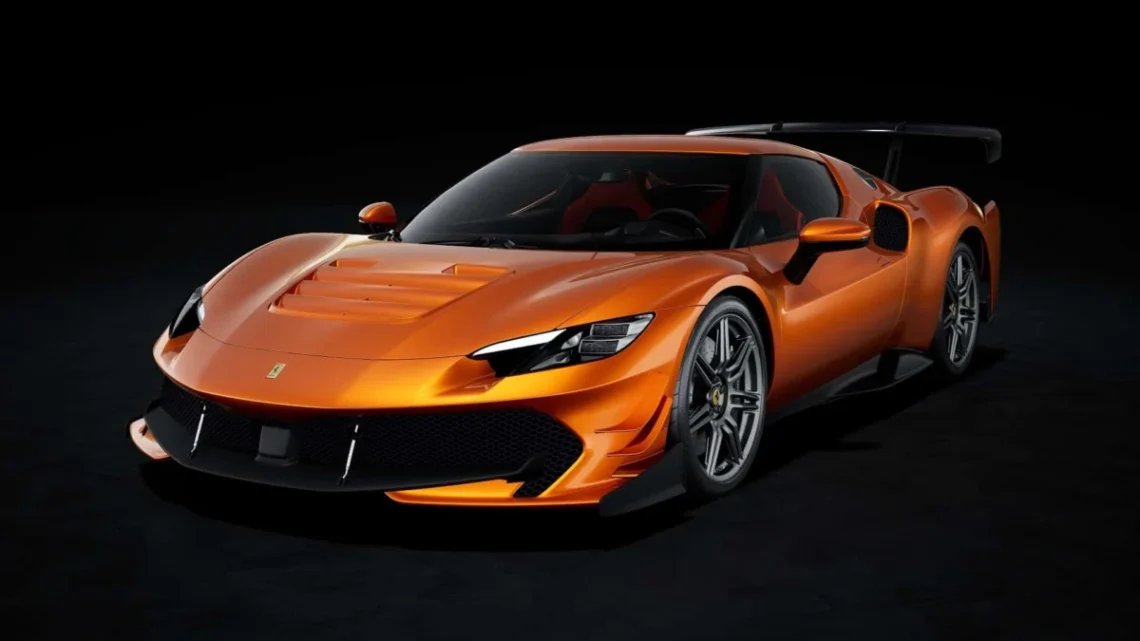
Ferrari divides its paint palette into four distinct categories: Standard, Historical, Classic, and Special. While traditionalists will inevitably gravitate toward iconic hues like Rosso Corsa or Giallo Modena, daring buyers can venture into unique territory. For instance, choosing Giallo Ambra—a striking, high-end metallic orange—transforms the car’s visual posture from classic racer to exotic modern art.
Beyond solid colors, Ferrari offers a comprehensive selection of livery packages. Owners can select upper- and lower-body graphics, aggressive wing decals, and classic racing door numbers. Interestingly, the natural lines of the 296 Challenge Stradale are so remarkably sculpted that the car looks exceptional in a single, unbroken block of color, making liveries an optional luxury rather than a mandatory aesthetic fix.
The Carbon Fiber Diet and Lexan Glass
True to its track-bred heritage, the car’s options list reads like a weight-reduction manifesto:
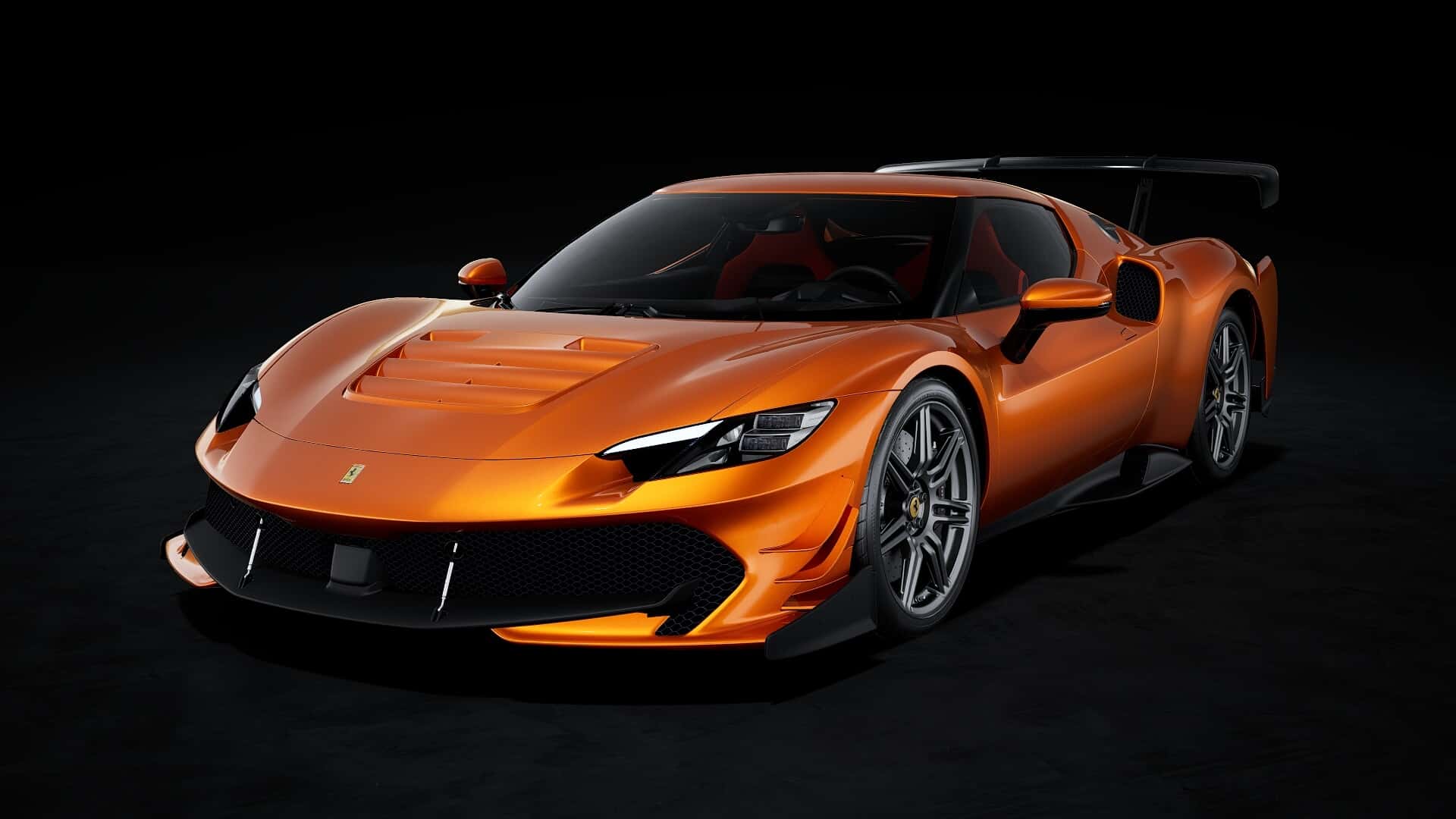
- Carbon Fiber Everywhere: Just about every exterior panel and aerodynamic appendage can be upgraded to visible carbon fiber. This includes the aggressive front splitter, the rear diffuser, and even the engine covers.
- Lexan Windows: For buyers seeking maximum weight savings, traditional glass can be entirely replaced with Lexan—a lightweight polycarbonate material straight out of professional motorsport.
- Badge Deletion: Purists can opt to ditch the classic metal Prancing Horse badges on the front fenders entirely, or replace them with flush-painted alternatives to reduce drag and clean up the body lines.
Shoes, Brakes, and Wheels
Choosing the right stance is critical. Ferrari provides six distinct wheel designs, spanning light silver finishes, gunmetal grays, and deep gloss blacks. Customization extends down to individual wheel bolts (with titanium options available) and center caps.
When it comes to rubber, Ferrari partners with Bridgestone and Pirelli, offering compound variations tailored primarily for road use or track duty. Notably, Pirelli offers two "Color Edition" tire variants featuring subtle yellow or gray sidewall accents. Behind the wheels, the massive carbon-ceramic brake system can be customized with calipers available in eight different shades, ranging from understated silver and black to vivid red and yellow.
Interior Appointments: Alcantara, Stitching, and Displays
Inside the cockpit, modifications skew toward functional minimalism mixed with bespoke luxury.
- Seating Choices: Buyers must choose between standard Racing seats and ultra-lightweight "Best Weight" buckets. While Ferrari remains tight-lipped on exact weight savings and padding densities, the latter clearly prioritize lateral support over long-distance touring comfort.
- Upholstery and Stitching: The cabin can be draped in one of seven different Alcantara shades. Furthermore, 26 distinct stitching colors are available. Matching contrast stitching—such as Filo Spec Flash Orange against a dark Alcantara interior—ties the exterior paint scheme directly into the cockpit. The lower dashboard can also be color-matched across 22 different options.
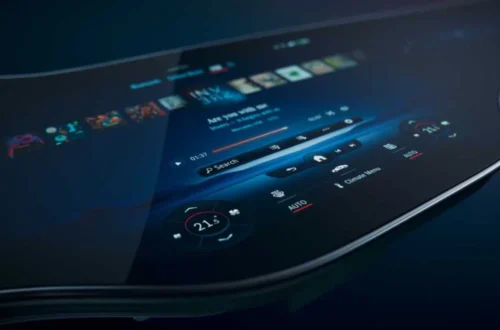
- The Passenger Display: In a nod to modern digital integration, Ferrari offers an optional passenger-side digital display. While somewhat incongruous in a stripped-down track car, it allows a co-driver to monitor telemetry—or, amusingly, stream media during a long transit to the track.
Official Responses and Manufacturer Intentions
Ferrari’s product strategy surrounding the 296 Challenge Stradale reflects a delicate balance between modern regulatory pressures and the brand’s core identity.
In official communications, Ferrari executives have emphasized that the car is designed for drivers who want a visceral, mechanical connection to the road. By intentionally omitting the complex hybrid systems found in the standard 296 lineup, the engineering team prioritized acoustic purity, sharp throttle response, and a lower center of gravity.
Regarding pricing and the extensive options list, Maranello has maintained its traditional silence within the digital configurator itself. No prices are displayed next to the carbon fiber splitters, titanium bolts, or custom Alcantara hues. Representatives note that pricing is strictly a matter between the client and their authorized dealer network—a policy that ensures elite clientele negotiate their bespoke builds in private salons rather than viewing itemized sums online.
Implications: What the 296 Challenge Stradale Means for the Supercar Market
The arrival of the Ferrari 296 Challenge Stradale and its accompanying online configurator carries significant implications for both the brand and the broader high-performance automotive landscape.
1. The Survival of the Pure ICE in an Electrified Era
As governments worldwide push toward aggressive electrification mandates, pure internal combustion engines are rapidly disappearing from production lines. By offering a 670-horsepower, non-hybrid track weapon, Ferrari is throwing a bone to purists who fear the complete digitization and hybridisation of the supercar. The 296 Challenge Stradale proves that traditional engineering still has a vital, highly lucrative place in the market.
2. The Lucrative Business of Bespoke Personalization
The digital configurator highlights how vital vehicle customization has become to Ferrari’s bottom line. With a base price of $307,000, it is a near-certainty that average transaction prices will soar past $400,000 once clients begin layering on carbon fiber packages, custom paint formulas, and specialized interior trims. Program personalization remains one of the highest-margin sectors for luxury automakers, turning car sales into full-scale artisan projects.
3. Track-Ready Road Cars as Collector Investments
Historically, Ferrari’s "Stradale" and "Scuderia" models—from the 360 Challenge Stradale to the 488 Pista—have enjoyed phenomenal residual values, often appreciating well beyond their original sticker prices. The 296 Challenge Stradale is positioned to follow this exact trajectory. Because it represents a unique, non-hybrid evolutionary branch of the 296 family, collectors are already lining up to secure allocations.
Ultimately, whether an enthusiast uses the online configurator to build a subtle, understated track weapon or a brilliantly loud orange-and-carbon exhibition piece, the Ferrari 296 Challenge Stradale reinforces one undeniable truth: Maranello still knows how to build a driver’s car that captures the imagination.