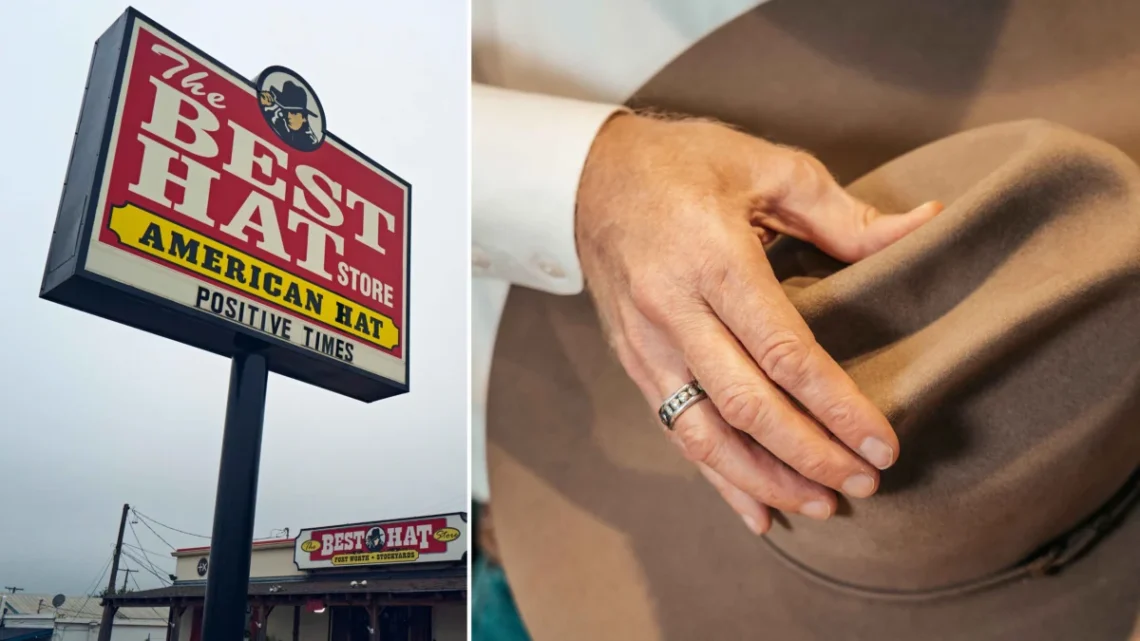
In the heart of Fort Worth, Texas—just a stone’s throw from the historic, cobblestoned charm of the Stockyards—a sensory experience awaits that feels less like retail and more like a pilgrimage into the soul of the American West. Stepping into "The Best Hat Store," one is immediately enveloped by the distinct, earthy scent of heated beaver felt. The air is thick with a mixture of nostalgia and industry; steam curls in slow, rhythmic plumes from professional shaping stands, and the low hum of conversation is punctuated by the sharp "clink" of a cold Coors Light being passed between old friends across a scarred wooden counter.
This is not a souvenir shop where mass-produced polyester replicas gather dust. This is an institution of heritage, a place where the cowboy tradition is not merely sold, but actively, painstakingly preserved. Here, rows of unshaped, open-crown hats sit in states of potential, waiting for the skilled hands of a master shaper to transform them into a piece of functional art.
The Craft of the Crown: A Living Tradition
To walk into The Best Hat Store is to witness a disappearing language of craftsmanship. Danny Adams, the store’s manager and a veteran of the trade for 13 years, carries himself with the quiet confidence of a man who understands that his work is defined by instinct rather than a blueprint.

"We’ve got to size you up," Adams says, his handlebar mustache twitching with a smile. There are no tape measures here. Instead, the process is tactile—a series of experienced glances, a gentle pressure of the palm, and a deep understanding of head geometry.
The art of hat-shaping is an oral and kinesthetic tradition. "There’s no school for this," Adams explains. "It’s a language of its own. It depends on how you were taught, the nuances of your mentor’s touch, and how you evolve those techniques over the years."
The staff, which includes veterans like Lalo Morales—who brings 35 years of expertise to the floor—treats each hat as a unique entity. Using steam, heat, and precise hand pressure, they mold the felt. They don’t rely on rigid templates; they rely on the "eye," the feel of the material, and a deep-seated knowledge of what a hat must be to withstand the rigors of ranch life or the scrutiny of a rodeo arena.

A Chronology of Craft: Three Decades of Heritage
The legacy of The Best Hat Store is one of family, persistence, and a refusal to compromise on quality. The store celebrated its 30th anniversary this past March, marking three decades since Susan Maddox and her late husband, Keith—affectionately known in the industry as "The Hat King"—opened their doors in 1990.
The year 2003 served as a critical pivot point for the business. The Maddox family acquired the legendary American Hat Company, a cornerstone of Western manufacturing founded in 1915. This acquisition allowed them to control the quality of the product from the manufacturing phase all the way to the final, custom-shaped crown.
Today, the business remains a family-driven endeavor. Susan Maddox continues to steer the ship, working alongside her daughters, Treasure and Mercedes. Mercedes, a CPA, manages the financial health of the enterprise, while Treasure, who balances a career in hotel marketing, remains a vital voice in the company’s strategic vision. They represent the next generation of custodians for a brand that has become synonymous with the Fort Worth Stockyards.

The Evolution of the Cowboy Hat
The cowboy hat, as we know it today, was never intended to be a fashion statement. It was born of the 19th-century American West, a piece of essential equipment for cattlemen who lived their lives in the saddle. It was a tool designed to survive the elements—the brutal Texas sun, the unpredictable prairie rain, and the grit of the trail.
The design was an amalgamation of practical influences: the wide brims and high crowns of Mexican vaquero headwear, the structural integrity of military-issued hats, and the durable felts favored by early settlers. Over time, the materials evolved, but the requirements remained the same: density, resilience, and the ability to hold a shape.
This is why beaver felt remains the gold standard. Unlike wool or synthetic blends, high-grade beaver felt is prized for its ability to be steamed, molded, and reshaped repeatedly without collapsing. It is a living material that records the history of its wearer—the way it is pinched, the way the brim rolls, and the specific way it sits on the brow.

Supporting Data: The Pulse of the Stockyards
The location of The Best Hat Store is as strategic as it is symbolic. The Fort Worth Stockyards host more than 10 million visitors annually. It is a historic district that refuses to be static, with daily longhorn cattle drives serving as a reminder of the city’s roots.
The Fort Worth Stock Show and Rodeo, founded in 1896, remains the oldest continuously running livestock show and rodeo in the United States. For the competitors who travel from across the country to test their mettle in the arena, a hat from this store is more than an accessory—it is a piece of necessary equipment.
The store’s influence extends far beyond the Texas border. Its hats, marked by the distinctive "+X" (or "positive times") logo, are a common sight at Professional Bull Riders (PBR) tours and high-stakes skijoring events across the mountainous West.

According to owner Susan Maddox, the manufacturing process is a testament to the labor of love: "Every hat is handmade, touched by up to 24 hands before it ever leaves the factory." This manual touch, in an age of automated assembly lines and disposable fashion, is exactly what keeps the store relevant.
The Human Element: Official Perspectives
The staff at The Best Hat Store acts as the interface between history and the modern consumer. For the staff members, the job is deeply personal. Ryan McBride, a manager who works alongside Danny Adams, views the shaping process as a dialogue with the customer.
"It works best if the person is right in front of you," McBride says while working a black Cattleman hat over a steamer. "When we’re shaping like we know how, it takes years of practice to get to this point. Other places use machines to press them at the factory, but that’s what makes us stand out. We can shape any of these to our liking, to fit the specific contours of a person’s face."

This commitment to individual service has created a loyal following. Customers range from grizzled ranch hands with dust still on their boots to international tourists passing through for global events like the FIFA World Cup. Regardless of the client’s background, the goal remains the same: to send them off with a hat that fits not just their head, but their lifestyle.
The Implications: Is the Art of Hatmaking Dying?
"People might consider this a dying art," Susan Maddox admits, reflecting on the difficulty of finding new talent with the patience required to master the craft. "Finding folks with the knowledge and the dedication to learn every step of the process isn’t always easy."
The implication of this statement is clear: the preservation of these skills is not guaranteed. In a fast-paced retail landscape where speed and margin often trump quality and heritage, workshops like The Best Hat Store are becoming rare sanctuaries. They represent a "slow retail" movement that was here long before the term was coined.

By inviting the public to witness the process—from the raw, uncreased felt to the final, hand-brushed finish—the store is actively engaged in cultural education. Every time a visitor walks through the door, they aren’t just buying a product; they are participating in the maintenance of a tradition that helped build the American West.
Beyond the Fort Worth Border: A National Network
While The Best Hat Store stands as a pillar in Texas, it is part of a broader national network of heritage hatters who are keeping the flame alive. Institutions such as Greeley Hat Works in Colorado, which has been shaping customs since 1909, and Rand’s Custom Hats in Montana, which has spent five decades refining the craft, share a common mission.
Whether it is the bespoke service of the Burns Cowboy Shop in Utah or the legacy manufacturing of brands like Stetson and Resistol, the industry remains anchored by a few key players who refuse to automate the soul out of the hat. These institutions, much like The Best Hat Store, have achieved a near-pilgrimage status, attracting collectors and traditionalists who understand that a custom-shaped hat is an investment in quality that lasts for generations.

Conclusion: A Lasting Impression
As the steam settles and the final crease is set on a customer’s new hat, there is a tangible sense of satisfaction that permeates the store. It is a fleeting, yet profound, connection between the artisan and the individual.
In a world that is increasingly digital, mass-produced, and disconnected from the origins of the things we own, The Best Hat Store provides a grounded alternative. It is a place where the scent of beaver felt, the heat of the steamer, and the calloused hands of the makers serve as a bridge to the past.
As Danny Adams notes, "You really get to know the person you’re working with by the time they leave." That, perhaps, is the true value of the institution. It is not just about the hat on your head; it is about the story you take with you when you walk back out into the bright Texas sun. In an era of rapid change, The Best Hat Store remains a steadfast, welcoming, and essential piece of the American story—proving that true craftsmanship never goes out of style.