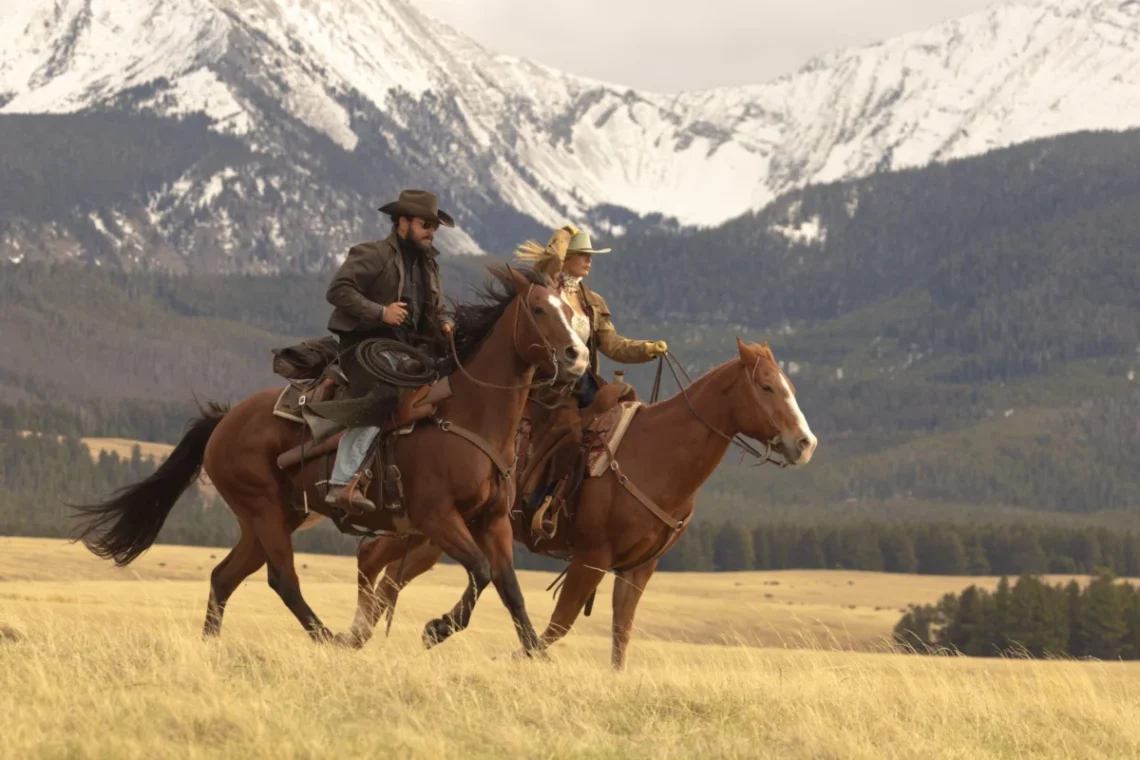
In the landscape of modern television, few creators possess the myth-making potency of Taylor Sheridan. With the premiere of Dutton Ranch, the latest expansion of his sprawling American saga, the narrative gravity shifts from the snow-dusted, jagged ridgelines of Montana to the sun-baked, expansive horizons of Texas. As Beth Dutton (Kelly Reilly) and Rip Wheeler (Cole Hauser) find themselves displaced following the destruction of their ancestral Montana homestead, they arrive in the Lone Star State—only to discover that while the scenery has changed, the volatility of their existence remains a constant companion.
Main Facts: A New Chapter in the Sheridan Universe
The premise of Dutton Ranch is one of forced reinvention. When the Montana ranch—the heart of the original Yellowstone series—succumbs to fire, the central duo migrates to Rio Paloma, Texas. This relocation serves as a structural pivot for the franchise, trading the verdant, high-altitude drama of the North for the dusty, unforgiving aesthetic of the South.
However, the change in geography does not equate to a change in fortune. Beth and Rip’s arrival in Texas quickly pits them against formidable local power brokers, most notably Beulah Jackson (Annette Bening), the matriarch and iron-fisted owner of the rival 10 Petal Ranch. The series maintains the hallmark Sheridan synthesis of high-stakes ranching drama, Shakespearean family feuds, and a penchant for "dogged American drama" that has captivated millions.
.jpg)
The Chronology of Production and Aesthetic Evolution
The visual identity of Dutton Ranch is a deliberate departure from its predecessor. Yvonne Boudreaux, the show’s production designer—who also lent her expertise to Yellowstone—notes that her task was to synthesize the established brand of the franchise with a distinct "Texas makeover."
"Authenticity is everything," Boudreaux asserts. Born in Louisiana and a 22-year resident of Texas, married into a seventh-generation Texan family, Boudreaux treated the production as an exercise in regional immersion. She describes the color palette for the series as a "sunrise," pulling directly from the local environment: the muted greens of agave, the ochre of the dust, and the deep, sun-bleached tones of the earth.
The series is punctuated by specific, location-driven beats that ground the fictionalized conflict in real-world geography:

- The Pilot Phase: Initial filming established the tone of the relocation, focusing on the transition from the charred ruins of the Montana estate to the arid, hopeful potential of Rio Paloma.
- The Conflict Escalation: Mid-season, the tension between the Duttons and the 10 Petal Ranch intensifies, utilizing the grand, 23,000-square-foot estate in Ferris, Texas, to showcase the opulence of the Jackson family.
- The Finale: The season concludes during a timeframe echoing America’s 250th anniversary, bringing the series’ political subtext to a head.
Supporting Data: The Geography of Dutton Ranch
To capture the "South Texan story" that Sheridan intended, the production team utilized a mosaic of real-world locations, blending historical architecture with meticulously crafted sets.
Weatherford: The Heart of the Ranch
Located 30 minutes west of Fort Worth, Weatherford serves as the primary setting for the new Dutton operation. The production secured a 2,500-acre, sixth-generation family ranch that has been in operation since 1934. This choice was strategic; the modest, rugged appearance of the land contrasts sharply with the gilded halls of Beulah Jackson’s estate. Furthermore, Lake Weatherford provided the backdrop for the intimate, emotionally resonant scenes between Carter (Finn Little) and Oreana (Natalie Alyn Lind), grounding the high-octane drama in quieter, human moments.
Granbury: The Site of Ruin
Granbury, situated south of Weatherford, was selected for its expansive, rolling acreage. It was here that the production staged the harrowing fourth-episode sequence in which the Duttons must confront the total loss of their herd due to foot-and-mouth disease—a moment of profound tragedy that serves as a visceral metaphor for the fragility of the ranching lifestyle.

Dallas and the Urban Frontier
The show does not shy away from the juxtaposition of rural tradition and urban luxury. The scenes featuring Beth Dutton’s sharp-tongued entry into the Hotel Swexan were filmed on-site. According to Boudreaux, the use of actual chefs from the hotel in the background of these scenes was a deliberate effort to bypass the artificiality of studio-filmed catering sequences, ensuring the "grit" of the performance remained palpable.
The "Small Town" Illusion
While the town of Cotulla served as the conceptual inspiration for the fictional Rio Paloma—valued for its historic, "rundown" aesthetic—the actual filming was dispersed. Rio Paloma’s "local watering hole," The Split Heart Bar, was modeled after the Roughnecks Bar and Grill in Rio Vista. The production team took exhaustive measurements of the real-world venue to reconstruct a functional, accurate set on their Fort Worth soundstage, allowing for greater control over the lighting and cinematography of key scenes.
Official Responses and Creative Vision
The creative team behind Dutton Ranch views the show as a mirror for the current American political and social climate. The dialogue is intentionally charged. In the finale, the character Mariano (Raoul Max Trujillo) delivers a line that has become a touchstone for the show’s themes: "You’ve built a kingdom in a country that hates kings."

This dialogue is not accidental. It speaks to the "Shakespearian" nature of the conflicts within the series. By juxtaposing the dynastic wealth of the 10 Petal Ranch with the scrappy, survivalist nature of the Duttons, Sheridan is forcing an exploration of the American dream’s darker side.
Yvonne Boudreaux’s commitment to the "family archive" aesthetic in the Jackson mansion—filling the shelves with historical relics and the walls with hunting trophies—was designed to evoke the heavy weight of history that characters like Beulah Jackson carry. It is a visual representation of power that is slowly being encroached upon by the newer, more desperate energy of the Duttons.
Implications: The Future of the Yellowstone Universe
The reception of the first season has been, by all metrics, significant. Despite the unsettling nature of the finale, which leaves many of the central conflicts unresolved, Paramount+ has already greenlit a second season.

The implications for the industry are clear: the "Sheridan Universe" has successfully transitioned from a regional western drama into a trans-state cultural phenomenon. By moving the narrative to Texas, the series has tapped into a different set of cultural signifiers—oil, massive landholdings, and the unique brand of Southern Gothic opulence that defines the Texas elite.
The success of Dutton Ranch suggests that the audience’s appetite for these stories is not tied to a specific location, but to the archetype of the "dogged American drama." As the production moves into its next cycle, viewers can expect a deepening of the themes introduced in the first season: the struggle between old money and new grit, the environmental challenges of modern ranching, and the ever-present, simmering threat of violence that defines the Dutton legacy.
Whether the "kingdom" built by the Jacksons will survive the encroachment of the Duttons remains to be seen. However, as the production team prepares to return to the limestone walls and high grass of North Texas, one thing is certain: the landscape of the American West, in all its iterations, continues to be the most compelling character in the Taylor Sheridan canon. The migration of the Duttons is not just a change of address; it is a transformation of the American myth for a new, more complicated era.