By Brahma Chellaney
July 10, 2026
The self-immolation of exiled Tibetan activist Lobga Rangzen outside the United Nations headquarters in New York on July 2 was not a spontaneous act of personal despair. It was a harrowing, final plea—a desperate attempt to jolt an indifferent international community out of its lethargy regarding one of the most critical geopolitical and humanitarian crises of the 21st century: the systematic erasure of Tibet.
As Rangzen’s life ended in flames at the doorstep of the world’s foremost diplomatic institution, the symbolism could not have been more piercing. While the United Nations remains paralyzed by internal bureaucracy and geopolitical maneuvering, China’s campaign to extinguish the distinct identity, culture, and religious heritage of the Tibetan plateau has reached a point of no return. The international community’s silence in the face of this cultural genocide is not merely a failure of policy; it is a profound moral failure that carries long-term implications for the stability of Asia and the integrity of the international rules-based order.
The Facts: A Cultural Erasure in Real-Time
For decades, the Chinese Communist Party (CCP) has viewed the Tibetan plateau not as a sovereign or distinct entity, but as a strategic buffer zone and a resource-rich frontier. Under the current leadership, however, the strategy has shifted from administrative control to comprehensive assimilation.
The erasure is multi-dimensional:
- Language and Education: Tibetan-medium schools are being phased out in favor of standardized Mandarin curricula. Children are increasingly separated from their families and placed in state-run boarding schools where they are isolated from their native language and cultural practices.
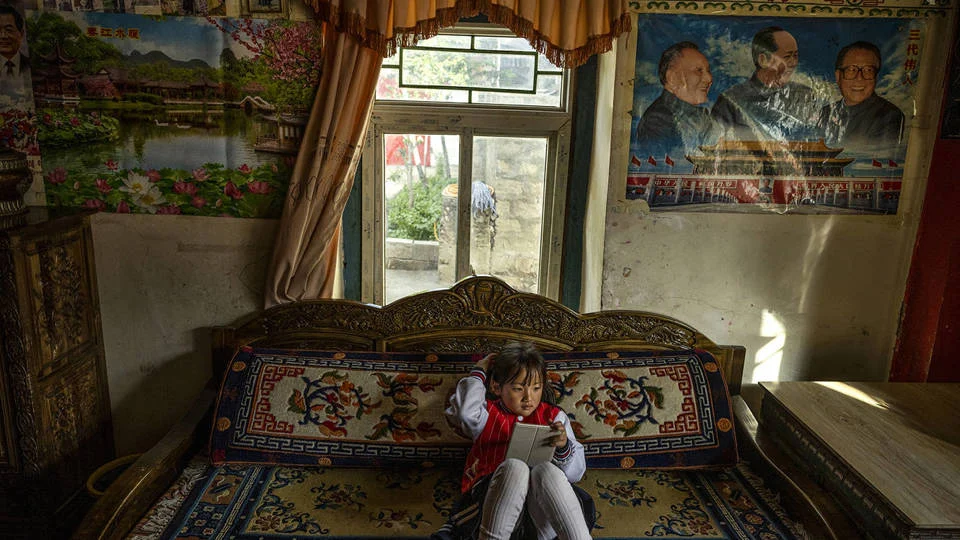
- Religious Suppression: The "Sinicization" of Buddhism is the state’s primary objective. Monasteries are being forced to display portraits of CCP leaders alongside or above religious icons. Monks and nuns are subjected to "patriotic education" campaigns, and the traditional monastic system is being dismantled from within.
- Surveillance and Demographic Engineering: High-tech surveillance, including facial recognition and mandatory DNA collection, has transformed Tibet into an open-air prison. Simultaneously, massive infrastructure projects have facilitated the migration of Han Chinese into urban centers, effectively diluting the demographic weight of the native Tibetan population.
- Environmental Transformation: The plateau, often called the "Third Pole," is being exploited for its vast mineral wealth and water resources. Massive dam projects on the major rivers flowing out of Tibet—which serve as the lifeblood for South and Southeast Asia—have been fast-tracked without regard for the downstream environmental consequences.
Chronology: The Escalation of Repression
To understand the current crisis, one must track the trajectory of China’s hardening stance over the past two decades:
- 2008–2010: Following widespread protests across the Tibetan plateau in 2008, Beijing implemented a "stability maintenance" model, drastically increasing the presence of the People’s Armed Police and restricting the movement of foreign journalists and diplomats.
- 2012–2015: The peak of the self-immolation wave within Tibet. Over 150 Tibetans set themselves on fire as a form of non-violent protest against the encroaching state. Beijing responded with collective punishment, targeting the families and villages of those who protested.
- 2017–2020: The rise of Chen Quanguo as the Party Secretary in Tibet (having previously served in Xinjiang). He introduced the "grid-style social management" system, which treats every Tibetan citizen as a potential threat to national security.
- 2023–2025: The implementation of the "Sinicization 2.0" campaign, aimed at ensuring that all religious practices align with the political ideology of the CCP. This era has seen the closure of thousands of private religious schools and the forced secularization of nomadic communities.
- July 2, 2026: Lobga Rangzen’s self-immolation at the UN, serving as a visceral indictment of the international community’s failure to act on the warnings issued by human rights organizations for over a decade.
Supporting Data: The Statistics of Disappearance
The gravity of the situation is reflected in data often obfuscated by state propaganda. According to human rights monitors, at least 80% of Tibetan children are now enrolled in state-run colonial-style boarding schools. These institutions serve as the primary engines of cultural homogenization, where the curriculum is designed to replace Tibetan identity with a monolithic "Chinese" national identity.
Economic data reveals a troubling trend of forced labor. Rural Tibetans, particularly those displaced from their ancestral nomadic lands, are being funneled into "vocational training" centers. These programs, which bear striking similarities to those employed in Xinjiang, are essentially state-sponsored labor schemes that force Tibetans into low-skilled factory jobs, severing their connection to their traditional way of life.
Furthermore, environmental data shows that the Tibetan plateau is warming at three times the global average. The state-driven extraction of rare earth minerals and the construction of massive hydroelectric dams have led to irreversible biodiversity loss, threatening the water security of over 1.5 billion people across the Asian continent.
Official Responses: A Study in Strategic Silence
The international community’s response has been, by and large, performative.
- The United Nations: While the Office of the High Commissioner for Human Rights (OHCHR) has periodically issued reports expressing "concern," these have been met with fierce pushback from Beijing. The UN’s inability to conduct independent, unhindered fact-finding missions in Tibet speaks to the organization’s vulnerability to pressure from a permanent member of the Security Council.
- The United States: Washington has passed legislation such as the Tibet Policy and Support Act, which calls for sanctions against Chinese officials involved in the interference of the selection of the Dalai Lama. While these measures are significant, they remain largely symbolic in the absence of a coordinated, multilateral strategy.
- European Union: The EU continues to prioritize trade relations with Beijing, often issuing joint statements that are carefully worded to avoid triggering retaliatory economic measures.
- Beijing’s Stance: China maintains that its policies in Tibet are directed toward "poverty alleviation," "modernization," and "national unity." The Ministry of Foreign Affairs routinely denounces any international scrutiny as "interference in China’s internal affairs," effectively shielding the region from any genuine accountability.
The Geopolitical Implications: A Bigger, Bolder China
The erasure of Tibet is not an isolated humanitarian tragedy; it is the blueprint for a new, authoritarian global order. By successfully dismantling the Tibetan culture, Beijing is demonstrating to the world that it can eliminate any internal opposition, no matter how deeply rooted in history, without paying a meaningful international price.
1. The Security Buffer:
With Tibet fully under its heel, China has neutralized its internal frontier. This allows Beijing to project power more aggressively across the Himalayas, fueling its border disputes with India. The transformation of the Tibetan plateau into a militarized zone has irrevocably altered the security architecture of the Indo-Pacific.
2. The Resource Weapon:
Control over the headwaters of the Brahmaputra, Indus, Mekong, and Yangtze rivers gives China unprecedented leverage over the neighboring nations. By managing these waters as a strategic asset, Beijing can dictate the environmental and economic destinies of its neighbors, effectively turning the Tibetan plateau into a "water tower" that serves as a tool of geopolitical coercion.
3. The Precedent of Impunity:
If the world allows the destruction of an entire civilization—one that has survived for millennia—to proceed without consequence, it sets a dangerous precedent. It signals to other autocratic regimes that the norms of human rights and cultural preservation are subordinate to state power.
Conclusion: A Call to Reckoning
Lobga Rangzen’s final act was an indictment of our collective apathy. As he stood before the United Nations, he was not just protesting the policies of a single government; he was protesting the failure of the global community to uphold the values it claims to champion.
The systematic erasure of Tibet is a litmus test for the international order. If we continue to prioritize trade, diplomacy, and the avoidance of friction over the survival of a unique and vibrant culture, we are complicit in its destruction. History will not judge us by our statements of concern or our carefully worded resolutions; it will judge us by our willingness to confront the realities that Rangzen died to illuminate.
The "Roof of the World" is crumbling, and with it, a piece of our collective human heritage. The time for quiet diplomacy has long passed. What is required now is a coordinated, global effort to hold Beijing accountable, to protect the remnants of Tibetan culture, and to ensure that the voice of the Tibetan people—which the state has tried so hard to silence—is finally heard. If we fail, we are not just losing Tibet; we are losing the very principles that define a civilized, just, and human-centric global order.