Welcome to Taste Test, where every week our critic Jonah Flicker explores the most buzzworthy and interesting whiskeys in the world. Check back each Sunday for his latest whiskey review.
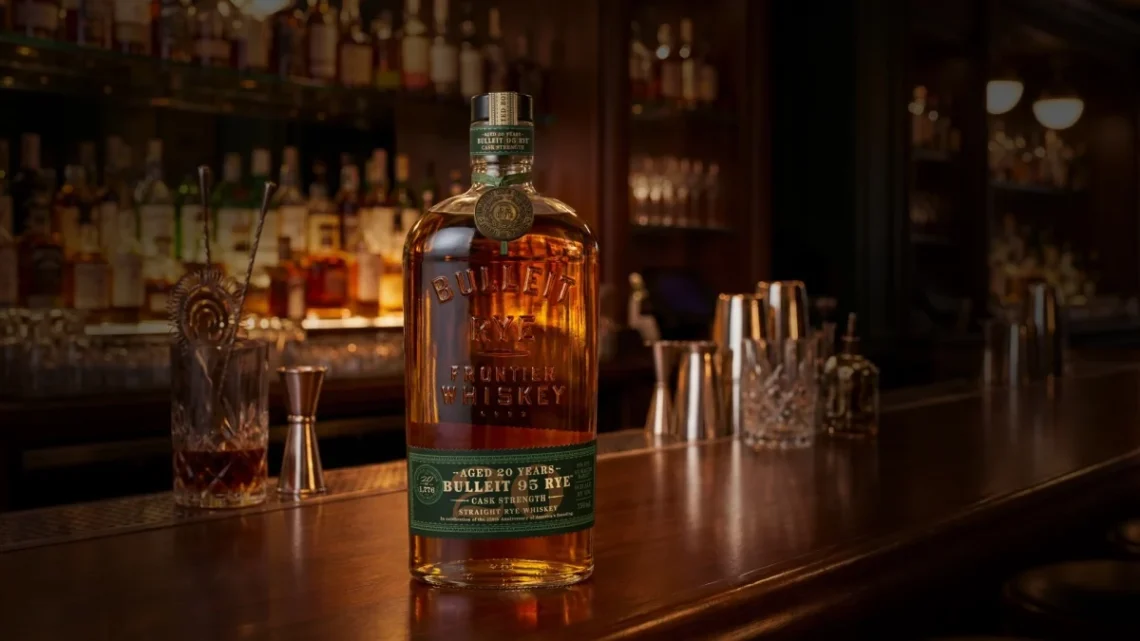
In the high-stakes world of American spirits, few brands carry the ubiquity and recognizability of Bulleit. From the dive bars of Brooklyn to the high-end speakeasies of Los Angeles, the Diageo-owned brand has long served as the backbone of the modern cocktail movement. However, their latest release—a 20-year-old rye—represents a pivot from the accessible, "frontier-style" profile for which they are known. It is an exercise in extreme maturation and high-octane proof, a bottle that challenges the very definition of what a classic American rye should be.
The Anatomy of the Release: Main Facts
On paper, the Bulleit 20-Year-Old Rye appears to be a collector’s dream. It is a whiskey distilled at the legendary MGP facility in Lawrenceburg, Indiana, utilizing the industry-standard "95/5" mashbill—95 percent rye grain and five percent malted barley. This recipe has become the gold standard for high-rye expressions, offering a pungent, spicy, and herbaceous profile that rye enthusiasts crave.
The defining characteristics of this release, however, are its age and its intensity. Aged for two decades in oak, this is the oldest whiskey ever released under the Bulleit label. To complement this extreme age, the distillery has opted to bottle the expression at a staggering 137 proof (68.5 percent ABV). To put that in perspective, in the enthusiast community, whiskey bottled at 140 proof or higher is colloquially referred to as "hazmat" because it is considered hazardous material for air travel. At 137 proof, the Bulleit 20-Year-Old sits precariously close to that threshold, pushing the limits of drinkability.
With only 1,776 bottles produced—a symbolic nod to the upcoming 250th anniversary of the United States—this is a limited-run collector’s item carrying a $300 price tag.
A Chronological Evolution of the Bulleit Brand
To understand the gravity of this 20-year-old release, one must look at the trajectory of the brand itself. Bulleit has spent decades cultivating an image of historical authenticity, even if the reality of its production has been more fluid.
Initially, the brand’s identity was tied to the lore of the "frontier." For years, the sourcing of its whiskey was a point of intense speculation. While the bourbon was widely recognized for its high-rye content, the rye whiskey was consistently sourced from MGP, which has solidified its reputation as the premier contract distillery for rye in North America.
In the 2010s, as the "whiskey boom" began to accelerate, Bulleit began to diversify its portfolio. We saw the introduction of higher-proof offerings and experimental batches. The brand transitioned from being a reliable utility player behind the bar to an experimental house, releasing products like the Mesquite Smoked Malt and exploring the category of American Single Malt. The 20-year-old rye is the culmination of this evolution—a move to prove that the brand can play in the "ultra-premium" space alongside heritage producers that have long dominated the age-statement market.
The Science of Aging and Proofing
The decision to age an American rye for 20 years is a bold—and risky—gamble. Unlike the cool, humid climate of Scotland, which allows for slow, gentle maturation, American whiskey experiences the "swing" of the seasons. In Kentucky or Indiana, the heat of summer forces the spirit deep into the charred oak staves, extracting massive amounts of tannins and wood sugars, while the cold of winter pulls it back. Over 20 years, this process can lead to what distillers call "over-oaking," where the wood influence completely overwhelms the delicate grain characteristics.
Furthermore, the choice to keep the whiskey at 137 proof raises significant questions regarding the art of "proofing down." In many high-end distilleries, the master blender will slowly add small amounts of demineralized water to a barrel-strength whiskey to bring it down to a "sweet spot"—often between 110 and 125 proof—where the volatile aromatics and flavor compounds are most expressive.

By bottling at 137 proof, Bulleit has opted for raw power over nuanced dilution. While there is a segment of the market that demands "cask strength" at all costs, the lack of proofing here leads to an aggressive ethanol heat that can mask the very flavors the 20-year aging process sought to build.
Official Stance and Market Positioning
Diageo has positioned this release as a commemorative masterpiece. The 1,776-bottle count is clearly designed to evoke a sense of patriotism and historical weight. The company’s marketing literature emphasizes the rarity of the barrels selected, implying that only the most resilient casks could survive two decades of maturation without becoming overly bitter or "woody."
From a market perspective, the $300 price point puts the bottle in direct competition with high-end releases from brands like WhistlePig, Kentucky Owl, and various "orphan barrel" programs. By entering this tier, Bulleit is attempting to shed its image as an "everyman’s whiskey" and transition into the realm of luxury investment spirits.
Implications for the Future of American Rye
This release serves as a litmus test for the American rye market. As distillers continue to experiment with longer age statements, we are seeing a shift in consumer expectations. However, the Bulleit 20-Year-Old Rye also highlights a growing tension between "proof-chasing" and "flavor-profiling."
If this bottle succeeds, it will likely encourage other large-scale producers to scour their warehouses for their oldest, highest-proof stock, regardless of whether that profile is truly balanced. If it fails to resonate, it may force a conversation about the necessity of blending and proofing as essential components of the distiller’s craft, rather than just "dilution."
Tasting Notes: The Verdict
When approaching the glass, one must respect the intensity of the liquid. On the nose, the age is immediately apparent; there is a deep, resonant profile of dark cocoa, toasted oak, and a faint whisper of dried tobacco. Once you move past the initial wall of heat, the palate opens up to reveal layers of dried fig, baked apple, and a robust black pepper spice that is quintessential to the 95/5 MGP mashbill.
However, the finish is where the "hazmat" proof takes its toll. The alcohol burn is significant, and while it provides a long, lingering warmth, it effectively scrubs the palate of the more delicate fruit notes that likely existed underneath.
Score: 86
For the dedicated collector, this is a fascinating study in extreme maturation. It is a testament to what happens when American rye is pushed to the physical limits of the barrel and the bottle. Yet, for the average drinker, it serves as a reminder that age and proof are not always synonymous with quality. If you are looking for a daily drinker, the classic 90-proof Bulleit Rye remains the superior choice. But if you want to experience a high-proof, ultra-aged monolith that demands your full attention—and a splash of water—this is a bottle that deserves a place on your shelf, if only for the conversation it inspires.