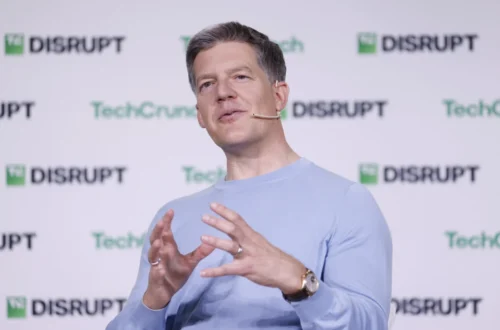
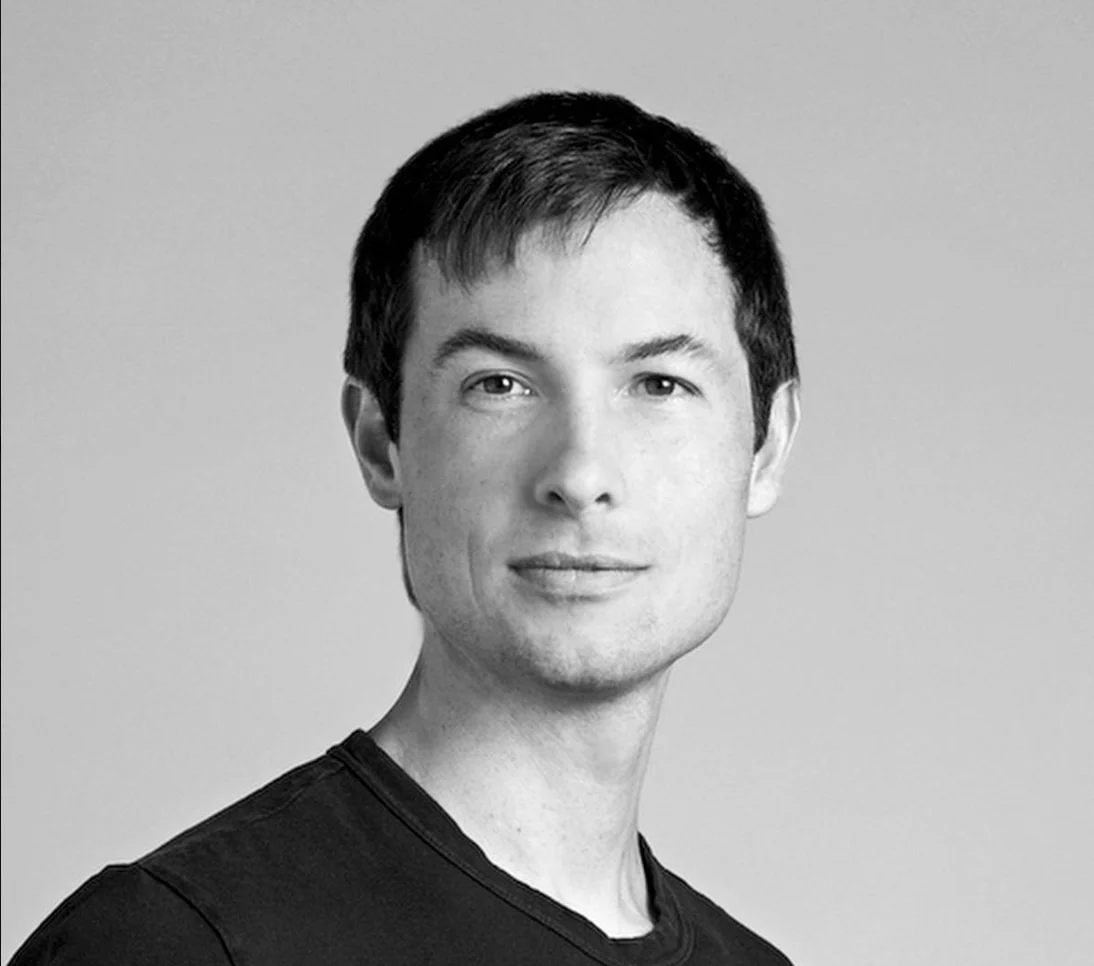
Reed Jobs is a man who prefers the granular complexity of molecular biology to the broader, often distracting, questions about his famous surname. While the world may still associate the name "Jobs" with the iconic silhouette of a MacBook, the son of the late Apple co-founder has spent the last three years carving out a distinct legacy in the high-stakes arena of cancer research. As the founder of Yosemite, an oncology-focused venture firm launched in 2023, Jobs is proving that he is less interested in tech-industry fame and more obsessed with the "Achilles’ heels" of human biology.
In a wide-ranging discussion, Jobs reflects on the evolution of his firm, the seismic impact of artificial intelligence on drug discovery, and why he believes we are currently living through the most critical period in the history of cancer treatment.
Main Facts: The Yosemite Strategy
Yosemite is not a conventional venture capital firm. It occupies a unique niche by blending philanthropy with aggressive, high-risk investment capital. The firm’s core mission is to "build" biotech companies from the ground up, often translating nascent academic research into clinical-stage assets.
With a team of 17, Yosemite currently manages a portfolio of nearly 25 companies across two funds. Their approach is dual-pronged: about one-third of their capital is deployed into "in-house" ventures—companies built in collaboration with research powerhouses like Yale, Berkeley, and Stanford—while the remainder is used to join existing, high-potential startups. To bridge the gap between academic discovery and commercial viability, Yosemite employs a "no-strings-attached" philanthropic model, providing grants to de-risk early-stage scientific ideas before they are incorporated into formal companies.
Chronology: From Pandemic Slump to AI Acceleration
The trajectory of Yosemite mirrors the broader volatility of the biotech sector over the last 36 months. When the firm first launched in 2023, the industry was reeling from a post-pandemic crash; capital was scarce, and investor sentiment was historically conservative.
- 2023: Launch of Yosemite. The firm debuts at TechCrunch Disrupt, emphasizing a focus on oncology and the integration of philanthropy in drug development.
- 2024: Market conditions begin to shift. Pharma companies, sitting on record cash reserves from the pandemic and facing an unprecedented "patent cliff" (where major blockbuster drugs lose protection), begin an aggressive acquisition spree.
- 2025: Artificial Intelligence transitions from a theoretical interest to an operational necessity. Yosemite scales its focus on AI-driven clinical trials and molecular discovery.
- 2026 (Present): Yosemite secures its second fund with a $350 million target. The firm is now seeing the first of its portfolio companies, such as Azalea, reach the clinical trial stage.
Supporting Data: Why Oncology is at an Inflection Point
The urgency behind Jobs’ work is driven by a convergence of technological breakthroughs and market necessity. The firm is currently targeting some of the most elusive targets in human biology, including the p53 tumor suppressor gene—a genetic "holy grail" that has frustrated scientists for decades.
The AI Transformation
Jobs argues that AI is currently revolutionizing two specific areas of healthcare:
- Clinical Trials: By utilizing "synthetic control arms," AI can simulate the untreated comparison group in a study using existing patient data. This effectively halves the required patient recruitment, which is currently the most significant cost and time sink in drug development.
- Targeting the "Undruggable": Many cancer-driving proteins were previously considered "undruggable" because they lacked the natural crevices for drug molecules to attach to. AI has enabled researchers to identify "cryptic pockets" on these proteins—a breakthrough that allowed for the development of drugs like those targeting the KRAS mutation, which has shown success in doubling the survival rates of pancreatic cancer patients.
Financial Resilience and Federal Policy
Despite concerns regarding federal funding, Jobs remains cautiously optimistic. When asked about potential cuts to the National Institutes of Health (NIH) budget—a topic he has spoken on publicly—he noted that bipartisan support in Congress has so far shielded the agency from catastrophic 40% funding cuts. However, he remains a vocal advocate for increasing NIH funding to $100 billion, arguing that the current budget has stagnated in real terms over the last decade due to inflation.

Official Responses and Strategic Philosophy
Yosemite’s philosophy on company building is rigorous and, at times, brutal. "We don’t think the cures for cancer are sitting out in pharma waiting to be discovered," Jobs explains. "We think we need to go make them with new knowledge."
On Failure and Risk
Jobs is transparent about the reality of his industry: of the nearly 25 companies in his portfolio, two have failed for scientific reasons. He views these failures as an expected byproduct of his "tranche" investment model, where funding is released only when specific scientific milestones are met. "We’re so early, sometimes things fail on the science. That’s what we’d expect."
On the "Storytelling" Trap
While Jobs values the technical prowess of academic founders, he emphasizes the importance of a professionalized management team. He warns that even the most groundbreaking science can fail if the narrative is poorly communicated to the market. "I’ve seen companies with great science fail because of bad storytelling," he says, noting that the best setups involve an academic founder focusing on the science while a CEO manages the complex landscape of capital and communication.
Implications: The Future of Medicine
The implications of Yosemite’s work extend far beyond the balance sheets of venture capital. By focusing on epigenetic gene editing (changing how genes are expressed rather than altering DNA) and innovative devices like histotripsy (using ultrasound to destroy liver tumors), Jobs is betting on a future where cancer is managed with the precision of software engineering.
Perhaps the most significant takeaway from the current state of the industry, according to Jobs, is the unexpected potential of weight-loss drugs (GLP-1s). Beyond their primary use, these drugs are showing protective effects against neurodegenerative diseases and cancer. This discovery has forced a industry-wide pivot, causing investors to re-examine "cold" disease areas that were previously deemed too difficult to tackle.
As for the broader "longevity industry," Jobs remains a skeptic of one-size-fits-all solutions. He argues that human aging is not a single, unified process that can be "solved" by a single pill. Instead, it is a complex, multi-cellular phenomenon that requires personalized optimization.
When asked how founders can approach his firm, Jobs offers an open door policy that strips away the pretenses of traditional venture capital. "We take people’s CVs out of it," he says. "I don’t want to know whose idea it is or what title someone holds. We’ve funded Nobel laureate labs and first-time grant recipients, and I’m equally happy with either outcome."
In a field often defined by ego and legacy, Reed Jobs seems intent on letting the science speak for itself. Whether or not his firm hits every target, the ambition behind Yosemite—to turn the most complex biological puzzles into solvable problems—is undeniable. In the race to find the next generation of cancer therapies, Jobs is positioning himself not as a distant investor, but as an active architect of the cure.