
The automotive landscape is undergoing a tectonic shift, and the Volkswagen Group—one of the world’s most expansive and powerful automotive conglomerates—is signaling that its period of unbridled growth may be giving way to a new era of surgical efficiency. In a strategic pivot aimed at securing long-term profitability amidst cooling global demand for electric vehicles (EVs) and rising production costs, the German automotive giant has announced a sweeping plan to streamline its massive portfolio.
For enthusiasts and market analysts alike, the most jarring headline emerging from this restructuring is the potential cull of several storied Porsche models. While Volkswagen has historically leveraged its scale to dominate every segment from budget hatchbacks to hyper-luxury supercars, the mandate to "gradually" reduce its total vehicle lineup by as much as 50 percent has cast a shadow of uncertainty over some of Stuttgart’s most recognizable nameplates.
The Strategy: A Shift Toward Lean Operations
The Volkswagen Group’s executive board has officially launched an initiative designed to simplify operations, reduce complexity in its supply chains, and eliminate models that no longer command the necessary profit margins or market share. The goal is to move from a "volume-first" philosophy to a "value-first" approach.
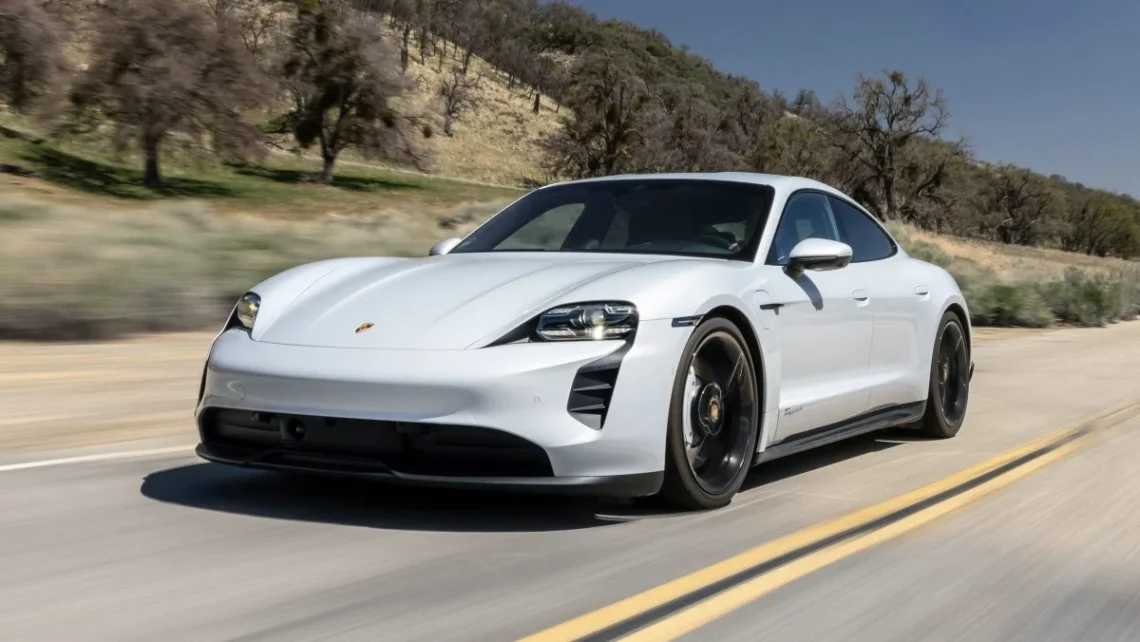
In a report recently published by the German newspaper Bild—and subsequently echoed by various industry analysts—the scale of this potential culling became clear. The report identifies 10 specific vehicles across the Group’s portfolio that are currently under the microscope. Among these, four are Porsches: the all-electric Taycan, the Cayenne Coupe, and both the gas-powered coupe and roadster iterations of the next-generation 718.
This announcement follows a period of internal turbulence within the Volkswagen Group, characterized by debates over factory utilization and the pace of electrification. By pruning the branches of its portfolio, VW aims to streamline its manufacturing footprint, allowing the company to concentrate resources on high-margin vehicles and next-generation software development.
A Chronology of the Pivot
To understand how we arrived at this moment, one must look at the recent timeline of the Group’s strategic shifts:

- Mid-2025: Facing inflationary pressures and stiff competition in the Chinese and European markets, Volkswagen begins internal audits of its global product roadmap.
- Late 2025: The Group signals that its initial "all-in" strategy on electric vehicles requires more flexibility, as consumer demand fails to keep pace with production capacity.
- Early 2026: Sales data reveals a significant gap between the performance of internal combustion engine (ICE) classics like the 911 and newer, high-tech EV offerings like the Taycan.
- September 2026: The executive board formally announces plans to streamline the lineup by up to 50 percent, triggering widespread speculation about model retirements.
- Late September 2026: Reports from Bild circulate, identifying the specific Porsche models flagged for potential discontinuation.
- October 2026: Porsche directs stakeholders to its forthcoming "Strategy 2035" roadmap, scheduled for unveiling on October 7, which is expected to clarify the long-term fate of these models.
Supporting Data: Why the Porsche 718 and Taycan Are at Risk
The potential retirement of these models is not based on whim, but on cold, hard market data. The Porsche Taycan, for instance, has long been a technical marvel—holding lap records at the Nürburgring and serving as the brand’s flagship EV. Yet, the sales figures tell a different story. Throughout the first half of 2026, the Taycan was outsold by the 911 nearly five to one. While the 911 remains a high-margin, high-demand icon, the Taycan has struggled to convert traditional Porsche loyalists at the expected rate.
The Cayenne Coupe, while aesthetically polarizing in a way that appeals to a specific demographic, faces a different challenge: cannibalization. As the standard Cayenne continues to dominate the SUV segment, the Coupe variant represents an additional manufacturing and inventory cost that may not be delivering the return on investment that the brand’s "Strategy 2035" requires.
Perhaps most surprising is the inclusion of the gas-powered 718. Only last year, Porsche made waves by announcing plans to offer high-performance internal combustion versions of the next-gen 718, bowing to pressure from purists who were skeptical of a purely electric sports car. If these models are indeed on the chopping block, it would represent a total reversal of that strategy, suggesting that Porsche may have decided that the business case for small-displacement, high-revving ICE sports cars is no longer viable under increasingly stringent global emissions regulations and internal cost-cutting mandates.
Official Responses and the Road Ahead
When reached for comment, a Porsche spokesperson maintained a professional silence regarding the specific list provided by Bild. "We cannot comment on speculative reports," the representative noted. However, the brand was quick to point toward its upcoming "Strategy 2035" presentation.
This event, to be held at the company’s Capital Markets Day on October 7, is expected to serve as the definitive word on the brand’s future. It is widely anticipated that Porsche will outline a path that balances its historical commitment to driving dynamics with the brutal financial realities of the mid-2030s.
The silence from the C-suite is understandable; announcing a model’s discontinuation years in advance can kill residual values and erode customer confidence. By framing these decisions within the broader context of "Strategy 2035," Porsche is attempting to pivot the conversation from "cancellation" to "evolution."

Broader Implications for the Volkswagen Group
The ripple effects of this consolidation extend far beyond Porsche. According to the industry reports, other brands under the VW umbrella are facing similar scrutiny. The Volkswagen Jetta and Taos, the Audi Q5 Sportback and Q6 e-tron Sportback, the Cupra Raval, and the Skoda Fabia are all cited as candidates for removal.
Notably absent from this list of endangered vehicles are products from Bentley and Lamborghini. This absence suggests a clear hierarchy in the Group’s survival strategy: the ultra-luxury and supercar divisions, which command immense margins, remain "untouchable." The core of the cuts appears to be focused on the "mass-premium" and "volume" segments, where competition from Asian manufacturers is fiercest and margins are thinnest.
What This Means for the Consumer
For the automotive enthusiast, these developments suggest a narrowing of choice. The "variety" that characterized the mid-2010s—where every niche, from the coupe-SUV to the entry-level roadster, was filled—is being replaced by a more curated, efficient lineup.
If the gas-powered 718 does indeed vanish, it will mark the end of an era for the mid-engine, flat-four and flat-six platforms that have defined Porsche’s accessible sports car identity for decades. Conversely, it may increase the collectibility of current models, as buyers rush to secure the last of the "analogue" experiences before the transition to an all-electric or highly consolidated future is finalized.
Ultimately, the Volkswagen Group’s decision to slim down is a symptom of a maturing industry. The "growth at any cost" era has passed; we are entering an era of "value at any cost." For Porsche, the challenge will be to maintain its prestige and performance pedigree while stripping away the excess that the market—and the bottom line—can no longer support. As October 7 approaches, the automotive world waits with bated breath to see which icons will survive the transition.