
By Yemi Osinbajo and Alexander Tsado
Published: September 18, 2026
Section: Innovation & Technology
Main Facts
The global narrative surrounding Artificial Intelligence (AI) is routinely framed as a high-stakes, binary competition between the United States and China. Headlines are dominated by discussions of massive data centers, multi-billion-dollar compute clusters, and the race to build the most sophisticated frontier models.
However, this conventional wisdom misses the larger economic horizon. According to a growing consensus among technologists and economic strategists, the most substantial economic prize of the AI era will not be found in training the next trillion-parameter foundational model in Silicon Valley or Shenzhen. Rather, it lies in the practical, scaled deployment of intelligence to solve real-world problems—an arena where Africa’s young, dynamic, and rapidly expanding economies are uniquely positioned to lead.
Historically, Africa has occupied the receiving end of the global innovation cycle. Breakthrough technologies were conceptualized, funded, and commercialized in the Global North, only to be later imported by African nations at premium costs and under restrictive terms dictated by external powers. The structural fragility of this model was laid bare during the COVID-19 pandemic, when African nations found themselves at the back of the global queue, struggling to secure basic vaccine access because manufacturing and intellectual property were concentrated elsewhere.
Today, as artificial intelligence threatens to widen global productivity gaps, African leaders, innovators, and policy architects are determined not to repeat the mistakes of the past. Instead of remaining passive consumers of imported algorithms, the continent is positioning itself as an active architect of practical AI integration—focusing on agriculture, healthcare, fintech, and logistics to unlock trillions of dollars in untapped economic value.
Chronology: From Digital Exclusion to AI Integration
To understand Africa’s current trajectory in the technological landscape, it is necessary to trace how the continent transformed its digital infrastructure over the past three decades.
- The Early 2000s (The Mobile Leapfrog): Prior to the widespread adoption of smartphones, traditional banking infrastructure was scarce across much of Sub-Saharan Africa. The launch of mobile money services—most notably M-Pesa in Kenya in 2007—proved that African markets could leapfrog legacy infrastructure entirely, establishing a precedent for rapid, home-grown technological adoption.
- The 2010s (The Tech Hub Boom): Across cities like Lagos, Nairobi, Cape Town, and Cairo, vibrant tech ecosystems began to emerge. Innovation hubs fostered a generation of software developers, creating localized fintech, agritech, and logistics platforms designed to navigate fragmented infrastructure and unbanked populations.
- The Early 2020s (The Pandemic Wake-Up Call): The COVID-19 crisis exposed severe vulnerabilities in global supply chains and vaccine distribution. African Union initiatives and regional coalitions accelerated discussions on technological sovereignty, local manufacturing, and self-reliance in critical scientific and digital domains.
- 2024–2025 (The Generative AI Wave): As global generative AI tools gained mainstream adoption, African entrepreneurs and researchers began adapting open-source models to local contexts. Efforts intensified to curate localized datasets in indigenous languages, agriculture, and regional health indicators.
- September 2026 (The Strategic Pivot): Thought leaders and policymakers formally challenge the Sino-American binary narrative, arguing that Africa’s demographic dividend—booming youth populations paired with urgent infrastructural needs—makes it the ideal crucible for practical, high-impact AI deployment.
Supporting Data: Demographics, Growth, and the Intelligence Dividend
The economic rationale for focusing on practical AI deployment in Africa is anchored in compelling demographic and macroeconomic realities:
- A Youthful Demographic Dividend: Africa is the youngest continent on Earth, with a median age of under 20. By 2050, the continent is projected to house a quarter of the global population and nearly a third of the world’s working-age population.
- Rapid Urbanization and Connectivity: Smartphone penetration across Sub-Saharan Africa continues to climb at double-digit rates, supported by expanding 4G and 5G network rollouts and subsea internet cables connecting coastal hubs to global backbones.
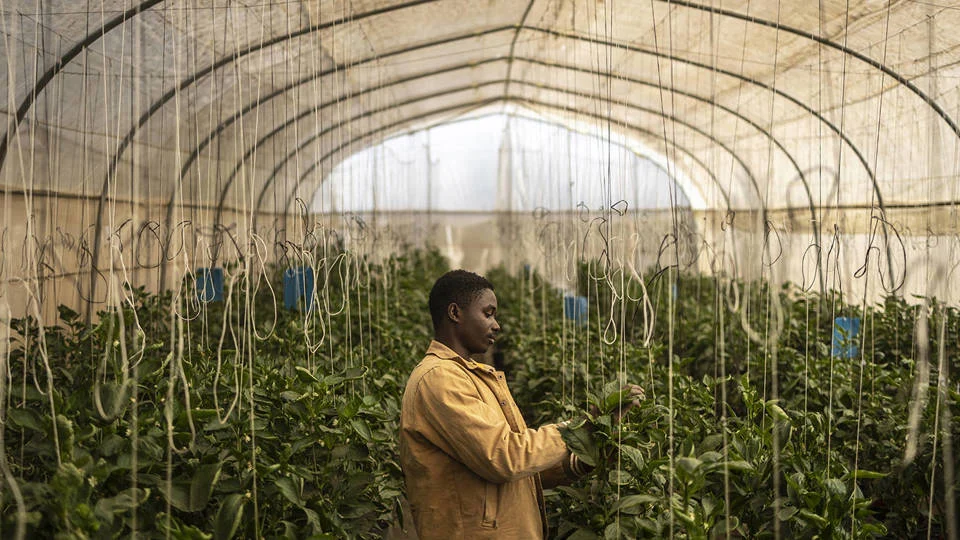
- The Agribusiness Imperative: Agriculture accounts for a significant share of employment and GDP across many African nations. AI-driven precision agriculture—utilizing computer vision, predictive weather modeling, and automated supply chain optimization—has the potential to multiply crop yields and mitigate the severe impacts of climate change.
- Fintech Maturity: Having already pioneered mobile money at scale, African financial ecosystems are primed for the integration of AI-powered credit scoring, fraud detection, and hyper-personalized micro-lending, which can dramatically expand formal financial inclusion for small and medium-sized enterprises (SMEs).
Official Responses and Strategic Perspectives
Governments, multilateral institutions, and private sector leaders are increasingly aligning behind the vision of African technological sovereignty.
Speaking on the imperative of homegrown digital solutions, regional policymakers have emphasized that AI cannot simply be downloaded from abroad; it must be trained on local realities. “If the data reflecting our agricultural soil, our linguistic diversity, and our disease burdens is missing from global models, then the resulting intelligence will fail our people,” note tech policy analysts in Abuja and Lagos.
International development agencies and venture capital firms are also shifting their focus. Rather than exclusively funding foreign-born software entering African markets, institutional capital is increasingly flowing into African-led startups that build domain-specific AI applications. These local solutions address foundational challenges—such as last-mile healthcare delivery, vernacular language processing, and solar-powered edge computing—that do not neatly fit the business models of Silicon Valley giants.
Furthermore, African nations are actively participating in global governance dialogues to ensure that international AI regulations do not lock out developing economies. Collaborative frameworks between African universities and global research institutions are being forged to promote open-source data sharing, ethical AI deployment, and local talent retention.
Implications: What the Global AI Race Gets Wrong
The persistent framing of AI as a two-horse race between the United States and China rests on a fundamental misunderstanding of where long-term value is created. Frontier model development—training models with hundreds of billions of parameters—is capital-intensive, highly centralized, and subject to diminishing marginal returns. Once a baseline level of artificial general intelligence or advanced reasoning is achieved, the true competitive advantage shifts to application: how effectively that intelligence is embedded into the daily workflows of hospitals, farms, schools, and small businesses.
This is where Africa’s unique market conditions become an economic superpower. Western economies are encumbered by legacy systems, heavily regulated service sectors, and aging populations. In contrast, African economies possess the agility born of necessity. Free from the burden of legacy infrastructure, they can implement leapfrog strategies at scale.
1. Redefining Productivity and Labor
As automation transforms global labor markets, Africa’s young workforce will not merely be consumers of automated tools; they will define new paradigms of human-AI collaboration. By leveraging mobile-first and cloud-based AI, young African entrepreneurs can build scalable enterprises that bypass traditional industrialization phases entirely.
2. Global Supply Chain Resilience
By developing localized AI models for agriculture, mining, and logistics, Africa can ensure greater transparency and efficiency in the extraction and processing of critical minerals essential for the global green transition. This shifts the continent’s role from a raw-material exporter to a value-added partner in the global tech supply chain.
3. Ethical and Inclusive Governance
Africa’s leadership in practical AI deployment can also set a global benchmark for inclusive technology design. By prioritizing linguistic diversity, equitable access, and community-driven data governance, African innovators can demonstrate how artificial intelligence can be harnessed to lift millions out of poverty rather than exacerbating global inequalities.
Conclusion
The global AI revolution is entering a decisive phase. While the race for frontier compute power will continue to capture headlines in Washington and Beijing, the true economic prize belongs to those who can operationalize intelligence where it is needed most. For a young, ambitious, and digitally awakened Africa, the future is not about catching up to yesterday’s innovations—it is about deploying tomorrow’s solutions first.