
MILAN, BETHESDA, AND NEW YORK — For decades, the global conversation surrounding the future of food has been dominated by a techno-optimist narrative. When policymakers, venture capitalists, and scientists gather to discuss fixing broken agricultural and nutritional systems, the solutions presented almost invariably involve high-tech interventions: novel laboratory-grown crops, hyper-efficient vertical farms, precision agricultural methods, synthesized biochemical compounds, automated robotic kitchens, and artificial intelligence-driven supply chains.
Yet, a growing chorus of sociologists, humanitarian workers, and community organizers argue that this relentless focus on high-tech fixes misses a fundamental truth. Some of the most profound, resilient, and transformative innovations surrounding food are not biochemical or mechanical; they are low-tech social practices and human relations. These innovations manifest as novel ways of cooperating, sharing knowledge, distributing responsibility, bridging cultural divides, and redesigning the very institutions through which communities feed themselves.
As global hunger statistics remain stark—with an estimated 673 million people facing hunger and 2.3 billion experiencing moderate or severe food insecurity in 2024—policymakers remain deadlocked over traditional economic and agricultural frameworks. Experts suggest that the path forward requires a radical shift in perspective: recognizing that food is fundamentally a sociocultural medium, and that social innovations in gastronomy are far superior to technological silver bullets in mending our fractured food systems.
Main Facts: The Power of Low-Tech Social Gastronomy
The core thesis of the social food movement is deceptively simple: eating is a fundamental biological necessity, but it is also one of our most powerful forms of communication and vehicles for social cohesion. While a pharmaceutical pill, a synthetic hormone, or an AI-driven robot can optimize caloric intake or streamline food preparation, they cannot provide meaning, cultural identity, or a sense of shared humanity.
Across the globe, communities facing crises—ranging from aggressive immigration crackdowns in Western metropolises to catastrophic civil war in East Africa—are turning to communal kitchens and mutual-aid networks not just for calories, but for survival, dignity, and solidarity.
Key dimensions of this social food paradigm include:
- Socioeconomic Restructuring: Restaurants removing fixed prices to adopt donation-based models, ensuring that access to nourishment is decoupled from wealth.
- Crisis Response and Mutual Aid: Communities organizing grassroots kitchens when public infrastructure collapses due to war or natural disaster.
- Peacebuilding and Integration: Using culinary arts to bridge societal divides, overcome language barriers, and counter cultural erasure among refugees and immigrant populations.
- Inclusive Livelihoods: Providing marginalized individuals—particularly women and those lacking formal professional credentials or language skills—avenues to economic self-sufficiency through cooking.
Chronology: How Grassroots Food Innovation Responded to Global Crises
To understand the momentum of social gastronomy, one must examine how grassroots initiatives have emerged organically in response to modern political, economic, and humanitarian shocks over the past decade.
2017: Grassroots Resilience in the Wake of Tragedy
Following the devastating Grenfell Tower fire in London, local women united to cook warm, culturally familiar meals for families who had lost their homes overnight. What began as an informal act of kitchen-table diplomacy evolved into the Hubb Community Kitchen, a permanent beacon of social support that later published Together: Our Community Cookbook to sustain its mission and empower displaced residents.
Mid-2020s: Culinary Diplomacy and Refugee Integration
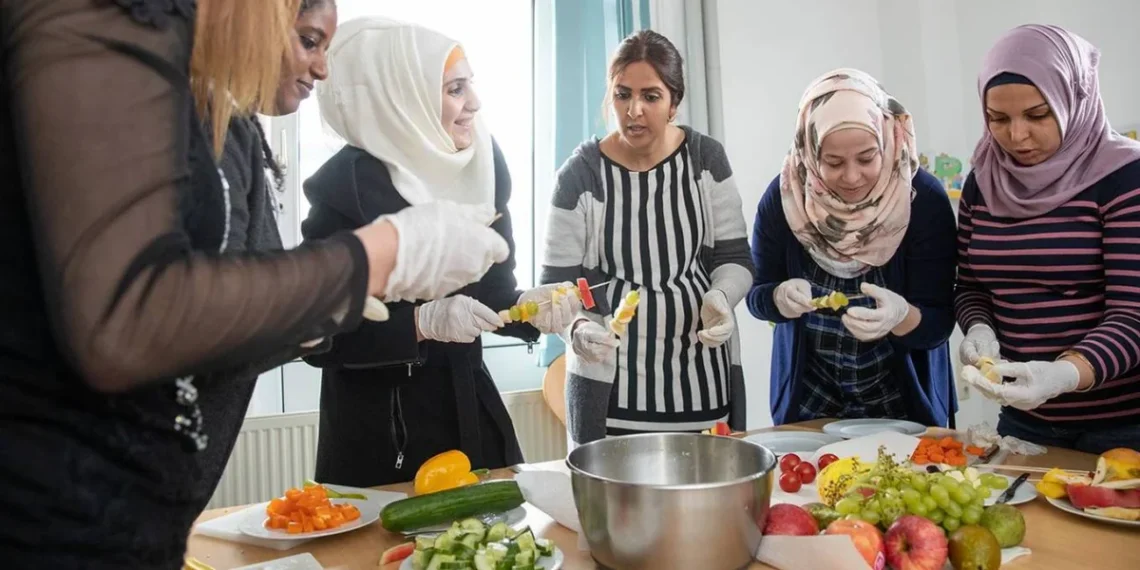
In France, the Refugee Food Festival established a recurring blueprint for cultural exchange, pairing local restaurateurs with refugee chefs to challenge xenophobia and celebrate culinary heritage. Concurrently, culinary incubators in various urban centers began pairing displaced Syrian women with local hosts, such as Turkish counterparts, discovering that shared culinary histories could effortlessly dismantle language barriers and negative stereotypes. Projects like the League of Kitchens in New York further institutionalized this concept, inviting the public into immigrant homes to learn ancestral recipes directly from matriarchs, thereby celebrating pluralism at the dinner table.
Early 2026: Navigating Immigration Cracks in Minneapolis
Amid an aggressive federal immigration crackdown in the United States, restaurateur Dylan Alverson made national headlines by stripping prices entirely from the menu at his Minneapolis restaurant, Post-Modern Times. Under this radical socioeconomic experiment, patrons who could afford to pay left donations, while those facing economic hardship or fear ate for free. Far from failing, the business model thrived, echoing historical precedents set by community kitchens and Italy’s Food for Soul initiatives.
2026: Mutual Aid Amid State Collapse in Sudan
Thousands of miles away from Western economic debates, civilians trapped in Sudan faced the total collapse of public services during a catastrophic civil war. Demonstrating the ultimate survival utility of social food systems, local networks organized mutual-aid initiatives anchored by community kitchens. These spaces served a dual purpose: identifying immediate nutritional needs while acting as diplomatic hubs where citizens could share scarce resources, exchange vital knowledge, and negotiate safety risks collectively.
Supporting Data: Hunger, Insecurity, and the Oversight of Social Capital
While the technological food sector attracts billions of dollars in venture capital, the data surrounding global nutritional distress highlights the inadequacy of purely scientific interventions.
- 673 Million: The estimated number of people worldwide facing chronic hunger in 2024, according to United Nations and international agency metrics.
- 2.3 Billion: The population segment experiencing moderate or severe food insecurity, unable to reliably access safe, nutritious, and sufficient food.
- Zero Marginal Cost for Meaning: Unlike high-tech solutions requiring significant capital expenditure, biotechnology labs, or robotics infrastructure, social innovations often fly under the radar because they rely on existing human capital, requiring minimal financial investment to yield profound psychological and communal benefits.
Furthermore, culinary pursuits offer unique economic elasticity. People can frequently earn a livelihood from food preparation even if they lack conventional academic degrees or fluency in a dominant language. Initiatives like Canada’s Newcomer Kitchen demonstrate how immigrant women can immediately monetize their traditional culinary knowledge, transforming an intimate domestic skill into formal economic agency.
Official Responses and Perspectives
Governments, international bodies, and academic institutions have increasingly turned their attention to the intersection of food systems, social cohesion, and security, albeit with differing priorities.
- International Organizations: Agencies such as UNICEF and the World Bank continue to publish extensive reports on Sustainable Development Goals (SDGs) related to hunger, repeatedly emphasizing that traditional agricultural supply chains are failing to equitably distribute food. However, institutional policymakers have historically struggled to codify or fund low-tech social practices, preferring standardized, quantifiable agricultural metrics.
- Cultural Preservation Bodies: UNESCO has recognized the power of social food practices by inscribing shared culinary traditions—such as the production and consumption of couscous across Algeria, Morocco, Mauritania, and Tunisia—onto its intangible cultural heritage list. Such designations acknowledge that food acts as a binding agent across geopolitical borders.
- Sociologists and Researchers: Scholars studying social innovation argue that institutional resistance to low-tech solutions stems from a capitalist bias toward proprietary technology. As researchers note in recent publications in the Royal Society Publishing journals, transforming food systems requires shifting focus away from "pills, hormones, and robot kitchens" and toward the invisible infrastructure of human care.
Implications: Re-evaluating the Future of Global Food Policy
The rise of social gastronomy carries profound implications for the future of urban planning, humanitarian aid, immigration policy, and global food security strategies.
1. Redefining "Innovation" in Policy
Policymakers must broaden their definition of innovation. Funding streams currently dominated by agritech and biotech should be partially redirected toward supporting community-led food networks, cooperative kitchens, and public dining spaces. When a restaurant drops its prices to feed an immigrant community under threat, or when Sudanese neighbors organize a community kitchen amid civil war, those actions are just as innovative—and far more durable—than a newly patented crop variety.
2. Combating Cultural Erasure and Polarization
In an era marked by rising nationalism, xenophobia, and cultural polarization, food remains one of the few universally accessible mediums for empathy. Projects that preserve indigenous and marginalized culinary traditions—such as Gullah Geechee cuisine in the American South or migrant recipes in European capitals—do more than maintain historical records; they assert the humanity and belonging of excluded populations within the body politic.
3. Fostering Human Flourishing Over Mere Sustenance
Ultimately, the critique of high-tech food fixes is not a rejection of science, but a demand for holistic thinking. A diet optimized entirely by algorithms and nutrient pills strips away the joy, memory, and community inherent in sharing a meal. By recognizing, respecting, and investing in the social practices people already use to feed one another, global society can move beyond mere biological survival toward genuine human flourishing.