Main Facts
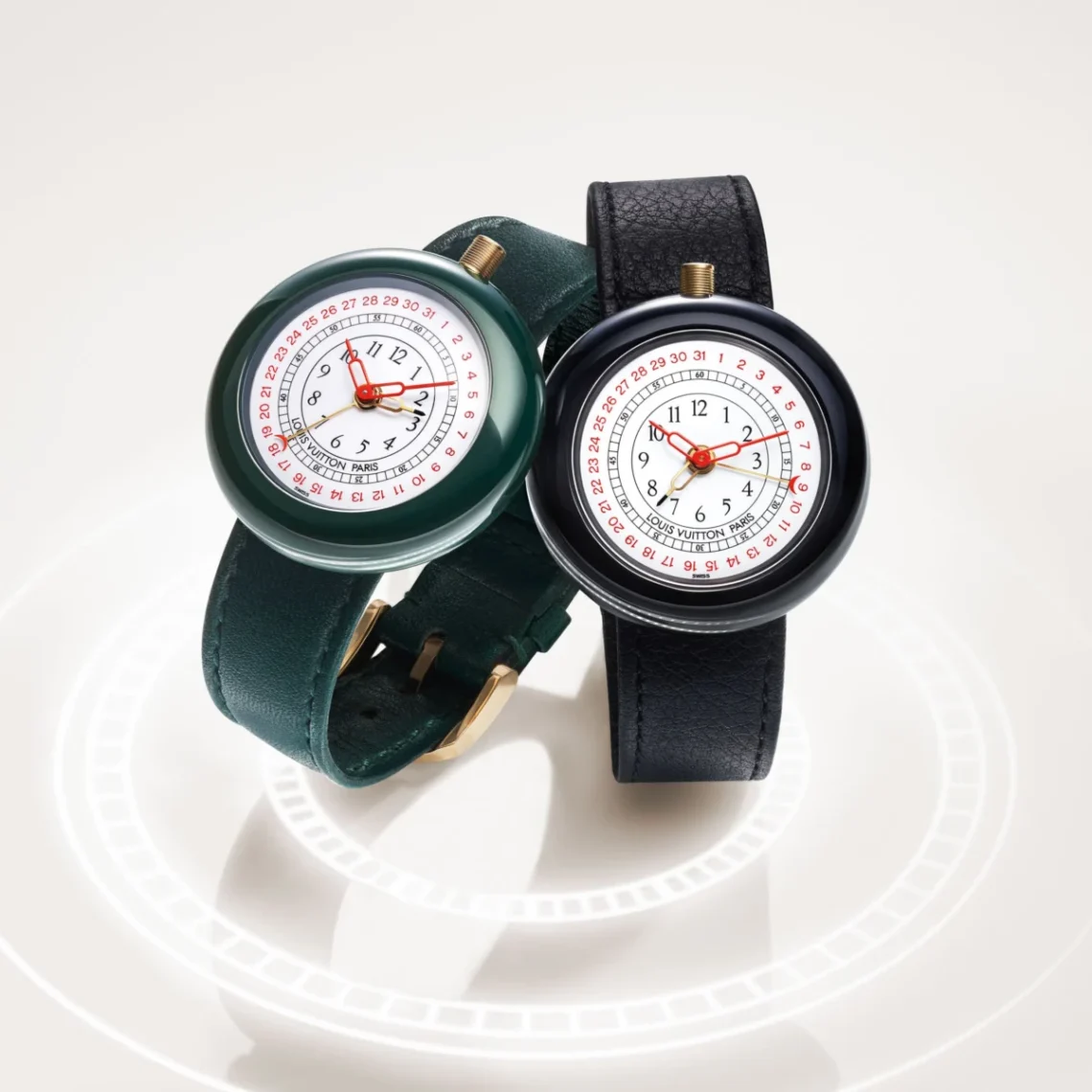
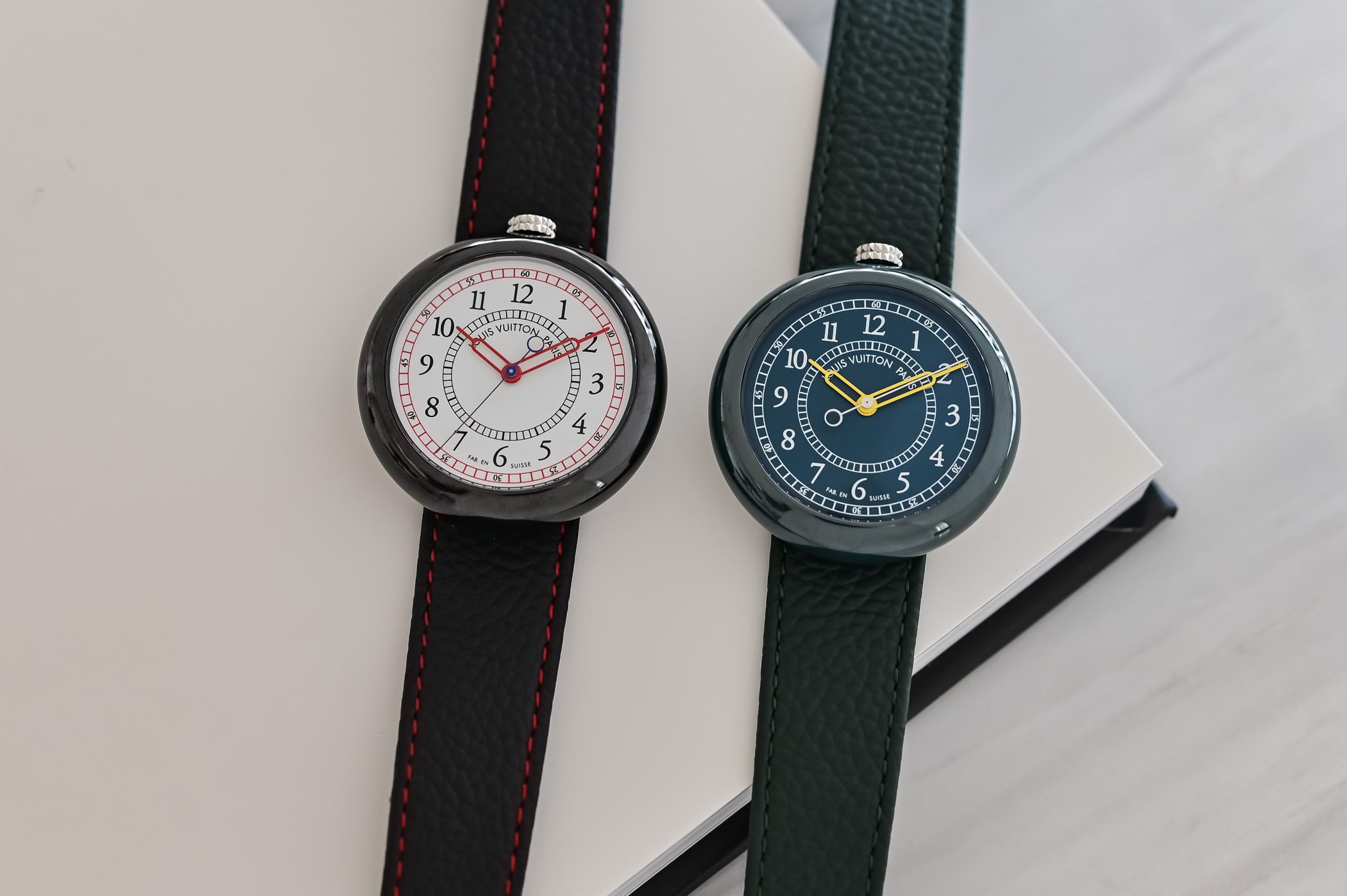
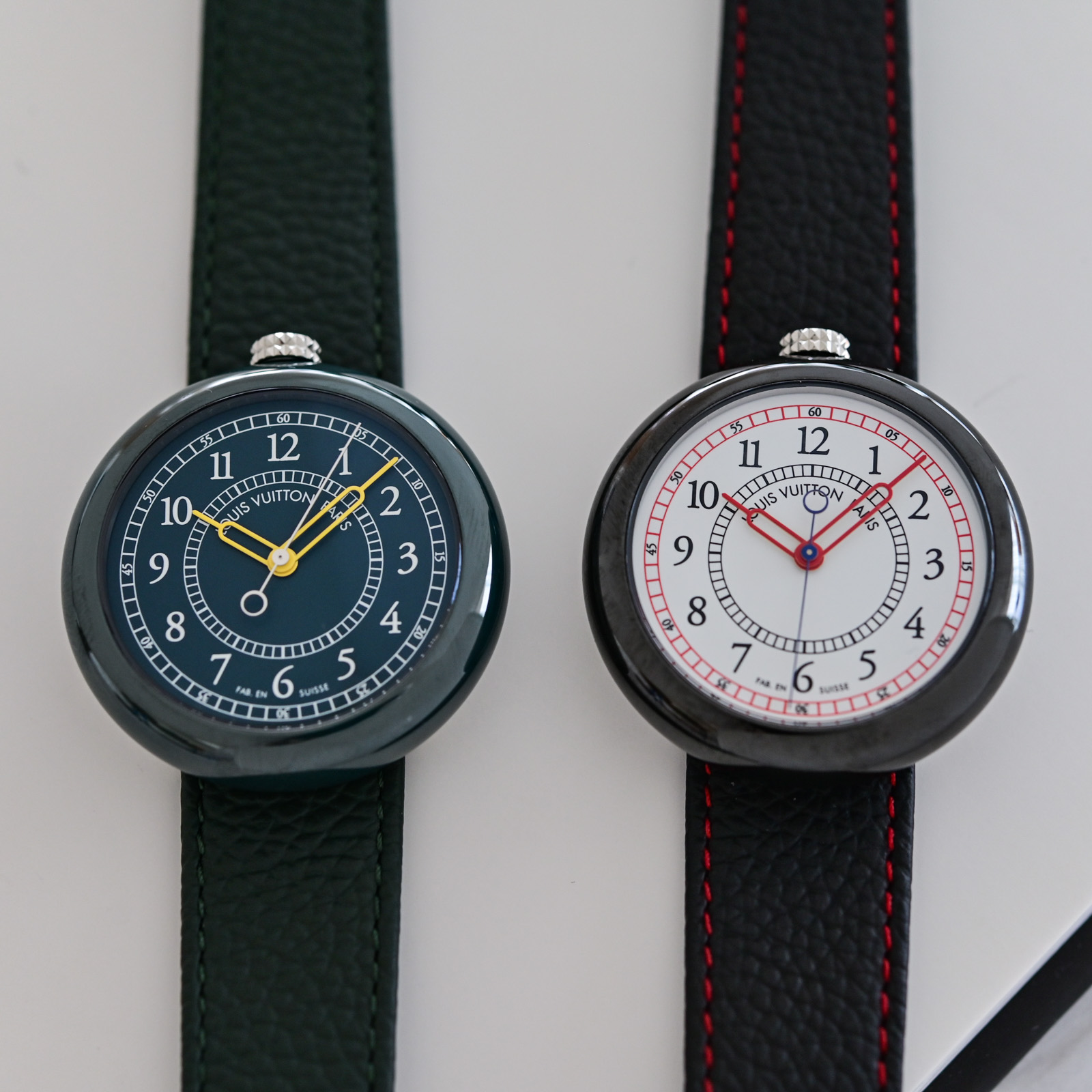
Louis Vuitton has expanded its horological footprint with the introduction of two permanent additions to its collection: the Louis Vuitton Monterey Ceramic in glossy black and green. Moving away from the ubiquitous 2002 Tambour design that many mistakenly credit as the brand’s horological genesis, these new releases pay homage to the brand’s true watchmaking pioneers—the Montre LV I and LV II launched in 1988.
Crafted with high-tech, glossy ceramic cases measuring 37mm in diameter and 11mm in thickness, the new Monterey duos blend avant-garde architectural history with contemporary mechanical watchmaking. Developed and assembled at La Fabrique du Temps Louis Vuitton, the timepieces house an automatic mechanical movement, ditching the quartz technology of the 1980s while keeping the iconic lug-less, pebble-shaped silhouette alive. Priced at EUR 23,000, these watches anchor themselves firmly in the luxury permanent collection, offering a masterclass in modern ceramic engineering and historical design revival.
Chronology: From Gae Aulenti to Modern Ceramics
To understand the gravity of the new Monterey Ceramic, one must look back nearly four decades to a time when Louis Vuitton was primarily known as a master trunk-maker rather than a watch manufacturer.
1988: The Birth of the Montre LV I and LV II
Contrary to popular historical consensus, Louis Vuitton’s entry into wristwatches did not begin with the drum-shaped Tambour in 2002. Instead, it started in 1988 with the debut of the Montre LV I and LV II. To design its maiden timepieces, the luxury house enlisted the genius of Italian architect and industrial designer Gae Aulenti.
Aulenti approached watchmaking through a sculptural lens, discarding traditional conventions. She conceived a lug-free, pebble-shaped case with a winding crown positioned entirely at 12 o’clock—an aesthetic configuration directly reminiscent of pocket watches adapted for the wrist.
- The LV I: A complex, 40mm gold travel watch loaded with auxiliary functions.
- The LV II: A more compact, 37mm variation that utilized cutting-edge black or green ceramic cases.
Because Louis Vuitton partnered with IWC for its quartz movements at the time, the brand gained rare access to IWC’s pioneering ceramic case technology, which had debuted just two years prior in 1986 on the Da Vinci Perpetual Calendar. Colloquially, these pieces became known as the “Monterey” watches—a phonetic American mispronunciation of the French word montre.
2025: The Golden Return
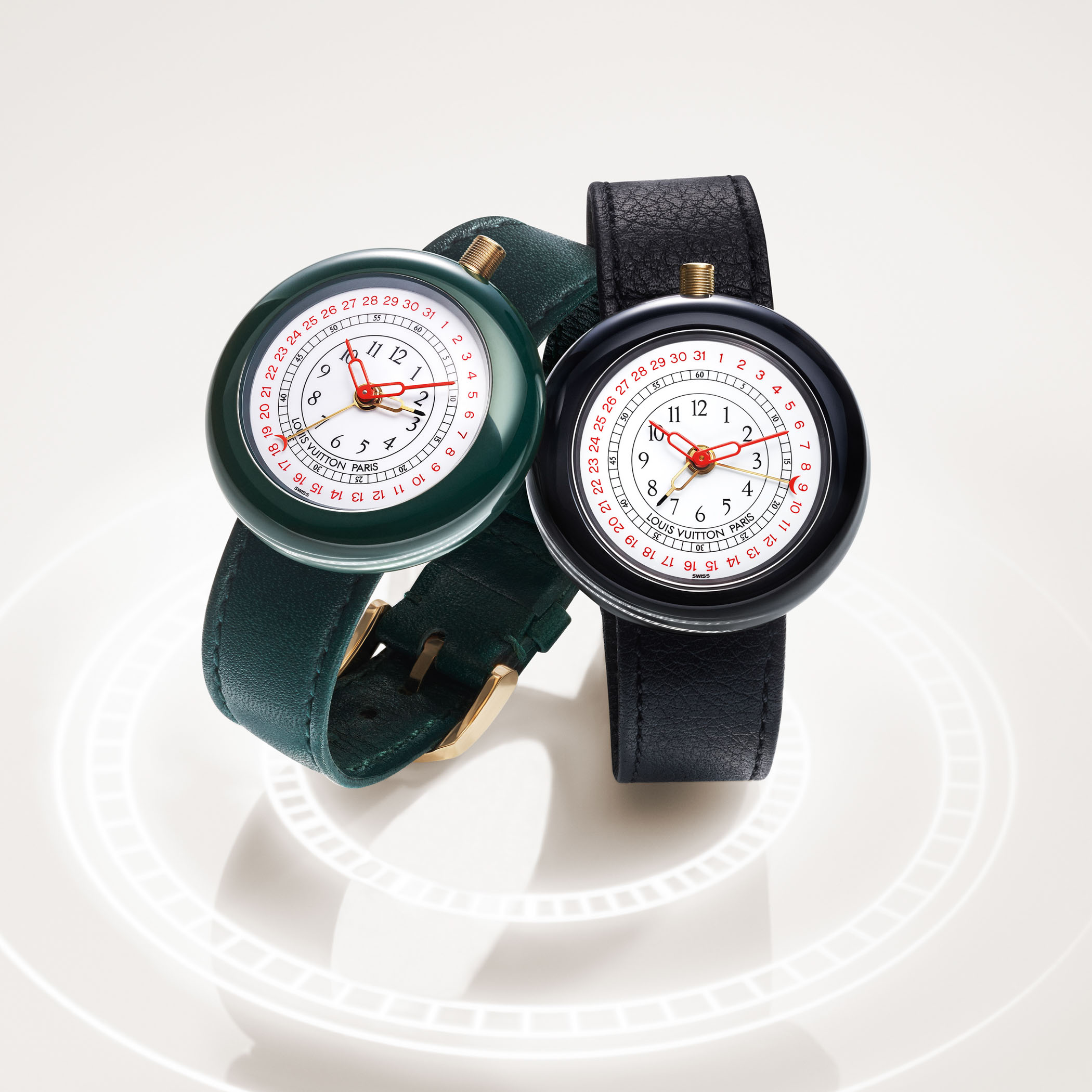
Last year, Louis Vuitton signaled a renewed interest in this historical artifact by releasing a limited-edition mechanical version of the Monterey rendered in a smooth, polished yellow gold case measuring 39mm. While successful, collectors understood that the gold model was merely a stepping stone toward a more authentic horological resurrection.
2026: The Ceramic Renaissance
Today, Louis Vuitton honors the true spirit of the 1988 LV II by launching two permanent references in high-tech ceramic: one in deep green and the other in sleek black. By returning to the original 37mm sizing and utilizing ceramic—the material that defined the industrial brilliance of the LV II—the brand has effectively closed a 38-year loop.
Supporting Data: Specifications and Engineering
The new Louis Vuitton Monterey Ceramic models are feats of modern manufacturing, blending architectural purity with high-performance watchmaking.
Case and Ergonomics
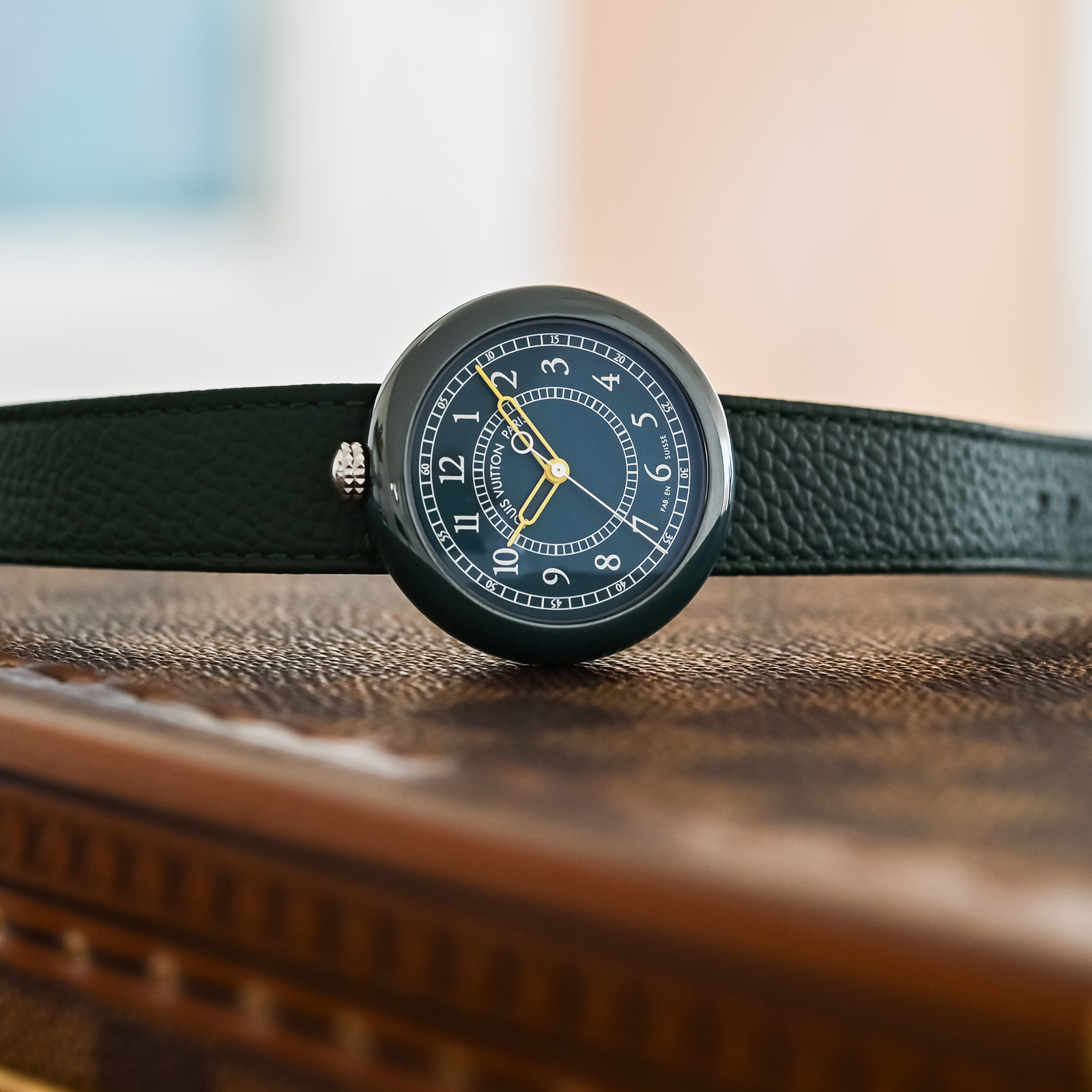
The signature pebble-shaped profile has been meticulously redesigned. Rather than employing cheap injection-molding techniques often used in mass-market ceramics, Louis Vuitton crafts these cases from a precise blend of ceramic powder, zirconium oxide, and custom pigments.
- The mixture is compressed into a solid block.
- It is sculpted on a specialized three-axis machine to carve out the organic pebble curves.
- The piece is fired at 1,000°C to lock in the permanent, rich coloration.
- Final manual grinding and hand-polishing treatments yield a high-gloss, mirror-like finish.
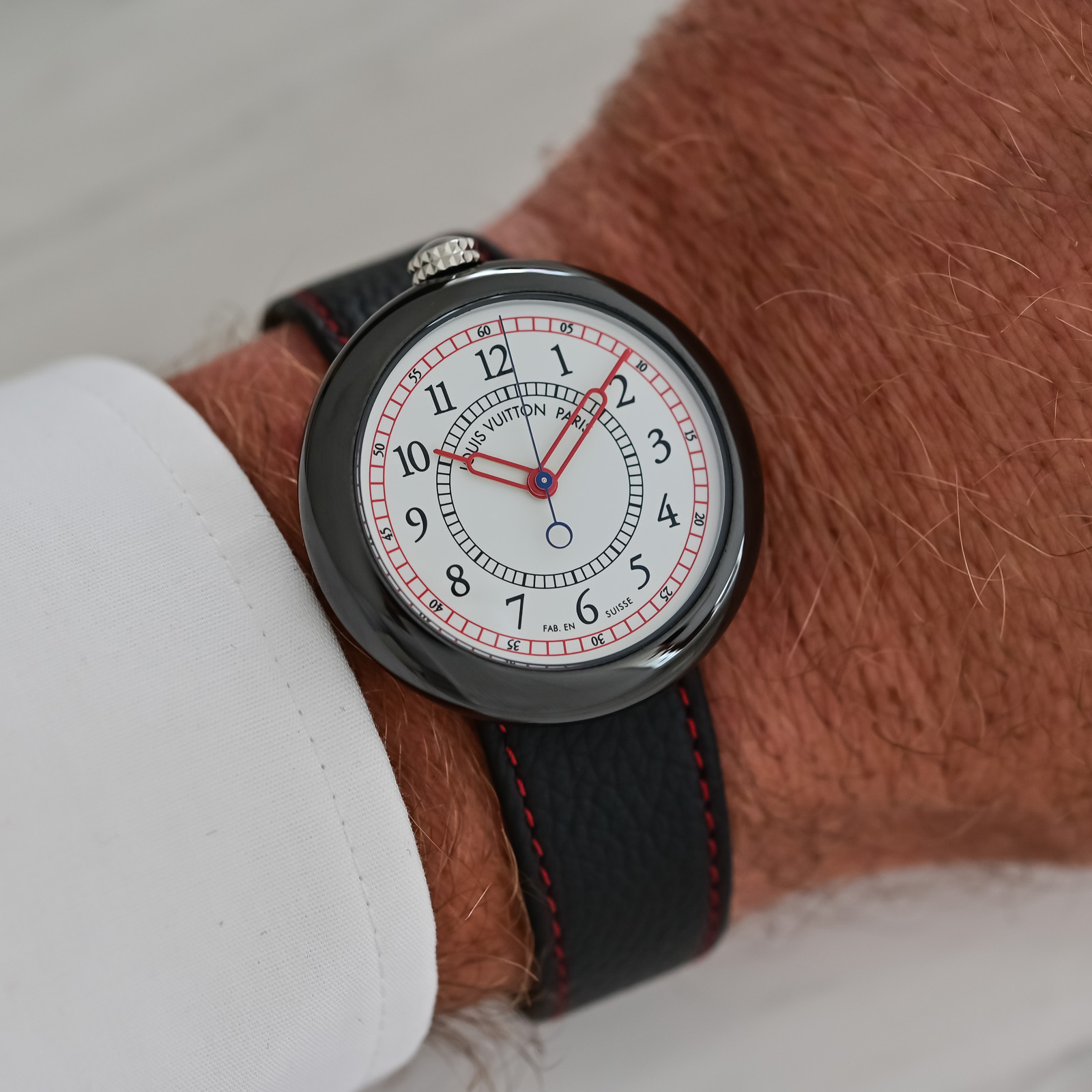
Measuring 37mm across and 11mm thick, the case is a mere 2mm thicker than its 1988 quartz ancestor to safely house the automatic mechanical caliber within. The steel crown at 12 o’clock has been subtly enlarged and decorated with a tactile Clous de Paris (hobnail) texture, improving grip while maintaining structural symmetry.
Furthermore, to maintain the uninterrupted flow of Aulenti’s original lug-less design, the straps do not attach via traditional spring bars. Instead, an ingenious system on the solid caseback allows the calfskin strap to thread directly beneath the case, creating a seamless, floating integration on the wrist.
Dial Architecture
The new Monterey offers two distinct aesthetic personalities:
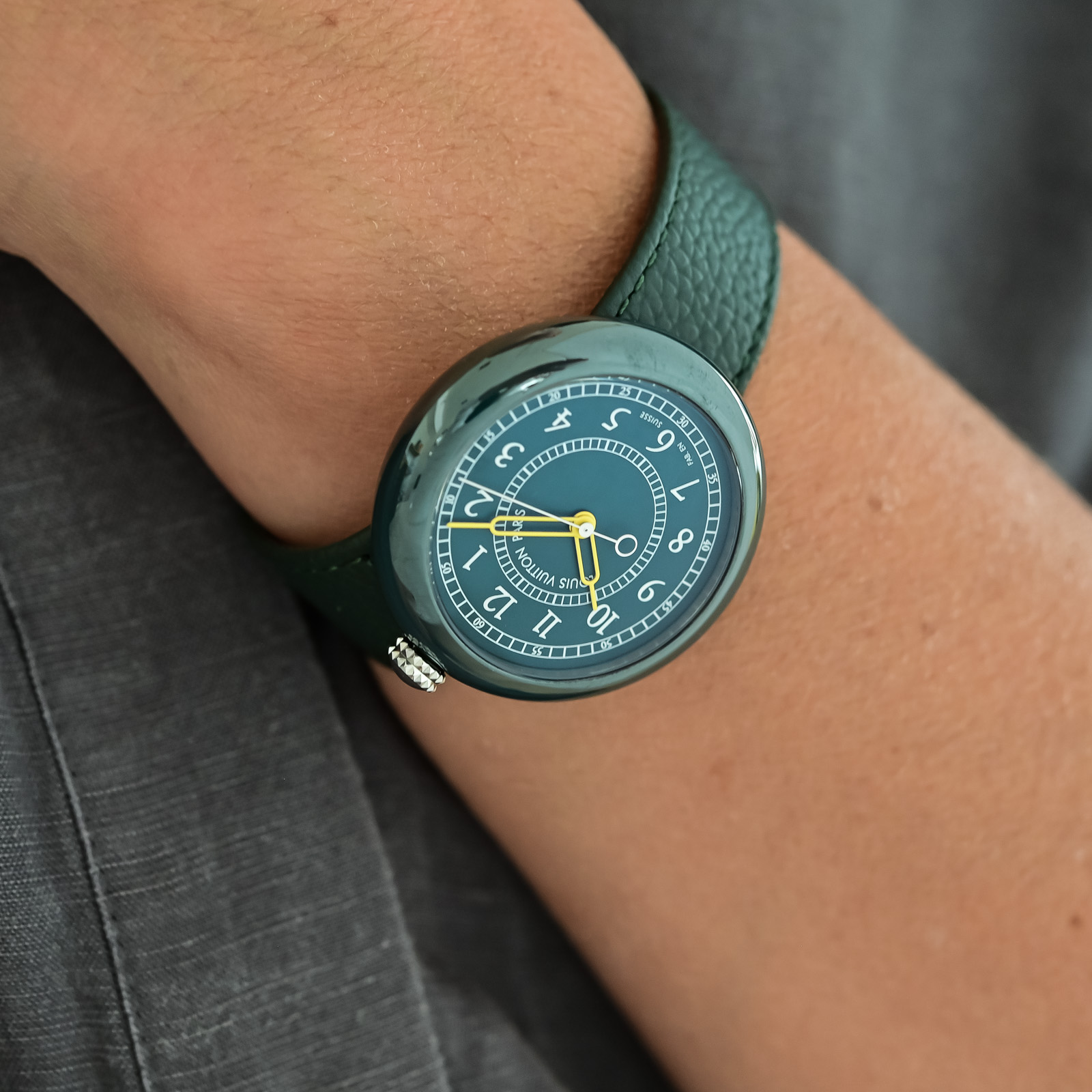
- The Green Edition: Features a monochromatic green ceramic case paired with a matching green lacquered dial, offset by vibrant yellow lacquered hour and minute hands, a white peripheral railway-style minute track, and a delicate blue seconds hand with an openworked counterweight.
- The Black Edition: Features a high-contrast black ceramic case housing a crisp white lacquered dial, matched with striking red lacquered syringe hands, a red railway minute track, and the same fine blue central seconds hand.
Both dials are protected by a sapphire crystal with an anti-reflective coating, and both lean into a cleaner, time-only aesthetic by omitting the date and alarm complications found on select historical pieces.
The Movement: Calibre LFT MA01.02
Conceived, developed, and assembled entirely in-house by La Fabrique du Temps Louis Vuitton, the engine driving the Monterey Ceramic is hidden behind a solid caseback.
- Dimensions: 23mm x 5.4mm
- Components: 174 parts, including 26 jewels
- Frequency: 28,800 vibrations per hour (4Hz)
- Power Reserve: 45 hours
- Winding: Self-winding mechanism driven by an 18k pink gold rotor decorated with distinct V-shaped notches.
- Finishing: True to high-horology standards, the hidden movement boasts sandblasted bridges with micro-sandblasted edges, perlage (circular graining) on the mainplate, polished bevels, and colourless jewels.
Complete Technical Specifications Table
| Feature | Specification Details |
|---|---|
| Case Material | High-tech glossy ceramic (available in Black or Green) |
| Case Dimensions | 37mm diameter x 11mm thickness |
| Crystal | Sapphire crystal with anti-reflective coating; closed caseback |
| Crown | Steel crown at 12 o’clock with Clous de Paris texture |
| Water Resistance | 30 meters (3 ATM) |
| Dials | Green: Green lacquered dial with yellow syringe hands, white railway track. Black: White lacquered dial with red syringe hands, red railway track. Both feature a needle-thin blue central seconds hand. |
| Movement | Calibre LFT MA01.02 (Conceived & assembled by La Fabrique du Temps) |
| Movement Specs | Automatic, 4Hz (28,800 vph), 45-hour power reserve, 174 components, 26 jewels, 18k pink gold V-notched oscillating weight |
| Strap | Black or green calfskin leather strap with a steel pin buckle |
| Collection Status | Permanent collection |
| Retail Price | EUR 23,000 |
Official Responses and Industry Context
While traditional luxury houses often rely on safe, predictable design revivals—such as replicating vintage dive watches or standard round dress pieces—Louis Vuitton’s approach with the Monterey Ceramic underscores a bold commitment to design-forward architecture.
Executives at La Fabrique du Temps have repeatedly emphasized that the house views watchmaking not merely as a mechanical exercise, but as an extension of its foundational philosophy: travel, design ingenuity, and uncompromising luxury craftsmanship. By leaning into Gae Aulenti’s unconventional 1988 blueprint, Louis Vuitton is actively rewriting its historical narrative.
Industry analysts note that while the 2002 Tambour established Louis Vuitton as a serious contender in fine watchmaking, the repositioning of the Monterey collection highlights a deeper, more sophisticated design heritage. By utilizing advanced ceramic manufacturing processes rather than outsourcing generic case shapes, the brand is signaling to serious horological collectors that it possesses the technical chops to match its high-fashion prestige.
Implications for the Luxury Watch Market
The launch of the permanent Louis Vuitton Monterey Ceramic collection carries several profound implications for the high-end watch market:
- The Elevation of "Non-Traditional" Design: For decades, the watch market has been dominated by circular cases with standard lug configurations. By championing Aulenti’s pebble-shaped, lug-less geometry, Louis Vuitton is proving that collectors are increasingly hungry for organic, architectural shapes that break away from conventional design language.
- Ceramic as a Baseline for Haute Horlogerie: Once treated as an exotic, experimental material reserved for high-end sports watches, ceramic has now fully cemented its place in dressier, design-centric timepieces. Louis Vuitton’s meticulous three-axis machining and hand-polishing process raise the bar for how ceramic can be shaped into complex, curvaceous profiles.
- Solidifying La Fabrique du Temps’ Reputation: By outfitting these watches with a high-frequency, beautifully finished in-house movement (Calibre LFT MA01.02) rather than relying on third-party movements, Louis Vuitton continues to distance itself from the "fashion watch" stigma. At EUR 23,000, these pieces compete directly with established legacy manufactures, proving that the house’s horological arm can stand proudly on pure mechanical merit.
Ultimately, the Louis Vuitton Monterey Ceramic is more than a nostalgic nod to the late 1980s. It is a confident assertion of design identity, proving that Louis Vuitton’s watchmaking future is just as compelling as its storied past.