Main Facts
In the contemporary landscape of agave-based spirits, few brands have captured the attention of both casual enthusiasts and dedicated connoisseurs quite like Mijenta. Renowned for producing exquisite aged and un-aged expressions—all crafted entirely without the use of chemical additives—Mijenta has firmly established itself as a gold standard in modern tequila production. While strict regulations governed by Mexico’s Tequila Regulatory Council (CRT) prohibit brands from explicitly printing "additive-free" on their labels, Mijenta’s transparent, meticulous approach to sourcing and distillation has made it a darling of the premium spirits community.
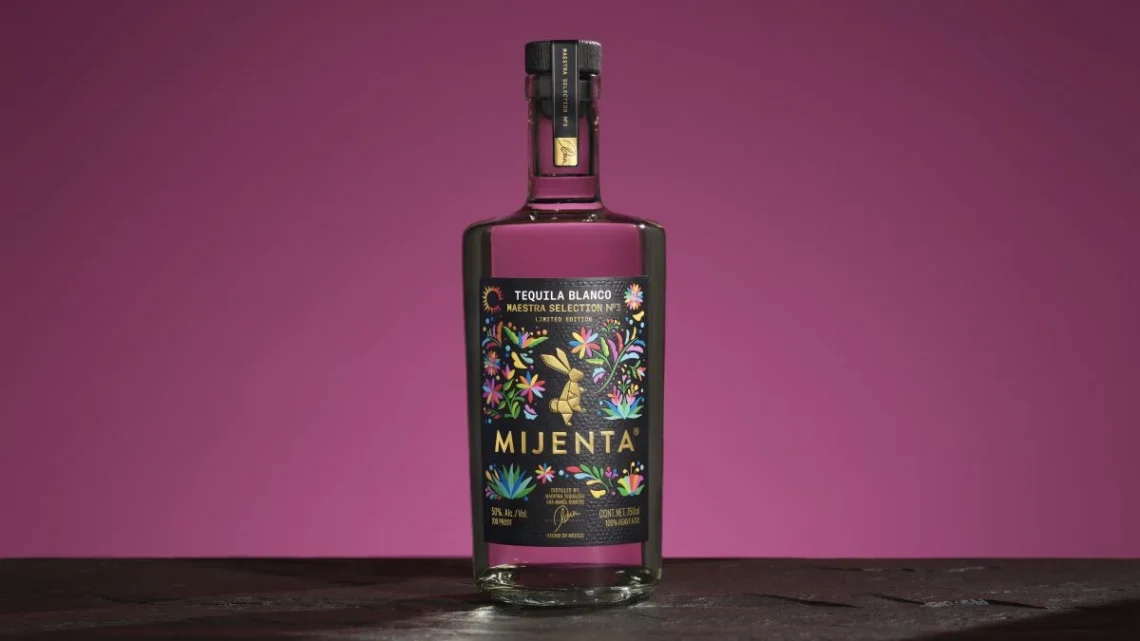
The brand’s latest triumph is the Maestra Selection No. 3, a limited-edition blanco tequila that showcases the absolute pinnacle of traditional craftsmanship. Priced at a suggested retail price (SRP) of $100, this new expression is currently rolling out to select retailers nationwide and is available directly through the brand’s official website.
What sets Maestra Selection No. 3 apart is a holistic, uncompromising dedication to time-honored production techniques. Distilled from rare, eight-year-old agaves de semilla (agaves grown from seed rather than the conventional cloning method) harvested in Jamay, Jalisco, this blanco represents an intricate fusion of ancient agricultural practices and modern refinement. The agave piñas were slow-cooked in traditional masonry ovens constructed from volcanic stone sourced directly from Popocatépetl, the active volcano near Mexico City. Following the cook, the agave was crushed using a tahona—a massive, traditional volcanic stone wheel that gently extracts the sweet juices without imparting harsh, bitter plant fibers.
Fermentation took place naturally in open-air wooden tanks alongside the agave fibers, maximizing the depth of flavor before the wash was twice-distilled in traditional copper pot stills. Eschewing the industry standard of bottling immediately after distillation, Maestra Selection No. 3 was rested in porous clay pots for 15 days. This unique post-distillation aeration process allows the spirit to breathe, softening any raw edges while imparting subtle, distinct mineral complexities before it is finally bottled at a strength designed to highlight its vibrant profile.
Chronology: The Evolution of Mijenta
To fully appreciate the significance of Maestra Selection No. 3, one must examine the rapid, deliberate trajectory of the brand since its inception.
2020: The Genesis
Mijenta was founded in 2020 by an industry powerhouse trio: entrepreneur and spirits expert Juan Coronado, creative director and co-founder Elise Som, and former Bacardi CEO Mike Dolan. From day one, the founders envisioned a brand that would not only produce world-class tequila but also champion environmental sustainability, community support, and total transparency. Crucially, they brought on master distiller Ana Maria Romero—affectionately known as the maestra tequilera—to spearhead the liquid program. Though Romero maintains consulting relationships with a select few other top-tier producers, her creative heart remains deeply intertwined with Mijenta, shepherding every core and limited-edition expression to date.
The Maestra Selection Journey
The Maestra Selection series was conceived as an experimental playground for Romero, a laboratory of sorts where single variables of terroir and agriculture could be isolated, tested, and celebrated.
- Maestra Selection No. 1: The inaugural release broke convention by utilizing agaves de semilla. Instead of relying on traditional vegetative propagation (planting hijuelos, or offshoots/clones from mature plants), No. 1 was cultivated from seeds, promoting genetic diversity within the agave fields and resulting in a profoundly complex flavor profile that stunned critics.
- Maestra Selection No. 2: The second chapter shifted its focus to the geographical boundaries of the Denomination of Origin for Tequila (DOT). Romero sourced agaves from all five official Mexican states authorized to produce tequila—Guanajuato, Jalisco, Michoacán, Nayarit, and Tamaulipas—blending the unique climatic and soil characteristics of each region into a single, cohesive masterwork.
- Maestra Selection No. 3 (Present Day): The latest release synthesizes the lessons learned from its predecessors. Rather than isolating just a single agricultural method or a multi-state terroir, No. 3 zooms out to encompass the entirety of the craft, marrying seed-grown agaves from Jamay with ancient cooking, crushing, and resting techniques.
Supporting Data and Tasting Notes
For spirits enthusiasts, the proof is always in the glass. We had the exclusive opportunity to sample Maestra Selection No. 3 prior to its public launch, and the results are nothing short of spectacular.
Sensory Analysis
- Appearance: Crystal clear, bright, and viscous, clinging invitingly to the sides of the glass with slow-moving tears.
- Nose: An immediate wave of sweet, roasted agave rises from the glass, quickly complemented by sharp top notes of crisp citrus peel, lemongrass, and freshly mown grass. Beneath the vegetal brightness lie deeper undertones of damp earth, white pepper, and a subtle whisper of baking spices.
- Palate: The entry is surprisingly luscious, coating the mouth with an initial rush of natural sweetness. This gives way to a complex, evolving mid-palate where herbal and earthy notes take center stage. Flavors of green bell pepper, wet stone, and zesty lime are anchored by a robust core of cooked agave.
- Finish: Long, warming, and exceptionally refined. The peppery kick fades gracefully into unexpected, delicate nuances of dark chocolate and toasted almond, leaving a clean, mineral-driven aftertaste that begs for another sip.
The Art of Packaging
Mijenta has always placed a heavy emphasis on visual storytelling, viewing packaging as an extension of the liquid itself. For Maestra Selection No. 3, the brand reunited with renowned Mexico City-based visual artist Sophia Castellanos—the creative visionary behind the striking label design of Maestra Selection No. 2. Castellanos contributed an intricate, vibrant original artwork titled "Tapestry of Dreams" for the bottle’s label. The piece visually translates the complex, dreamy layering of flavors and historical production methods that went into the liquid, making the bottle a striking centerpiece for any collector’s back bar.
Furthermore, Mijenta’s commitment to sustainability remains woven into the physical presentation. The bottles are crafted from locally sourced glass, adorned with labels made from paper waste generated by the agave harvesting process itself (agave bagasse), and sealed with sustainable wooden stoppers.

Official Responses and Industry Perspectives
In statements accompanying the launch, Ana Maria Romero elaborated on the philosophical shift that guided the creation of Maestra Selection No. 3.
"Every part of the production process plays a vital role in shaping the final taste profile of a tequila," Romero explained. "For this expression, I wanted to explore this impact more deeply and in a way that honors the origins and craftsmanship of tequila. While previous expressions in this series have explored a single variable at a time—first agave cultivation methods, then terroir—this release takes a broader view of the entire craft."
Romero emphasized that the goal was not merely to recreate the past, but to synthesize historical methods into a forward-thinking spirit. "The result is a tequila that is both unmistakably Mijenta and a unique spirit shaped by production methods not used in our core expressions," she added.
Industry analysts have noted that releases like the Maestra Selection series are indicative of a broader, highly lucrative shift in the global spirits market. Consumers are increasingly turning away from mass-produced, celebrity-backed tequilas reliant on diffuser-based extraction and artificial flavorings. Instead, a discerning class of drinkers is rewarding brands that champion artisanal pedigree, transparency, and agricultural heritage. By pulling back the curtain on seed-grown agaves, volcanic ovens, and clay-pot aeration, Mijenta is actively educating its consumer base while elevating the cultural status of blanco tequila from a shot-taking party spirit to a contemplative, slow-sipping luxury good.
Implications for the Tequila Industry and Future Trends
The debut of Mijenta’s Maestra Selection No. 3 carries significant implications for the future of agave spirits production, marketing, and consumption.
1. The Renaissance of Agaves de Semilla
For decades, the commercial tequila industry has relied almost exclusively on vegetative propagation (cloning hijuelos). While efficient, this practice reduces genetic diversity across agave fields, potentially leaving crops more vulnerable to climate change, pests, and disease. By successfully championing agaves de semilla across multiple limited releases, Mijenta is proving that seed cultivation is not only viable for high-end spirits but yields exceptional flavor complexity. As other producers take note, we may see a wider industry movement toward agricultural biodiversity and seed-grown agaves.
2. Pushing Back Against Industrial Shortcuts
In an era where industrial tequila giants utilize high-pressure autoclaves, column stills, and commercial yeast strains to maximize speed and yield, Mijenta’s adherence to labor-intensive methods—such as masonry volcanic stone ovens, tahona crushing, and clay pot resting—serves as a stark reminder of what artisanal tequila should taste like. Maestra Selection No. 3 sets a high benchmark that forces competitors to justify their production shortcuts, empowering consumers to ask deeper questions about how their favorite spirits are made.
3. The Elevation of Blanco Tequila
Historically, the prestige and high price tags in the tequila world were reserved almost exclusively for añejos and extra añejos, operating under the outdated consumer assumption that wood aging equals quality. Mijenta, alongside other pioneering additive-free brands, is flipping this narrative on its head. By pricing a blanco tequila at $100 and marketing it as a complex, collectible masterpiece, Mijenta proves that the uninhibited, un-aged essence of the agave plant can stand shoulder-to-shoulder with the finest aged spirits in the world.
As bottles of Maestra Selection No. 3 hit shelves across the United States, they represent more than just a new product launch. They are a testament to the power of patience, respect for the earth, and the boundless potential of agave when placed in the hands of a true master. For collectors, connoisseurs, and anyone willing to expand their palate, hunting down a bottle of this remarkable blanco is nothing short of essential.