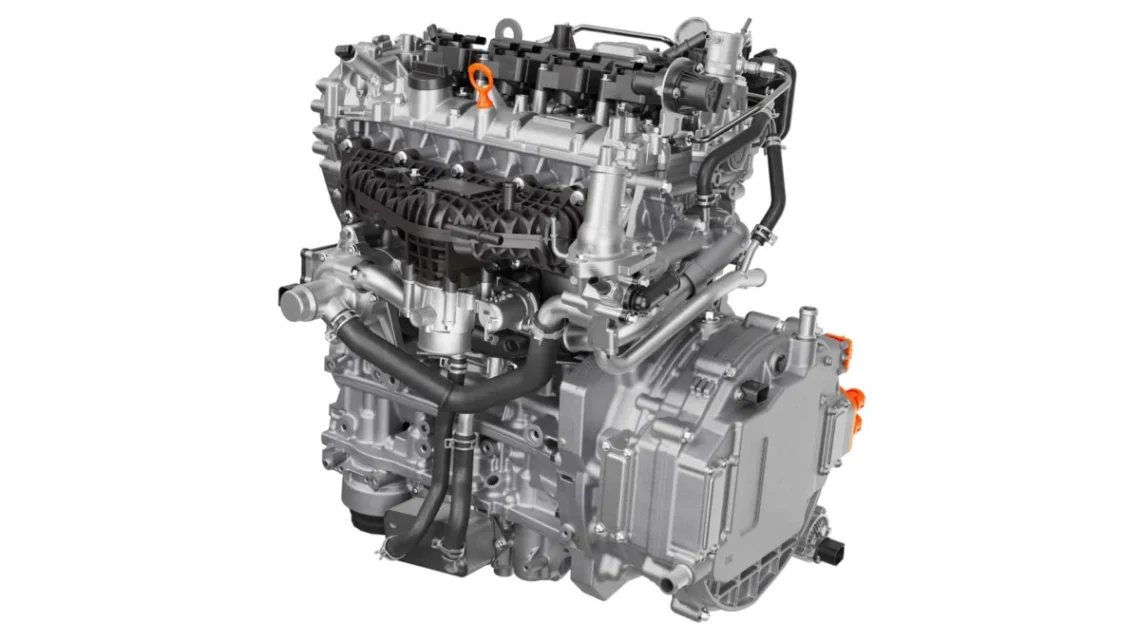
In a bold move that challenges the conventional narrative of the automotive industry’s transition to electrification, Horse Powertrain—the strategic joint venture between the Renault Group and Geely—has unveiled a revolutionary power unit. The "D20 Methanol" range extender represents a significant pivot in internal combustion technology, designed specifically to serve as a high-efficiency generator for battery-electric vehicles (BEVs). By utilizing methanol as a fuel source and integrating cutting-edge axial-flux motor architecture, the company is positioning itself at the forefront of alternative-fuel propulsion.
The Genesis of a Hybrid Paradigm
The automotive landscape has been dominated by the binary choice between pure internal combustion and battery-electric drivetrains. Horse Powertrain, however, is betting on a nuanced middle ground. Formed as a collaboration between French automotive giant Renault and the Chinese conglomerate Geely, the company was established to lead the development of next-generation low-emission powertrains.
The D20 Methanol system is not a traditional engine meant to drive the wheels directly; rather, it acts as a dedicated generator. This "range extender" configuration allows the engine to operate within its most efficient RPM band constantly, providing a steady charge to the vehicle’s battery pack. By offloading the mechanical burden of driving the wheels to electric motors, the D20 bypasses the traditional inefficiencies associated with varying driving loads.
Technical Specifications: The Power of Compactness
The technical architecture of the D20 is characterized by its remarkable power density. Weighing in at a mere 375 pounds, the entire unit is designed for minimal footprint, a necessity for modern vehicle platforms that must prioritize cabin space and aerodynamic efficiency.
Axial-Flux vs. Radial-Flux Motors
Perhaps the most notable innovation within the D20 is the integration of compact axial-flux motors. In a traditional radial-flux motor—the industry standard for decades—the rotor spins inside the stator, resulting in a cylindrical shape that occupies significant volume.
The D20’s axial-flux motors flip this script. In this design, the rotor and stator are layered as discs, stacked in a "pancake" configuration. This allows for a significantly more compact package. According to internal data provided by Horse Powertrain, these motors are 46 percent shorter than their radial-flux counterparts while simultaneously delivering 63 percent more power. The unit features a yokeless design, which enables the system to operate with two rotors surrounding a single stator, maximizing torque output while minimizing weight.
Fuel-to-Energy Efficiency
The D20 boasts a 47-percent fuel-to-energy conversion ratio. To put this in perspective, the system requires only 5.2 gallons of methanol to fully recharge a 40-kilowatt-hour battery. With an electrical efficiency rating of 96.4 percent, the powertrain consumes approximately 2.1 kilowatt-hours of methanol to generate 1 kilowatt-hour of usable electrical energy. This high efficiency is achieved through a high-energy ignition system capable of supporting "ultra-lean" methanol combustion, a process that significantly lowers emissions profiles compared to traditional gasoline engines.
Chronology of Development
The road to the D20 Methanol powertrain reflects the rapid pace of R&D at Horse Powertrain.
- Early 2023: Horse Powertrain announces its official formation, signaling a concentrated effort to keep the combustion engine relevant through hybridization and alternative fuels.
- Mid-2023: Initial prototyping of the axial-flux generator begins, focusing on the integration of the motor directly onto the engine’s crankshaft to reduce mechanical losses.
- Early 2024: Testing phases reveal that the "pancake" motor architecture outperforms previous iterative designs in both volumetric power density and heat management.
- Late 2024: Official unveiling of the D20 Methanol system, confirming that the unit meets stringent European and Chinese emissions standards, clearing the path for potential mass-market implementation.
Official Perspectives: Bridging the Gap
Fortune Zhao, Chief Technology Officer at Horse Powertrain, emphasizes that the D20 is more than just an engine; it is a proving ground for future mobility solutions.
"The Horse D20 Methanol is a staging ground for a range of cutting-edge technologies to deliver a powertrain of unparalleled compactness and efficiency," Zhao stated during the launch. "This can be seen in our use of an axial flux motor to achieve the necessary width and volumetric power density for the unit, marking one of the first uses of the technology in a mass-market automotive powertrain."
Zhao’s commentary underscores the company’s philosophy: that combustion technology should not be discarded, but rather evolved to serve as the silent partner in an electric-first ecosystem. By utilizing methanol—which can be produced from renewable sources—the company aims to address the range anxiety associated with EVs without relying on fossil-based gasoline.
Implications for the Global Automotive Market
The development of the D20 carries profound implications for the global transition to sustainable transportation.
Emission Compliance
One of the most significant barriers to the survival of the combustion engine is the tightening of emissions regulations in Europe and China. By achieving compliance with these standards, the D20 proves that high-energy density engines can still play a role in a decarbonized future. Methanol combustion, specifically, produces significantly lower levels of particulate matter and nitrogen oxides (NOx) compared to diesel or standard gasoline.
The Role of Range Extenders
The industry is currently witnessing a resurgence in interest regarding range-extended electric vehicles (REEVs). For many consumers, the infrastructure for full battery-electric charging remains insufficient, particularly in rural areas or during long-distance travel. The D20 provides an "all-in-one" solution: the benefits of electric torque and silent operation, with the convenience of liquid-fuel refilling.
Manufacturing and Scalability
Because the D20 is a product of a joint venture between Renault and Geely, it is designed with global scalability in mind. The manufacturing processes used for these engines can be adapted across multiple brands under the Geely umbrella (such as Volvo, Polestar, and Lotus) and the Renault-Nissan-Mitsubishi alliance. This allows for economies of scale that could bring the cost of this sophisticated technology down to a level suitable for mass-market vehicles.
The Road Ahead: Challenges and Opportunities
Despite the technical successes of the D20, the path to widespread adoption is not without hurdles. The primary challenge remains the global infrastructure for methanol refueling. Unlike gasoline or electricity, methanol stations are not yet ubiquitous. However, the D20’s ability to be deployed in specific markets—particularly China, where methanol fuel initiatives are already underway—gives it a distinct advantage.
Furthermore, the integration of axial-flux motors into mass-production vehicles is still in its infancy. While the technology is objectively superior in terms of power density, the manufacturing complexities of high-precision discs and magnetic field management mean that cost-optimization will be a priority for Horse Powertrain over the next several years.
Conclusion: A Nuanced Future
The Horse D20 Methanol powertrain is a testament to the ingenuity of modern automotive engineering. By refusing to accept that the internal combustion engine is a "dead" technology, Horse Powertrain has instead transformed it into a sophisticated power plant for the electric era.
While the D20 is unlikely to find its way into the American market in the immediate future—where the current focus remains heavily skewed toward pure battery-electric vehicles—the underlying technologies, particularly the axial-flux motors and high-efficiency ignition systems, are destined to become staples of future vehicle architectures. Horse Powertrain has provided a compelling roadmap: one where the efficiency of the electric motor and the energy density of liquid fuels coexist, offering a pragmatic solution to the complex challenges of global mobility.
As the industry moves forward, the D20 will serve as a vital case study in how collaboration and technological agility can redefine what is possible in the quest for cleaner, more efficient transportation. Whether or not it becomes the dominant standard, it has undoubtedly raised the bar for what we expect from the next generation of hybrid propulsion.