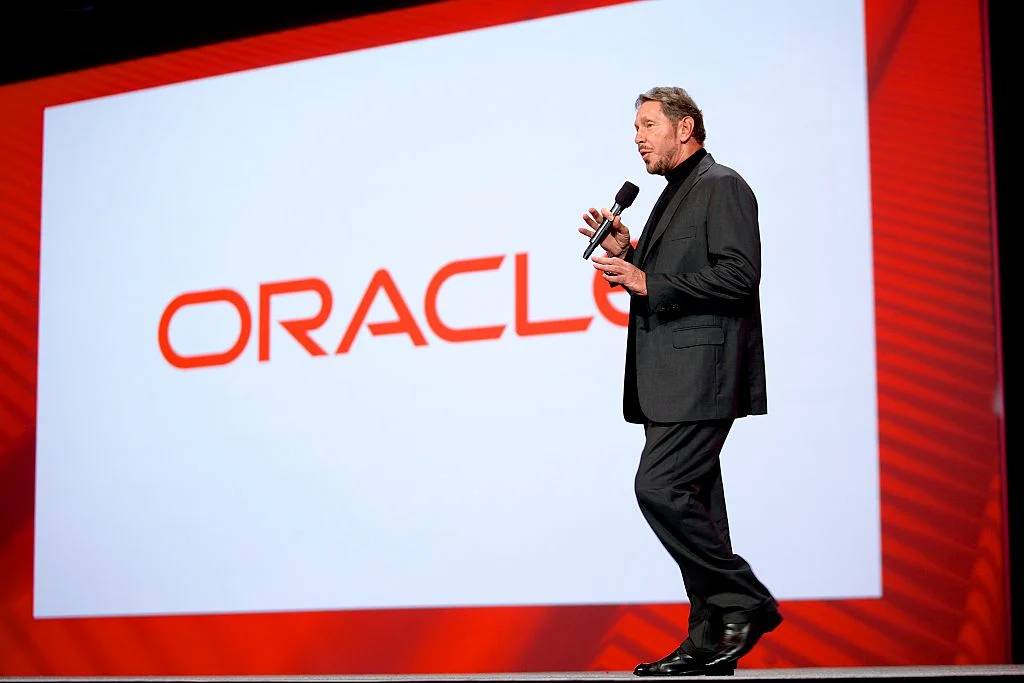
SAN FRANCISCO — In a sudden and closely watched financial reversal, Oracle co-founder and executive chairman Larry Ellison has officially canceled a planned sale of 50 million shares of company stock, valued at approximately $7.5 billion. The decision, announced by the enterprise technology titan on a Saturday, eliminates a massive insider liquidation that had previously been disclosed to federal regulators.
The abrupt cancellation comes at a critical juncture for Oracle. The company is currently executing a capital-intensive pivot toward artificial intelligence infrastructure, absorbing significant expenditures for next-generation data centers, while simultaneously carving out a prominent role in the restructured U.S. operations of short-form video platform TikTok. Beyond his duties at Oracle, Ellison’s vast personal capital remains tied to high-stakes entertainment industry maneuvers, notably backing his son David Ellison’s sprawling media acquisition bids.
While Oracle executives have remained tight-lipped regarding the precise catalysts behind Ellison’s change of heart, market analysts are scrutinizing the move against a backdrop of macroeconomic headwinds, shifting technology sector dynamics, and the billionaire’s broader portfolio management.
Main Facts
The core development centers on a regulatory filing amendment submitted over the weekend. According to official disclosures, Larry Ellison—one of the world’s wealthiest individuals—has entirely scrapped his pre-scheduled trading plan.
- The Scrapped Sale: Ellison had previously established a plan to divest 50 million shares of Oracle common stock. Based on market valuations at the time of the initial filing, the block of shares was estimated to be worth roughly $7.5 billion.
- Current Status: In a definitive statement released on Saturday, Oracle clarified the current state of the executive’s holdings: “No Oracle stock was sold under that plan, and he has no other plans to sell any of his Oracle stock.”
- Market Context: The cancellation arrives while Oracle’s equity performance faces sustained pressure. As of market close ahead of the announcement, Oracle (ORCL) stock has experienced a significant downturn, plunging 22% since the beginning of the year.
- Strategic Diversification: Ellison’s decision to retain his massive equity stake coincides with a period of intense capital deployment by Oracle into artificial intelligence data centers, its integration as a key security and ownership partner in TikTok’s U.S. business, and heavy financial commitments to family-led media ventures.
Despite the billions of dollars involved and the potential signaling effect of an insider selling such a massive stake, Oracle’s corporate communications team offered no specific rationale for why the billionaire pulled the plug on the transaction.
Chronology
To fully understand the weight of Ellison’s weekend reversal, it is necessary to examine the timeline of events leading up to the announcement, charting how Oracle’s operational strategies and Ellison’s personal financial initiatives have intersected over the past year.
Late 2025: Expanding Media Horizons
- December 2025: Larry Ellison’s financial influence extends aggressively beyond enterprise software. Mid-month reports reveal that Ellison is utilizing his immense personal wealth to financially back his son, David Ellison, in a high-profile pursuit of media giant Warner Bros. The multi-billion-dollar backing underscores the family’s ambitions to reshape the traditional Hollywood landscape.
Early 2026: Securing TikTok and Early Stock Pressures
- January 2026: Oracle cements its footprint in geopolitical and consumer tech circles by emerging as a primary owner and security partner for TikTok’s U.S. operations, a strategic positioning designed to address long-standing national security and data privacy concerns regarding the platform’s foreign ownership.
- Early 2026: Macroeconomic pressures and high capital expenditures begin to weigh heavily on Oracle’s share price. By the spring, the stock reflects investor anxieties regarding the sheer cost of competing in the generative AI arms race.
Mid-2026: The Data Center Buildout and Legal Battles
- June 2026: Oracle doubles down on its infrastructure narrative, releasing earnings reports and strategic updates highlighting massive, ongoing expenditures directed toward building out advanced data centers capable of handling massive AI workloads.
- August 2026: Back on the entertainment front, the Paramount-Warner Bros. merger and acquisition drama intensifies. The transaction, heavily underpinned by Larry Ellison’s capital, becomes deeply entangled in regulatory scrutiny and is contested heavily in court, drawing involvement from state legal authorities, including California Attorney General Rob Bonta.
- September 2026: Reuters and other financial outlets report on regulatory filings indicating Ellison’s intent to offload 50 million Oracle shares—a transaction slated to net him roughly $7.5 billion.
- September 12–13, 2026: In a sudden reversal, Oracle announces on Saturday that Ellison has completely canceled the planned stock sale, assuring the public that zero shares were liquidated and that no alternative divestment plans are currently in place.
Supporting Data
A closer examination of the financial, operational, and legal data surrounding Oracle and Larry Ellison provides critical context for why the cancellation of a $7.5 billion stock sale commands such intense interest from Wall Street.
Oracle’s Stock Performance and Valuation Metrics
Oracle has long been a heavyweight in enterprise database management, cloud infrastructure, and enterprise resource planning (ERP). However, the 2026 fiscal landscape has introduced notable friction.
- Year-to-Date Performance: Oracle stock has fallen 22% since the start of the year. This stark correction reflects a combination of broader tech sector valuation resets and investor concerns regarding compressed operating margins as capital expenditures soar.
- The AI Infrastructure Cost: Competing against hyperscale cloud providers like Amazon Web Services (AWS), Microsoft Azure, and Google Cloud requires unprecedented capital investments. Oracle’s aggressive strategy to build and equip high-performance data centers tailored for artificial intelligence training and inference demands billions of dollars in upfront outlays, placing a heavy burden on near-term cash flows.
The TikTok Partnership
Oracle’s role as a key security and structural partner for TikTok’s U.S. operations places the enterprise software giant at the epicenter of international technology policy. While this venture secures a massive, high-profile commercial relationship, it also injects regulatory complexity and operational responsibilities that diverge from Oracle’s traditional business-to-business (B2B) software model.
The Ellison Family Media Empire
Larry Ellison’s personal balance sheet is increasingly intertwined with the ambitions of his son, David Ellison.
- The Warner Bros. Bid: The financial backing required to launch and sustain Paramount’s renewed multi-billion-dollar bid for Warner Bros. is estimated at roughly $40 billion in total transaction value, with Larry Ellison serving as the ultimate financial guarantor.
- Legal and Regulatory Hurdles: This entertainment industry consolidation has faced stiff resistance. Settlement talks and antitrust challenges—such as those overseen by California regulators—mean that massive amounts of capital must remain fluid, secure, or ready to be deployed at a moment’s notice to support legal defenses, restructuring, or equity commitments.
Official Responses
Corporate governance norms dictate that major insider transactions—especially those involving billions of dollars by a co-founder and executive chairman—are handled with strict adherence to Securities and Exchange Commission (SEC) guidelines, typically utilizing pre-arranged trading plans (such as Rule 10b5-1 plans) to avoid allegations of insider trading.
When Oracle filed notice regarding the planned sale of 50 million shares, market watchers assumed the transaction was part of Ellison’s routine wealth management, estate planning, or capital reallocation strategy. However, the corporate response to the cancellation was notably concise.
In its Saturday release, the company stated:
“No Oracle stock was sold under that plan, and he has no other plans to sell any of his Oracle stock.”
By explicitly stating that Ellison holds no other plans to unload his equity, Oracle’s leadership sought to immediately calm nervous retail and institutional investors. In the world of technology stocks, an insider liquidating $7.5 billion can easily be interpreted as a lack of confidence in near-term prospects. Conversely, an executive withdrawing a massive sell order—especially during a period when the stock is down 22%—can be read as a strong vote of confidence in the company’s underlying turnaround strategy.
To date, Larry Ellison himself has not issued a personal statement elaborating on the decision, leaving financial analysts to parse the corporate filings and weigh the broader macroeconomic and strategic implications.
Implications
The cancellation of Larry Ellison’s $7.5 billion stock sale ripples across multiple fronts, carrying distinct implications for Oracle’s market standing, its aggressive AI pivot, and the billionaire’s personal ventures.
1. Reassurance for Oracle Shareholders
For months, Oracle investors have weathered a challenging market environment. With the stock down 22% year-to-date, news of a planned $7.5 billion insider sale could easily have exacerbated downward pressure, fueling fears that company leadership foresaw a prolonged slump. By canceling the sale and committing to retaining his shares, Ellison sends an unambiguous signal of alignment. He retains his massive stake in Oracle, tying his immense personal net worth directly to the success or failure of the company’s current strategic roadmap.
2. Financing the AI and Cloud Infrastructure Race
Oracle’s transformation into a premier cloud and AI data center powerhouse is an expensive endeavor. Building state-of-the-art facilities equipped with specialized, high-performance GPUs and robust networking infrastructure requires continuous, heavy capital expenditure. By keeping his stock—and presumably preserving his financial liquidity and borrowing capacity elsewhere—Ellison ensures that Oracle remains anchored by a co-founder who is deeply invested, both philosophically and financially, in winning the enterprise AI race.
3. Maneuvering Capital for the Media Wars
The intersection of tech wealth and Hollywood is undergoing a historic realignment. Larry Ellison’s financial backing of David Ellison’s media ambitions—specifically the high-stakes push involving Warner Bros.—requires extraordinary liquidity and financial flexibility.
When the initial stock sale was planned, some analysts speculated the proceeds might be earmarked to fund these media acquisitions or provide collateral for complex financing packages. The cancellation of the sale raises intriguing questions about how the Ellison family intends to fund the multi-billion-dollar media consolidation. With California legal challenges and settlement negotiations surrounding the Paramount-Warner Bros. deal still fluid, Ellison may have elected to utilize alternative financing structures, leverage other assets, or adjust the timing of capital deployment to keep his Oracle equity intact.
4. Long-Term Governance and Succession
As one of the enduring pioneers of the Silicon Valley software boom, Larry Ellison’s grip on Oracle remains absolute. His decision to maintain his equity position reinforces his long-term commitment to the firm he co-founded in 1977. For institutional investors who view Ellison’s visionary leadership as an irreplaceable asset, the news that he is holding onto every single share of his planned divestment is a stabilizing development.
Conclusion
Larry Ellison’s decision to pull the plug on his $7.5 billion stock sale is more than a routine administrative update in a regulatory filing; it is a major financial event that intersects with Oracle’s high-stakes pivot toward artificial intelligence, its expanding role in national technology infrastructure via TikTok, and the high-wire act of financing a multi-billion-dollar media empire.
While Oracle’s shares continue to navigate a turbulent 2026 market—sitting down 22% year-to-date—the executive chairman’s choice to keep his massive equity stake locked in place provides a much-needed psychological anchor for investors. As Oracle races to build the data centers of tomorrow and Ellison navigates the legal and financial battlegrounds of Hollywood, the tech billionaire has made one thing abundantly clear: he is not cashing out.