By Maritime & Conservation News Desk
Updated October 2026
NEW JERSEY — In the ongoing debate over how best to protect the critically endangered North Atlantic right whale without dealing a crippling blow to the recreational boating and marine manufacturing industries, a prominent New Jersey yacht builder is stepping up its campaign.
The Viking Yacht Company is formally urging the National Oceanic and Atmospheric Administration (NOAA) to accelerate its efforts to modernize the federal vessel-speed rule. The company argues that modern marine mammal detection, radar, and artificial-intelligence (AI) technologies have advanced to a point where they can offer a precise, real-time alternative to the broad, blanket speed restrictions that have governed East Coast waters for nearly two decades.
This push for modernization follows a high-level executive order signed on September 17, which directs the Department of Commerce and NOAA to actively leverage technological advancements in marine mammal avoidance. The directive also mandates closer collaboration with private-sector innovators to integrate these systems into everyday maritime operations.
While federal agencies review these technologies, the existing 2008 rule remains firmly in place. This regulation requires most vessels 65 feet and longer to restrict their speed to 10 knots or less within designated Seasonal Management Areas (SMAs) along the U.S. East Coast. Industry leaders like Viking contend that while the conservation goals of the rule are vital, a static 10-knot restriction fails to account for modern engineering, localized whale movements, and the high-tech mitigation tools available today.
Main Facts
The core of the dispute centers on balancing the survival of one of the world’s most endangered large whale species with the operational capabilities of modern recreational and commercial vessels.
- The Conservation Challenge: The North Atlantic right whale population hovers around 360 individuals. Vessel strikes and entanglement in fishing gear remain the leading anthropogenic causes of injury and mortality for the species.
- The Federal Regulation: Enacted in 2008, the current NOAA vessel-speed rule mandates that non-compliant vessels 65 feet and greater slow down to 10 knots in specific zones during times when whales are historically known to congregate. Proposals to expand this rule to vessels 35 feet and larger have faced fierce pushback from boating and fishing associations.
- The Technological Solution: Rather than forcing all vessels to crawl at sub-10-knot speeds across massive swaths of ocean—regardless of whether a whale is present—Viking and its industry partners champion a "smart" approach. By utilizing high-definition radar, infrared cameras, acoustic monitoring, and AI-driven classification software, mariners can identify marine mammals in real-time, allowing for targeted course corrections or localized speed reductions.
- The Executive Action: The September 17 executive order shifts federal momentum toward public-private partnerships, encouraging regulatory bodies to embrace technological alternatives rather than relying solely on blunt-force geographic and seasonal mandates.
Chronology of the Right Whale Speed Rule and Industry Action
Understanding the urgency behind Viking’s recent appeal requires examining the timeline of regulatory friction, technological development, and industry mobilization over the past two decades.
2008: The Baseline Rule is Established
NOAA implements the North Atlantic Right Whale Vessel Strike Reduction Rule. It applies mandatory 10-knot speed limits to vessels 65 feet and longer in designated seasonal corridors along the Atlantic seaboard. While praised by conservationists, the rule draws criticism from mariners who note its inflexibility.
2022: Viking Launches the WAVS Taskforce
Recognizing that the regulatory landscape is shifting—and that proposed expansions threaten smaller recreational vessels—Viking Yacht Company takes a proactive stance at the Fort Lauderdale International Boat Show. The builder establishes the Whale and Vessel Safety (WAVS) Taskforce. Utilizing a 24-foot Contender research vessel outfitted with experimental sensors, the taskforce begins testing how off-the-shelf and custom marine electronics can reliably spot whales at a distance.
March 2026: NOAA Opens Advance Notice of Proposed Rulemaking (ANPR)
Responding to mounting pressure from both conservation groups and maritime industries, NOAA opens an Advance Notice of Proposed Rulemaking. The agency signals a willingness to listen to alternatives, requesting public input on whether dynamic management areas and technology-based strike-avoidance measures could successfully replace or supplement static seasonal speed limits.
September 17, 2026: Executive Order Signed
The White House issues an executive order directing the Department of Commerce and NOAA to incorporate private-sector innovations in marine mammal avoidance. The order marks a formal policy shift toward technological integration.
September 18, 2026: Viking Appeals to NOAA
Capitalizing on the executive order, Viking sends an official letter to NOAA Administrator Neil Jacobs. The letter urges the agency to prioritize the ongoing rulemaking process and form direct partnerships with the tech developers and marine manufacturers currently testing detection equipment.
Supporting Data and Technological Innovation
For years, skeptics questioned whether electronic sensors could match the reliability of human spotters on the water. However, the data and field tests compiled by the WAVS Taskforce and allied marine electronics companies suggest that detection technology has crossed a critical threshold.
How Real-Time Detection Works
Modern marine mammal avoidance systems integrate multiple sensory feeds to remove the burden of constant human vigilance:
- Infrared (Thermal) Imaging: Whales generate a distinct thermal signature when they surface to blow, creating a contrast against the cooler ocean surface that can be detected day or night.
- High-Definition Radar: Specialized radar pulse settings can pick up surface disruptions and low-profile objects, such as a whale’s blow or flukes, even in marginal visibility.
- Acoustic Monitoring: Hydrophones deployed regionally or locally listen for right whale vocalizations (such as upcalls), broadcasting alerts to nearby vessel navigation systems.
- Artificial Intelligence (AI) and Machine Learning: Software algorithms process visual and radar data instantaneously, filtering out wave action, seabirds, and flotsam to alert the captain specifically to marine mammal activity.
The Economic and Operational Impact of 10-Knot Limits
Marine economists and industry associations have frequently pointed out the unintended consequences of blanket speed restrictions. For modern sportfishing yachts and coastal cruisers designed to operate efficiently at speeds ranging from 25 to 35 knots, operating continuously at 10 knots significantly increases fuel consumption inefficiencies, extends transit times to offshore fishing and cruising grounds, and impacts charter businesses, coastal tourism, and marine manufacturing economies.
By replacing blanket restrictions with targeted slow-down zones—triggered only when a detection system verifies a whale is in the immediate vicinity—boaters can maintain normal operations while conservationists gain a dynamic, responsive safety net.
Official Responses and Stakeholder Perspectives
The debate over right whale protections brings together distinct viewpoints from marine manufacturers, federal regulators, and conservation organizations.
Viking Yacht Company
Viking’s leadership has consistently framed its involvement not as an effort to avoid environmental responsibility, but as a quest for practical, workable solutions.
"We have been working on this since 2002 [sic, 2022] because technology has to be part of the solution," said Viking President and CEO Pat Healey. "We want to protect the whales, we want to make boating safer, and we want a rule that reflects how today’s recreational boats operate."
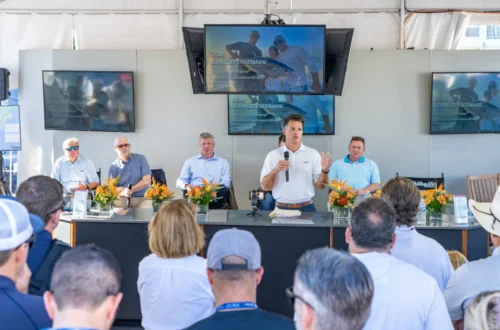
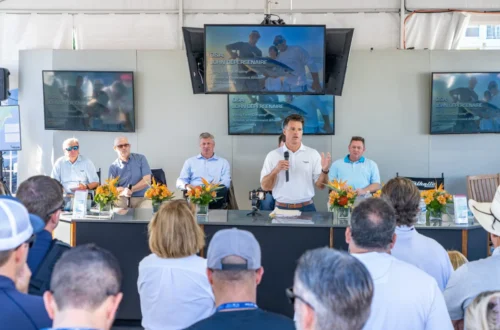
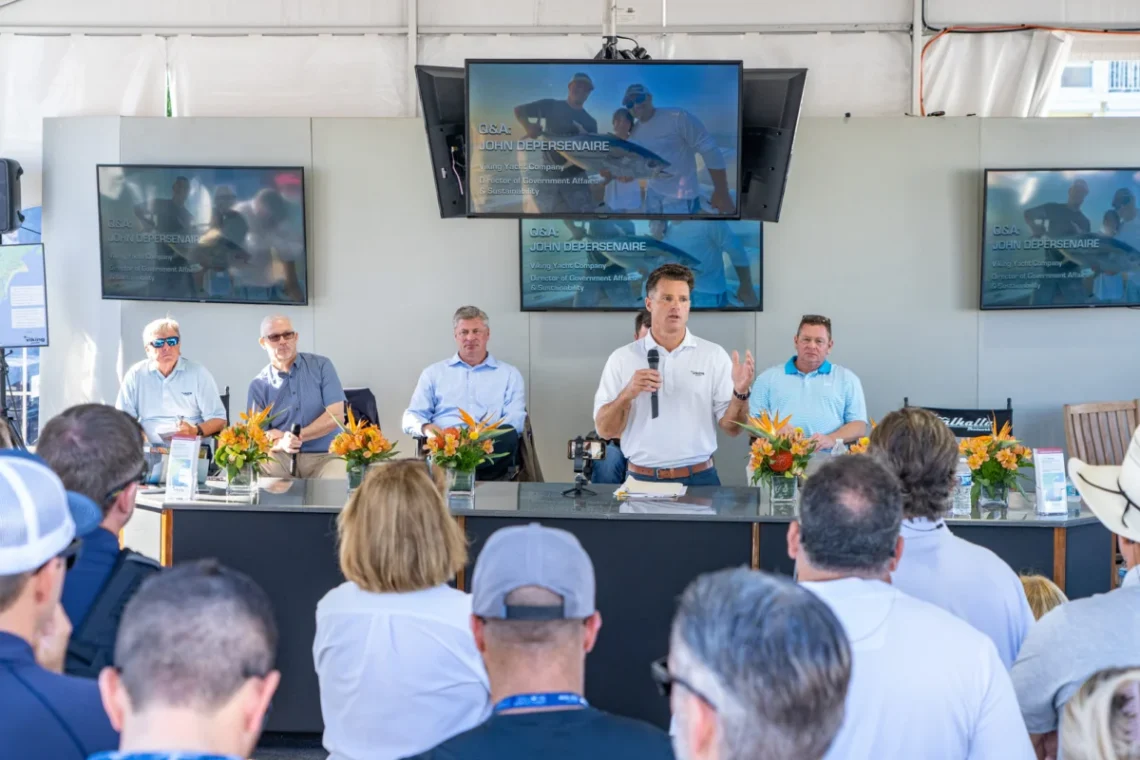
John DePersenaire, Viking’s Director of Government Affairs and Sustainability, echoed this sentiment following the delivery of the September letter to NOAA.
"Technology has emerged as a way to address this important conservation issue without unnecessarily restricting boaters," DePersenaire noted. "We have made great progress since the rule took effect 18 years ago, and it’s time to acknowledge that progress and modernize the rule accordingly."
NOAA and Federal Regulators
NOAA faces the delicate task of satisfying the mandates of the Endangered Species Act and the Marine Mammal Protection Act while managing economic pressures from maritime stakeholders. Agency representatives have acknowledged the promise shown by private-sector sensor development. Through the Advance Notice of Proposed Rulemaking, NOAA has invited tech developers, commercial fleets, and recreational stakeholders to submit empirical data regarding detection reliability, false-positive rates, and range limitations.
Conservation Perspectives
While environmental organizations generally support the exploration of new technologies, many maintain a cautious stance. Historically, conservation groups have argued that electronic detection systems are not infallible—rough sea states, surface glare, nighttime conditions, and whales that do not surface frequently enough can limit the effectiveness of cameras and radar. Consequently, many wildlife advocates argue that technology should serve as a supplement to, rather than an immediate replacement for, mandatory seasonal speed restrictions until detection systems achieve near-perfect reliability benchmarks during rigorous, independent third-party testing.
Implications for the Future of Recreational Boating
The outcome of NOAA’s current regulatory review will have far-reaching implications for everyone who spends time on the water along the U.S. Atlantic coast.
- Regulatory Evolution: If NOAA successfully crafts a framework that accepts certified avoidance technology as an equivalent compliance measure to speed restrictions, it could set a global precedent for how governments manage human-wildlife conflicts in the marine environment.
- Marine Electronics Market: A federal validation of whale-detection systems is expected to trigger a boom in marine electronics development. Companies specializing in AI, thermal imaging, and radar integration will likely see surging demand to equip new builds and retrofit existing fleets.
- The Public Rulemaking Road Ahead: Despite the momentum generated by the recent executive order and industry appeals, any formal changes to federal speed rules cannot happen overnight. NOAA’s proposed rule changes must still wind their way through a formal public comment period, peer review of technological standards, and inter-agency evaluations before a final rule can be codified.
For builders like Viking, and the thousands of boaters navigating eastern waters, the message is clear: the path forward relies on innovation rather than stagnation. As marine technology continues to evolve, the maritime community hopes to prove that protecting the majestic North Atlantic right whale and preserving the freedom of the seas do not have to be mutually exclusive goals.