By Maria Doulton
April 09, 2026
Paris, the epicenter of artistic refinement, is set to host a monumental event that promises to redefine the boundaries between high jewelry and fine art. From June 8th to October 4th, L’École, School of Jewellery Arts, will present "Daniel Brush: The Art of Line and Light." This exhibition stands as the most comprehensive retrospective ever dedicated to the late American artist, bringing together more than 75 rare jewels, paintings, and sculptures—many of which have been shielded from public view within the artist’s private Manhattan studio for decades.
The Man Behind the Myth
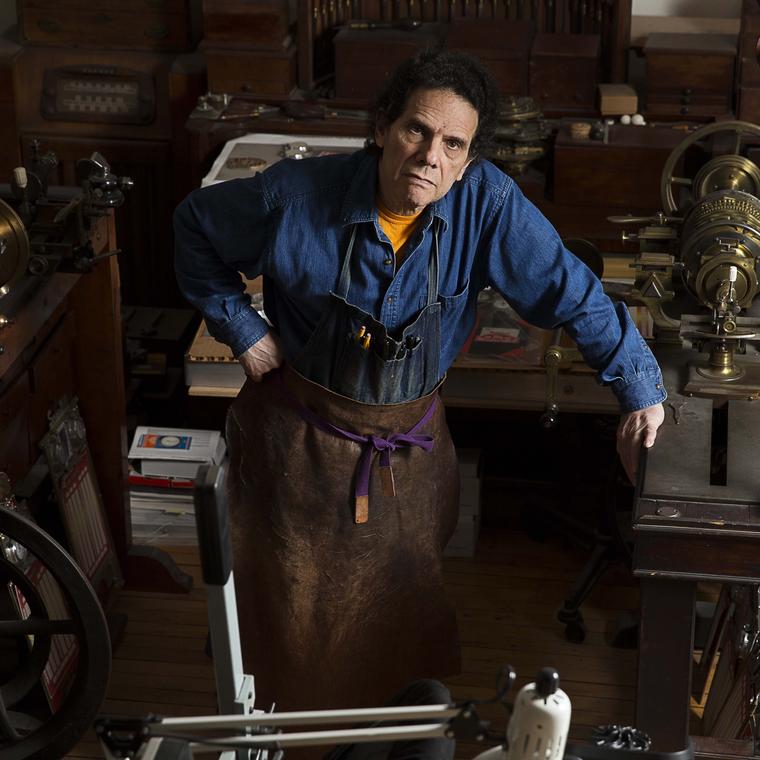
Daniel Brush, who passed away in 2022 at the age of 75, was a figure of profound mystery and singular devotion. A self-taught goldsmith whose career began in the realms of painting and sculpture, Brush chose a path of radical seclusion in 1978. For more than a decade, he retreated into the sanctuary of his New York loft, effectively vanishing from the public eye to immerse himself in the study of ancient craftsmanship.
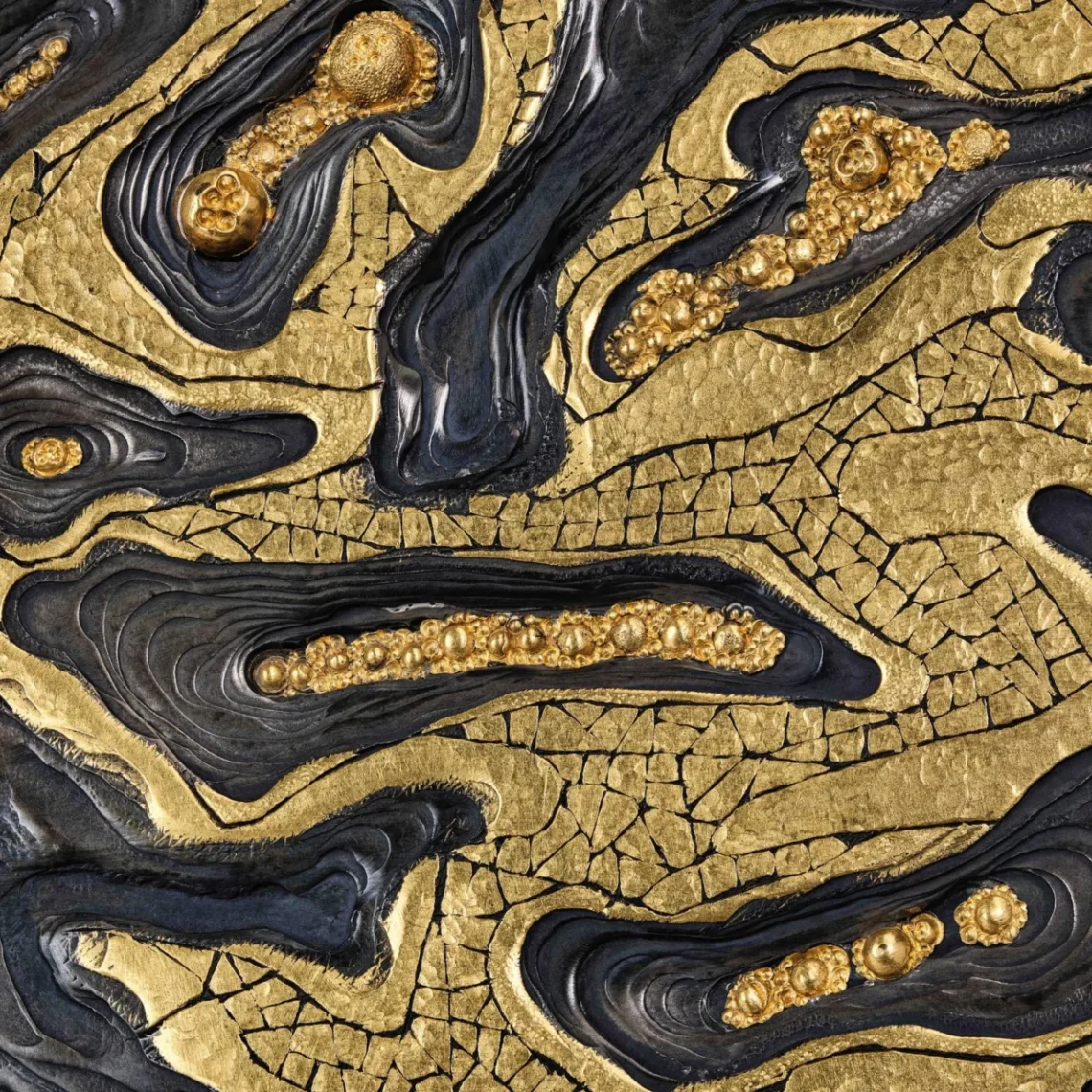
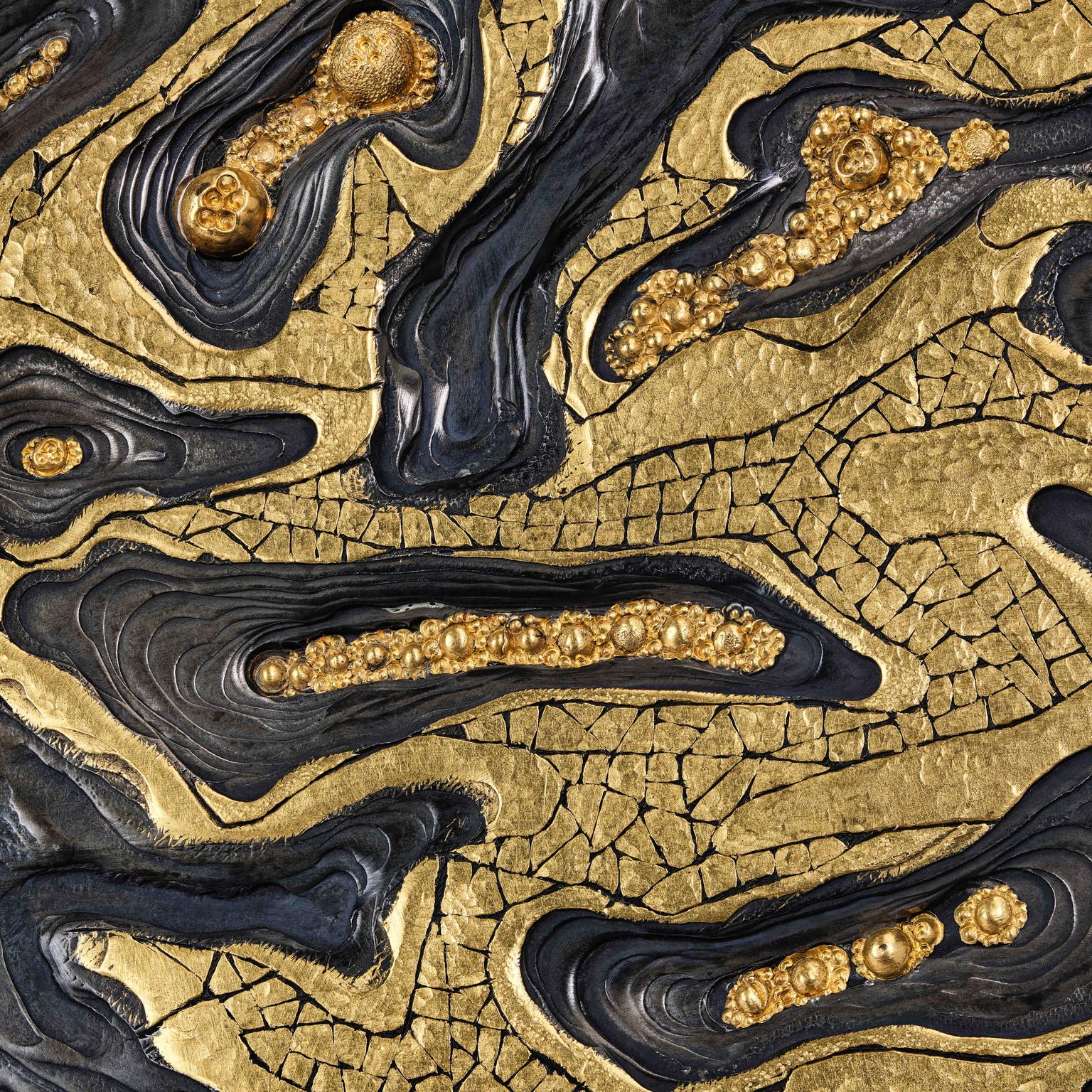
It was here that he mastered the ancient Etruscan technique of granulation—a notoriously difficult process involving the soldering of minute gold grains onto a surface. Yet, to define Brush merely as a goldsmith is to ignore the philosophical depth of his work. He did not simply make jewelry; he conducted a lifelong inquiry into the nature of beauty, the necessity of touch, and the historical weight of small objects.
A Curatorial Dialogue
The exhibition is co-curated by two individuals uniquely positioned to decode Brush’s complex legacy: his wife and lifelong collaborator, Olivia Brush, and the esteemed jewelry historian Vivienne Becker, author of the definitive monograph on his work.
Rather than adhering to a rigid chronological timeline or a conventional thematic categorization, the curators have chosen to structure the exhibition around the intellectual and existential questions that drove Brush’s creative engine. The show invites visitors to confront the fundamental queries that haunted the artist: Does a jewel require a body to be complete? Can an object intended to be held carry the same emotional weight as one worn? Where does jewelry sit on the spectrum of fine art?
These are not merely rhetorical provocations. They are the scaffolding for a body of work that consistently dismantled the artificial walls between decorative arts and the fine arts. By framing the exhibition through these questions, the curators provide a rare window into the mind of a creator who viewed the act of making as an act of philosophy.
Chronology of a Creative Odyssey
The development of Daniel Brush’s career is a testament to the power of persistent, solitary labor. His evolution from a painter to a master of metallurgy is a narrative of intense refinement:
- 1970s – The Departure: Having established himself as a painter and sculptor, Brush experiences a crisis of medium. He realizes that traditional canvas is insufficient to capture the intensity of light and texture he envisions.
- 1978–1988 – The Decade of Seclusion: Brush retreats to his New York loft. This period marks his transformation into a master of gold, as he spends ten years teaching himself the "lost" arts of the ancient world.
- 1990s – The Masterpieces of Metal: During this decade, he creates his signature granulated gold domes and begins experimenting with blued steel, a material rarely utilized in high-jewelry circles due to its unforgiving nature.
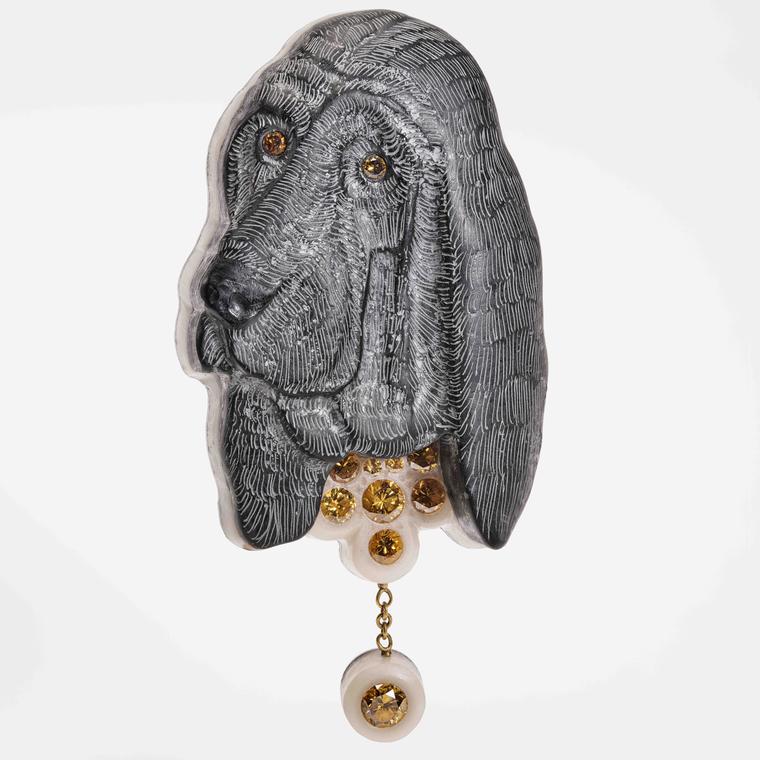
- 2000s – The Narrative Series: Brush expands his reach with thematic collections such as La Ménagerie Magnétique, where he employs incised steel, colored diamonds, and magnets to turn animal portraiture into a study of line and playfulness.
- 2010s – The Final Reflections: His later years see the creation of the Necks series—a collection of 75 steel chokers—and the Actresses collection, which serves as a poignant homage to the Golden Age of Hollywood through diamond and steel ID bracelets.
The Anatomy of the Work: Data and Significance
The significance of Brush’s work lies in his refusal to outsource his labor. Unlike many contemporary jewelers who act as designers directing a team of craftsmen, Brush worked entirely alone. He operated without assistants, often skipping the preliminary design stage to cut directly into the metal.
His works have earned a permanent place in the canon of art history, with pieces held in the permanent collection of the Metropolitan Museum of Art. His reach has been further cemented by exhibitions at the Smithsonian, the Museum of Arts and Design, and high-profile placements at auction houses like Christie’s and Phillips.
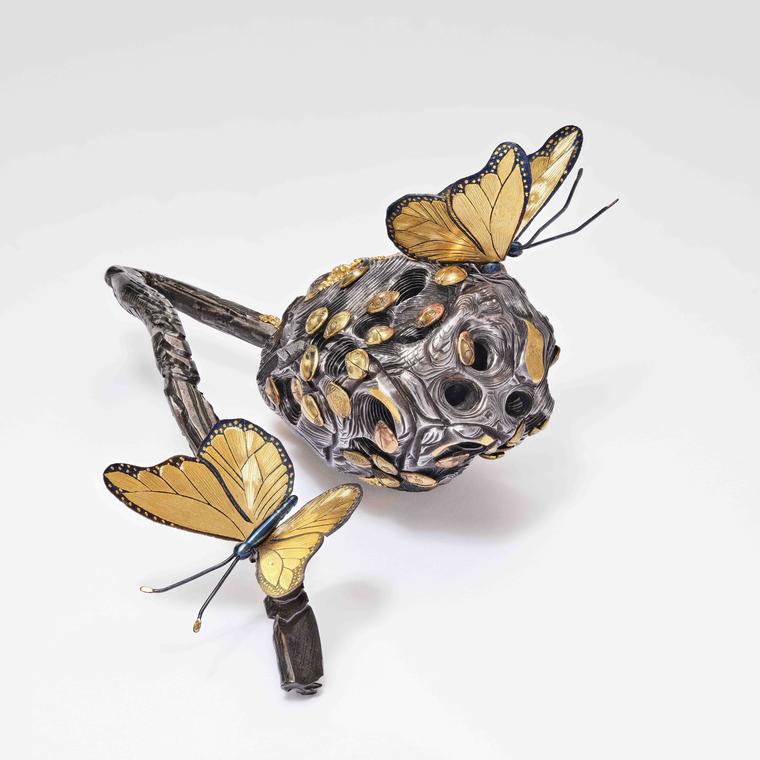
His choice of materials—often pairing the humble with the divine—was deliberate. By combining steel with diamonds, or industrial metal with pure gold, he forced a dialogue between the temporary and the eternal. The Nest series (1990-1992), for instance, features gold butterflies resting on worked steel forms, creating a tension between the rigid, industrial base and the delicate, organic nature of the insects.
Implications for the World of Jewelry
The exhibition at L’École serves as a timely intervention in the ongoing debate regarding the status of jewelry as a high-art form. In an era where "fine art" is often defined by scale, Brush argued that a masterpiece could be something held in the palm of the hand.
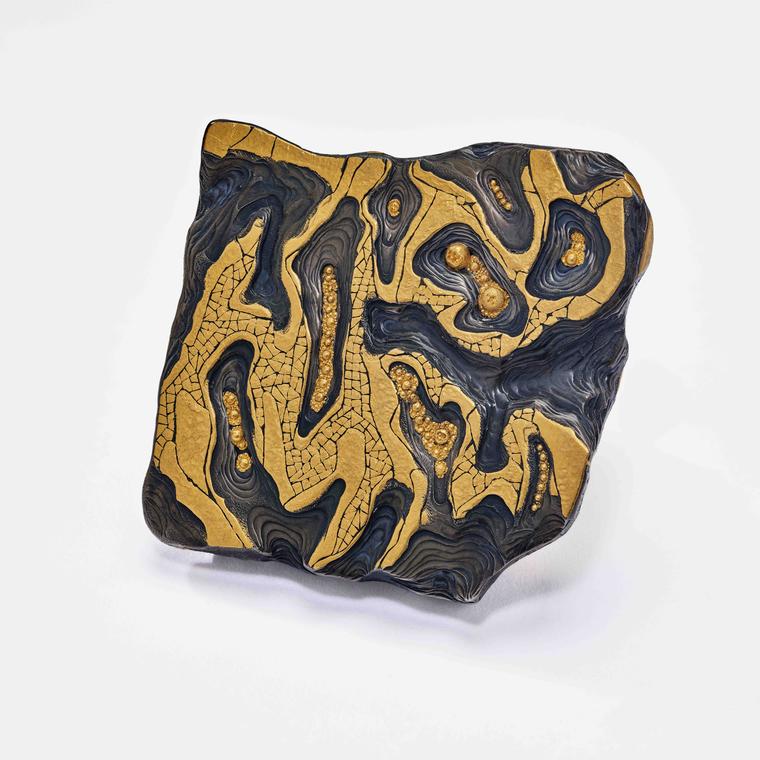
By insisting on this, Brush challenged the hierarchy that places sculpture on a pedestal and jewelry on the body. His work suggests that the "scale of history" is not a function of size, but of intent and execution. For the contemporary collector, the scholar, and the casual observer, the exhibition challenges us to reconsider what we value in an object. Is it the karat weight, or is it the "line and light"—the intangible evidence of a human life spent in pursuit of perfection?
Official Perspectives and Educational Impact
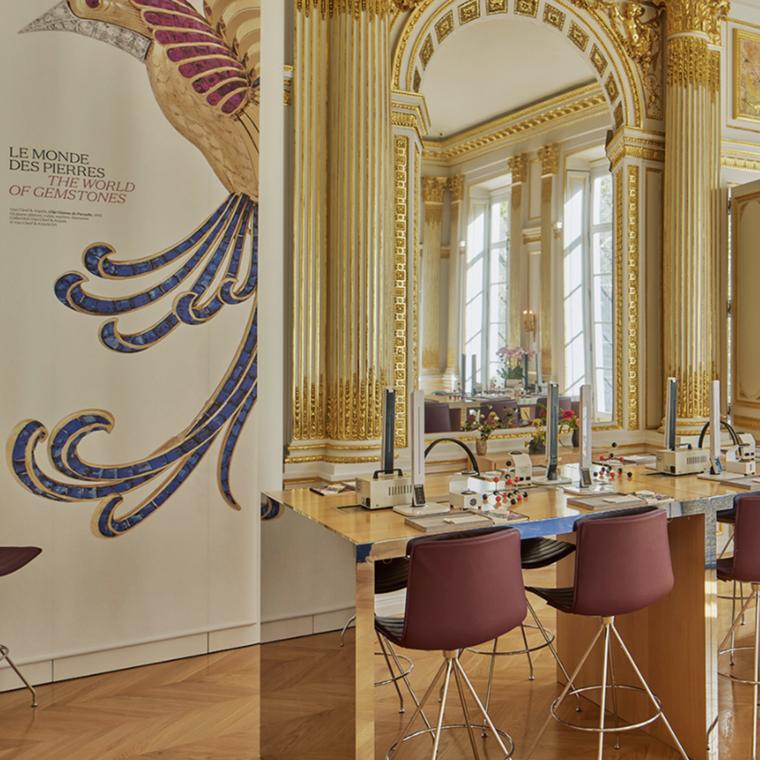
L’École, School of Jewellery Arts, has positioned this exhibition as a cornerstone of its 2026 programming. The choice of venue—the historic Hôtel de Mercy-Argenteau—provides an appropriately opulent yet scholarly backdrop for an artist who bridged the gap between ancient techniques and modern conceptualism.
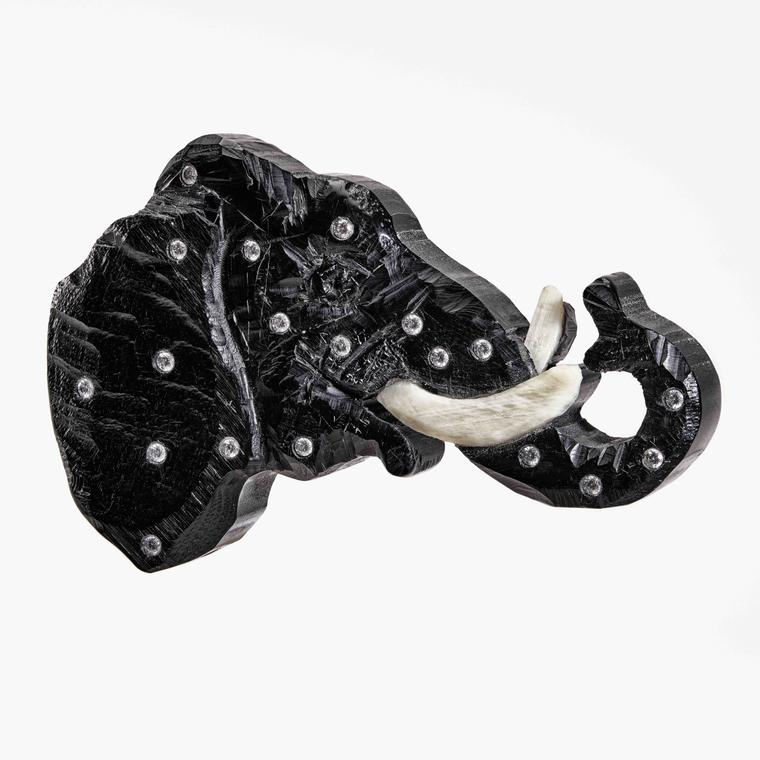
"Daniel Brush was a philosopher who happened to use gold as his language," says Vivienne Becker. By providing free public access to this exhibition, L’École aims to democratize the study of jewelry, moving the conversation away from market value and toward cultural significance.
The exhibition is open from Tuesday to Sunday, with extended hours on Thursdays until 8:30 pm. Visitors are encouraged to register in advance. The event is not merely a display of precious objects; it is an educational experience designed to foster a deeper appreciation for the rigor required to elevate craft to the level of poetry.
Conclusion: An Essential Pilgrimage
For anyone who cares about the intersection of human history, art, and the material world, this exhibition is essential viewing. It offers a rare opportunity to see the complete arc of a man who treated every piece of metal as a canvas for the divine.
In a world increasingly dominated by mass-produced luxury, the work of Daniel Brush stands as a stark, beautiful reminder of the power of the individual. His pieces—from the haunting steel chokers to the intricate, diamond-encrusted creatures of his menagerie—are not merely accessories. They are fragments of a soul translated into form.
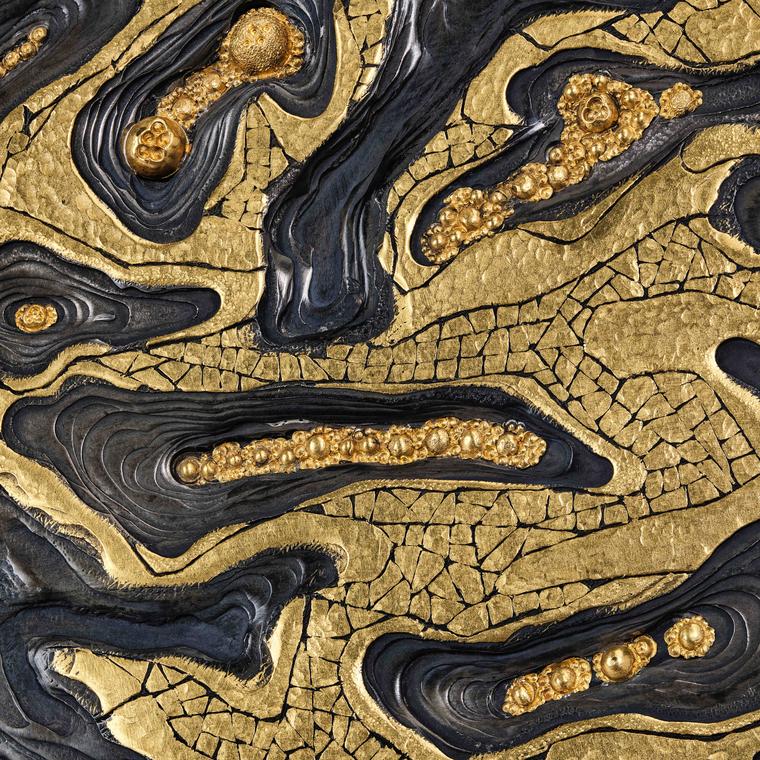
As you walk through the halls of the Hôtel de Mercy-Argenteau this summer, consider the "line and breath" that defined Brush’s existence. He did not just make jewelry; he left behind a map of his own internal light, waiting for the viewer to catch a glimpse.
Exhibition Details:
- Daniel Brush, the Art of Line and Light
- Dates: June 8th – October 4th, 2026
- Location: L’École, School of Jewelry Arts, Hôtel de Mercy-Argenteau, 16 bis boulevard Montmartre, Paris 9e.
- Admission: Free (Registration required)
- Website: lecolevancleefarpels.com