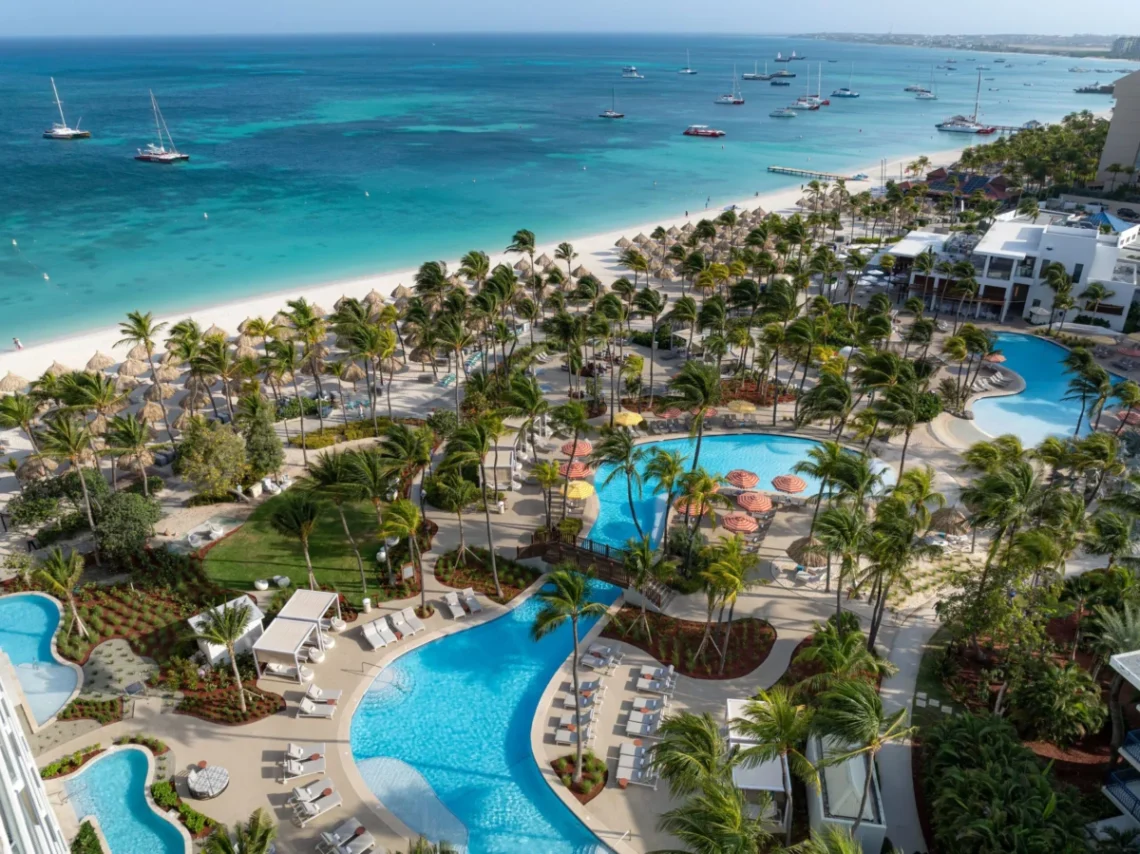
Aruba is more than just a destination; it is an enduring paradox of the Caribbean. Located just 18 miles off the coast of Venezuela, the island operates as a serene, Dutch-influenced sanctuary that has successfully insulated itself from the volatile weather patterns and economic fluctuations that often plague its neighbors. With its hallmark white-sand beaches, electric-blue waters, and a near-constant trade wind that keeps the tropical humidity at bay, Aruba remains a masterclass in tourism consistency.
Beyond its postcard-perfect aesthetics, the island’s location—safely tucked outside the traditional Atlantic hurricane belt—provides a unique security for travelers and investors alike. However, to view Aruba merely as a sun-soaked retreat is to overlook its complexity. From the rugged, cactus-strewn interior of Arikok National Park to the sophisticated, multicultural culinary tapestry woven from Dutch, Caribbean, and Latin influences, the island offers a depth that rewards the curious.
The Evolution of an Island Icon: A Chronology of Growth
The transformation of Aruba from a colonial outpost to a world-class tourism powerhouse did not happen overnight. Its history is a timeline of adaptation, shifting from industry to hospitality.
- 1924–1985 (The Industrial Era): For decades, Aruba’s economy was dominated by the Lago Oil Refinery. While it provided stability, the island was not yet the leisure destination it is today.
- The 1980s (The Hospitality Pivot): Following the closure of the refinery, the Aruban government made a strategic, aggressive pivot toward tourism. This era saw the initial development of the Palm Beach and Eagle Beach high-rise corridors.
- 1990–2005 (The Rise of the Luxury Segment): Aruba began refining its brand, moving away from mass-market tourism toward premium service. The introduction of international hotel brands brought standardized luxury, elevating the island’s profile among North American travelers.
- 2010–2020 (The Boutique Revolution): Recognizing that the modern traveler craved intimacy, the hotel scene diversified. Smaller, design-forward properties began to appear, offering a counterpoint to the massive high-rise resorts.
- 2020–Present (The Sustainability Era): Post-pandemic, Aruba has repositioned itself as a leader in sustainable tourism, focusing on the preservation of its natural resources, particularly the 20 percent of its landmass protected within Arikok National Park.
Supporting Data: The Economic and Environmental Pillars
Aruba’s success is not accidental; it is supported by robust data that explains why it continues to dominate the Caribbean travel sector.
Tourism Dependency and Resilience
According to the Aruba Tourism Authority (ATA), tourism accounts for approximately 80% of the island’s GDP. Despite this high dependency, the island maintains a remarkably low crime rate and one of the highest repeat-visitor rates in the Caribbean. Data indicates that over 60% of visitors to Aruba are returnees, a loyalty metric that is virtually unheard of in the global tourism industry.
The "Hurricane Belt" Advantage
Meteorological data confirms that Aruba’s southern latitude—well south of the Caribbean’s primary storm tracks—drastically reduces the risk of major hurricane disruption. For insurance companies and large-scale developers, this creates a "low-risk" environment for infrastructure investment, which in turn allows for the development of higher-end, amenity-rich resorts that would be too risky to build in the Bahamas or the Lesser Antilles.
Biodiversity and Preservation
Arikok National Park is the literal and metaphorical "green lung" of the island. Spanning nearly 7,900 acres, the park serves as a vital buffer against over-development. Environmental audits show that the protection of these limestone caves, natural pools (like the Conchi), and native flora—such as the Wayaca tree and various species of cacti—has been essential in maintaining the island’s ecological health, ensuring that the "rugged side" of Aruba remains accessible for eco-tourism.
Official Perspectives: The Strategy of "One Happy Island"
Government officials and tourism boards have long maintained that Aruba’s greatest asset is its social cohesion. In recent interviews, representatives from the Aruba Tourism Authority have emphasized the "One Happy Island" branding as more than a marketing slogan—it is a policy directive.
"Our goal is not just to attract the greatest number of visitors, but to attract the right visitors who respect our culture and our ecosystem," says an official from the Ministry of Tourism. "We are moving away from the ‘volume’ model and toward a ‘value’ model. This means incentivizing hotels that invest in green energy, waste reduction, and the support of local Aruban businesses, rather than just international chains."
The government has also been instrumental in the "Aruba Certification Program," which ensures that businesses ranging from dive shops to boutique hotels meet strict standards of service and sustainability. This top-down regulation has prevented the chaotic, unplanned development seen in other island nations, keeping the aesthetic of the shoreline uniform and upscale.
Implications: The Future of the Aruban Escape
As the global travel market evolves, Aruba faces several key challenges and opportunities that will define its next decade.
1. The Balancing Act of Mass Tourism
With a population of just over 100,000, Aruba’s infrastructure is under constant pressure from cruise ship arrivals and long-stay resort guests. The implication here is a potential "carrying capacity" crisis. Future urban planning will likely focus on decentralizing tourism—encouraging guests to visit the "San Nicolas" art district in the south rather than crowding the beaches of the north.
2. Culinary Diplomacy
The culinary scene in Aruba is rapidly becoming its own attraction. The implication of this is a shift in the traveler demographic; visitors are no longer coming just for the sand, but for a gastronomic experience that blends the traditional funchi (cornmeal-based side) with modern, fusion techniques. This provides an opportunity for local chefs to take center stage, moving the island away from a reliance on imported food products.
3. The Digital Nomad Trend
The rise of remote work has changed how people use the island. We are seeing a shift from the traditional one-week vacation to "work-cations" lasting three to six weeks. This necessitates a change in hotel infrastructure—faster Wi-Fi, more collaborative workspaces, and long-term stay amenities. The hotels that adapt to this "live-work-play" model will likely dominate the market share in the coming years.
Choosing Your Sanctuary: A Guide to the Landscape
The island’s hotel scene is as diverse as its geography. To understand where to stay, one must understand the "vibe" of each region:
- Palm Beach: The epicenter of energy. This is where you find the sprawling, high-rise resorts, high-end shopping, and a nightlife scene that feels distinctly cosmopolitan. It is ideal for the traveler who wants the convenience of a "city by the sea."
- Eagle Beach: The gold standard for those who prioritize the beach itself. Home to the iconic Divi Divi trees and wide, pristine sands, the resorts here are lower-profile and more focused on relaxation than raucous nightlife.
- Saventa and the South: This is the frontier. For the traveler looking to escape the "resort bubble," the southern end of the island offers boutique experiences that feel like authentic Aruban life. Here, you are more likely to find locally owned guesthouses and a quieter, more introspective atmosphere.
Conclusion: Why Aruba Endures
Aruba’s secret is its consistency. In a world of travel unpredictability, Aruba offers a reliable, high-quality experience that manages to be both familiar and surprising. Whether you are navigating the limestone paths of Arikok, dining on fresh catch-of-the-day at a harborside bistro, or simply reclining on the powder-soft sands of Eagle Beach, the island delivers a sense of place that is rare in the modern age.
It is small enough to feel like a weekend getaway, yet expansive enough in its culture and natural beauty to warrant a much longer, more immersive stay. For those who return year after year, the island is not just a destination—it is a second home, a constant in a changing world, and a testament to the fact that when a destination cares for its land and its people, the visitors will always follow.