By Mohamed A. El-Erian
July 22, 2026
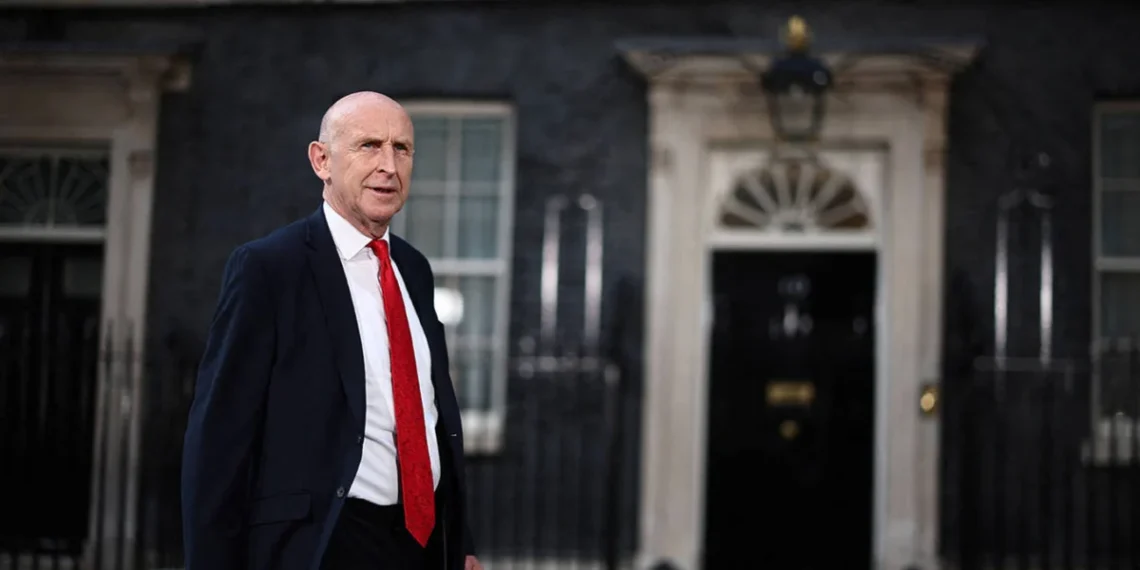
In a political landscape defined by incrementalism and cautious consensus, the surprise appointment of John Healey as Chancellor of the Exchequer by newly minted Prime Minister Andy Burnham marks a definitive departure from the status quo. Defying the prognostications of Westminster insiders and the jittery expectations of global financial markets, Burnham has opted for a strategist with deep institutional roots but an unconventional policy pedigree.
As the United Kingdom grapples with sluggish productivity, persistent inflationary pressures, and the long-term structural scars of the post-pandemic era, the choice of Healey is more than a cabinet reshuffle; it is a declaration of intent. For the British economy to pivot from stagnation to sustainable growth, Healey must now reconcile his background as a former defense secretary with the fiscal exigencies of a nation at a crossroads.
The Main Facts: A Bold Deviation from Protocol
The appointment of John Healey as Chancellor has sent shockwaves through the City of London and the corridors of Whitehall. Traditionally, the office of the Chancellor is occupied by a figure with a background in banking, trade, or specialized economic policy. Healey, by contrast, brings a resume dominated by defense and security—sectors that, while vital, are rarely seen as the primary training ground for managing the complexities of the British Exchequer.
Prime Minister Burnham’s decision is a calculated gamble. By selecting an "insider" who understands the bureaucratic machinery of the Treasury but possesses the instincts of a national security strategist, Burnham is signaling that he views the UK’s economic challenges through the lens of long-term resilience and geopolitical competition. The central question remains: can the Treasury, under Healey’s stewardship, move beyond the reactive fiscal management that has characterized the last decade and toward a proactive, pro-growth architecture?
A Chronology of the Transition
The road to this unexpected cabinet formation began months before the general election.
- January 2026: Andy Burnham’s campaign pivots from broad social reform to a "National Renewal" platform, emphasizing industrial stability.
- May 2026: The general election results in a decisive mandate for Burnham, catching financial analysts off-guard who expected a narrower margin.
- July 15, 2026: Speculation peaks regarding the chancellorship, with market favorites favoring traditional technocrats from the private sector.
- July 22, 2026: Prime Minister Burnham formally announces the appointment of John Healey, citing the need for "disciplined, strategic vision" in the Treasury.
The speed at which the appointment was finalized suggests that Burnham and Healey had been cultivating a shared vision for economic reform well in advance of the election, prioritizing security-focused investment as a catalyst for broader private-sector growth.
Supporting Data: The Economic Landscape
To understand the weight of the task facing the new Chancellor, one must look at the data. The UK currently faces a "trilemma": managing debt-to-GDP ratios that remain near historic highs, addressing a chronic labor shortage in high-tech sectors, and responding to the rising costs of energy and defense.
Productivity and Investment
For the past decade, UK business investment has remained largely flat. According to the latest Office for National Statistics (ONS) data, the "productivity puzzle"—whereby the economy grows without corresponding gains in worker output—remains the primary drag on wages. Healey’s challenge is to create an environment where capital expenditure (CapEx) is incentivized over short-term dividend payouts.
Fiscal Constraints
With the debt-to-GDP ratio hovering near 100%, there is little room for traditional Keynesian stimulus. Healey’s background in defense spending—a sector known for its massive, long-term procurement cycles—might be an asset here. He is well-versed in the "opportunity cost" analysis required to prioritize spending in a fiscal environment where every billion pounds is contested.
Official Responses and Market Sentiment
The reaction to the appointment has been a study in contrasts. While the Labour Party caucus has largely rallied behind the Prime Minister, acknowledging the need for a "strong hand" at the Treasury, the reaction from the City has been one of cautious skepticism.
The City’s View
Bond markets saw a slight uptick in yields following the announcement, reflecting a "wait-and-see" approach. Investors are wary of whether Healey’s defense-centric background implies a potential surge in government borrowing to fund industrial military complexes, or if he will adhere to the fiscal responsibility mandates that markets demand.
Opposition and Political Commentary
The Shadow Chancellor has criticized the move as "amateur hour," suggesting that the complexity of the UK’s tax code and the nuances of international trade negotiations require an economist’s touch, not a security hawk’s intuition. Conversely, defense analysts have praised the move, arguing that in an era of "geoeconomic warfare," having an economic lead who understands defense is a strategic advantage.
Implications: The "Healey Doctrine"
What might a "Healey Doctrine" look like for the UK economy? There are three primary pillars that are likely to define his tenure:
1. Dual-Use Industrial Strategy
Healey is expected to prioritize "dual-use" technologies—innovations that serve both civilian and military applications. By channeling government research and development funds into fields like artificial intelligence, quantum computing, and advanced materials, he hopes to boost the UK’s civilian manufacturing base while simultaneously modernizing the nation’s defense infrastructure.
2. Streamlining the Treasury
The Treasury is often criticized for being overly bureaucratic and risk-averse. Healey, having navigated the complex procurement pipelines of the Ministry of Defense, is likely to bring a more mission-oriented approach to the department. We should expect a push for faster decision-making cycles and a reduction in the red tape that often hampers infrastructure projects.
3. Geopolitical Alignment of Trade
The Chancellor is likely to view economic policy through the prism of global alliances. Expect the UK to pivot toward deeper economic integration with G7 partners, focusing on supply chain security and energy independence. This is a move away from the purely neoliberal focus on cost-minimization toward a model of "resilience-maximization."
The Path Forward: A Calculated Risk
John Healey’s success will depend on his ability to pivot. While his defense instincts are valuable, he must avoid the trap of "securitizing" every aspect of economic policy. The UK economy needs more than just resilience; it needs dynamism. It needs an environment where SMEs (Small and Medium Enterprises) can thrive, where the tax burden is predictable, and where the regulatory landscape encourages innovation rather than shielding legacy industries.
If Healey can leverage his insider knowledge of the Treasury to dismantle the structural bottlenecks that have stifled growth, and if he can restrain his instinct to prioritize defense spending over broader economic vitality, he may very well be the architect of a British renaissance. However, if he fails to bridge the gap between defense logic and market logic, he risks becoming the Chancellor of a stagnant ship, navigating through increasingly turbulent global waters.
The Burnham-Healey partnership is, at its core, a bet on the idea that the old ways of managing the economy are no longer sufficient. It is a bold, perhaps even reckless, bet. But in a world where the rules of the economic game are being rewritten in real-time, the greatest risk may well be to play it safe.
As the markets settle and the first budget announcement looms, all eyes will be on the Treasury. The UK is not just watching a new Chancellor; it is watching a fundamental test of whether a nation can retool its economic engine while the car is moving at high speed. The outcome of this experiment will define the Burnham era and, quite possibly, the trajectory of the British economy for the next decade.