Introduction: The Evolution of the Ultimate Global Itinerary
In 1872, French novelist Jules Verne captured the collective imagination of the world with Around the World in Eighty Days, chronicling the fictional Phileas Fogg’s frantic, train-and-steamer-fueled race across continents. More than a century later, in 1995, that whimsical Victorian adventure was reimagined for the modern elite through the lens of a reconfigured commercial airliner.
Organized through a collaboration between TCS World Travel and the American Museum of Natural History, this inaugural small-group airborne expedition deployed a handpicked crew alongside world-renowned scientists. Passengers were whisked from one bucket-list destination to another, proving that an immense, untapped global appetite existed for multi-week, long-distance luxury travel built around tightly curated itineraries.
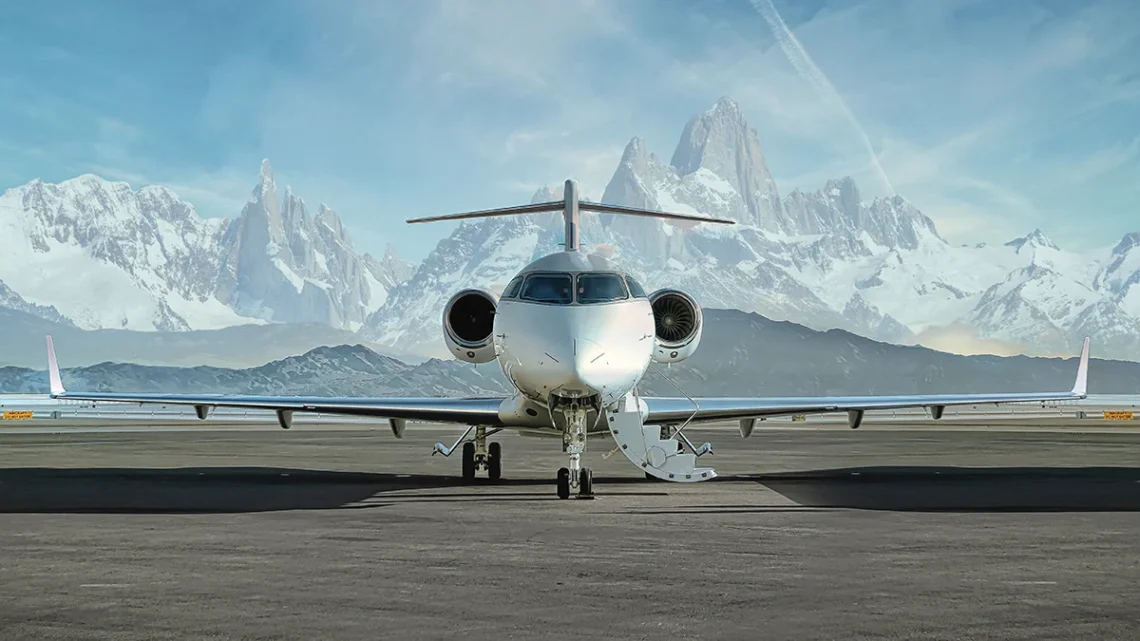
Fast-forward nearly three decades, and the ultra-luxury air-tour niche has matured from a novel experiment into a multi-million-dollar industry. Today, it spans an impressive diversity of aircraft types—from long-haul VIP jumbo jets and converted commercial liners to agile midsize jets and rugged bush planes. Modern adventurers are no longer just visiting major capitals; they are plumbing the depths of Antarctica’s ice caves, tracking wildlife in Tanzania, and touching down in hard-to-reach hinterlands like the Gobi Desert, Kazakhstan, and the majestic Himalayan peaks.
As Jennifer Lew, vice president of product at TCS World Travel, aptly puts it: "People want to be transformed. It’s about having the experience, not checking a box, as much as having something few can."
Chronology of the Air-Tour Revolution
To understand how private jet expeditions reached their current zenith of opulence and accessibility, it is essential to trace the historical milestones that shaped the industry:
1995: The Genesis of the Modern Air Expedition. TCS World Travel and the American Museum of Natural History partner to launch one of the world’s first multi-destination private air tours. Utilizing a modified commercial airliner, the journey proves that affluent travelers desire curated, continuous globetrotting supported by academic and scientific experts.
Late 1990s to 2000s: Expansion of the Fleet. Recognizing the high profit margins and immense appeal of hassle-free global navigation, major luxury travel operators begin acquiring and modifying specialized aircraft. Brands like Abercrombie & Kent and National Geographic Expeditions enter the fray, deploying converted Boeing 757s equipped with lie-flat seats and dedicated support staff.
2010s: The Rise of Ultra-Exclusive Micro-Fleets. The market bifurcates to accommodate both large-scale private jet tours and ultra-exclusive, low-density micro-jets. Hospitality giants like Four Seasons launch branded private jet experiences, while ultra-luxury resort brands like Aman partner with specialists such as Remote Lands to introduce hyper-exclusive itineraries aboard smaller converted aircraft like the Airbus A319, accommodating as few as 16 guests.
Present Day: Remote Frontiers and Hyper-Personalization. Today’s air-tour operators push further into the geographic margins. Itineraries routinely feature previously inaccessible locales such as Antarctica, the high plateaus of Central Asia, and deep Patagonia. Concurrently, ultra-bespoke curators like Blue Parallel and Sienna Charles inject extreme personalization, guaranteeing total anonymity, private access to closed-to-the-public historical sites, and ultra-luxury ground logistics.
Supporting Data: Fleet Architecture and Passenger Capacity
The modern luxury air-tour ecosystem is characterized by an astonishing variety of aircraft configurations tailored to different definitions of exclusivity. Far from standard commercial layouts, these planes are engineering marvels designed to function as airborne boutique hotels.
Spacious seating, onboard experts, historians, and National Geographic photographers traveling alongside guests.
Aman Jet Expeditions (Remote Lands)
Converted Airbus A319
16 guests
Side-facing lounges, expanded spa-like bathrooms, residential-style interior design, and unmatched personal space.
Abercrombie & Kent
Converted Commercial Jets / Small Jets
10 to 50 guests (depending on itinerary)
Flexible fleet scaling from wide-body comfort down to regional small jets for niche exploration.
The Anatomy of an Airborne Crew
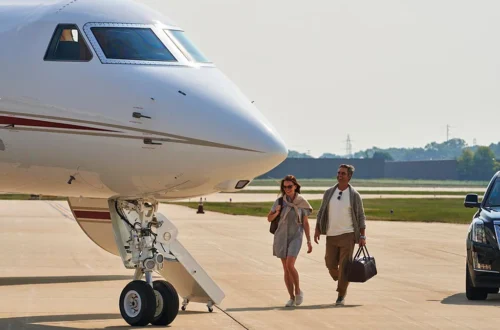
What truly separates these expeditions from first-class commercial travel is the invisible army of professionals working behind the scenes. A typical long-haul private jet expedition carries a comprehensive support staff designed to eradicate travel friction entirely. On board, passengers are tended to by elite flight attendants, an executive chef crafting meals tailored to regional stops, a dedicated physician, expert expedition leaders, cultural specialists, and a professional photographer to document the journey. On the ground, logistical teams coordinate private security, VIP airport fast-track clearance, and chauffeured fleets.
Official Perspectives and Expert Insights
The appeal of private jet travel extends beyond mere comfort; it represents a fundamental reimagining of time, safety, and exclusivity.
Larry King, a private pilot based in Texas who has flown his own Citation M2 light jet on nearly a dozen multi-week international trips—including a 72-day global odyssey—decided to trade the responsibilities of the cockpit for a fully curated group expedition with his wife, Judy. After experiencing National Geographic’s 21-day tour of Africa aboard a VIP-configured Boeing 757, King was won over by the aircraft’s transcontinental range and the absolute serenity of the experience.
"The luxury of flying better than first class in a private 757 is the biggest positive," King notes. "I wanted to hit the high spots while not missing anything, and not taking two months to do it. You get on board, eat, sleep, and wake up refreshed for your next adventure." He also highlights the critical element of security, noting that major expedition operators excel at anticipating geopolitical or logistical friction points that could derail independent itineraries.
For ultra-high-net-worth individuals, privacy is paramount. Catherine Heald, CEO and cofounder of Remote Lands—the operational partner for Aman Jet Expeditions—explains the philosophy driving their ultra-exclusive 16-passenger Airbus A319 itineraries:
"We have a lot of celebrities and prominent people who wouldn’t want to do a group tour or be put in vans or large hotels."
This sentiment is echoed by clients like Blaine Adams, a financial adviser from Houston who has completed three Aman Jet journeys with her husband. Though initially hesitant about group travel, Adams found that the hybrid model—where guests enjoy shared flights but receive private vehicles, guides, and accommodations upon landing—provided the ultimate balance.
"We don’t do group travel," Adams admits. "We love the ability to get off and have our own driver and guide. It was easy to move between doing things on your own and being with the group."
Implications: The Future of High-End Global Exploration
As boutique operators like Blue Parallel and Sienna Charles continue to push the boundaries of what money can buy—securing private, after-hours tours of the Vatican’s Sistine Chapel or arranging entry into French wine estates closed to the general public—the implications for the broader travel landscape are profound.
1. The Redefinition of Luxury Through Time
In the 21st century, time has superseded material goods as the ultimate luxury asset. Traditional multi-week global travel used to require enduring chaotic airport connections, customs lines, and exhausting layovers. Private jet expeditions effectively collapse geographic distance, transforming multi-stop odysseys into seamless, continuous experiences.
2. Hyper-Personalization vs. Shared Community
The industry has successfully resolved a long-standing paradox: how to offer the economic and logistical efficiencies of a large aircraft charter while preserving the deeply personalized, uncrowded feel of independent elite travel. By pairing shared long-haul transport with private, ground-level itineraries (private cars, personal guides, and standalone luxury villas), operators are capturing a sophisticated demographic that historically shunned group travel entirely.
3. Sustainable Concerns and Remote Access
As these air-tour operators expand deeper into ecologically sensitive and remote regions—such as Antarctica, the Atlas Mountains of Morocco, and the Gobi Desert—they face mounting scrutiny regarding their environmental footprint. While operators increasingly tout carbon offset programs and localized conservation partnerships, the tension between ultra-exclusive carbon-intensive travel and global ecological preservation remains a defining challenge for the sector’s future.
Ultimately, as air transport continues to shrink the globe, boutique operators will likely double down on hyper-intimate, transformative experiences. For the modern Phileas Fogg, the journey is no longer about racing the clock; it is about bending time, space, and access to experience the world’s most remote corners in absolute, uncompromised comfort.