The global diamond industry, once characterized by the ironclad stability of an eternal monopoly, is currently navigating its most profound identity crisis in history. As of late 2026, the marketplace has bifurcated into two distinct, competing realities. On one side, lab-grown diamonds have surged to capture over 50% of global diamond jewelry sales by value—a metric that would have been dismissed as science fiction just a decade ago. On the other, the traditional mined diamond sector is retrenching, closing unprofitable pits, and rebranding itself as a bastion of ultra-luxury scarcity.
For the modern consumer, the question is no longer merely "is this diamond real?" The question has shifted to a far more complex inquiry: "What is the value of a stone, and who decided it?"
The Chronology of Disruption
Seven years ago, the entry of lab-grown diamonds into the engagement ring market was viewed by incumbents as a transient nuisance. Industry leaders at the time questioned the very nomenclature, debating whether a stone synthesized in a high-pressure, high-temperature (HPHT) reactor or through Chemical Vapor Deposition (CVD) in Surat or Singapore could be considered a "diamond" in the eyes of the consumer.
That debate has been definitively settled by the marketplace. According to Dr. Ulrika D’Haenens-Johansson, senior manager of diamond research at the Gemological Institute of America (GIA), the transition is near-total. By 2026, lab-grown stones represent over half of all diamond jewelry sales by value and constitute more than 50% of engagement rings sold by volume in the United States.

The initial strategy of the natural diamond industry—led by giants like De Beers, which launched its "Lightbox" brand to offer lab-grown fashion jewelry below cost—was intended to "price out" pioneers and maintain the premium status of mined stones. Instead, the strategy acted as a catalyst, normalizing the lab-grown product and inadvertently signaling to consumers that the barrier to entry was significantly lower than previously advertised.
Supporting Data: The Economics of Abundance
The fundamental issue facing the diamond trade is that lab-grown diamonds are subject to the unforgiving economics of manufactured technology. As the science of synthesis has been perfected, production costs have plummeted, and they continue to slide toward commodity levels.
- The Price Collapse: A quality 1-carat mined diamond, which once commanded upwards of £10,000, now faces stiff competition from lab-grown alternatives that are approximately 80% cheaper. A high-quality lab-grown E-color/VVS diamond currently retails between £800 and £2,000, while its mined counterpart remains in the £4,500 to £8,500 range.
- Grading Obsolescence: Dr. D’Haenens-Johansson notes that 95% of lab-grown output now falls into the "D to F" color and "flawless to VVS2" clarity bands. The GIA grading vocabulary, originally developed in the 1940s to describe the rarity of natural, earth-mined output, is losing its utility when the "standard" lab-grown stone is effectively perfect.
- Market Penetration: In the heart of London’s jewelry district, Hatton Garden, Regal Jewellers reports that 70% of their engagement ring sales are now lab-grown, reflecting a global shift in preference among younger demographics.
The Mining Sector: A Casualty List
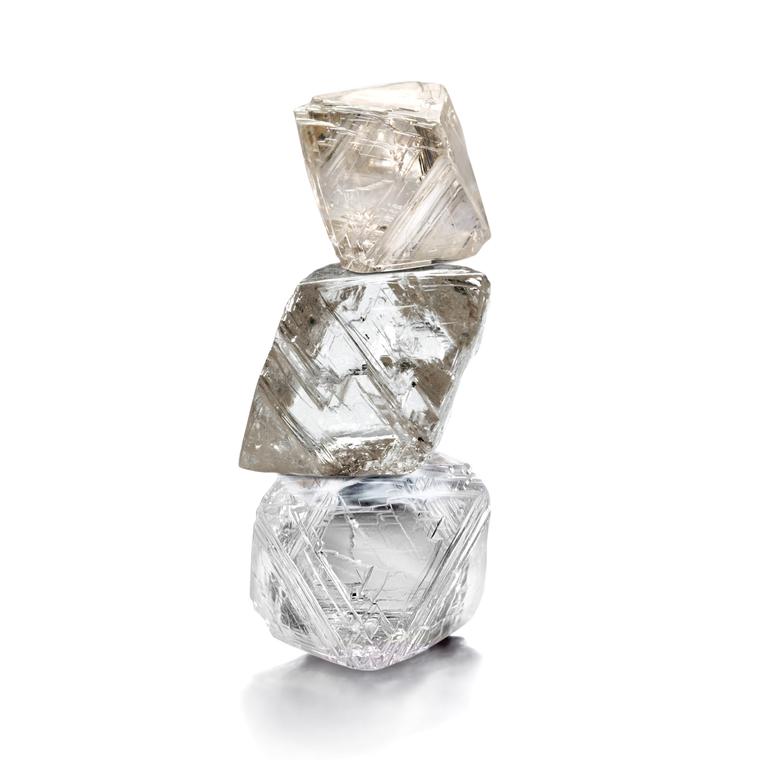
If the lab-grown trade is grappling with the challenges of over-abundance, the natural diamond mining sector is fighting a desperate war for scarcity. The industry is currently witnessing a series of closures and insolvency filings that underscore the gravity of the situation.
- Diavik and Ekati: Rio Tinto’s Diavik mine in Canada’s Northwest Territories ceased production in March 2026 after 23 years of operation. Its neighbor, Ekati, filed for insolvency earlier in the spring.
- Global Producers: Russia’s Alrosa, the world’s largest producer by volume, reported a $129 million loss in the first half of 2026. CEO Pavel Marinychev recently characterized the industry’s status as the "deepest sectoral crisis in history."
- Macroeconomic Impact: In Botswana, where diamond exports traditionally account for one-third of national revenue, export earnings fell by nearly 30% in the first five months of 2026. While Debswana plans to scale output back up to 18 million carats, this remains far below the pre-downturn peak of 24 million.
Market analyst Paul Zimnisky suggests that these supply cuts are finally putting a floor under rough diamond prices. However, he warns that if aggressive closures continue, the current excess inventory could lead to a severe supply crunch by 2027 or 2028.
Official Responses and Strategic Shifts
The industry is currently divided on how to respond to this new reality. The World Jewellery Federation (CIBJO) is actively lobbying to classify lab-grown stones strictly as "synthetic," an effort to linguistically distance them from natural gems.
Meanwhile, Marty Hurwitz, executive director of the Grown Diamond Trade Organization (GDTO), remains unfazed by the price volatility. He argues that the future of the industry lies in branding. "The strongest companies will not depend indefinitely on earning extraordinary margins from a loose stone," Hurwitz stated. He envisions a future where lab-grown stones dominate the volume market, while natural diamonds retreat into a "branded luxury" category—akin to the difference between a high-end watch and a mass-market timepiece.
Interestingly, consumer research has yielded a surprising result: sustainability is not the primary driver. Contrary to early industry marketing, shoppers prioritize design, appearance, quality, and price. Ethics serve only as a secondary confirmation for a purchase decision already made.
Implications: The Rise of the "Third Way"
As the battle between lab and mine rages, a "third way" has emerged in the form of vintage and antique jewelry. According to Nick Withington, CEO of William May, vintage engagement ring sales are surging, with Google searches for the category increasing tenfold year-on-year.
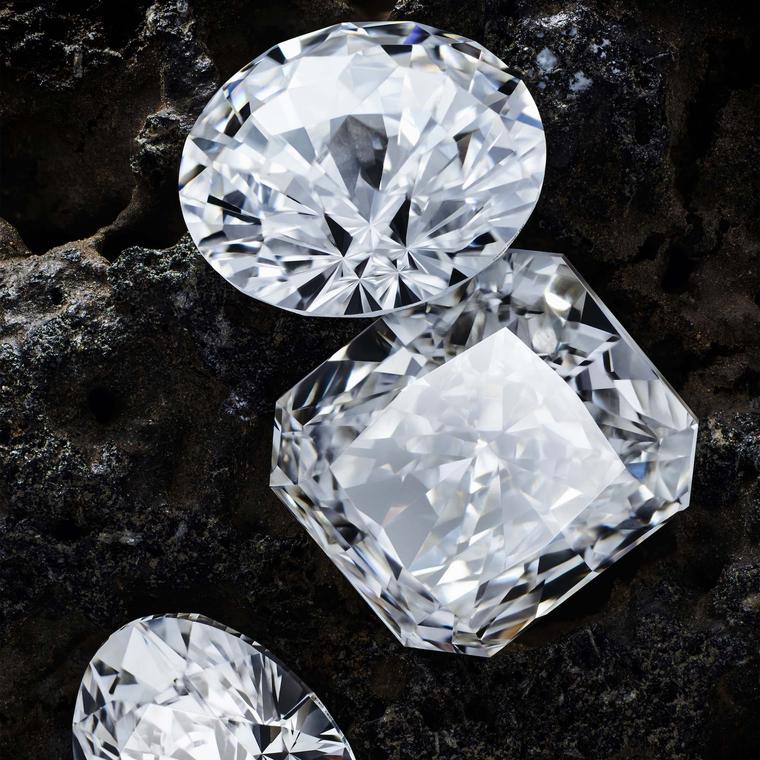
Vintage jewelry solves the "diamond dilemma" for the modern buyer: it provides the historical prestige and inherent scarcity of a natural stone, but with a transparent, eco-friendly provenance that requires no new mining. It is the ultimate antidote to the "factory-made" versus "earth-mined" debate.
The Path Forward for the Consumer
For those entering the market today, the implications are clear:
- For the Lab-Grown Buyer: The choice is now a rational one. If the goal is the largest, most brilliant stone for the lowest price, the lab-grown market is the logical destination. Because prices are expected to continue their downward trajectory, there is no immediate pressure to buy; patience will likely yield better value.
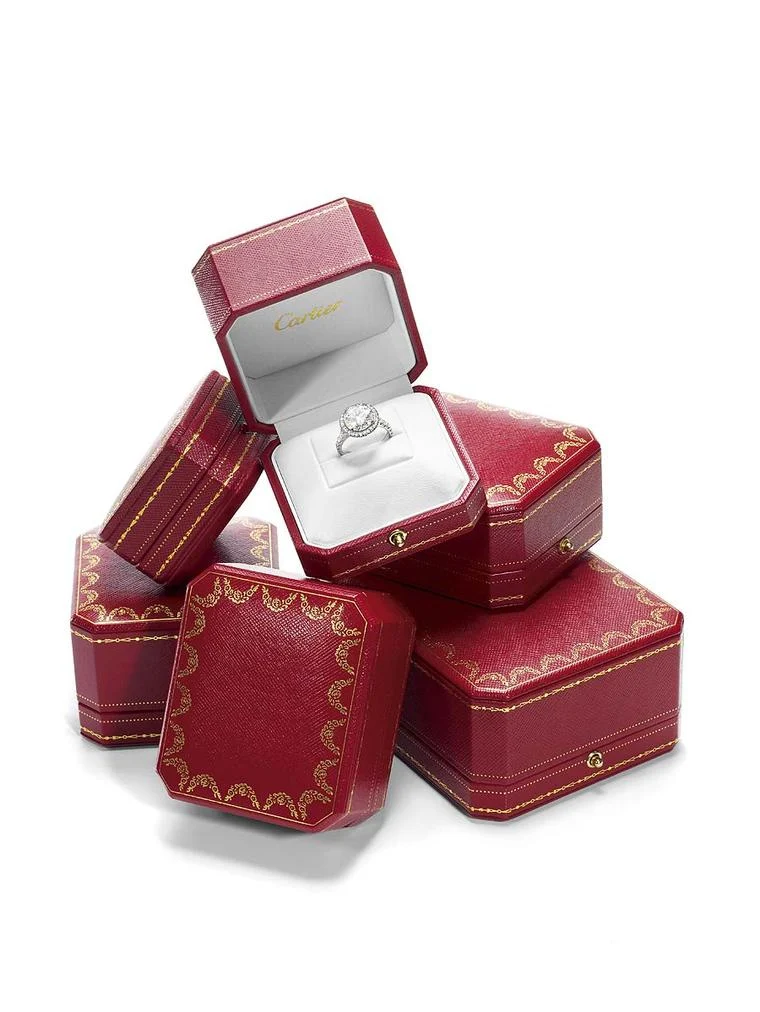
- For the Natural Diamond Buyer: Buy with extreme discernment. The "middle of the market"—ordinary, one-carat, near-colorless stones—is currently the most volatile segment. If you choose natural, focus on exceptional rarity, provenance, and the stamp of heritage houses like Cartier or Tiffany. These brands are successfully signaling that their stones are not mere commodities, but luxury assets.
- For the Value-Seeker: Look to the past. Antique and vintage pieces offer a unique combination of craftsmanship, sustainability, and value retention that neither modern lab-grown nor mass-produced mined diamonds can currently match.
The era where the material itself conferred meaning is over. In 2026, the value of a diamond is no longer hidden within the carbon lattice of the stone; it is built by the house that sells it, the designer who sets it, and the story it carries. The market has moved from a monopoly of substance to a competition of desire.