The global diamond industry, a sector that has historically relied on the narrative of eternal rarity, finds itself at a precarious crossroads. By mid-2026, the industry has undergone a tectonic shift: lab-grown diamonds (LGDs) now command more than half of the global diamond jewellery market by value, and over 50% of all engagement rings sold in the United States by volume. As mines shutter and production costs for synthetic stones plummet toward commodity pricing, the traditional diamond establishment is finally acknowledging that the threat it once dismissed as a "passing fad" has fundamentally rewritten the rules of commerce.
The Chronology of Disruption
Seven years ago, the jewelry world was embroiled in a fierce semantic debate: Was a stone grown in a reactor in Surat or Singapore truly a "diamond"? That question has been settled by the market. Consumers have spoken, and they have decisively voted for affordability and accessibility.
The disruption began as a trickle, with small-scale experiments in lab-grown tech entering engagement ring retail cases. By 2024, the Grown Diamond Trade Organization (GDTO) was established to navigate the rapid adoption of these stones. In 2025, the industry saw the first significant price crashes, as the manufacturing process for synthetic carbon became increasingly efficient. By 2026, we have moved past the "legitimacy" debate into a era of "value definition," where the natural and lab-grown sectors operate in increasingly divergent spheres.
The Price of Abundance: Economics of the Lab
The economics of a manufactured product are inherently unforgiving. Unlike natural diamonds, which require the massive, capital-intensive infrastructure of mining, the cost of producing a lab-grown diamond is tethered to the price of energy and the efficiency of technological output.
De Beers’ "Lightbox" strategy—an attempt to insulate the market by selling lab-grown fashion jewellery below cost—served as a canary in the coal mine, signaling that the industry giant recognized the inevitable commoditization of the lab-grown product. Today, the price delta is stark. A 1-carat, E-color, VVS clarity lab-grown diamond retails for approximately £800 to £2,000 ($1,000–$2,500), while its mined counterpart commands between £4,500 and £8,500 ($5,700–$10,800).
Dr. Ulrika D’Haenens-Johansson, senior manager of diamond research at the Gemological Institute of America (GIA), notes that approximately 95% of lab-grown diamonds now fall within the narrow D-to-F color and Flawless-to-VVS2 clarity bands. This uniformity is a double-edged sword. While it provides the consumer with a "perfect" stone, it renders the historical grading vocabulary of the 1940s—designed to describe the rarity of mine output—largely obsolete for the lab-grown sector. In this new world, "premium" is the only standard.
The Retreat of the Miners: A Shrinking Landscape
As the lab-grown market embraces abundance, the natural diamond industry is aggressively pivoting toward scarcity. The mid-2026 mining data paints a sobering picture of contraction. Rio Tinto’s Diavik mine in Canada’s Northwest Territories, after 23 years of operation, ceased production in March. The nearby Ekati mine has filed for insolvency.
The impact on sovereign economies is severe. In Botswana, where diamond exports traditionally account for one-third of national revenue, earnings fell by nearly 30% in the first five months of 2026. Alrosa, the world’s largest producer by volume, has reported losses exceeding $129 million for the first half of the year, with CEO Pavel Marinychev describing the situation as the "deepest sectoral crisis in history."
However, this forced discipline is showing signs of stabilizing the market. Analysts observe that supply cuts have successfully placed a floor under the price of rough diamonds. For the first time since March 2025, the Rapaport polished index posted flat or positive numbers across major categories in July 2026. The strategy is clear: by treating natural diamonds as a finite luxury asset rather than a commodity, the mining giants hope to preserve the value of the "rare and beautiful."
Official Responses and Strategic Shifts
The industry’s response to this schism has been marked by defensive maneuvers and a search for new branding paradigms. The World Jewellery Federation (CIBJO) is currently pushing to reclassify "lab-grown" diamonds as "synthetic" to create a stronger linguistic barrier between the two categories.
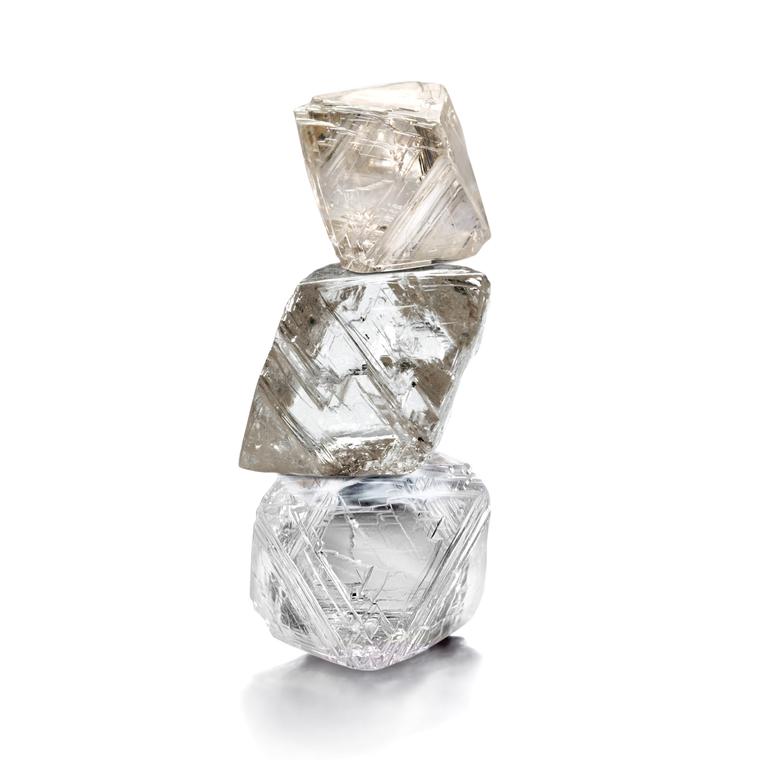
Yet, as Marty Hurwitz, executive director of the GDTO, points out, attacking lab-grown diamonds as "factory imitations" may prove counterproductive. "A Mercedes does not need to claim that a Toyota is not a car," Hurwitz notes. He argues that the future of the luxury diamond trade lies in branding, not in fighting the existence of synthetic alternatives.
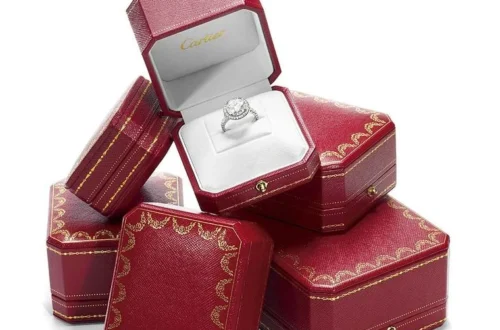
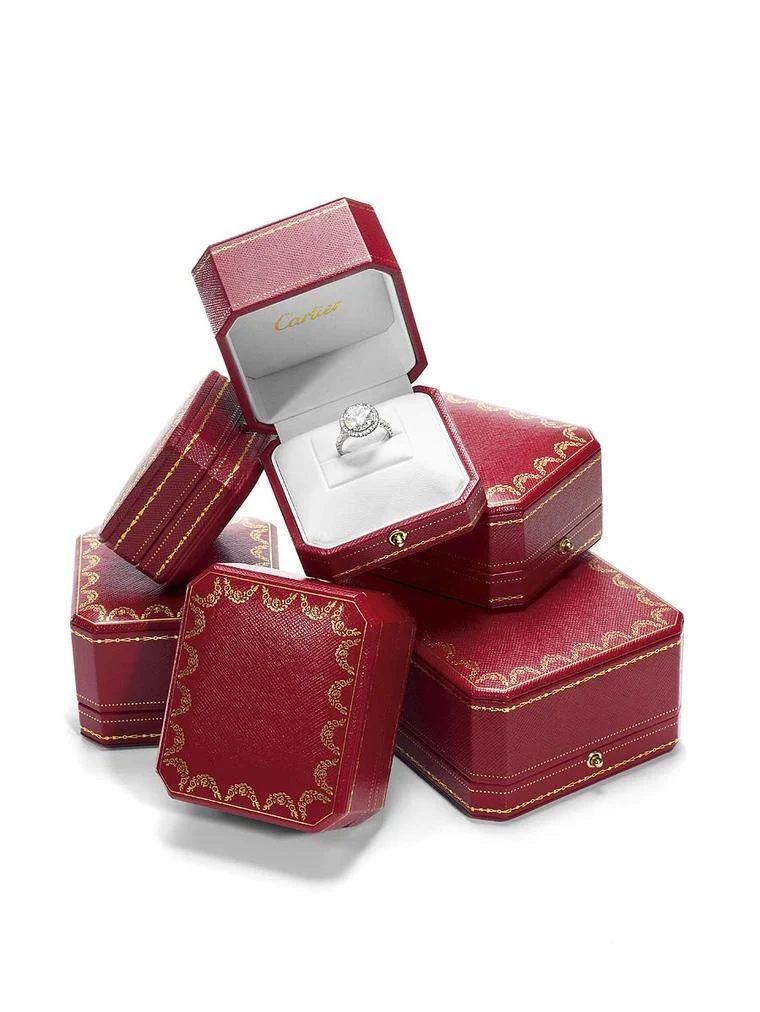
Luxury houses like Cartier, Van Cleef & Arpels, and Tiffany & Co. are leaning into their heritage and rigorous sourcing criteria. By refusing to incorporate lab-grown stones, these brands elevate their solitaire engagement rings into symbols of verifiable origin, catering to clients who seek the "story" that only a billion-year-old stone can tell.
The Sustainability Paradox
Perhaps the most surprising finding in the current market, as noted by the GDTO, is that consumers are largely indifferent to the sustainability credentials that the lab-grown industry once banked on. While marketers initially assumed shoppers would prioritize production data and environmental impact, consumer behavior shows that design, appearance, quality, and price—in that order—remain the primary drivers of purchase. Sustainability serves only as a secondary confirmation for a decision already made.
Implications: The Rise of the "Third Way"
As the market divides into the "Natural Luxury" and "Lab-Grown Accessory" categories, a third, more traditional path has emerged as a major beneficiary: the vintage and antique market.
Nick Withington, CEO of British jeweler William May, reports that Google searches for vintage jewelry have surged tenfold year-on-year. For the discerning buyer, an Art Deco ring solves the dilemma of the modern market: it is natural, it is historically significant, it involves no new mining, and it carries an inherent, inimitable narrative. Vintage jewelry is effectively reclaiming the space that the "mid-market" natural diamond once occupied.
Looking Forward: A Sector Reimagined
For the consumer standing at the jewelry counter in late 2026, the path is clearer than ever, provided one understands the market’s new topography:
- The Lab-Grown Consumer: If you prioritize size, brilliance, and value—and have no expectations regarding long-term resale—the lab-grown diamond is the rational, modern choice.
- The Luxury Collector: If you are purchasing a natural diamond, do so for the attributes only nature can provide: extreme rarity, historical provenance, and the investment-grade quality of unique stones.
- The Ethical Traditionalist: For those seeking the prestige of a natural stone without the environmental footprint of new mining, the vintage and antique market offers the most compelling value proposition.
The diamond industry is no longer a monolithic entity; it has fragmented into three distinct sectors. The material itself no longer confers meaning by default. Instead, that meaning must be earned—through the heritage of a maison, the innovation of a laboratory, or the craftsmanship of a bygone era. As the dust settles, the industry is poised to become more transparent, more creative, and more responsive to a new generation of buyers who have little interest in the "diamond dream" of the 20th century, but are deeply invested in the luxury of the 21st.