MEXICO CITY — Across Latin America, the political landscape has experienced a volatile, rightward-leaning realignment. From the Southern Cone to the Andes, traditional left-wing coalitions have struggled against a rising tide of populist conservatism, anti-establishment frustration, and economic discontent. Yet, amid this regional shift toward the radical right, Mexico stands out as an enduring bastion of left-wing governance.
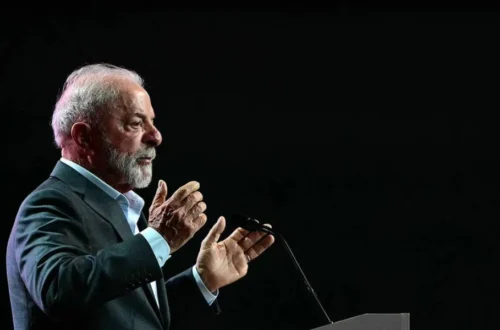
While neighboring left-leaning administrations—such as that of Luiz Inácio Lula da Silva in Brazil—face grueling, polarized electoral battles and narrow margins of survival, Mexico’s ruling party, Morena (Movimiento Regeneración Nacional), enjoys commanding public support. Current polling trends for upcoming legislative cycles indicate that Morena is positioned to secure a staggering advantage, projected to win up to five times as many votes as its fractured opposition counterparts.
The
question of how Mexico’s left has not only survived but thrived while other progressive movements flounder is one of the most pressing inquiries in contemporary Latin American politics. The answer, political analysts suggest, lies in a unique brand of pragmatic leftism: a strategic cocktail of bold social redistribution, calculated security management, and a stark willingness to compromise institutional orthodoxies in the name of political longevity.
Main Facts: The Anatomy of Morena’s Dominance
To understand Mexico’s current political trajectory, one must examine the fundamental pillars supporting the Morena hegemony. Founded by former President Andrés Manuel López Obrador (AMLO) and carried forward under the administration of his successor, Claudia Sheinbaum, Morena has redefined the social contract in Latin America’s second-largest economy.
- Massive Electoral Momentum: Unlike traditional center-left parties that rely on narrow urban coalitions, Morena has successfully united Mexico’s working-class base, rural communities, and a significant portion of the rising middle class. Upcoming legislative projections show the ruling party maintaining an insurmountable lead over the historic, yet deeply unpopular, opposition parties (PAN, PRI, and PRD).
- Pragmatic Compromise over Ideological Purity: Unlike more dogmatic socialist movements in the region, Morena has demonstrated a flexible approach to governance. While implementing sweeping redistributive programs, the party has maintained a pragmatic relationship with private enterprise, avoided extreme capital controls, and preserved orthodox macroeconomic frameworks that keep inflation and foreign exchange relatively stable.
- Institutional Transformation: Morena’s strategy goes beyond winning elections; it involves a systemic redrawing of Mexico’s political architecture. Through constitutional reforms, the judicial overhaul, and the consolidation of executive power, the ruling party has systematically weakened traditional checks and balances, arguing that these bodies historically served entrenched elites rather than the impoverished majority.
Chronology: The Evolution of Mexico’s Left-Wing Resurgence
The path to Morena’s current dominance was not built overnight. It represents the culmination of decades of political struggle, institutional frustration, and strategic pivoting.
1988–2006: The Wilderness and the Birth of a Movement
The modern Mexican left traces its foundational trauma and mobilization to the controversial 1988 presidential election, widely believed to have been stolen from leftist candidate Cuauhtémoc Cárdenas through software manipulation of the electoral system (the caída del sistema).
Decades later, in 2006, Andrés Manuel López Obrador—then running under the Party of the Democratic Revolution (PRD)—narrowly lost the presidential election to Felipe Calderón by a razor-thin margin of 0.56%. Citing massive electoral fraud, AMLO led months of paralyzing civil disobedience in downtown Mexico City, establishing himself as the definitive leader of Mexico’s disenfranchised masses.
2012–2014: The Split and the Creation of Morena
Following a second unsuccessful presidential run in 2012 against the Institutional Revolutionary Party’s (PRI) Enrique Peña Nieto, AMLO concluded that the PRD had become too compromised by Mexico’s political establishment. In 2014, he formally broke away to establish Morena as a grassroots social movement turned political party. This pivot allowed him to construct a direct, unmediated relationship with the voters, bypassing traditional party apparatuses.
2018: The Historic Landslide
Promising a Cuarta Transformación (Fourth Transformation) to eradicate corruption, dismantle the neoliberal economic model, and prioritize the poor ("Por el bien de todos, primero los pobres"), AMLO won the 2018 presidential election in a historic landslide. Morena secured majorities in both houses of Congress, giving the left its most powerful mandate in modern Mexican history.
2021–2024: Legislative Consolidation and the Sheinbaum Succession
During the midterm elections of 2021, despite economic headwinds and the challenges of the COVID-19 pandemic, Morena retained its core legislative coalition. By 2024, the party orchestrated a seamless political transition. Claudia Sheinbaum, a climate scientist and former Mexico City mayor, won the presidency by a historic margin, cementing Morena’s institutional grip and proving that the movement transcended the cult of personality surrounding its founder.
Supporting Data: Economic Redistribution and Public Approval
Morena’s popularity is not merely a product of charismatic rhetoric; it is anchored in tangible, material outcomes for millions of Mexican citizens. Data compiled by various economic and polling institutions illustrate the mechanics of this support:
- Direct Cash Transfers: Under Morena, social spending has been institutionalized and expanded. Programs such as universal pensions for senior citizens, youth apprenticeship grants (Jóvenes Construyendo el Futuro), and scholarships for students have injected billions of pesos directly into households. According to government data, these transfers reach over 25 million households—roughly 70% of the Mexican population.
- Poverty Reduction Metrics: According to the National Council for the Evaluation of Social Development (CONEVAL) and independent economic studies, poverty in Mexico dropped significantly during AMLO’s administration. Millions of Mexicans crossed out of multidimensional poverty, driven largely by sustained increases in the federal minimum wage—which more than doubled in real terms over six years—and targeted welfare programs.
- Macroeconomic Stability: Unlike instances of left-wing governance in Venezuela or Argentina, Morena has prioritized fiscal discipline. Mexico’s debt-to-GDP ratio has remained relatively stable, foreign direct investment (bolstered by nearshoring trends as companies move supply chains closer to the U.S.) has reached record highs, and the Mexican peso has demonstrated historic resilience against the U.S. dollar, earning it the moniker "super peso" during periods of global volatility.
- Electoral Projections: Recent polling data from firms such as El Financiero and Reforma indicate that Morena maintains a voter preference margin that towers over the combined totals of the conservative PAN and the historic PRI. While opposition parties struggle to define a coherent alternative platform, Morena’s approval ratings consistently hover above 55%, even deep into its sixth consecutive year in power.
Official Responses: Perspectives from Government and Opposition
The unprecedented dominance of Morena has elicited sharply contrasting narratives from government officials and political opponents alike.
The Administration’s Perspective: Justice and Sovereignty
Representatives of the Claudia Sheinbaum administration and congressional leaders defend Morena’s trajectory as a necessary correction to decades of neoliberal neglect, systemic corruption, and extreme income inequality.
"For decades, economic growth in Mexico was treated as an end in itself, while the human cost was ignored," stated a high-ranking Morena senator, speaking on condition of anonymity regarding internal legislative strategy. "Our model proves that fiscal responsibility and social justice are not mutually exclusive. When you put resources directly into the pockets of working families, you stimulate the internal market, strengthen social cohesion, and build a resilient democracy."
Administration officials also emphasize that their pragmatic approach to security and foreign policy—balancing domestic social intervention with pragmatic cooperation with international partners like the United States—ensures stability while protecting national sovereignty.
The Opposition’s Perspective: Democratic Backsliding and Populism
Conversely, opposition leaders, civil society organizations, and critics paint a much darker picture of Morena’s hegemony, warning that Mexico is sliding toward a single-party authoritarian state reminiscent of the 20th-century PRI hegemony.
"What Morena calls ‘pragmatism’ is actually a systematic dismantling of democratic checks and balances," argued a prominent member of the opposition National Action Party (PAN). "By weakening the judiciary, capturing independent regulatory agencies, and centralizing executive power, the ruling party is eroding the foundational rules of our republic. Economic handouts are being used to build an electoral clientelism that suffocates political pluralism."
Critics also point to persistent security challenges, arguing that despite Morena’s rhetoric, cartel violence, extortion, and impunity continue to plague large swathes of the country, exposing the limits of the administration’s "hugs, not bullets" (abrazos, no balazos) security paradigm inherited from the previous administration.
Implications: What Morena’s Success Means for the Future of Latin America
The resilience of Mexico’s left carries profound implications for geopolitics, economic policy, and governance models across the Western Hemisphere.
1. A New Blueprint for the Latin American Left
As traditional pink-tide governments in South America struggle with inflation, corruption scandals, and public exhaustion, Morena offers a compelling alternative model. By combining aggressive social spending with fiscal orthodoxy, a pragmatic relationship with global capital markets, and a disciplined populist political machine, Morena demonstrates how a left-wing party can institutionalize its power without triggering catastrophic economic collapse or capital flight.
2. The Future of Mexican Democracy
As Morena prepares for upcoming legislative battles with an overwhelming advantage, the central question for Mexico shifts from electoral competition to institutional health. Without a robust, credible, and unified opposition, the burden of accountability falls heavily on civil society, independent journalism, and internal party dynamics. Whether Morena can manage internal factionalism now that its charismatic founder, AMLO, has stepped back from daily politics will determine the party’s longevity.
3. Geopolitical Alignment and US-Mexico Relations
With Sheinbaum at the helm and Morena dominating the legislature, Mexico’s geopolitical weight is at an all-time high. Capitalizing on global supply chain realignment (nearshoring), Mexico is increasingly indispensable to the United States economically. Morena’s ability to navigate trade disputes, migration pressures, and security cooperation with Washington while maintaining its nationalist, sovereign domestic posture will shape North American relations for decades to come.
Conclusion
Mexico’s left has achieved what few progressive movements in the contemporary world have managed: sustained, expanding electoral dominance in the face of regional political headwinds. By anchoring its legitimacy in material redistribution, mastering the art of political pragmatism, and responding directly to the frustrations of the working class, Morena has transformed from a populist movement into a structural hegemon. Whether this model will foster long-term democratic resilience or lead to unchecked central authority remains the defining debate of modern Mexican history.