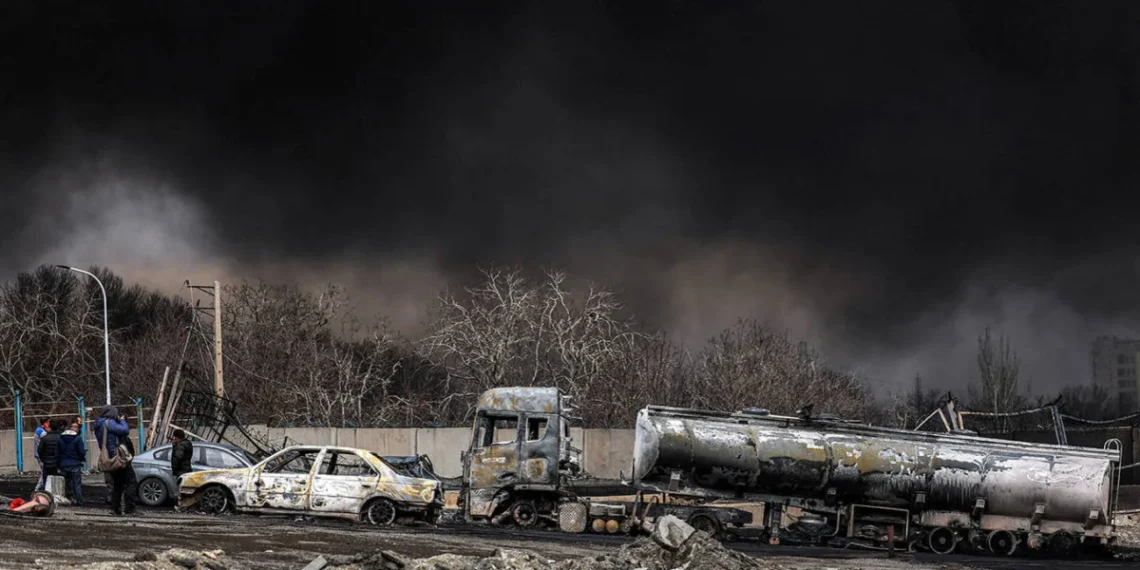
RIO DE JANEIRO — Six months into the devastating war involving Iran, the ongoing standoff and closure of the Strait of Hormuz continue to violently rattle the global economy. While international traders, financial institutions, and governments frantically monitor the maritime chokepoint for signs of military escalation, households and corporations worldwide are grappling with soaring fuel costs and genuine fears of systemic energy shortages.
Yet, beneath the immediate economic panic lies a deeper, far more insidious crisis: a rapidly escalating environmental toll. The conflict is driving a desperate pivot toward carbon-intensive fuels, accelerating deforestation, and fracturing international cooperation on climate change. Unlike fluctuating oil prices, which will eventually stabilize when peace returns, the ecological damage being unleashed today will linger for generations, fundamentally altering the trajectory of global climate stabilization.
Main Facts: The Energy Shock and Ecological Fallout
The closure of the Strait of Hormuz—through which roughly a fifth of the world’s petroleum passes daily—has exposed the fragile dependency of the global energy grid. As crude oil supplies tighten and prices skyrocket, energy-dependent nations are finding themselves forced into short-term survival mode.
To keep the lights on and manufacturing sectors functioning, governments are bypassing green transitions and reverting to reliable, highly polluting alternatives. Chief among these are coal-fired power plants, which are being brought back online or pushed to maximum capacity, alongside a sudden, aggressive dash for unregulated biofuels.
The immediate consequences of this tactical retreat from decarbonization include:
- Surging Greenhouse Gas Emissions: The return to coal and heavy fuel oils has instantly reversed years of incremental climate progress in several developing and industrialized nations.
- Aggressive Deforestation: The rush for alternative biomass and agricultural bio-inputs to replace lost petroleum products is driving illegal logging and land clearing in critical tropical ecosystems.
- Political Paralysis in Climate Diplomacy: With national security and energy sovereignty dominating geopolitical agendas, global climate negotiations have stalled, starved of the trust and financial commitments required to keep global temperature rises under critical thresholds.
Chronology: Six Months of Escalation and Ecological Drift
Month 1: The Spark and the Chokepoint
The conflict ignited abruptly, quickly culminating in the effective blockade of the Strait of Hormuz. International brent crude prices spiked by over 40% within the first fortnight. Governments scrambled to secure emergency fossil fuel reserves, while initial warnings from environmental economists regarding a potential "green backlash" were drowned out by immediate economic panic.
Months 2 and 3: The Scramble for Substitutes
As strategic reserves dwindled and Middle Eastern supply chains remained paralyzed, importing nations began altering their energy portfolios. Several Asian and European nations delayed planned coal plant retirements. Simultaneously, agricultural commodities typically destined for food markets were redirected toward biofuel refineries to cushion the blow of liquid fuel scarcity, sending global food prices climbing alongside energy costs.
Months 4 and 5: Ecosystems on the Frontline
With industrial demand for timber, charcoal, and agricultural biomass surging, deforestation rates in major carbon sinks—particularly the Amazon and Southeast Asia—began to spike. Local authorities, distracted by national emergency preparations and economic stimulus efforts, relaxed environmental enforcement, opening protected lands to unchecked exploitation.
Month 6 (Present): Institutional Stalemate
Entering the half-year mark, the conflict has hardened into a grinding war of attrition. International climate forums, slated to finalize critical funding mechanisms for vulnerable nations, have lost momentum. Delegates report that geopolitical polarization over the war has crippled diplomatic goodwill, leaving the Paris Agreement architecture under its most severe strain since inception.
Supporting Data: Quantifying the Crisis
While comprehensive global emission audits take time to compile, preliminary data from energy monitors and environmental research groups paint a grim picture of the war’s collateral damage:
- Energy Reversion: Early indicators suggest that emergency reliance on coal has temporarily injected an estimated 800 million metric tons of additional carbon dioxide into the atmosphere globally over the past six months.
- Biomass Pressures: Biofuel mandates in several major economies have expanded by 15% to compensate for petroleum shortfalls, driving the conversion of over two million hectares of marginal land and secondary forests into monoculture feedstock production.
- Financial Diversion: National defense budgets have ballooned globally, resulting in a simultaneous contraction of international climate finance pledges by an estimated 35%, leaving developing nations without the fiscal buffers needed to withstand concurrent climate shocks.
Official Responses and Diplomatic Reactions
Governments caught in the crosshairs of the energy crisis have defended their actions as unavoidable emergency measures. Energy ministries argue that preventing widespread blackouts, industrial collapse, and social unrest must take precedence over long-term decarbonization goals.
"When you are facing an immediate energy famine that threatens to freeze populations and halt economies, long-term climate models become secondary to immediate survival," noted an anonymous energy policy advisor from a G7 nation. "Governments are not abandoning climate goals out of malice; they are trapped in a triage scenario."
Conversely, environmental groups, scientific bodies, and climate vulnerable nations have sharply condemned these short-sighted measures. Leading climate scientists, including co-authors of international climate assessments, have warned that mortgaging the planet’s future to weather a geopolitical storm is a catastrophic miscalculation.
"The atmospheric concentration of greenhouse gases does not negotiate with geopolitical crises," climate scientists emphasize. "Every gigaton of carbon released today to substitute for Middle Eastern oil brings humanity closer to irreversible tipping points—such as the dieback of the Amazon rainforest or the destabilization of major ice sheets. We cannot simply burn our way out of a conflict and expect the climate system to forgive the debt."
Implications: A Long Shadow Over Global Sustainability
The ripple effects of the Hormuz blockade extend far beyond immediate carbon accounting. They expose a fundamental structural vulnerability in the global transition to renewable energy: the vulnerability of green transitions to geopolitical shocks.
1. Fractured Multilateralism
Trust between the Global North and Global South—already fragile due to unfulfilled climate finance promises—is fraying further. Developing nations point out that while wealthy countries demanded rapid decarbonization during times of peace, those same nations are quick to revert to fossil fuels the moment their own energy security is threatened. This hypocrisy threatens to poison future climate summits, making binding agreements increasingly difficult to forge.
2. Permanent Environmental Degradation
While an oil spill can be contained and an energy market can stabilize, the loss of primary forests and the disturbance of fragile biodiversity hotspots are irreversible on human timescales. The carbon released from accelerated deforestation during this conflict will remain in the atmosphere for centuries, actively working against global efforts to cap warming at 1.5°C.
3. The Urgency of Resilience
Ultimately, the Iran war and the closure of the Strait of Hormuz serve as a brutal validation of the core argument long made by environmental economists: true national security is inextricably linked to ecological security. Societies dependent on volatile, geopolitically fraught fossil fuel markets will always be one conflict away from systemic economic and environmental collapse.
As the war in the Middle East grinds past its sixth month, the international community faces an urgent imperative. Leaders must resist the temptation to view environmental protection as a luxury to be discarded in times of crisis. Unless governments aggressively decouple their national security from fossil fuel dependencies and reinvest in decentralized, resilient renewable grids, every future geopolitical conflict will be fought not only with missiles and blockades, but at the direct expense of the Earth’s life-support systems.