On September 22, the cultural landscape of Los Angeles will undergo a seismic shift. In the heart of Exposition Park, where once stood little more than sprawling asphalt parking lots, the George Lucas Museum of Narrative Art will open its doors to the public. More than a decade in the making, this ambitious institution represents a profound departure from traditional museum curation, aiming to dissolve the rigid hierarchies that have long separated "high art" from the visual storytelling that defines our collective cultural identity.
Founded by legendary filmmaker George Lucas and his wife, Mellody Hobson, the museum is not merely a monument to the creator of Star Wars and Indiana Jones. Instead, it serves as a massive, 300,000-square-foot manifesto on the power of visual communication—a place where Norman Rockwell sits comfortably alongside the gritty, counter-cultural comix of R. Crumb, and where ancient sculptural traditions meet the modern language of manga and digital animation.

The Architecture of Imagination: A Cloud Over Exposition Park
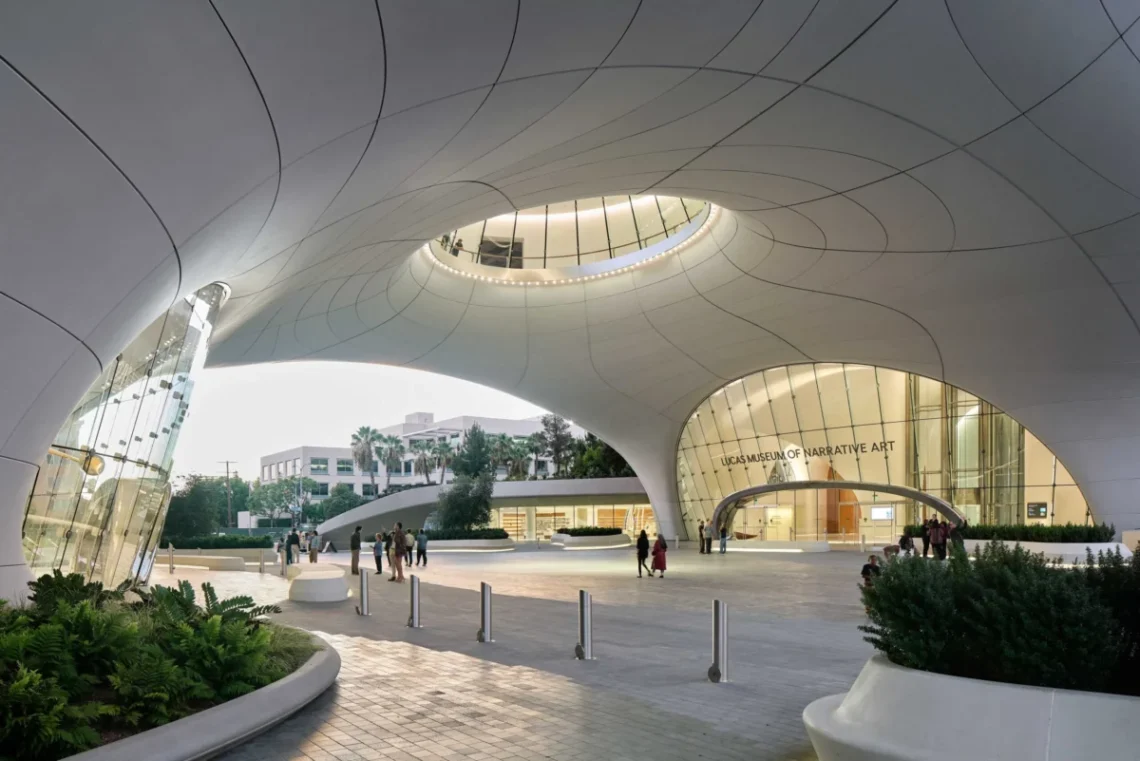
The structure itself, designed by visionary architect Ma Yansong, is an architectural marvel that challenges the very concept of urban space. Eschewing the sharp angles and rigid geometries of typical institutional buildings, the museum’s design was inspired by the organic, sprawling trees of the surrounding park. The result is a fluid, white, futuristic silhouette that seems to float above the landscape—an ethereal form that Yansong describes as being "as light and free as a cloud."
The building features no straight lines, a deliberate choice meant to mimic the organic progression of human storytelling. Inside, the architecture facilitates a journey rather than a static viewing experience. As visitors transition from the underground parking facilities—often the most mundane part of an LA outing—they are transported into an environment designed to feel like an ascent into a new, elevated universe.

The integration with nature is equally intentional. Landscape architect Mia Lehrer has transformed the exterior into a topography of contoured green hills and winding paths that refuse to follow a single, prescribed route. "Paths climb, descend, cross bridges, and embrace sculptures," Lehrer noted, emphasizing that the museum experience begins long before a guest steps through the threshold.
A Chronology of Vision: From Collector to Founder
The seeds of this institution were planted over 50 years ago, when a young George Lucas began collecting art while still a college student. What began as a modest interest in comic art—often dismissed by the art establishment of the era—eventually burgeoned into an expansive collection of over 40,000 works.

- The Formative Years (1970s–1990s): Lucas’s early collecting focused on illustration and narrative art, forms he felt were vital to the human experience but underserved by traditional galleries.
- The Vision (Early 2010s): Following his marriage to Mellody Hobson in 2013, the concept for the museum solidified. Hobson, a titan of industry and former chairman of DreamWorks Animation, brought a sophisticated understanding of both business and the narrative arts to the project.
- The Planning Phase (2014–2017): After considering several cities, the couple selected Los Angeles for its deep ties to the entertainment industry and its rich, diverse population.
- Construction and Challenges (2018–2024): The project weathered environmental concerns, architectural revisions, and the global logistical challenges of the early 2020s, finally reaching its completion date in September 2024.
Challenging the Hierarchy of Art
The primary mission of the Lucas Museum is to "dissipate hierarchies." Historically, art museums have prioritized classical painting and sculpture, often relegating illustration, comic books, and genre-specific art to the fringes. Lucas and Hobson are fundamentally flipping this script.
The Breadth of the Collection
The museum’s galleries are organized by themes rather than chronology or medium. Visitors will find exhibitions titled "Motherhood" or "Sports," which bridge the gap between disparate artistic genres.

- Iconic American Art: The collection includes substantial works by Norman Rockwell and Frida Kahlo, grounding the collection in recognized historical significance.
- The "People’s Art": The inclusion of manga, comic books, and underground illustrations (such as the works of R. Crumb, Jim Davis, and Charles Schulz) validates these mediums as legitimate, powerful forms of narrative expression.
- The Rembrandt of the Broncos: One of the most compelling narratives within the museum is the inclusion of Ernie Barnes. An NFL offensive guard turned artist, Barnes’s fluid, dynamic depictions of Black life and sports were largely ignored by the mainstream fine art world during his lifetime. The museum highlights his legacy as a pioneer who bridged the gap between athleticism and the canvas, serving as an official artist for the 1984 Los Angeles Olympics.
Supporting Data and Institutional Offerings
The campus is designed to be a hub of community and intellectual engagement, offering more than just exhibition space:
- Research Library: A three-story, free-to-the-public facility that houses an exhaustive archive of narrative art history, providing resources for students, researchers, and curious visitors alike.
- Theaters: Two specialized venues—the Robert Flaherty Theater, focusing on the history and future of documentary filmmaking, and the Slavko Vorkapich Theater, which showcases experimental short films that push the boundaries of cinematic editing.
- Outdoor Sculpture Garden: The 13-acre green space serves as a living gallery, featuring 10 outdoor sculptures, including Colombian master Fernando Botero’s bronze Maternity.
- Skywalker Grill: An on-site dining establishment designed to encourage visitors to extend their stay and engage in conversation about the works they have viewed.
Official Responses and Philosophy
During a media preview on September 2, George Lucas articulated the philosophical foundation of the museum. "A picture is very powerful, and stories are very powerful," Lucas stated. "Those two elements create a society."

This sentiment is echoed by the museum’s leadership. CEO Tracey Bates noted that "every gallery, every program, every corner of this museum was built with our visitors in mind." The goal is to make art accessible, removing the pretension that often surrounds high-end galleries. By focusing on "people’s art," the founders hope to invite a broader demographic into the conversation, ensuring that the museum feels like a public utility rather than an exclusive club.
The Implications: Redefining the Museum of the 21st Century
The opening of the Lucas Museum is not just a triumph for Southern California; it is a signal to the global art community that the definition of "fine art" is evolving. By prioritizing narrative—the human impulse to share experiences through images—the museum aligns itself with the oldest human traditions.

Global Cultural Impact
The museum’s inaugural exhibition, "The History of Native Art: Heroes, Myth, The Sacred," sets the stage by placing modern narrative pieces alongside recreations of ancient masterpieces like the ceiling of the Sistine Chapel and the interior of the Hagia Sophia. This juxtaposition forces visitors to recognize that whether it is a Renaissance fresco or a 20th-century comic book, the underlying motivation remains the same: the preservation and transmission of human stories.
A Nod to the Founders’ Legacy
While the museum is strictly curated to avoid being a "Lucas Museum" in the sense of a fan shrine, it does not ignore the history that funded its creation. The "Cinema" section includes a dedicated "Star Wars in Motion" gallery. Here, visitors can examine the vehicles and props that shaped modern visual culture. It serves as a bridge, bringing in fans of the Star Wars and Indiana Jones franchises and, through them, introducing a wider audience to the broader, historical context of narrative art.

The Future of Community Engagement
The ultimate success of the museum will be measured by its ability to foster a "common belief system." As Lucas noted, "Narrative art creates a group of people with common belief systems, and that common belief system allows them to work together." By providing a free library, expansive green spaces, and exhibitions that celebrate diverse voices—including those historically marginalized by race and gender—the museum is positioning itself as a cornerstone of civic life in Los Angeles.
As the doors open this September, the George Lucas Museum of Narrative Art stands as a testament to the idea that storytelling is the thread that binds us. It is an institution built on the belief that art is not something to be locked behind glass, but something to be shared, analyzed, and lived. Whether one is a fan of high-modernist murals, a devotee of underground comix, or simply a visitor seeking a new perspective on the history of human expression, the museum offers a space that is as expansive as the imagination itself. In the heart of LA, the story is only just beginning.