
By Stephen Holmes
Published: September 14, 2026
NEW YORK — At first glance, the rising tide of populist anxiety regarding immigration and the growing community pushback against the rapid expansion of artificial intelligence data centers share a common psychological DNA. Both phenomena reflect deep-seated insecurities about individual and collective agency in a rapidly modernizing, increasingly volatile global economy.
However, beneath the surface of these two contemporary anxieties lies a profound philosophical divergence. While nativist narratives assure native-born populations that their existence, culture, and heritage are valuable enough to warrant a deliberate, malicious campaign of replacement, the fear of technological obsolescence driven by data centers assumes an altogether darker premise: that human labor, cognition, and physical presence will soon be rendered economically worthless.
Few ideological frameworks have traveled as far or mutated as aggressively as the "Great Replacement" theory. Originally coined in France by writer Renaud Camus, the concept posits that native populations are being systematically and deliberately supplanted by foreign immigrants.
What began as a fringe intellectual thesis in European literary circles has since furnished the foundational grammar for a global populist resurgence. It has propelled the political advances of Marine Le Pen’s National Rally in France, anchored Viktor Orbán’s prolonged governance in Hungary, fueled the rise of the Alternative für Deutschland (AfD) in Germany, and provided the ideological scaffolding for Donald Trump’s hardline mass-deportation agenda in the United States. Tragic evidence of the theory’s lethal potency is etched into the modern historical record, having been explicitly cited by mass murderers in Christchurch, New Zealand; El Paso, Texas; Hanau, Germany; and Buffalo, New York.
Main Facts: The Dual Anxieties of the 21st Century
To understand the current political landscape, analysts must examine how two distinct fears are reshaping public policy, social cohesion, and capital investment:
- The Nativist Narrative (The Great Replacement): This political framework leverages cultural anxiety, framing demographic shifts not as the organic byproduct of globalized labor markets and demographic aging, but as an existential, orchestrated threat to national identity. It transforms economic stagnation and cultural transition into a zero-sum battle for survival.
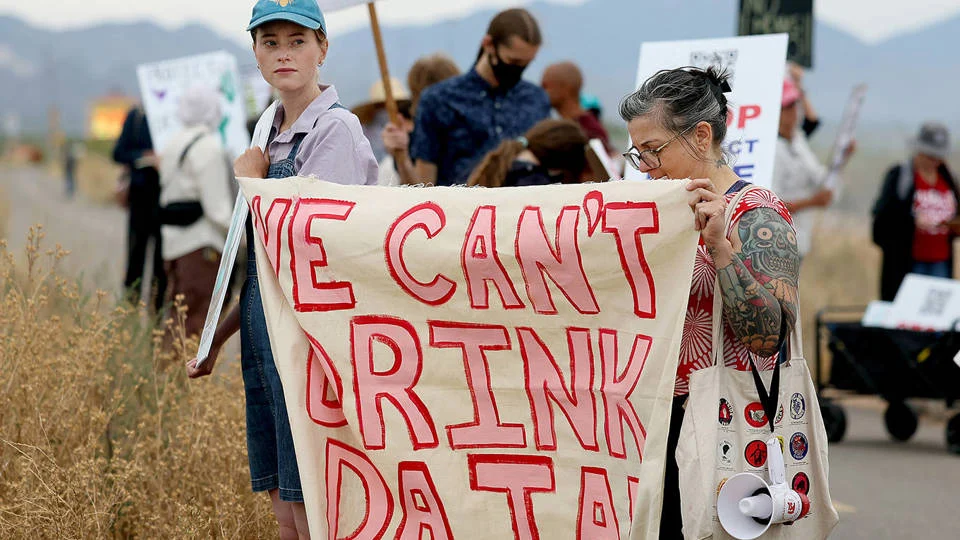
- The Technological Narrative (The Data Center Backlash): Across suburban and rural landscapes in the United States and Europe, communities are fiercely resisting the footprint of hyperscale data centers. Driven by the explosive demand for generative AI training and cloud computing, these massive facilities consume unprecedented amounts of electricity and water while offering minimal local employment.
- The Divergence in Human Worth: The fundamental psychological split between these two anxieties centers on dignity. Nativism, despite its xenophobic violence, ultimately flatters its adherents by suggesting they are formidable enough to be targeted. Conversely, the rise of automated infrastructure signals a cold economic reality: capital no longer needs human labor at scale, threatening to reduce local communities to mere utility providers for digital overlords.
Chronology: From European Literary Circles to Global Populism and Digital Expansion
The convergence of cultural nativism and technological transformation did not happen overnight. The timeline of these parallel developments illustrates how modern economic distress found twin outlets in political xenophobia and anti-infrastructure sentiment.
- 2011: French author Renaud Camus publishes Le Grand Remplacement, formalizing the thesis that European populations are being demographically and culturally replaced by non-European immigrants, primarily from North Africa and the Middle East.
- 2015–2016: The European migration crisis accelerates, providing fertile ground for right-wing populist parties to weaponize replacement rhetoric. Concurrently, the Brexit vote in the UK and the election of Donald Trump in the U.S. institutionalize anti-immigrant politics as a dominant global force.
- 2018–2022: Hyperscale data center construction surges globally, moving out of traditional tech hubs like Northern Virginia and Silicon Valley into smaller municipalities seeking tax revenue. Residents begin organizing against noise pollution, strained water grids, and massive grid demands.
- 2023–2024: The launch of advanced generative AI models triggers a gold rush for computing power. Data center footprints expand exponentially, sparking fierce local zoning battles and pitting tech conglomerates against rural and suburban homeowners.
- 2025–2026: Mass deportation rhetoric solidifies into official policy platforms in several Western democracies, while local opposition to AI infrastructure matures into a broader critique of corporate techno-feudalism. The psychological dichotomy between feeling "hunted" by immigrants versus "discarded" by algorithms becomes a defining tension of the mid-2020s political economy.
Supporting Data: The Economics of Fear and Infrastructure
Understanding the potency of these modern anxieties requires examining the underlying macroeconomic and demographic data driving public sentiment.
| Metric / Indicator | Nativist / Immigration Context | Technological / Data Center Context |
|---|---|---|
| Core Economic Driver | Globalization, wage stagnation, shifting labor markets | Automation, generative AI scaling, cloud computing demand |
| Geographic Focal Point | Border regions, post-industrial towns, urban peripheries | Suburbs, rural counties with cheap land and grid access |
| Perceived Threat | Cultural erasure, demographic minority status | Economic irrelevance, resource depletion (water/power) |
| Local Job Creation | Variable; often dependent on migrant labor in agriculture/services | Extremely low post-construction employment (often <50 permanent jobs per facility) |
| Resource Consumption | Social welfare and public service strains | Massive municipal water usage and multi-megawatt power draws |
Economic analyses consistently show that while immigration generally boosts aggregate economic output and mitigates aging workforce crises in developed nations, the localized disruption of labor markets fuels acute anxiety. Similarly, while data centers generate substantial municipal tax revenues, their physical footprint often alienates local populations who see their immediate environments industrialized to feed digital systems that employ very few local residents.
Official Responses: Governments Caught Between Borders and Servers
Political leaders and institutional bodies are struggling to formulate coherent responses to these dual crises, often exacerbating tensions through mismanaged policy.
The Political Response to Nativism
Governments across the Western world have responded to the political gravity of the Great Replacement narrative by tightening border controls, increasing funding for interior enforcement, and rhetorically adopting aspects of nationalist framing. Mainstream political parties, fearful of losing working-class constituencies to populist challengers, have increasingly normalized restrictive asylum policies.
Human rights organizations and economists, however, argue that these crackdowns fail to address the root demographic realities. With birth rates falling below replacement levels across North America, Europe, and East Asia, restricting immigration often deepens long-term fiscal and labor crises, creating a vicious cycle of economic dependency and xenophobic backlash.
The Regulatory Response to AI Infrastructure
In stark contrast, state and local governments are grappling with a physical infrastructure boom that caught regulators flat-footed. In states like Virginia, Ohio, and Texas, utility commissions and zoning boards are being forced to rewrite codes to handle data centers that consume as much electricity as small cities.
Official responses have ranged from welcoming tax-abated tech campuses to enacting outright moratoriums on new builds. Environmental protection agencies are increasingly scrutinizing the water usage of closed-loop cooling systems, while grid operators warn of impending brownouts driven by data center demand. Yet, because these facilities are tied to national security, geopolitical competitiveness, and the race for artificial general intelligence (AGI), federal governments have been hesitant to impose sweeping federal restrictions, leaving local communities to fight tech giants largely on their own.
Implications: The Search for Human Agency in a Post-Industrial Age
The parallel trajectories of anti-immigrant populism and anti-data center activism offer a sobering diagnostic of the modern democratic condition. Both movements are symptoms of a deeper malaise: a widespread loss of faith in the traditional social contract.
When citizens feel that their economic future is slipping beyond their control, they gravitate toward narratives that explain their displacement. The Great Replacement theory offers a perverse form of reassurance: it posits an active, plotting adversary—immigrants, elites, or globalists—implying that the native population still matters enough to be targeted. It is a politics of grievance rooted in the belief that one’s historical place has intrinsic value that is being stolen.
The backlash against data centers, however, confronts a more terrifying abyss. An algorithm or a server rack does not hate, displace out of malice, or seek to replace a culture; it simply optimizes. It operates on a cold, indifferent logic of computational efficiency. The fear of the data center is the fear that human beings are no longer the primary actors in economic history, but merely collateral damage in the relentless march of technological progress.
Ultimately, bridging these divides requires political and economic leaders to restore a sense of agency and shared prosperity to communities caught in the crosshairs of globalization and automation. Until economic systems are reoriented to ensure that technological advancements and demographic shifts serve human flourishing rather than threatening it, societies will continue to oscillate between the phantom menace of cultural replacement and the very real threat of economic obsolescence.