Few corners of the internet offer the hypnotic, stress-relieving satisfaction of a meticulous car detailing video. Whether it is the rhythmic thrum of a professional pressure washer slicing through years of caked-on environmental fallout or a dedicated landscape artist rescuing an overgrown lawn free of charge, the visual transformation of neglected property is universally captivating.
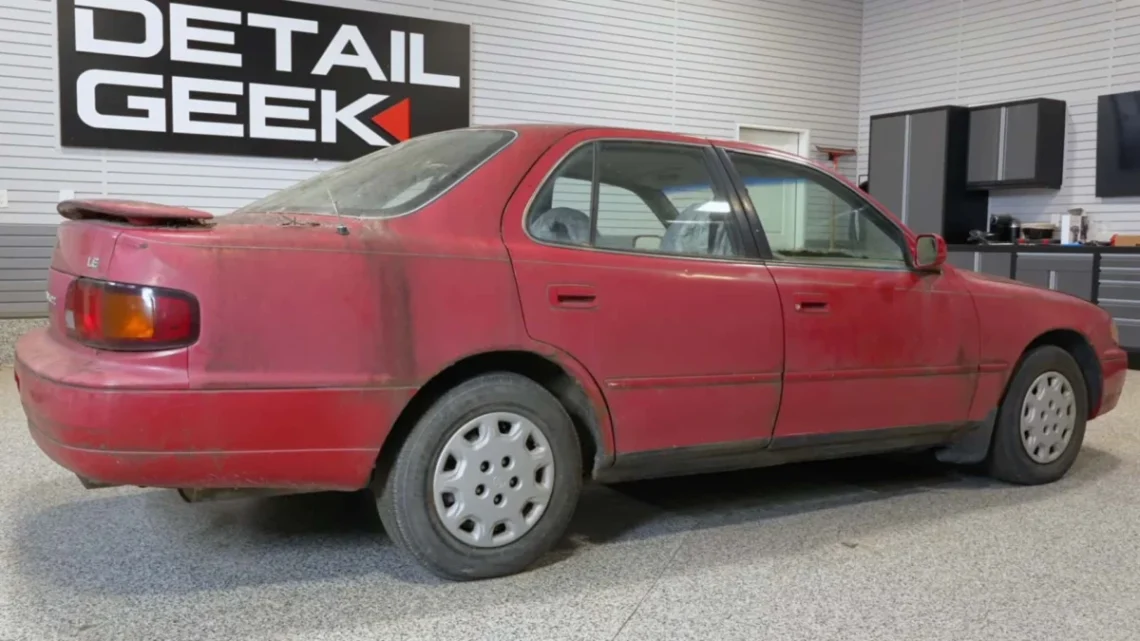
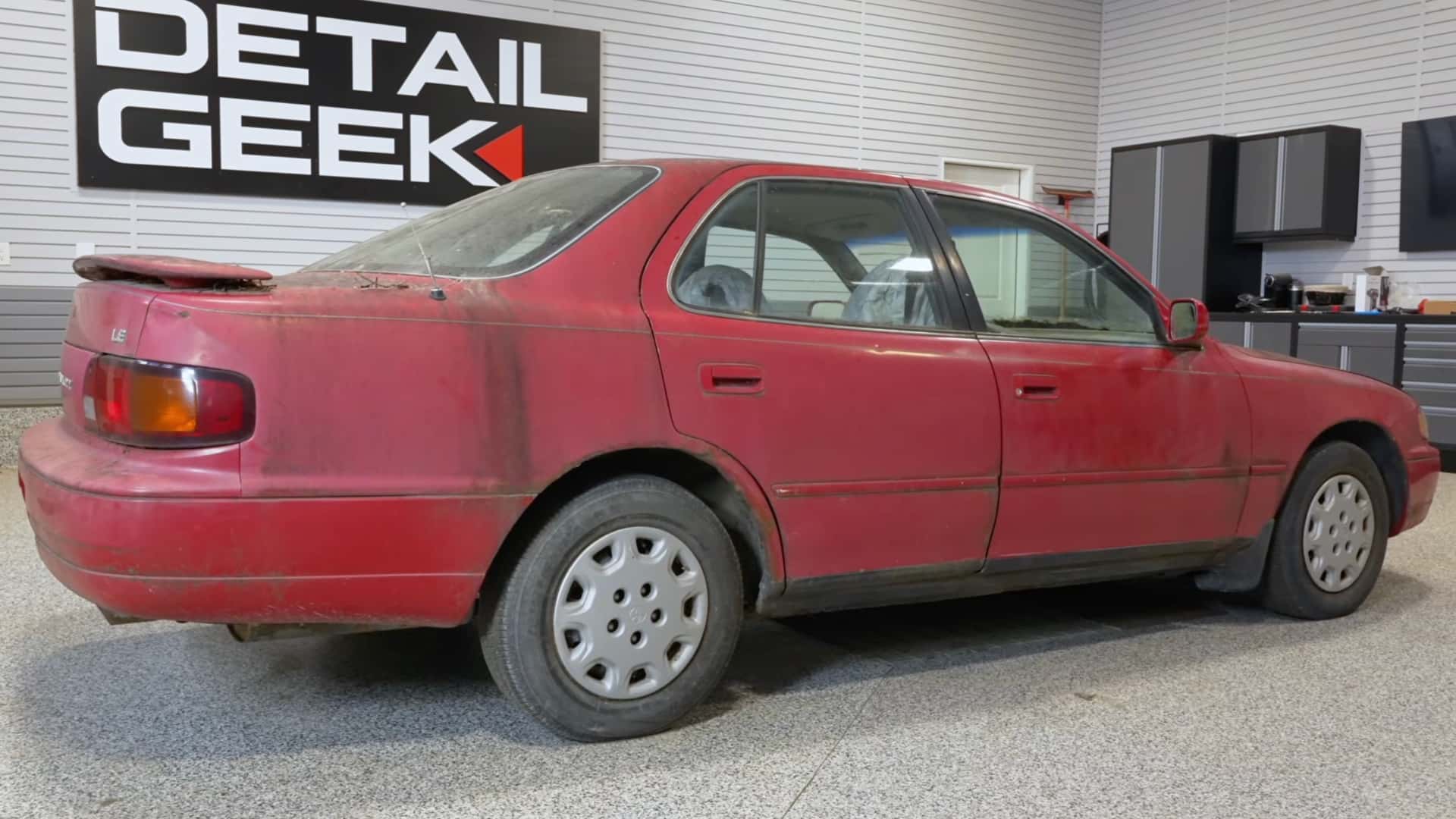
In a masterclass of automotive restoration through cleaning, the immensely popular YouTube channel The Detail Geek recently turned its sights on a quintessential survivor of American driveways and suburban asphalt: a 1995 Toyota Camry. Having clearly spent a significant portion of its life languishing in the elements—likely tucked beneath the sprawling branches of a debris-shedding tree—this once-reliable sedan stood as a textbook definition of vehicular neglect.
Yet, beneath the thick layers of organic decay, biological growth, and structural grime lay the indestructible engineering of a legendary Japanese platform. What followed was an arduous, deeply therapeutic rehabilitation process that reminded millions of automotive enthusiasts why the XV10-generation Camry remains an undisputed icon of durability.
The Main Facts: Anatomy of a Forgotten Legend
To understand the magnitude of The Detail Geek’s latest project, one must first appreciate the subject matter. The 1995 Toyota Camry (part of the third generation, produced from 1992 through 1996) is widely regarded by automotive historians and mechanics alike as one of the best-built passenger cars of the late 20th century. Over-engineered during a period when Toyota was pouring massive resources into establishing global luxury and reliability dominance, these Camrys routinely soldier past the 300,000-mile mark with little more than routine fluid changes.
However, mechanical resilience does not make a car immune to Mother Nature. The specific 1995 Camry featured in the viral video had evidently been parked and forgotten.
- Exterior Degradation: The bodywork was practically unrecognizable beneath a thick crustal layer of dried mud, road film, bird droppings, pollen, and accumulated leaf litter that had decomposed into a sticky mulch in the cowl and door jambs.
- Interior Hazard Zone: Stepping inside the cabin revealed a biohazard of neglect. The interior smelled and looked like a cross between a forest floor and an abandoned animal shelter. Leaves, wind-blown debris, discarded trash, active mold colonies, and enough embedded dog hair to stuff a kennel blanketed every square inch of the carpeting, headliner, and upholstery.
Despite this apocalyptic level of filth, the vehicle’s structural integrity remained intact, setting the stage for one of the channel’s most dramatic before-and-after transformations to date.
Chronology of a Transformation: Step-by-Step Rehabilitation
Restoring a vehicle that has suffered years of environmental exposure requires a systematic, clinical approach. The Detail Geek methodology relies not on aggressive abrasives that could ruin decades-old paint or brittle plastics, but on specialized chemical cleaners, high-pressure extraction, and hours of relentless manual labor.
Phase 1: The Exterior De-Mulching and Pre-Wash
The restoration began on the outside. Before any mechanical wash mitt touched the single-stage or clear-coated paintwork, the vehicle required a thorough clearance of organic debris.
- Debris Removal: Leaves, twigs, and hardened seed pods wedged in the window seals, windshield wipers, and panel gaps were manually cleared.
- Pressure Washing: A heavy-duty pressure washer was deployed to blast away the top layers of caked-on dirt, loosening the decades of grit that had settled into the pores of the paint and trim.
- Chemical Soaking and Foam Bath: A thick layer of snow foam was applied, lifting remaining microscopic pollutants, road grime, and stubborn tree sap.
- Detail Brush Agitation: Soft-bristled detailing brushes were worked into the panel gaps, badges, window trims, and grille to dislodge organic stains before a final rinse revealed the true state of the exterior panels.
Phase 2: Interior Stripping and Biohazard Mitigation
With the exterior stabilized, the real challenge began inside the cabin. A standard vacuum cleaner would have been entirely useless against the sheer volume of compacted pet hair and biological debris.
- Total Interior Evacuation: Every removable component—most notably the heavily soiled floor mats and seat cushions—was extracted from the vehicle to allow unhindered access to the floorboards.
- Heavy-Duty Vacuuming and Agitation: Rubber pet-hair removal brushes were used to pull deep-seated canine fibers from the fabric upholstery, followed by high-powered commercial vacuuming.
- Hot-Water Extraction and Chemical Treatment: Carpets and seats were treated with specialized enzymatic cleaners designed to break down organic odors, mold spores, and deep-set stains. A hot-water extractor then flushed the fabrics, pulling years of accumulated grime out from the foam padding beneath.
- Trim and Dashboard Restoration: Every square inch of the plastic dashboard, center console, and door panels was scrubbed with detail brushes and wiped down with UV-protectant conditioning formulas to restore moisture and a factory-fresh matte finish without leaving a greasy residue.
Supporting Data: The 1995 Toyota Camry XV10 Heritage
To contextualize why saving a 1995 Camry is worth the immense effort of a professional detailer, it helps to look at the vehicle’s legacy within the automotive landscape.
| Metric / Feature | Specification |
|---|---|
| Production Years | 1992 – 1996 (Third Generation) |
| Engine Options | 2.2-liter Inline-4 (5S-FE) / 3.0-liter V6 (3VZ-FE / 1MZ-FE) |
| Transmission | 5-speed manual / 4-speed automatic |
| Curb Weight | Approx. 2,900 – 3,200 lbs |
| Reputation | Renowned for "bulletproof" engine reliability and body panel longevity |
| Cultural Status | A ubiquitous symbol of dependable, no-nonsense commuter transportation |
The XV10 Camry was engineered during an era when Japanese manufacturers built cars designed to last multiple decades. The body steel was galvanized, the interiors utilized thick plastics that resisted cracking better than many modern equivalents, and the powertrains were famously over-engineered. This structural durability is precisely why a car can sit outside under a tree for half a decade, accumulate mold and pet hair, and yet emerge from a detailing session structurally and cosmetically viable once more.
Official Responses and Community Reactions
When The Detail Geek published the transformation video on YouTube, the automotive community responded with overwhelming enthusiasm. Within hours of going live, the comment section flooded with praise, nostalgia, and humorous anecdotes regarding the resilience of nineties Toyotas.
"It’s incredible how a car can look like it’s ready for the crusher, only to reveal a remarkably solid machine underneath once you apply professional-grade patience and cleaning agents. This isn’t just detailing; it’s archaeology." — Verified YouTube Commenter
Longtime subscribers and professional detailers alike noted the psychological benefits of watching such deep-clean transformations. In an era dominated by high-tech digital screens, complex EV software updates, and disposable consumer goods, there is a profound, grounding comfort in watching physical labor yield tangible, restorative results.
Toyota enthusiasts also chimed in, with many pointing out that this particular 1995 model, once cleaned, likely has another 100,000 miles left in its engine bay. As one viewer succinctly put it: "That Camry isn’t just clean; it’s broken-in for the next decade."
Implications: The Value of Preservation in a Disposable Culture
The viral success of this 1995 Toyota Camry restoration highlights a broader cultural shift toward preservation and sustainability. In the modern automotive market, cars are frequently treated as disposable appliances. When a vehicle looks worn out, stained, or slightly dated, consumers are often quick to trade it in for a newer model rather than invest time, care, or minor maintenance.
Videos like this challenge that disposable mindset. They demonstrate that:
- Aesthetics Can Be Deceiving: Thick layers of dirt, mold, and environmental fallout can make a structurally sound vehicle appear totaled when it is merely neglected.
- Economic Practicality: Professional detailing and light cosmetic refreshment cost a fraction of a new car payment, offering a financially viable path to reliable transportation.
- Emotional Resonance: Older cars carry stories, nostalgia, and a mechanical simplicity that modern computer-heavy vehicles often lack. Restoring them preserves a tangible piece of automotive history.
Ultimately, while the 1995 Toyota Camry may never grace the cover of an exotic car magazine or command six figures at a Barrett-Jackson auction, its rehabilitation by The Detail Geek serves as a powerful reminder. With the right combination of professional expertise, chemical science, and old-fashioned elbow grease, almost anything can be brought back from the brink.