By [Journalist Name]
Published: Special to Cultural & Nonprofit Review
Main Facts: The Intersection of Brain Science, Educational Inequity, and Youth Orchestras
In an era where public school budgets are continuously scrutinized and arts programs are frequently the first to face the budgetary axe, the intrinsic value of music education has never been more rigorously defended by science—nor more precarious in practice.
According to landmark research from the National Institute of Health (NIH), early musical training—even when undertaken for a brief period—generates profound, lifelong enhancements in human brain function. The cognitive benefits are sweeping, ranging from accelerated vocabulary acquisition and sharpened executive functions to superior time-management capabilities and advanced problem-solving skills. Fundamentally, picking up an instrument builds enduring neural superhighways connecting perception and action.
Yet, this neurological gold standard stands in stark contrast to a grim socio-economic reality across the United States. Access to music education is deeply inequitable. While affluent school districts often boast fully funded symphonic bands and string ensembles, millions of American students experience intermittent instruction at best—and absolute absence at worst.
Data compiled by industry advocates reveals a staggering deficit: more than 3 million students in the United States lack access to musical training through their schools entirely. Worse still, an estimated 2 million students navigate their formative years with zero access to any in-school arts programming whatsoever. For these children, the traditional pillars of creative expression—art class, music lessons, theater, and dance—simply do not exist.
Enter the Seattle Youth Symphony Orchestra (SYSO), affectionately pronounced "Sigh-So." For more than eight decades, this institution has served as a vital cultural and educational bridge, dismantling barriers and opening doors for young people. By delivering exceptional music education, SYSO does not merely train musicians; it cultivates resilient students, confident leaders, and tight-knit community members.
During the 2024–25 academic year alone, SYSO made an indelible impact:
- Student Reach: Served over 1,300 students.
- Geographic Reach: Represented 256 unique schools spread across 95 distinct zip codes.
- Direct Instruction: Contributed more than 430 instructional hours directly within public school classrooms.
By combining rigorous training with a steadfast commitment to equitable access, SYSO connects youth to the self-assurance, unbridled creativity, and profound sense of belonging that only collective music-making can inspire.
Chronology: Eight Decades of Cultivating Community and Musical Excellence
To understand how SYSO has evolved into a premier incubator for youth development, one must trace its historical trajectory from a regional localized project to an expansive, multi-tiered community asset.
The Foundation Era (Mid-20th Century)
Founded over 80 years ago in the Pacific Northwest, SYSO began with a simple yet ambitious premise: to provide aspiring young classical musicians with a platform that exceeded the limited musical boundaries of their individual neighborhood schools. In its early decades, the organization functioned primarily as a traditional youth orchestra—auditioning talented youth, rehearsing classical repertoires, and staging seasonal concert performances for local audiences.
Expansion and Modernization (Late 20th Century)
As public school arts funding began its historical cyclical decline in the late 1900s, SYSO recognized that waiting for schools to supply foundational musicianship was no longer viable. The organization expanded its mandate, evolving from an elite performance outlet into an active educational interventionist. SYSO began developing satellite ensembles, training workshops, and community-embedded programs designed to catch children before they fell through the cracks of shrinking school budgets.
The Modern Era and the Rise of Flexible Philanthropy (2020s)
Entering the 2020s, SYSO modernized its operational and funding strategies to address systemic inequities head-on. Confronting the high cost of instruments, specialized instruction, and organizational overhead, the organization leaned heavily into contemporary philanthropic mechanisms—most notably Donor-Advised Funds (DAFs)—to secure its financial health. Today, SYSO stands as a multi-faceted creative ecosystem, pairing traditional stage performances with deep, targeted public-school interventions like its signature Endangered Instruments program.
Supporting Data: The Anatomy of Musical Disparity and Programmatic Impact
The challenges facing youth music education can be mapped through clear metrics, highlighting both the systemic deficits in American schools and the precise interventions engineered by organizations like SYSO.
The National Deficit in Arts Education
- 3 Million: The number of U.S. students with zero access to in-school music training.
- 2 Million: The number of U.S. students entirely excluded from any form of arts education (including theater, dance, and visual arts).
- The Cognitive Dividend: NIH studies confirm that early auditory-motor training leaves a biological footprint that aids cognitive processing well into adulthood.
SYSO’s 2024–25 Operational Metrics
- 1,300+: Total student participants across all programs.
- 256: Total schools represented within the program ecosystem.
- 95: Zip codes spanned, proving that the organization draws from diverse socio-economic and geographic backgrounds.
- 430+: Direct instructional hours delivered inside public school facilities.
- 30%: The proportion of SYSO’s individual contributions now arriving via Donor-Advised Funds (DAFs), signaling a major shift in how modern donors support arts nonprofits.
Official Responses: Voices from the Frontlines of Music Education
The philosophy driving SYSO is articulated passionately by its leadership, who view music not as an isolated luxury, but as a fundamental human right and a powerful engine for youth empowerment.
"SYSO is a place where students are empowered, challenged, and supported simultaneously," says Melody Mikkelson, SYSO’s Executive Director. "It becomes this incubator for creative growth from which artistry, education, and community can stem."
Mikkelson emphasizes that youth orchestras serve a vital social function beyond merely practicing scales. They provide an expansive peer network that validates a young person’s ambitions long before they face high-stakes post-graduation decisions.
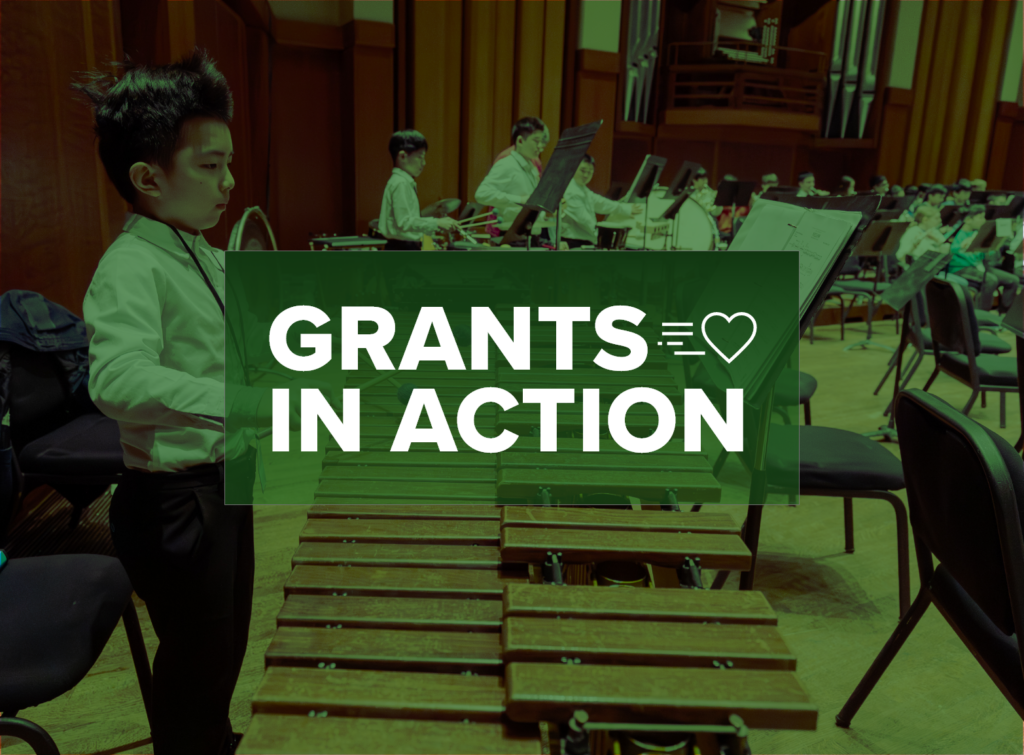
"Youth orchestras are this place of connection where aspiring musicians can have a pond that is bigger than their school to play in and meet other like-minded players," Mikkelson explains. "They receive insight into their potential futures before they make those big expensive decisions about what they’re doing after high school."
Dismantling the Cost Barrier
Classical music often battles an entrenched public perception of elitism—an aura of prestige that can obscure the stark economic realities facing working musicians and aspiring students alike. SYSO actively works to dismantle this perception by lowering financial hurdles.
"There are two big truths that we believe: that all students should have access to both the support and the tools to inspire them," notes Mikkelson. "With music, it’s the cost of the instruments, but also of the instruction, and studying with high-quality music educators, professional musicians, performers, and teaching artists."
The Endangered Instruments Initiative
To combat the disappearance of critical orchestral instrumentation in public schools, SYSO launched its specialized Endangered Instruments program.
"For the Endangered Instruments program, SYSO instructors show up in the public schools to specifically support the less popular instruments, like the viola, string bass, oboe, bassoon, French horn and low brass, which are hard to teach," Mikkelson details. "No one single music educator in a public school can teach all of those. There aren’t so many, but those are the ones that give the sound to the orchestra, the ones you get scholarships on."
Busting the Overhead Myth
Funding an arts organization requires robust infrastructure, yet traditional philanthropy has long suffered from the "overhead myth"—the misguided notion that administrative and backstage costs are somehow less worthy of funding than visible, on-stage performers.
Mikkelson points out the absurdity of this dichotomy: "You can generally find funding for the shiny performer on stage, but the performance on stage doesn’t happen without the stage managers and the venue booking and the rehearsals and all of that behind-the-scenes work that the organization puts in. We’re trying to do what we can to bust that overhead myth."
Here, modern philanthropic vehicles like Donor-Advised Funds (DAFs) have proven revolutionary. Because DAFs allow for holistic, unrestricted grantmaking, they frequently cover essential overhead costs, supporting artists and administrators working both in the spotlight and behind the scenes.
"With DAFs, the fact that transformational gifts can come without those strings attached—and it’s so trusting of frontline staff, of the teachers, of the conductors who show up to support a school—is huge," Mikkelson says. "We’re at a place where about 30% of our individual contributions are coming through DAFs and our individual support overall has been on the rise over the past few years."
Implications: Building a Sustainable Ecosystem for Future Artists
The work being done by the Seattle Youth Symphony Orchestra carries profound implications for the future of arts funding, educational policy, and community development across the United States.
1. Shifting Philanthropic Paradigms
As non-traditional giving vehicles like DAFs continue to capture a larger share of charitable contributions—accounting for roughly 30% of SYSO’s individual support—nonprofits are gaining unprecedented operational agility. The shift toward unrestricted funding signals a maturing philanthropic sector that trusts educational leaders, teaching artists, and administrators to allocate resources where they are most urgently needed. By moving away from hyper-restricted, project-specific grants, donors are empowering organizations to sustain the invisible infrastructure—the sheet music, venue bookings, instrument repairs, and administrative coordination—that makes public art possible.
2. Safeguarding Cultural Diversity in Orchestras
Programs like SYSO’s Endangered Instruments initiative do more than simply supply players for local symphonies; they preserve the sonic diversity of Western classical and contemporary orchestral music. By actively embedding professional instructors into under-resourced public schools to teach complex instruments like the bassoon, oboe, and viola, SYSO ensures that students from diverse socio-economic backgrounds have access to the exact skill sets that unlock collegiate music scholarships and professional careers.
3. Holistic Youth Development as a Public Good
The neuroscientific evidence is clear: musical training rewires the brain for enhanced executive function, problem-solving, and emotional resilience. When organizations step in to fill the multi-million-student gap left by declining public school arts budgets, they are not merely running extracurricular clubs. They are engaging in preventative youth development.
Ultimately, SYSO demonstrates that investing in young musicians is a high-yield investment in human potential. By simultaneously fostering artistry, academic learning, and a deep sense of belonging, institutions like the Seattle Youth Symphony Orchestra are proving that when communities provide children with the right tools and unshakeable support, the music they create echoes far beyond the concert hall—shaping confident artists, capable thinkers, and connected human beings for generations to come.
Disclaimer: NPT (National Philanthropic Trust) is not affiliated with any of the organizations described herein, and the inclusion of any organization in this material should not be considered an endorsement by NPT of such organization, or its services or products. This article is for informational purposes only and does not constitute legal or tax advice.