The dream of crossing the United States in a matter of hours—rather than the better part of a day—is no longer confined to the pages of science fiction. The Federal Aviation Administration (FAA) has officially signaled a paradigm shift in civil aviation, announcing a groundbreaking proposal to lift the decades-old ban on supersonic flight over the continental United States. This regulatory pivot marks the most significant change in American aviation policy since the retirement of the Concorde in 2003, potentially ushering in a new era where Mach 1 travel becomes as routine as a standard business flight.
The Genesis of the Ban: A Half-Century of Silence
To understand the gravity of the FAA’s recent proposal, one must look back to the early 1970s. As the Boeing 2707 program stalled and the Anglo-French Concorde began its service, the primary concern for regulators was not just the technology itself, but the "sonic boom"—the thunderous shockwave created when an aircraft exceeds the speed of sound (approximately 770 mph).
In 1973, following intense public outcry over noise pollution and the potential for property damage caused by these shockwaves, the FAA implemented a near-total prohibition on commercial supersonic flight over U.S. land. For over 50 years, this rule forced supersonic aircraft to throttle back to subsonic speeds while flying over territory, effectively rendering the supersonic capabilities of jets like the Concorde useless for domestic routes. Now, as aerospace engineering enters a renaissance of quiet-tech, the agency is finally opening the door to a reversal.
The Proposal: A New Framework for Noise Certification
The FAA’s current proposal is centered on a shift from a flat ban to a performance-based certification standard. Rather than asking "Is it supersonic?", the agency is shifting the question to "How much noise does it make?"
Under the proposed guidelines, the FAA would establish rigorous noise-based certification requirements. This involves a multi-tiered approach:
- Noise Benchmarking: Any aircraft attempting to operate at Mach 1 or above must meet strict noise emission standards that mirror, or in some cases exceed, the safety profiles of modern subsonic commercial jets.
- Takeoff and Landing Standards: The FAA has indicated that subsequent rules, expected later this year, will formalize noise footprints for supersonic aircraft during the most sensitive phases of flight—departure and arrival—when jets are closest to population centers.
- The Mach Cutoff Technique: The centerpiece of the proposal is the "Mach Cutoff" flight technique. By manipulating the aircraft’s design, altitude, and atmospheric conditions, engineers can ensure that the sonic boom is refracted upward into the atmosphere rather than reaching the ground. This scientific feat effectively "tames" the boom, turning a jarring explosion into a barely audible thud.
Chronology: From Concorde to the Overture
The history of supersonic travel is a volatile timeline of ambition and retreat.
- 1973: The FAA institutes the domestic ban on supersonic flight due to the sonic boom.
- 2003: The Concorde makes its final commercial flight, ending the first era of supersonic passenger travel.
- 2025: Boom Supersonic’s XB-1 demonstrator successfully breaks the sound barrier during a test flight, signaling that the technology is ready for a commercial comeback.
- 2027: The FAA aims to finalize the current regulatory framework, potentially clearing the runway for the first legal domestic supersonic passenger flights.
Industry Titans: The Contenders in the New Supersonic Race
The prospect of a legalized domestic market has galvanized the aerospace industry. Several key players are currently positioning themselves to dominate what could be a multi-billion dollar sector.
Boom Supersonic and the Overture
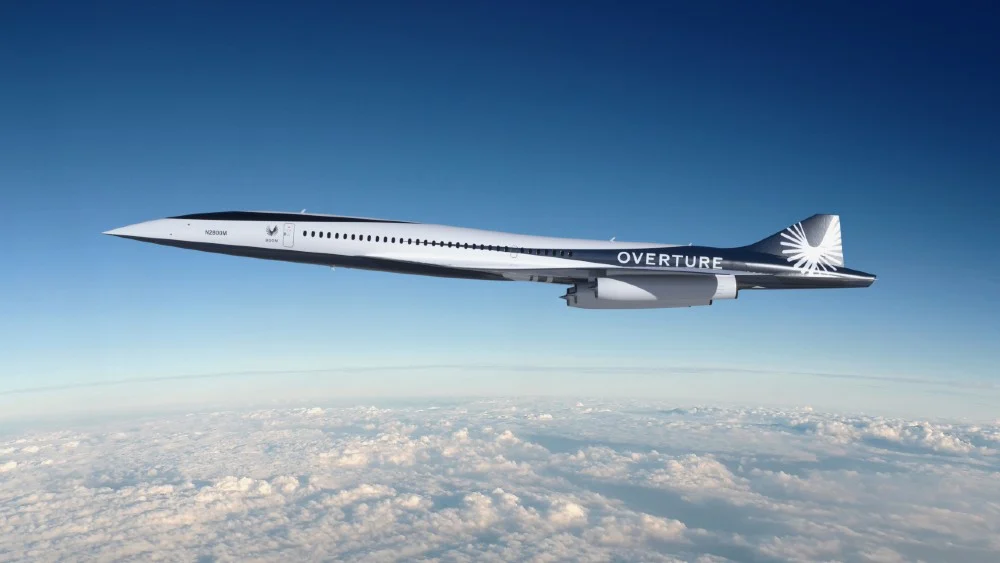
Perhaps the most high-profile contender is Boom Supersonic, based in Colorado. Their flagship project, the Overture, is designed to cruise at Mach 1.7—roughly double the speed of traditional commercial jets. The company has already secured significant interest from major carriers, including United Airlines and American Airlines. The success of their XB-1 demonstrator, which proved that the company could achieve stable flight at supersonic speeds, has provided the necessary momentum to push toward production.

Spike Aviation: Luxury at the Speed of Sound
While Boom focuses on the commercial passenger market, companies like Spike Aviation are targeting the executive and business travel sector. Their proposed S-512 Diplomat is engineered with a specific focus on "low-boom" technology. By optimizing the airframe to minimize pressure waves, Spike aims to offer a jet that can traverse the distance between New York and Paris in under four hours, all without disturbing the peace on the ground.
Official Responses and Strategic Implications
FAA Administrator Bryan Bedford emphasized in a recent press release that the move is the result of years of interdisciplinary collaboration. "Advances in aerospace engineering, materials science, noise reduction, and new operational concepts will eliminate the old sonic boom," Bedford stated. "This means we can ultimately repeal the ban from the 1970s on supersonic flight over U.S. territory while minimizing noise impacts to residents in communities along the route and near airports."
The strategic implications for the U.S. economy are profound. By legalizing supersonic flight, the U.S. is not only fostering a domestic industry but is also positioning itself as the global leader in the next generation of aviation. The FAA has already begun discussions with international aviation authorities to harmonize these new standards, ensuring that a jet built in the U.S. can fly with the same noise-certification protocols in Europe or Asia.
The Technological Challenges Ahead
Despite the optimism, the path to 2027 is not without hurdles. Critics and environmentalists have raised concerns regarding the carbon footprint of supersonic jets, which typically require significantly more fuel per passenger than traditional aircraft.
Furthermore, the "Mach Cutoff" technique is highly dependent on meteorological conditions. If atmospheric conditions change unexpectedly—such as a sudden change in wind shear or air temperature—a pilot may be forced to slow down, disrupting schedules and efficiency. Aerospace engineers are currently working on AI-driven flight management systems that can predict these atmospheric variables in real-time, adjusting the flight path to maintain the "silent" profile.
Implications for the Future of Travel
If the FAA’s proposal is finalized in 2027 as planned, the impact on global business will be immediate.
- Globalization 2.0: The ability to travel from New York to Los Angeles in roughly two and a half hours, or New York to London in less than four, will fundamentally change the landscape of international business and diplomacy.
- Infrastructure Upgrades: Airports will need to rethink their noise-abatement procedures and ground infrastructure to accommodate these new, high-performance engines.
- Market Competition: The race to be the first to market will likely lead to a period of rapid innovation, similar to the early days of the Jet Age.
Conclusion: A New Horizon
The FAA’s proposal is more than just a regulatory update; it is an invitation for the aerospace industry to reimagine the possibilities of flight. By moving away from an outright ban and toward a performance-based standard, the United States is signaling that the era of "quiet" supersonic travel has arrived.
As the technology continues to mature, the focus will shift from if we can fly at the speed of sound, to how efficiently we can do it while protecting the environment and the public. With major carriers already placing orders and flight demonstrators taking to the skies, the clock is ticking. The dream of the 20th century is finally becoming the reality of the 21st, and the future of air travel is looking significantly faster.