After two grueling years defined by market contraction and fluctuating consumer sentiment, the Swatch Group—the world’s largest watchmaking conglomerate—has officially signaled a return to form. Following a 12% sales decline in 2024 and a subsequent 7% drop in 2025, the Swiss giant, home to horological pillars like Omega, Breguet, Longines, and Tissot, has reported a robust recovery in its 2026 half-year financial results.
The report, which details an 8.5% increase in sales at constant exchange rates, offers a much-needed morale boost to the Swiss watch industry, which has been grappling with geopolitical instability, shifting luxury trends, and a remarkably strong Swiss franc. As the group looks toward the second half of 2026, the data suggests that the worst of the “correction period” may finally be behind them.
The Financial Landscape: Decoding the H1 2026 Results
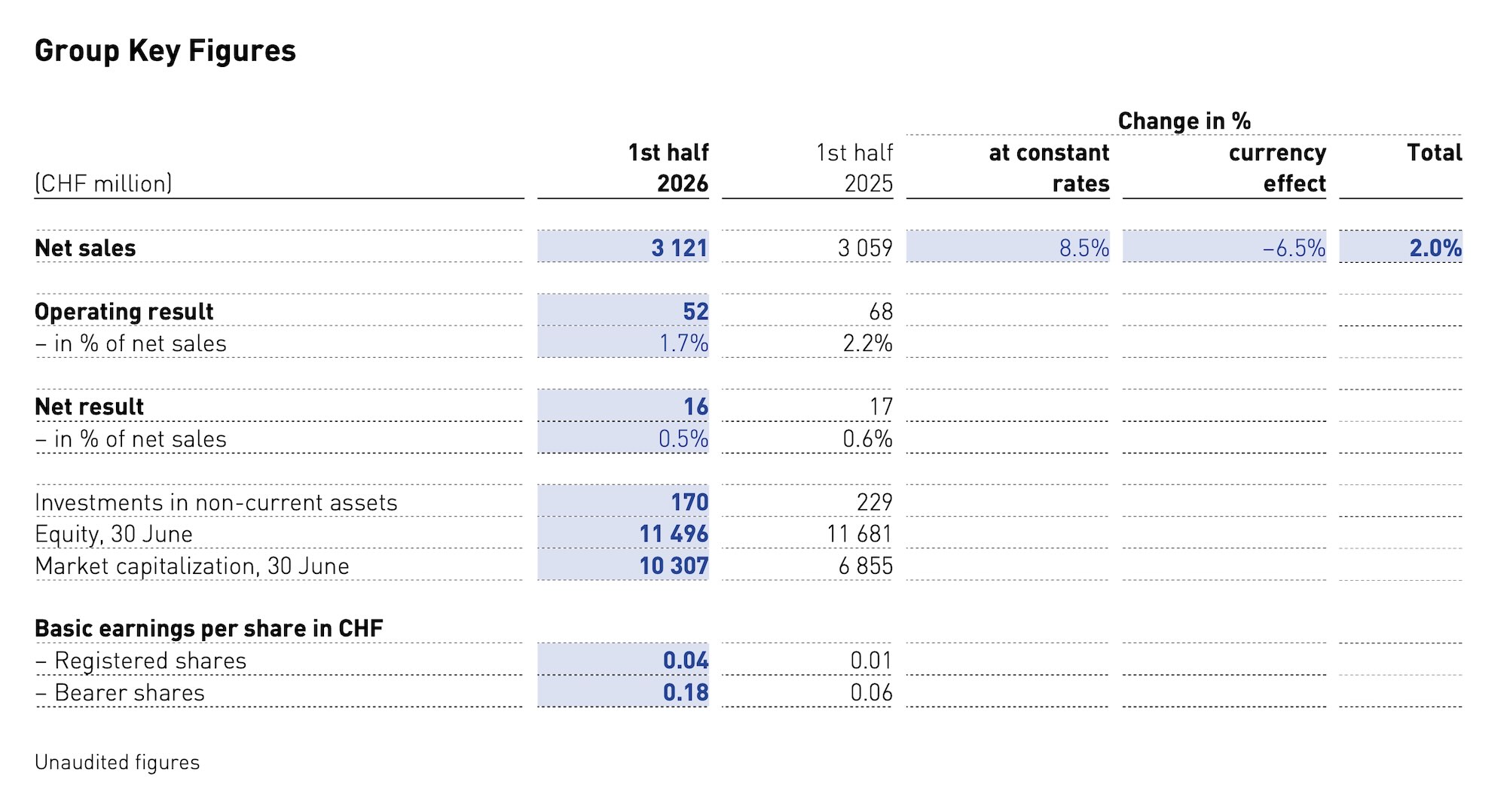
The headline figure of an 8.5% growth rate at constant exchange rates is more than just a number; it represents a fundamental shift in momentum. When converted to current rates, the growth reflects a more modest 2% increase, hampered by a significant currency headwind of nearly CHF 200 million. Despite this, the group’s total sales for the first six months of 2026 reached CHF 3,121 million, compared to CHF 3,059 million during the same period in 2025.
Quarterly Performance Breakdown
The strength of this recovery is best understood by looking at the intra-year acceleration. While the first half shows strong year-on-year growth, the momentum gathered pace as the months progressed. Specifically, the second quarter of 2026 recorded an impressive +9.4% increase in sales at constant exchange rates. Management noted that this acceleration, which became particularly pronounced in May and June, has carried over into July, providing a bullish outlook for the remainder of the fiscal year.
A Chronology of Recovery: From Contraction to Expansion
To understand the significance of this turnaround, one must look at the trajectory of the Swatch Group over the last 36 months.
- 2024: The Year of Headwinds: The group faced a 12% decline in revenues, driven by a cooling luxury market and macroeconomic instability in key regions. The industry witnessed a "polarization" of the market, where high-end independent brands and select giants like Rolex consolidated power, leaving mid-market players struggling for share of wallet.
- 2025: The Stabilizing Phase: A further 7% decline marked a year of consolidation. During this period, the Swatch Group began aggressively pivoting its marketing strategies, focusing on high-impact collaborations and reinforcing its entry-to-mid-range dominance.
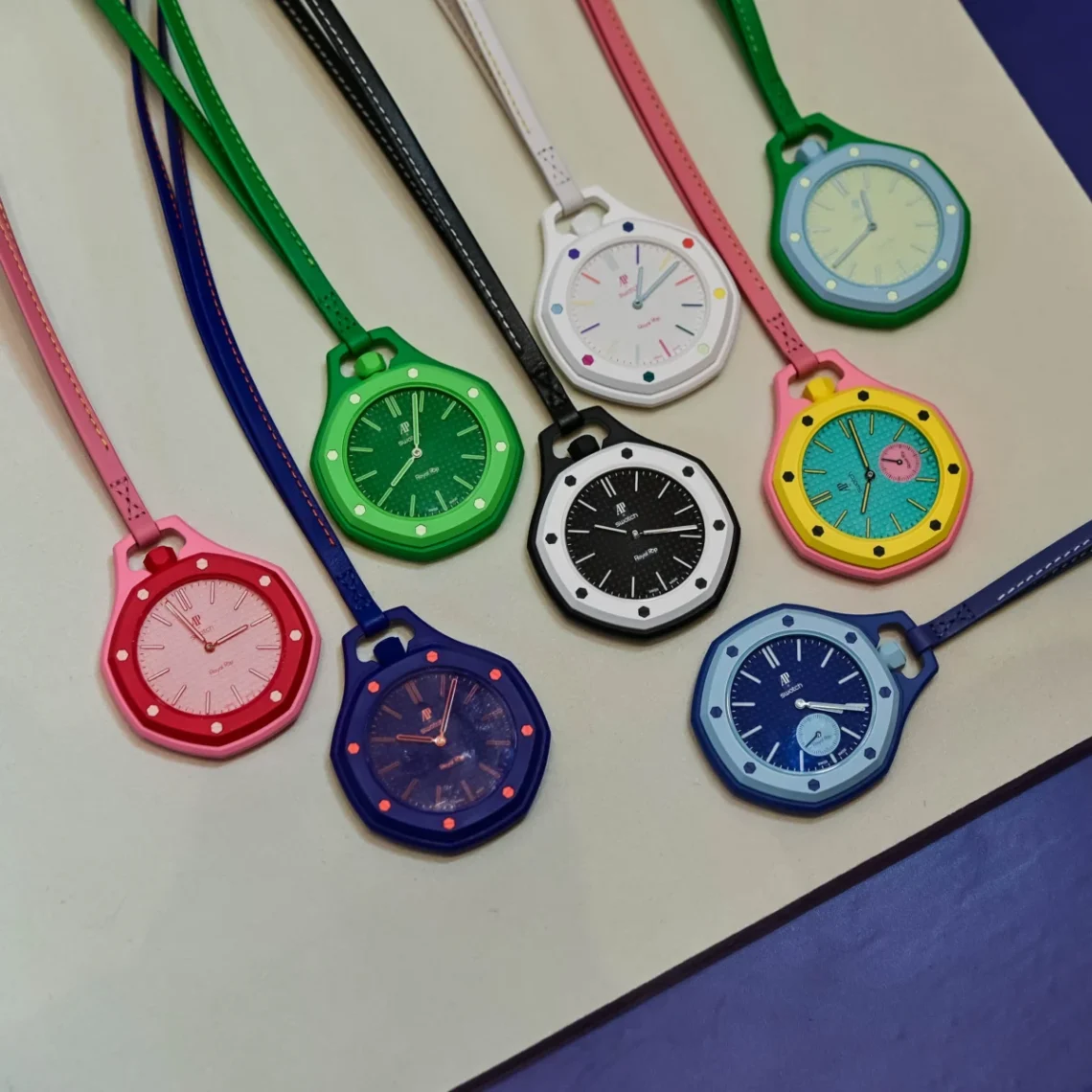
- H1 2026: The Inflection Point: With the launch of key anniversary models—notably from Breguet—and the viral success of the Audemars Piguet x Swatch collaboration, the group saw a definitive break in the downward trend. The growth in the second quarter suggests that the strategic adjustments made during the 2024-2025 slump are beginning to yield tangible dividends.
Geographic Performance: Global Resilience
One of the most encouraging aspects of the 2026 half-year report is the breadth of the growth. The Watches & Jewellery segment (excluding production) saw an increase of +9.5% at constant exchange rates, a performance that was replicated across every continent where the group operates.

Regional Highlights
- The Americas: The United States remains a powerhouse for the group, recording a staggering 27% growth. This reflects a deep-rooted consumer appetite for both the prestige of Omega and the accessibility of Tissot and Longines.
- Europe: The European market, often seen as a mature and slow-growing environment, surprised analysts with double-digit growth in key hubs. Spain led the charge with a 28% increase, while Italy followed with 12%.
- Asia-Pacific: Despite the complexities of the Asian market, the group maintained stability. Japan (+20%) and South Korea (+12%) performed exceptionally well. China (including Hong Kong and Macau) showed a resilient 9% growth, proving that the brand’s footprint in the East remains a vital component of its global strategy.
Brand-Level Analysis: Innovation as a Catalyst
The Swatch Group’s diverse portfolio allowed it to capture different segments of the market simultaneously.
The Luxury Tier
Breguet, the group’s historic high-end brand, managed to navigate a difficult luxury environment by leveraging its 250th anniversary. By focusing on bold, limited-edition innovations, the brand successfully captured the attention of high-net-worth collectors who are increasingly selective with their purchases.
The Powerhouse: Omega
Omega remains the crown jewel of the group’s retail strategy. The brand reported a 20% growth at constant rates in its retail business, a clear indicator that the brand’s direct-to-consumer (DTC) efforts and retail experience improvements are resonating with customers.
The Entry and Mid-Range Engine
Longines, Tissot, and Hamilton continued to act as the group’s workhorses. These brands recorded double-digit growth, proving that the entry-to-mid-range segment remains the bedrock of the Swatch Group’s success. In a volatile economy, these brands offer the "affordable luxury" that consumers are increasingly seeking.
The Viral Factor: Audemars Piguet x Swatch
No discussion of the 2026 performance would be complete without mentioning the Audemars Piguet x Swatch collaboration. While financial figures for the specific project were not isolated, the collaboration is widely credited with maintaining the group’s "cool factor." With over 25 billion views on social media, the partnership serves as a masterclass in modern marketing, proving that heritage brands can remain culturally relevant by engaging with a younger, digital-native demographic.
Official Stance and Future Implications
The Swatch Group’s official commentary is cautiously optimistic. By acknowledging the "geopolitical challenges in the Middle East" while simultaneously highlighting the acceleration in May and June, the group is projecting a sense of controlled confidence.
The implications for the broader Swiss watch industry are significant. The Swatch Group’s return to growth mirrors similar positive trends seen at competitors like Richemont, suggesting that the "luxury watch winter" that plagued 2024 and 2025 is thawing.
Challenges Ahead
Despite the positive momentum, the group is not immune to external factors. The strength of the Swiss franc continues to exert pressure on reported earnings. Additionally, the high level of inventory held by some retailers and the continued volatility in global travel retail (a major revenue stream for luxury watches) remain variables that the group must manage carefully.
Conclusion: A New Chapter for the Giant
As we look toward the second half of 2026, the Swatch Group appears to have regained its rhythm. The strategy of balancing historical prestige (Breguet/Omega) with accessible innovation (Longines/Tissot) and viral marketing (Swatch collabs) seems to be the winning formula in a post-pandemic, high-interest-rate environment.
The strong start to the third quarter confirms that the momentum is not merely a one-off fluctuation. If the current trajectory holds, 2026 will be remembered as the year the Swatch Group proved that even the most established giants can adapt, innovate, and thrive in the face of persistent global adversity. Stakeholders and industry observers will be watching the next quarterly report in early 2027 with bated breath, but for now, the message from the group is clear: the giant is awake, and it is moving forward.