By Zongyuan Zoe Liu
September 18, 2026
Main Facts
In late August 2026, the United States Treasury Department launched what administration officials have aggressively branded as "Operation Economic Outcast," a sweeping financial containment strategy aimed at achieving the total isolation of the Iranian regime. U.S. Treasury Secretary Scott Bessent dramatically characterized the campaign during a press briefing in Washington as an "economic D-Day," promising what he termed "the single greatest financial offensive ever marshaled against an adversary."
The core mechanics of the offensive rely on time-tested American statecraft: severing targeted regimes from the U.S. dollar-based global financial architecture, penalizing foreign intermediaries, and leveraging the supreme extraterritorial reach of primary and secondary sanctions. By locking Tehran out of the Society for Worldwide Interbank Financial Telecommunication (SWIFT) network and penalizing any institution that facilitates the purchase of Iranian crude oil, Washington aims to drain the regime’s foreign exchange reserves and paralyze its domestic economy.
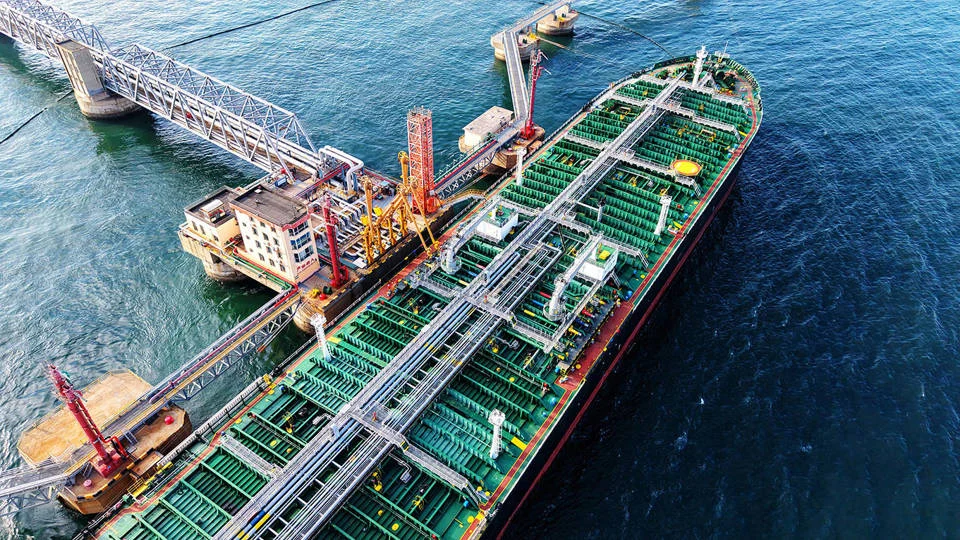
However, a profound structural contradiction underpins this aggressive posture. Unlike previous eras of American unilateral financial dominance, Iran’s vital economic lifeline—specifically its petroleum exports—no longer relies primarily on Western-cleared financial channels. Instead, the bulk of Iranian oil trade flows through a shadow network of smaller Chinese financial institutions, localized independent refineries (often referred to as China’s "teapot" refineries), and transactions denominated in the Chinese yuan, or renminbi (RMB).
Consequently, the success or failure of Washington’s grand economic offensive is no longer entirely within American hands. Because Tehran and Beijing have steadily built out alternative, non-dollar financial corridors over the past decade, the enforcement of U.S. sanctions increasingly hinges on the cooperation, compliance, or willful circumvention of institutions entirely beyond American regulatory control. This awkward geopolitical reality turns the D-Day analogy on its head: whereas the original amphibious landing at Normandy was executed by a united Western coalition against a common foe, today’s financial offensive relies on the cooperation—or at least the non-interference—of a strategic superpower competitor.
Chronology
To understand how Washington arrived at this precarious juncture, it is necessary to trace the evolution of U.S. secondary sanctions, Sino-Iranian economic integration, and the steady internationalization of the renminbi.
- July 2015: The Joint Comprehensive Plan of Action (JCPOA), commonly known as the Iran nuclear deal, is signed. Iran temporarily integrates back into the formal global financial system, and its oil exports surge.
- May 2018: The United States unilaterally withdraws from the JCPOA under the first Trump administration, initiating a "maximum pressure" campaign designed to drive Iranian oil exports down to zero.
- 2019–2021: As major global banks and European firms comply with reinstated U.S. secondary sanctions, Iran pivots decisively toward Asia. Beijing and Tehran quietly expand bilateral trade agreements, with a growing percentage of oil transactions settling in RMB through regional Chinese banks that lack exposure to the U.S. financial system.
- March 2021: China and Iran sign a 25-year Comprehensive Strategic Partnership, formalizing long-term cooperation in energy, security, and economic development, laying the groundwork for deeper financial decoupling from the U.S. dollar.
- Late 2024–2025: Amid escalating geopolitical tensions in the Middle East and persistent enforcement gaps, the volume of Iranian crude flowing to independent Chinese refiners reaches multi-year highs, routinely bypassing Western maritime tracking through a vast "dark fleet" of tankers.
- August 2026: U.S. Treasury Secretary Scott Bessent announces "Operation Economic Outcast," declaring an "economic D-Day" against Tehran. The administration signals a renewed, aggressive push to choke off remaining loopholes, immediately colliding with the reality of RMB-denominated commodity trade.
Supporting Data
The structural shift from dollar hegemony to fragmented currency blocs in the Middle East-Asia energy corridor is underscored by several key economic indicators:
- The Volume of Sanctioned Crude: According to independent energy tracking firms, Iran’s oil exports averaged approximately 1.5 to 1.7 million barrels per day through mid-2026, with over 90% of these shipments destined for the People’s Republic of China.
- The Rise of RMB Settlement: While the U.S. dollar historically dominated 100% of international oil contracts, data from financial intelligence platforms indicates that more than 40% of Sino-Iranian bilateral trade is now settled in renminbi or via bilateral swap arrangements that bypass Western clearinghouses like CHIPS (Clearing House Interbank Payments System).
- The Tier-2 and Tier-3 Bank Factor: The vast majority of transactions funding Iranian oil are processed not by China’s major state-owned "Big Four" banks (such as the Industrial and Commercial Bank of China or Bank of China)—which remain sensitive to potential secondary sanctions due to their massive exposure to Western markets—but rather by smaller, regional provincial banks and specialized financial institutions in northeastern and southern China. These entities have minimal assets in the United States, rendering traditional U.S. banking restrictions largely toothless.
- Reserves and Alternative Messaging: Cross-Border Interbank Payment System (CIPS), China’s homegrown alternative to SWIFT, has seen a steady, incremental rise in transaction volume for cross-border commodity settlements, providing a nascent safe harbor for nations targeted by Western financial penalties.
Official Responses
The divergence in rhetoric between Washington and Beijing highlights the high-stakes geopolitical game being played out across international financial exchanges.
From Washington:
U.S. Treasury officials maintain that the administration possesses a wide array of escalating tools to compel compliance. During his policy unveiling, Secretary Bessent emphasized that the U.S. government is prepared to target any institution—regardless of its geographic location or size—that acts as a conduit for illicit Iranian wealth.
"We are entering a new phase of economic enforcement where sovereignty does not shield enablers of terror and proliferation," a senior Treasury official told reporters on condition of anonymity. "If financial institutions choose to act as laundromats for sanctioned regimes, they will find themselves cut off from the global economy. There are no safe harbors."
From Beijing:
The Chinese Foreign Ministry has consistently pushed back against what it terms "illegal, unilateral U.S. long-arm jurisdiction." Beijing maintains that its normal economic and trade exchanges with Iran are transparent, lawful, and compliant with international law, insisting that sovereign nations have the right to choose their bilateral trade partners and settlement currencies.
"China-Iran cooperation is conducted within the framework of international law and is beyond reproach," a spokesperson for China’s Ministry of Foreign Affairs stated following the Treasury’s announcement. "We firmly oppose any illegal unilateral sanctions and long-arm jurisdiction that harms China’s legitimate rights and interests. China will take necessary measures to resolutely safeguard the lawful rights of its enterprises and financial institutions."
Implications
The reliance of U.S. sanctions policy on the cooperation of a strategic rival carries profound, long-term implications for the future of global finance, American hegemony, and international diplomacy.
1. The Limits of Financial Statecraft
For decades, the exorbitant privilege of the U.S. dollar gave Washington the unique ability to enforce foreign policy objectives unilaterally. By cutting off access to dollar-clearing mechanisms, the U.S. could effectively isolate recalcitrant actors. However, "Operation Economic Outcast" exposes the diminishing returns of this strategy. When an adversary can plug into an alternative, non-dollar financial ecosystem—backed by the world’s second-largest economy—the coercive power of American financial sanctions is blunted.
2. Accelerated De-Dollarization
Every time Washington threatens or deploys sweeping secondary sanctions, targeted nations and their trading partners are given an added incentive to accelerate de-dollarization efforts. The Sino-Iranian energy trade serves as a live-fire laboratory for financial decoupling. By proving that trade can continue without touching the dollar, Beijing and Tehran are providing a functional blueprint for other nations seeking insulation from Washington’s regulatory reach.
3. The Dilemma of Enforcement Overreach
To truly make "Operation Economic Outcast" successful, the White House would have to dramatically escalate pressure on major Chinese financial institutions, risking a full-blown financial war between the world’s two largest economies. Such a move could trigger severe global market volatility, disrupt supply chains, and alienate American allies in Europe and Asia who remain deeply entangled in trade with China. Conversely, failing to enforce sanctions rigorously risks rendering the Treasury’s grand pronouncements toothless, eroding the perceived deterrence of American financial power.
As the standoff between Washington and Beijing intensifies over the coming months, the ultimate fate of Iran’s economy will be decided not just in the halls of the U.S. Treasury, but in the quiet, localized boardrooms of provincial Chinese banks where the renminbi continues to flow.