By Jonah Flicker | Taste Test
Main Facts: The 13th Edition of an Iconic Experimental Series
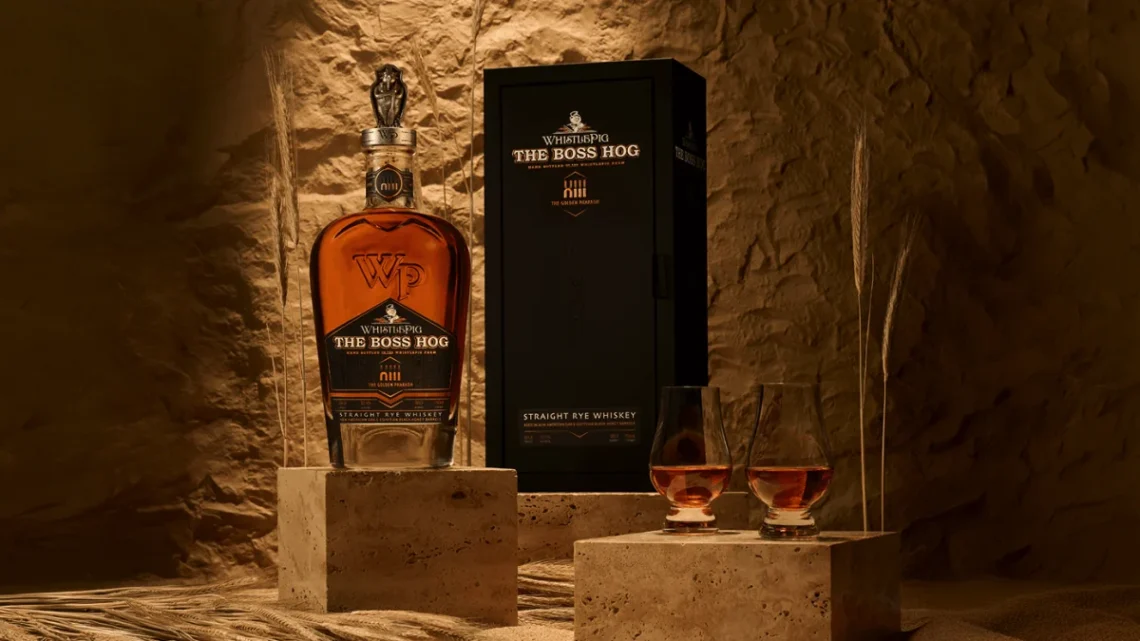
In the rolling, picturesque hills of Vermont, just a stone’s throw from Burlington, the trailblazing distillers at WhistlePig have once again upended the conventions of high-end American whiskey. Enter The Golden Pharaoh, the eagerly awaited 13th installment in the distillery’s critically acclaimed, envelope-pushing Boss Hog rye whiskey series.
Known for wedding meticulous craftsmanship with eccentric, globe-trotting cask experiments, WhistlePig has built a reputation for defying expectations. Sometimes, these flights of fancy cross into uncharted, overly avant-garde territory; other times, they achieve a precarious harmony. The Golden Pharaoh firmly plants itself in the latter camp. Inspired by the rich agricultural and culinary history of Ancient Egypt, this single-barrel, barrel-proof rye offers a masterclass in secondary maturation. Rather than drowning the underlying spirit in gimmicky sweetness, the Egyptian-inspired barrel finish coaxes out nuanced, exotic notes while fiercely protecting the robust, spicy backbone of mature rye.
Commanding a suggested retail price of $600, The Golden Pharaoh is undeniably positioned in the ultra-luxury tier. Yet, for collectors and connoisseurs willing to make the investment, it represents a high-water mark for the annual series—a liquid artifact that bridges millennia-old culinary traditions with modern craft distilling.
Chronology: From a 3,000-Year-Old Tomb to the Vermont Countryside
To understand how a bottle of Vermont rye whiskey came to be infused with the spirit of the Pharaohs, one must retrace a creative journey that spans thousands of years and months of painstaking laboratory-style experimentation.
Step 1: Historical Excavation
The genesis of The Golden Pharaoh began not in a modern rackhouse, but in the annals of archaeological research. Head blender Meghan Ireland, the creative force behind WhistlePig’s liquid portfolio, spent months combing through historical texts and culinary archives in search of a genuinely novel maturation medium. Her breakthrough came when she discovered a 3,000-year-old tiger nut cake recipe carved into the stone walls of an ancient Egyptian tomb.
Step 2: Decoding Ancient Ingredients
The ancient recipe relied heavily on two distinct components:
- Egyptian Black Honey: A traditional, mineral-rich sugarcane molasses byproduct deeply embedded in North African culinary history.
- Tiger Nuts: Despite their misleading name, tiger nuts are not actually nuts, but rather edible tubers native to the Mediterranean and Africa. When harvested, they yield a rich, earthy flavor profile frequently compared to a hybrid of almonds and coconut.
Step 3: Modern Translation and Liqueur Crafting
Translating an ancient baked good into a functional barrel-seasoning agent required serious culinary alchemy. Ireland and the WhistlePig distillation team ground the tiger nuts and rested them in base rye whiskey, sweetening the concoction with authentic Egyptian black honey to create a proprietary liqueur.
Step 4: Barrel Seasoning and Final Maturation
The team filled empty ex-rye casks with this bespoke tiger-nut-and-honey liqueur, allowing the wood to saturate with the rich, exotic flavors for precisely four weeks. Once the seasoning period was complete, the liqueur was emptied, and fully matured, high-proof rye whiskey was introduced to the barrels for an additional eight-week secondary finish. The result is a seamless marriage of ancient flavor profiles and contemporary craft whiskey.
Supporting Data: Tasting Notes, Proof, and Packaging
For whiskey enthusiasts, the proof is always in the glass. The Golden Pharaoh delivers a masterclass in balance, proving that high-concept finishing techniques do not have to overpower the underlying spirit.
Technical Specifications
- Release: The Boss Hog XIII: The Golden Pharaoh
- Distillery: WhistlePig (Shoreham, Vermont)
- Category: Straight Rye Whiskey with Secondary Cask Finish
- Proof: Varies by single barrel, ranging between 102.6 and 105.6 proof (51.3% to 52.8% ABV)
- Suggested Retail Price (SRP): $600.00
- Taste Test Score: 95 / 100
The Tasting Experience
The secondary maturation leaves an unmistakable yet refined footprint on the whiskey. On the initial pour, the nose welcomes a wave of warmth, quickly followed by complex aromas of toasted almonds, rich dark brown sugar, and sticky molasses.
On the palate, the influence of the tiger nut and black honey liqueur becomes wonderfully apparent without stealing the show. Notes of honeyed sweetness and baking spices—prominently cinnamon, freshly grated nutmeg, and clove—kick off the tasting journey. However, because the base rye was robust and well-aged to begin with, classic signature notes of vanilla bean, rich maple syrup, sharp black pepper, and toasted American oak easily punch through the secondary layer.

The barrel proof, hovering comfortably in the 102 to 105 range, provides a lush, viscous mouthfeel that coats the palate without demanding water or ice. It is built explicitly for slow, contemplative sipping.
Packaging and Presentation
True to the Boss Hog tradition, the presentation is as striking as the liquid inside. A limited allocation of these bottles features a custom, intricately detailed gold topper bearing the likeness of King Tutankhamun. This collector’s edition design element nods directly to the Pharaonic theme, instantly driving up the secondary market allure for die-hard brand completionists.
Official Responses and Distillery Philosophy
WhistlePig has long operated on the bleeding edge of whiskey innovation, often dividing purists who prefer traditional aging methods. However, the leadership team maintains that experimentation is core to the distillery’s DNA.
In interviews surrounding the launch of previous iterations—such as last year’s pulque-finished Feather & Flame and perennial fan favorites like The Juggernaut—head blender Meghan Ireland has emphasized that experimentation must always serve a purpose. "We never do something just for the shock value," Ireland has noted in past technical briefs. "If a cask finish doesn’t elevate the underlying rye, if it doesn’t create a symbiotic relationship between the wood and the spirit, it doesn’t make the final cut."
By utilizing historical research as a compass rather than a gimmick, WhistlePig aims to legitimize unexpected cultural crossovers in the spirits industry. The response from trade critics has largely vindicated this approach; despite the esoteric nature of tiger nuts and Egyptian black honey, industry insiders have praised the distillery for exercising restraint where other brands might have leaned too heavily into cloying sweetness.
Implications: Where Does The Golden Pharaoh Fit in the Ultra-Premium Market?
The launch of The Golden Pharaoh carries several broader implications for the contemporary American whiskey landscape, particularly within the surging ultra-premium collector category.
1. The Expansion of Cask-Finishing Boundaries
For decades, secondary maturation in the American whiskey sector was largely confined to a predictable carousel of used bourbon barrels, port pipes, sherry butts, and occasional rum casks. WhistlePig’s relentless pursuit of esoteric finishes—ranging from Mexican pulque-style washes to ancient Egyptian-inspired tiger nut liqueurs—has permanently expanded the vocabulary of modern whiskey making. Distillers across Kentucky, Tennessee, and the craft rust belt are increasingly emboldened to experiment with hyper-local and historically inspired adjuncts.
2. The Economics of Luxury Collecting
At a $600 price point, The Golden Pharaoh exists in an economic stratosphere far removed from everyday purchasing habits. Yet, the secondary market for Boss Hog releases remains remarkably resilient. Collectors view these annual drops as appreciating liquid assets, further supercharged by limited-edition packaging features like the King-Tut-inspired gold topper.
3. To Drink or To Hold?
This dynamic creates an eternal dilemma for buyers: crack the seal and experience one of the most innovative ryes of the year, or keep it pristine on a shelf as a centerpiece collection piece. Industry critics like Jonah Flicker offer a definitive piece of advice for those fortunate enough to acquire a bottle: Find a way to drink it.
"If you’re willing to splurge, I advise you to find a bottle to drink and not to collect (get two if you must)," Flicker urges. "Because this is a prime example of just how good this annual experimental rye whiskey series can be."
Ultimately, The Golden Pharaoh proves that even after thirteen iterations, WhistlePig’s flagship series hasn’t run out of magic. By looking 3,000 years into the past, the distillery has delivered one of the most exciting, well-executed American whiskeys of the modern era.