Since its inception in 2010, the Belgian independent watchmaker Ressence has acted as a provocateur in the world of high horology. Founded by industrial designer Benoît Mintiens, the brand did not simply seek to build a "better" watch; it sought to fundamentally redefine the dialogue between the user and the passage of time. By eliminating traditional hands in favor of the patented Ressence Orbital Convex System (ROCS)—a complex display of constantly rotating, three-dimensional discs—the brand successfully blurred the lines between sculpture and timepiece.
However, until recently, a technical "glass ceiling" remained. While the display was revolutionary, the engine driving it relied on modified third-party movements. The arrival of the Ressence Type 11 marks the most significant milestone in the brand’s history, signaling its transition from a specialized module-maker to a true manufacture with the debut of the proprietary Ressence Werk RW-01 movement.
The Main Facts: A Technical Paradigm Shift
The Ressence Type 11 is not merely a new reference; it is the culmination of over a decade of R&D. While its aesthetic lineage is clearly derived from the iconic Type 1, the Type 11 represents a total architectural recalibration.
The core of the innovation lies in the Ressence Werk RW-01. For the first time, the movement was conceived specifically to power the ROCS module from the ground up. In previous iterations, Ressence relied on the ETA 2824-2 or 2892-2, which were originally designed to power simple hand-driven displays. Driving the energy-intensive, heavy, and rotating ROCS disc system with these base calibres was a mechanical feat, but it came with trade-offs in power reserve and torque efficiency.
The RW-01, produced in partnership with Swiss specialist Concepto, features a distinctive triangular architecture defined by twin mainspring barrels and a centrally positioned balance wheel. This setup provides a robust 60-hour power reserve, a significant jump from the 36 to 42 hours provided by previous movements. Furthermore, the entire system now runs on titanium ball bearings, reducing friction and ensuring the long-term reliability of the complex rotating discs.
A Chronology of Innovation: From Concept to Manufacture
To understand the weight of the Type 11’s release, one must look at the brand’s evolutionary path:
- 2010: The brand debuts with a mission to change how we read time, introducing the industrial design language that would become its hallmark.
- 2011–2015: The refinement of the ROCS module. Ressence experiments with oil-filled chambers (the Type 3 and Type 5) to create a "no-refraction" effect, making the dial appear as if it is floating on the surface of the crystal.
- 2016–2022: The expansion of the collection with the Type 1 Round and the ultra-minimalist Type 8. During this period, the brand faces the limitations of its third-party base calibres—namely, the power reserve and the complexity of the winding systems required for its unconventional case designs.
- 2026: The release of the Type 11. Ressence achieves independence from generic base calibres, launching the RW-01. This move elevates the brand into the upper echelons of independent watchmaking, where internal control over the movement architecture is considered the gold standard.
Supporting Data: The Anatomy of the Type 11
The Type 11 is a study in refined ergonomics. Despite the technical complexity of the new movement, the watch maintains a wearable, sculptural profile.
Case and Ergonomics
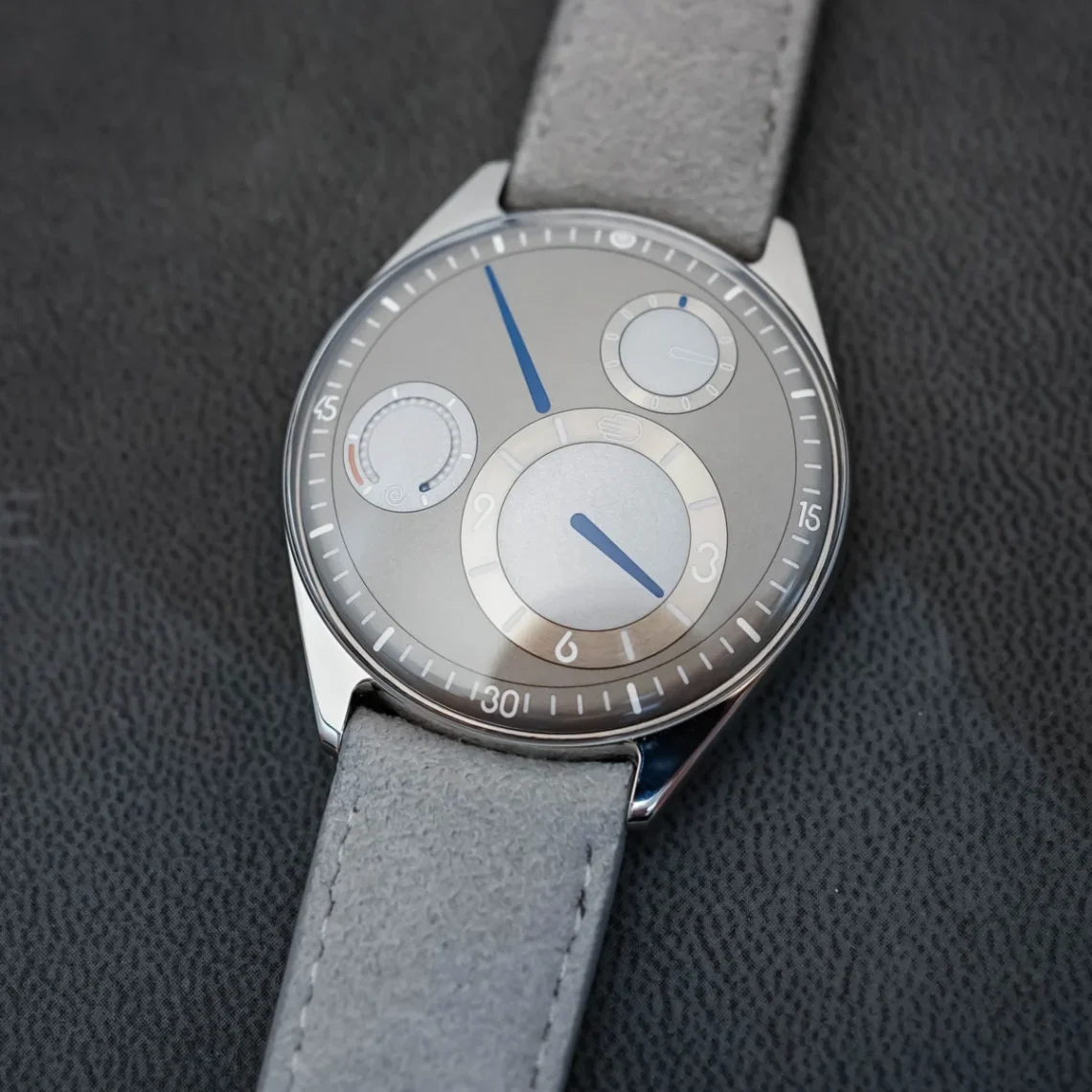
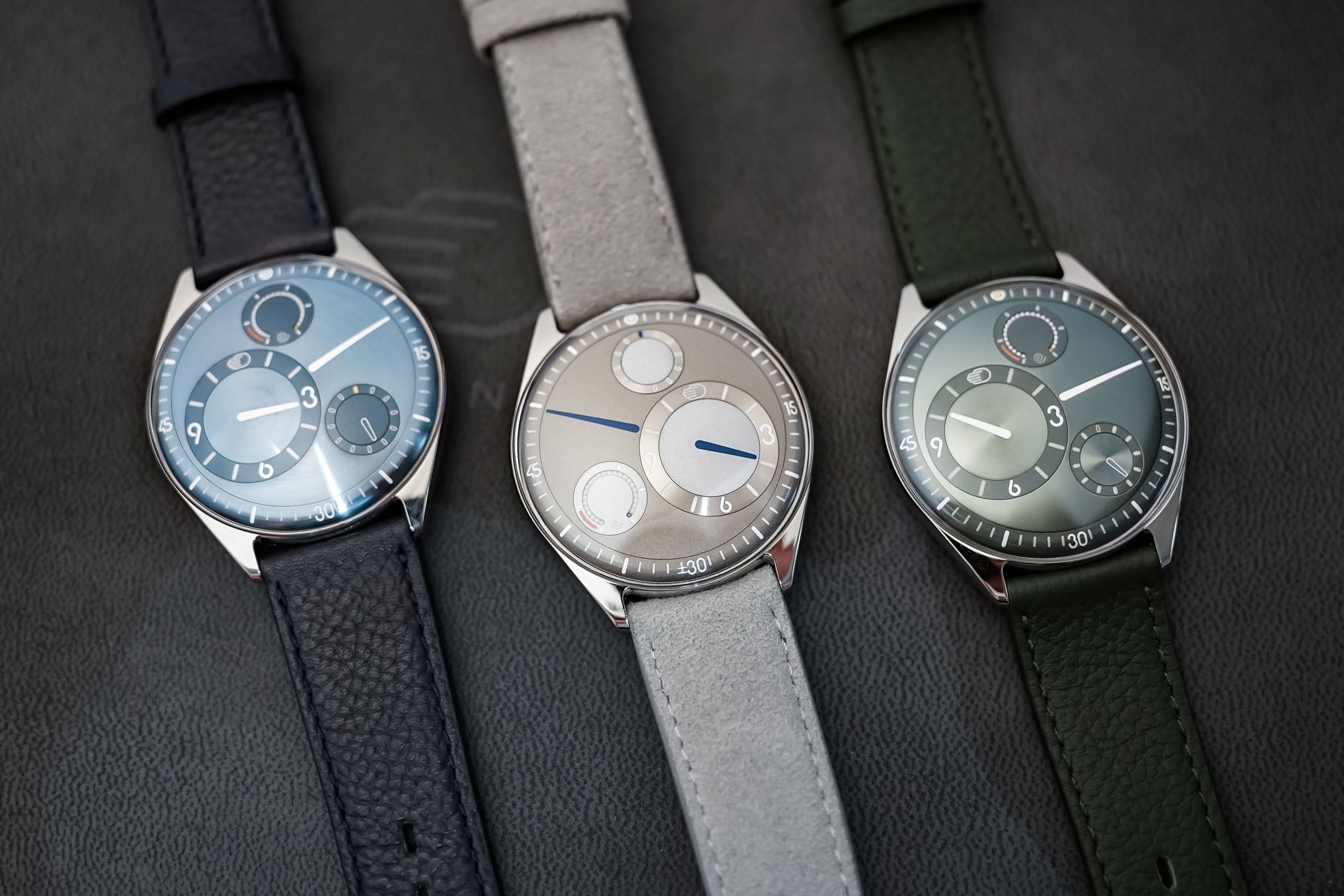
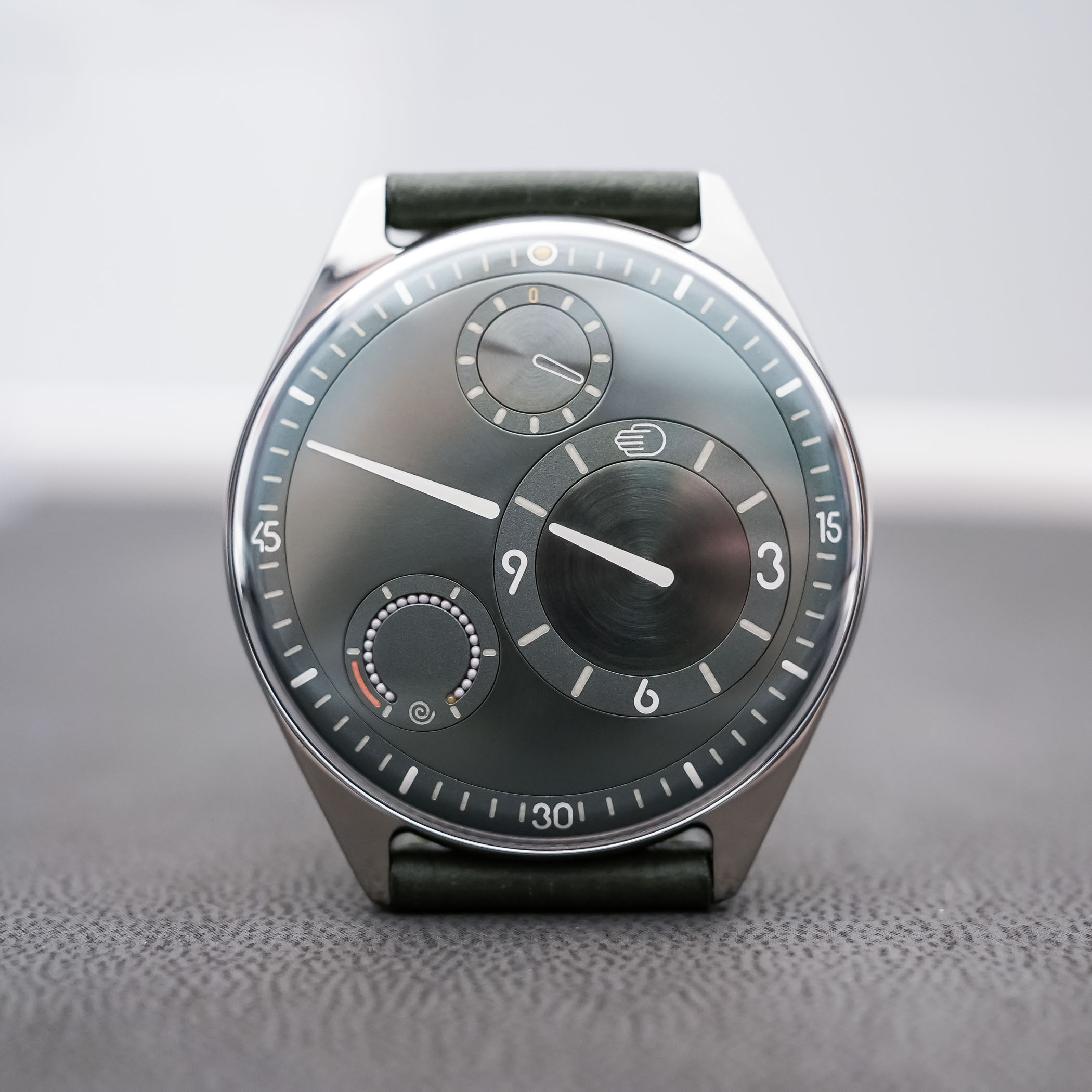
Crafted from Grade 5 titanium, the case measures 41mm in diameter and 11mm in height. With a lug-to-lug distance of 45mm, the watch is engineered for comfort. The introduction of conventional lugs—a departure from some of the more integrated, flowing designs of the past—gives the Type 11 a slightly more classical, grounded stance while retaining the "pebble" silhouette that fans of the brand adore. The fully polished finish accentuates the sculptural geometry of the titanium, a material chosen for both its hypoallergenic properties and its lightweight nature.
The Display and the Ceramic Innovation
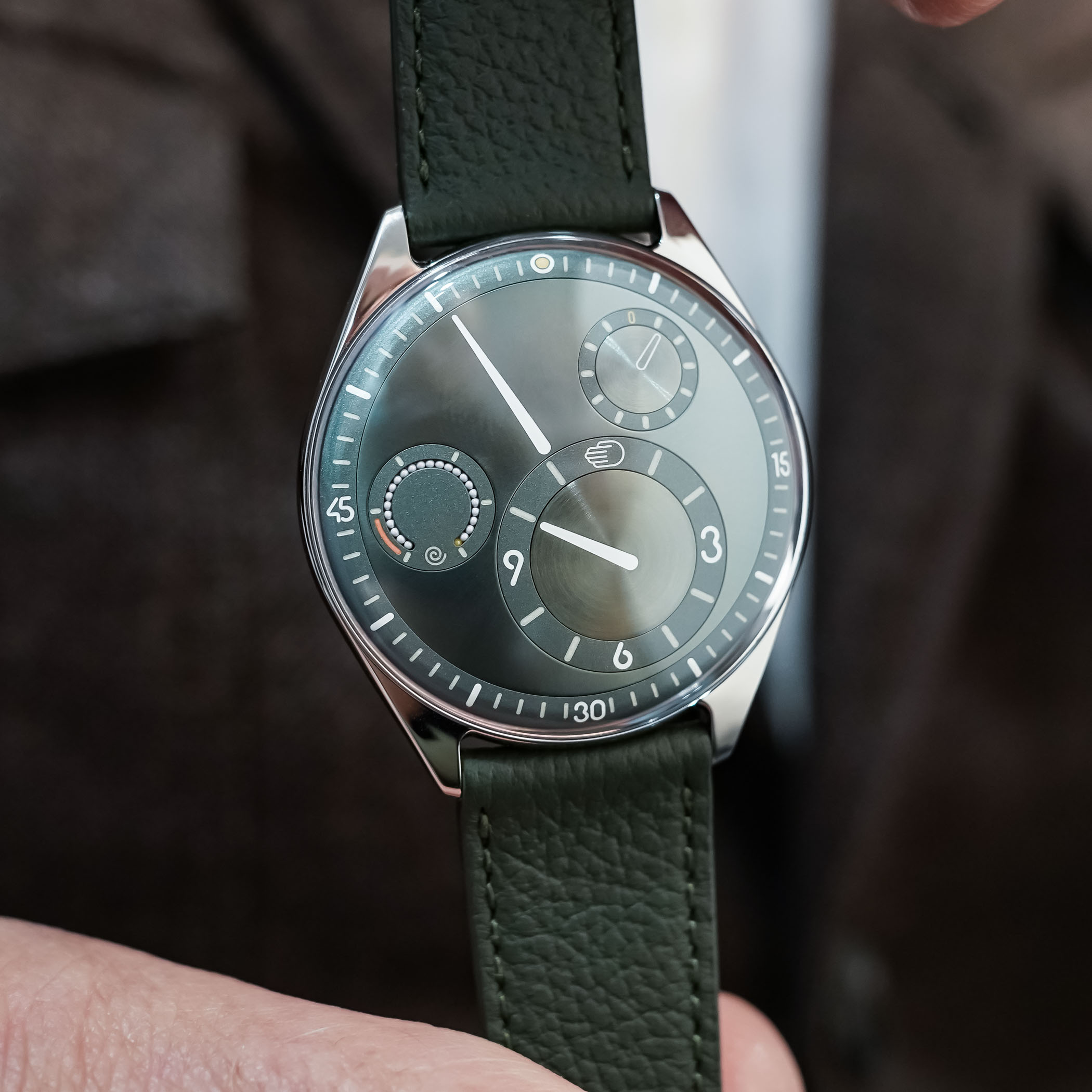
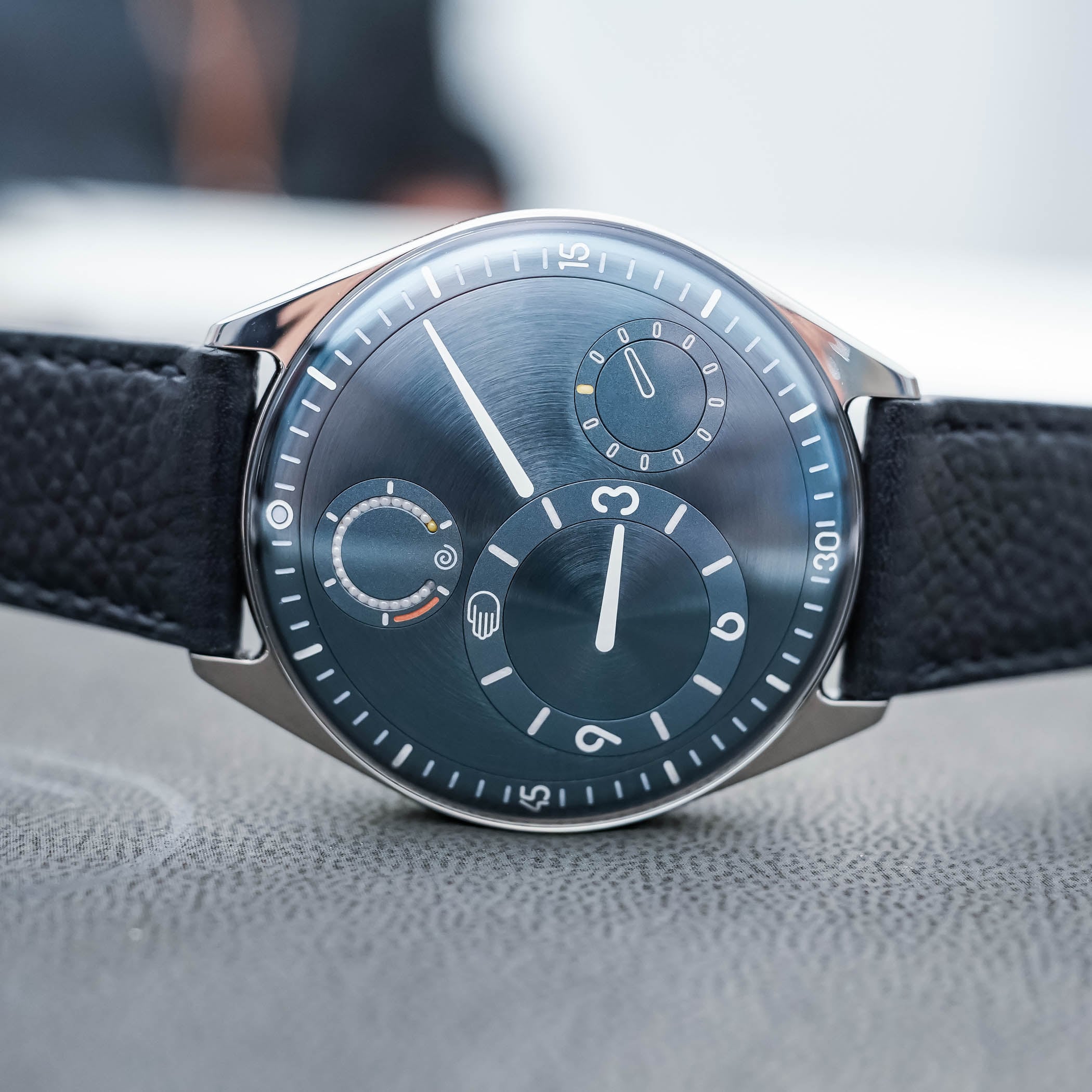
The dial is a masterpiece of kinetic design. Available in Pine, Sky, and Latte finishes, the convex Grade 5 titanium dial features three rotating satellites for hours, seconds, and the power reserve. The lack of a static dial creates a "living" watch face that rotates once per hour to track minutes against a fixed, grained-finish outer scale.
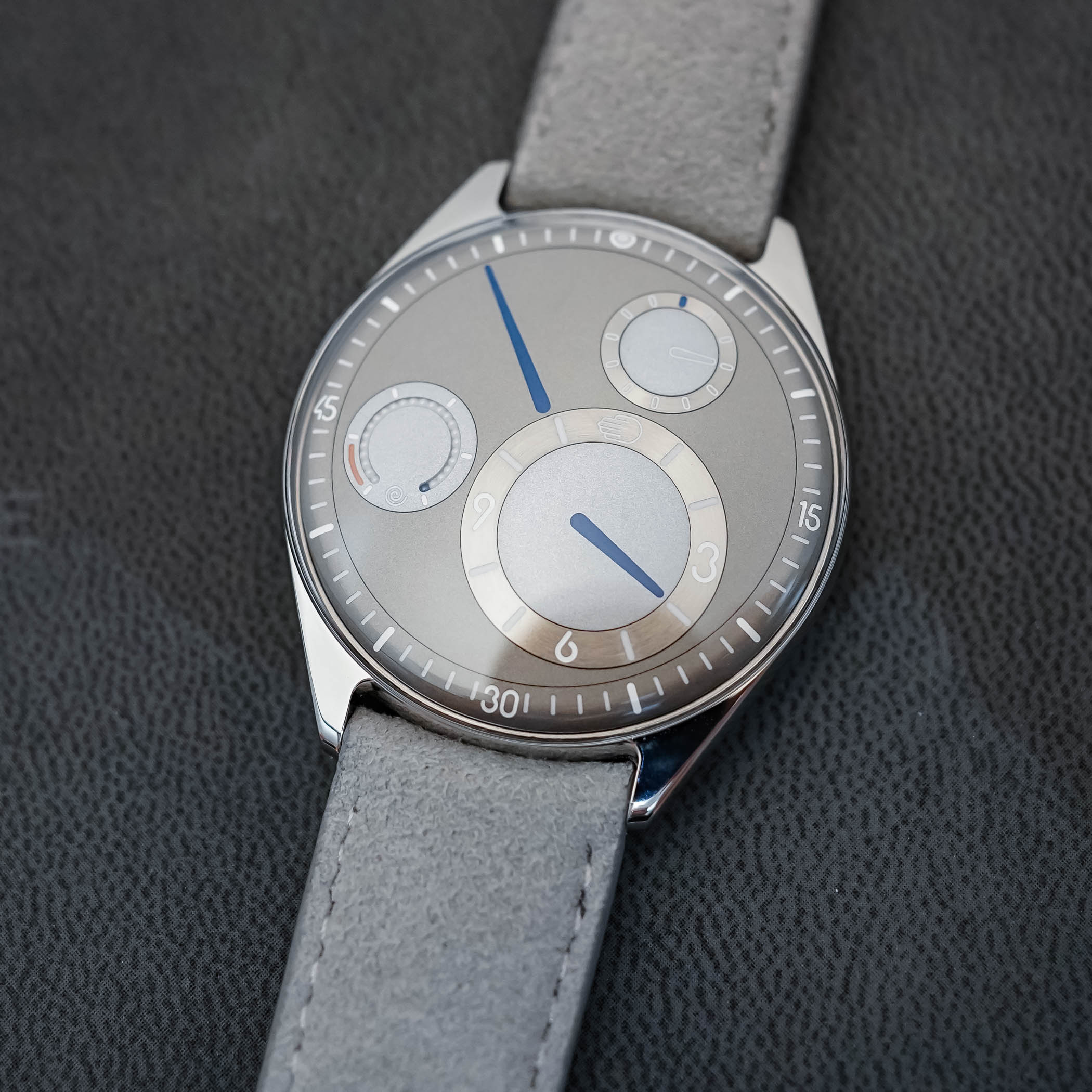
The most playful, yet highly practical, addition is the ceramic micro-ball power reserve indicator. By utilizing a string of micro-balls that change color as the barrels wind or unwind, Ressence has transformed a technical necessity into an intuitive, visual delight. It is an approach that feels distinctly "Ressence": solving a mechanical challenge through imaginative industrial design rather than sheer complexity.
The Winding Revolution
One of the most frequent critiques of early Ressence models was the unconventional time-setting and winding process, which required the user to manipulate the caseback in a specific, sometimes unintuitive, sequence. The Type 11 introduces a hinged lever integrated into the caseback. This allows for smooth, continuous manual winding and significantly simplifies time-setting, effectively removing the "barrier to entry" for new collectors.
Official Responses and Strategic Vision
Benoît Mintiens has long stated that Ressence is not a traditional watch company, but a design house that uses mechanical movements as its medium. In internal discussions regarding the shift to the RW-01, the brand emphasized that this was not about "bragging rights" for having an in-house movement, but about achieving a total mechanical symbiosis.
"We were limited by the engine," the brand noted in its release documentation. "By designing the RW-01, we stopped asking, ‘How can we force this movement to drive our module?’ and started asking, ‘How should a movement be built to serve the module perfectly?’"
The partnership with Concepto is a strategic masterstroke, allowing Ressence to maintain the small-batch, high-craftsmanship standards of an independent brand while leveraging the industrial scale and precision of a specialized Swiss manufacturer. This collaboration ensures that the Type 11 remains a reliable, serviceable piece of machinery for generations to come.
Implications: The Future of Independent Horology
The launch of the Type 11 carries several profound implications for the watch industry:
- The End of the "Base-Calibre" Era for Indies: As supply chains for ETA and Sellita movements become more constrained or restricted, mid-sized independent brands are increasingly forced to innovate. Ressence has proven that a proprietary movement, when done correctly, can elevate a brand’s market position and value proposition.
- Engineering as Design: By integrating the ROCS and the RW-01 into a unified entity, Ressence has set a new benchmark for how display modules should be engineered. This reduces the mechanical "stack height" and improves the energy transmission efficiency, which could lead to even more complex complications in future models.
- The Valuation of "Design-First" Watchmaking: At a price point of CHF 23,000 (excluding taxes), the Type 11 occupies a high-luxury segment. This price is justified not by precious metals or traditional complications like tourbillons, but by the intellectual property, proprietary movement development, and the unique, fluid user experience. It challenges the collector to value innovation and creative engineering as much as they value heritage or material rarity.
Conclusion: A Coherent Masterpiece
The Ressence Type 11 is the watch the brand has been building toward for sixteen years. It is a harmonious marriage of the avant-garde display that made the company famous and a newfound mechanical maturity that makes the watch a practical, everyday companion.
For the collector, the Type 11 is not just a way to track time; it is a way to witness it. By stripping away the static hands and the conventional crown, and replacing them with a rotating, ceramic-integrated, proprietary system, Ressence has successfully created one of the most intellectually stimulating watches in the modern era. It is, quite simply, the most accomplished and coherent chapter yet in the Belgian brand’s ongoing story of horological evolution.
For those who find traditional watchmaking to be repetitive, the Type 11 offers a refreshing, tactile, and thoroughly modern alternative. It is an object that rewards the curiosity of the wearer every single time they glance at their wrist.