GLASHÜTTE, GERMANY — Independent watchmaking is often defined by an obsession with tradition, a relentless pursuit of hand-finished anglage, and a quiet reverence for historical pocket watch architectures. Yet, within the idyllic, clock-making cradle of Glashütte, Germany, independent manufacture Moritz Grossmann has long danced to the beat of its own impeccably regulated drum. Bearing the name of one of the foundational architects of 19th-century German watchmaking, the brand today occupies a rarefied tier of low-volume, artisanal haute horlogerie.
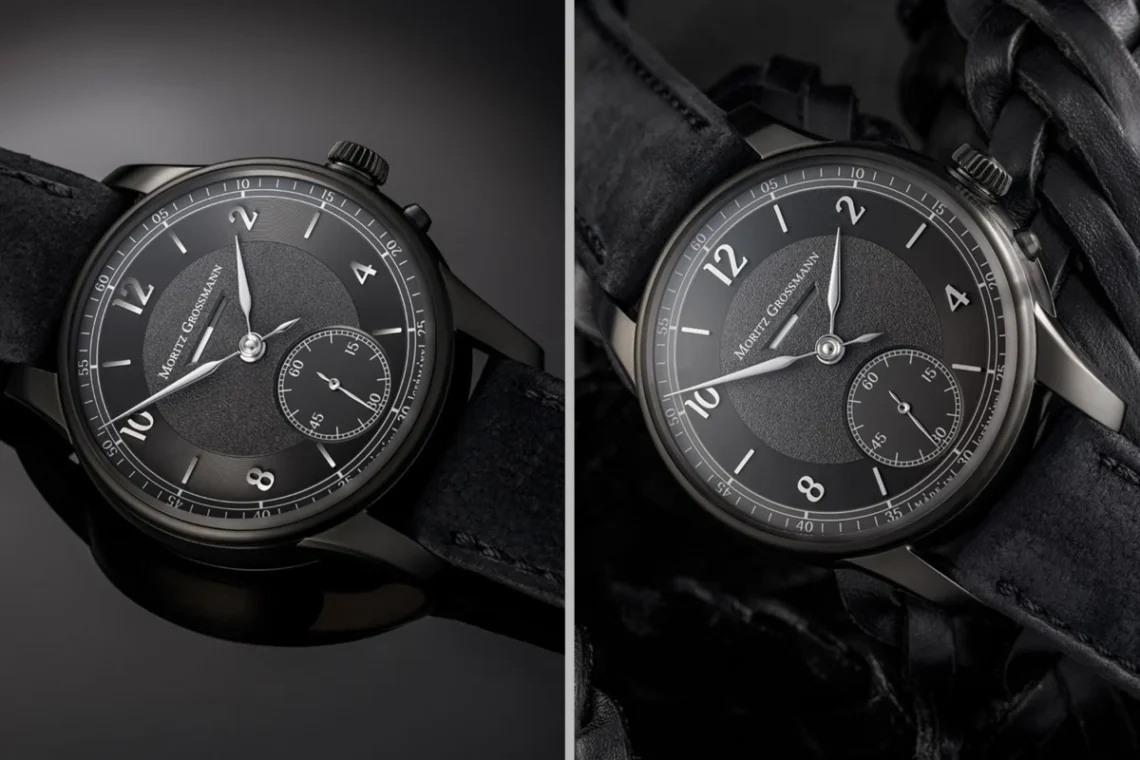
To mark the bicentennial of its legendary founder’s birth, Moritz Grossmann has unleashed two striking, contemporary, dark-themed iterations of its signature complication: the Moritz Grossmann Benu Power Reserve Black Steel Limited Editions. Fusing the sporty, monochromatic geometry of previous anniversary editions with the dynamic, multi-layered architecture of 2025’s sector-dial movement layout, these two new references—one in brushed matte stainless steel, the other in deep dark grey DLC-coated steel—offer a bold, shadowy counter-narrative to classical dress watch tropes.
Main Facts: The Anatomy of a Modern Dark Art Piece
At first glance, the new Benu Power Reserve models command attention through their unapologetically modern, tactical-leaning aesthetic. Eschewing the warm tones of precious metals or classic silvered dials, Moritz Grossmann has opted for an avant-garde monochrome palette that leans into industrial refinement.
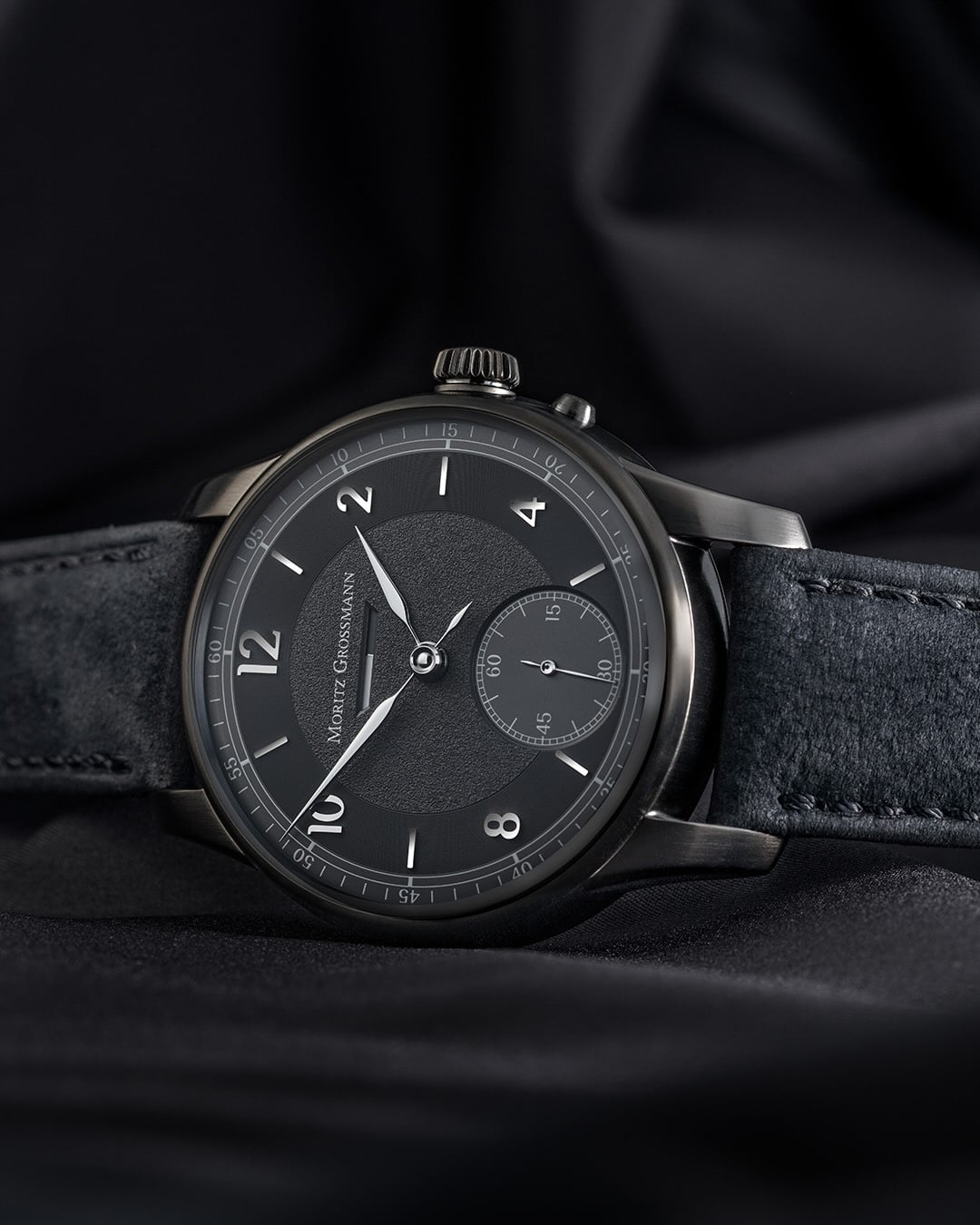
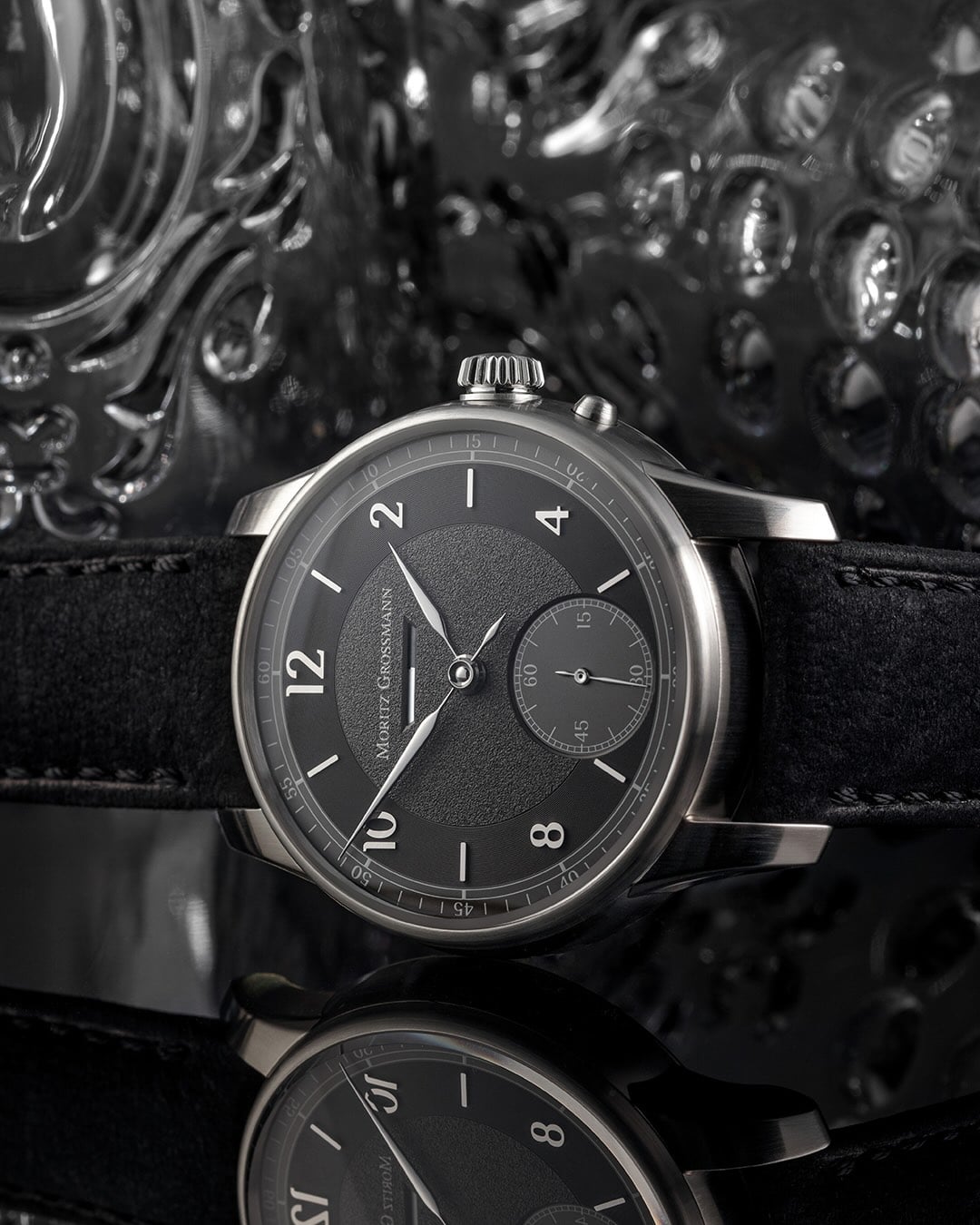
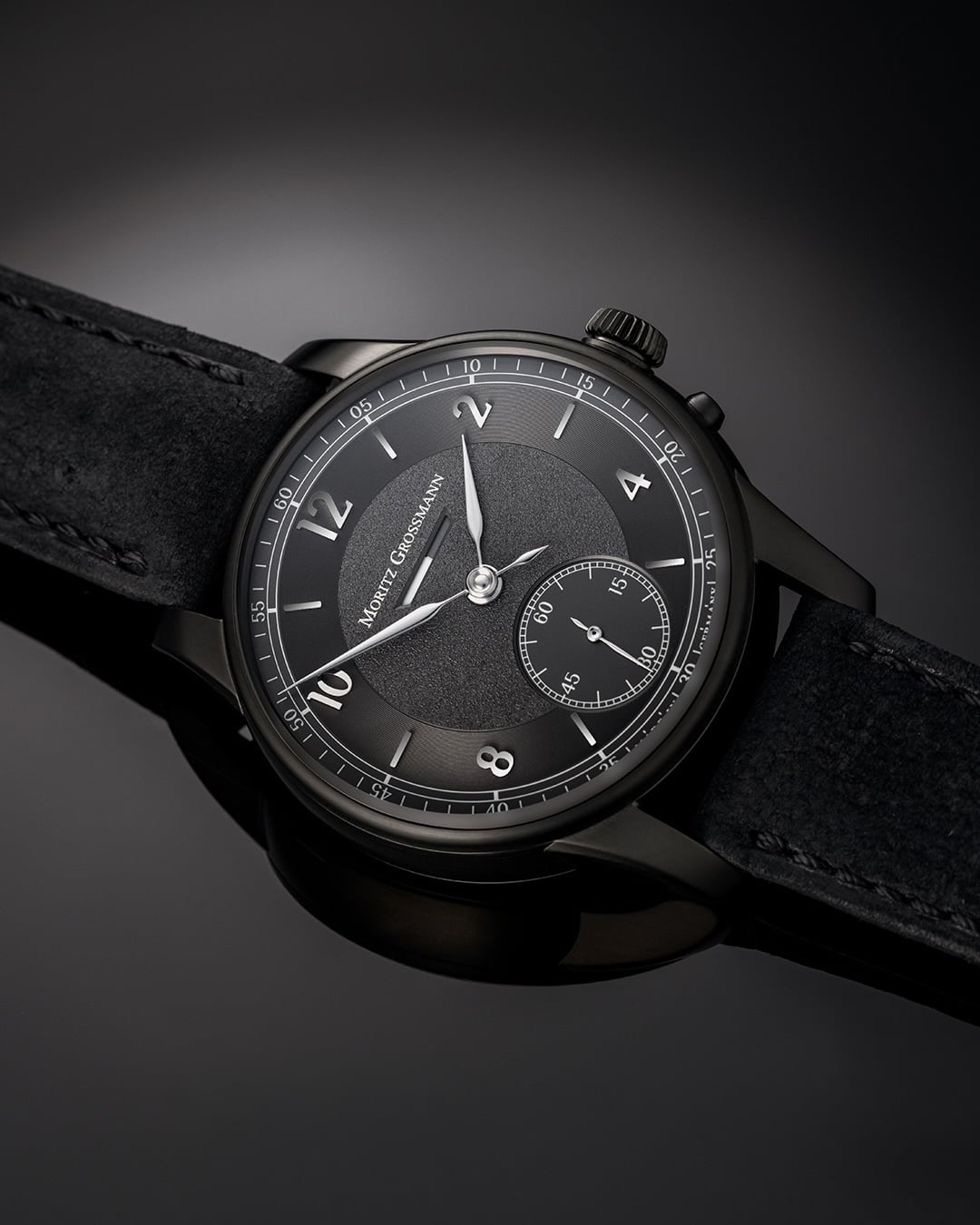
The watch is anchored by a familiar yet heavily stylized three-part Benu case measuring 41mm in diameter and 11.65mm in height. The case geometry itself features elegantly tapering lugs, but the finishing is what sets these editions apart. Treated to a fully brushed matte finish, the standard stainless steel variant radiates a sporty, understated coolness, while its sibling, wrapped in a light-absorbing dark grey DLC (Diamond-Like Carbon) coating, presents a brooding, stealth-wealth profile.
Framed by a remarkably slim bezel, the true star of the show is the multi-layered dark grey sector dial. Moritz Grossmann has meticulously played with textures and elevations to create immense visual depth:
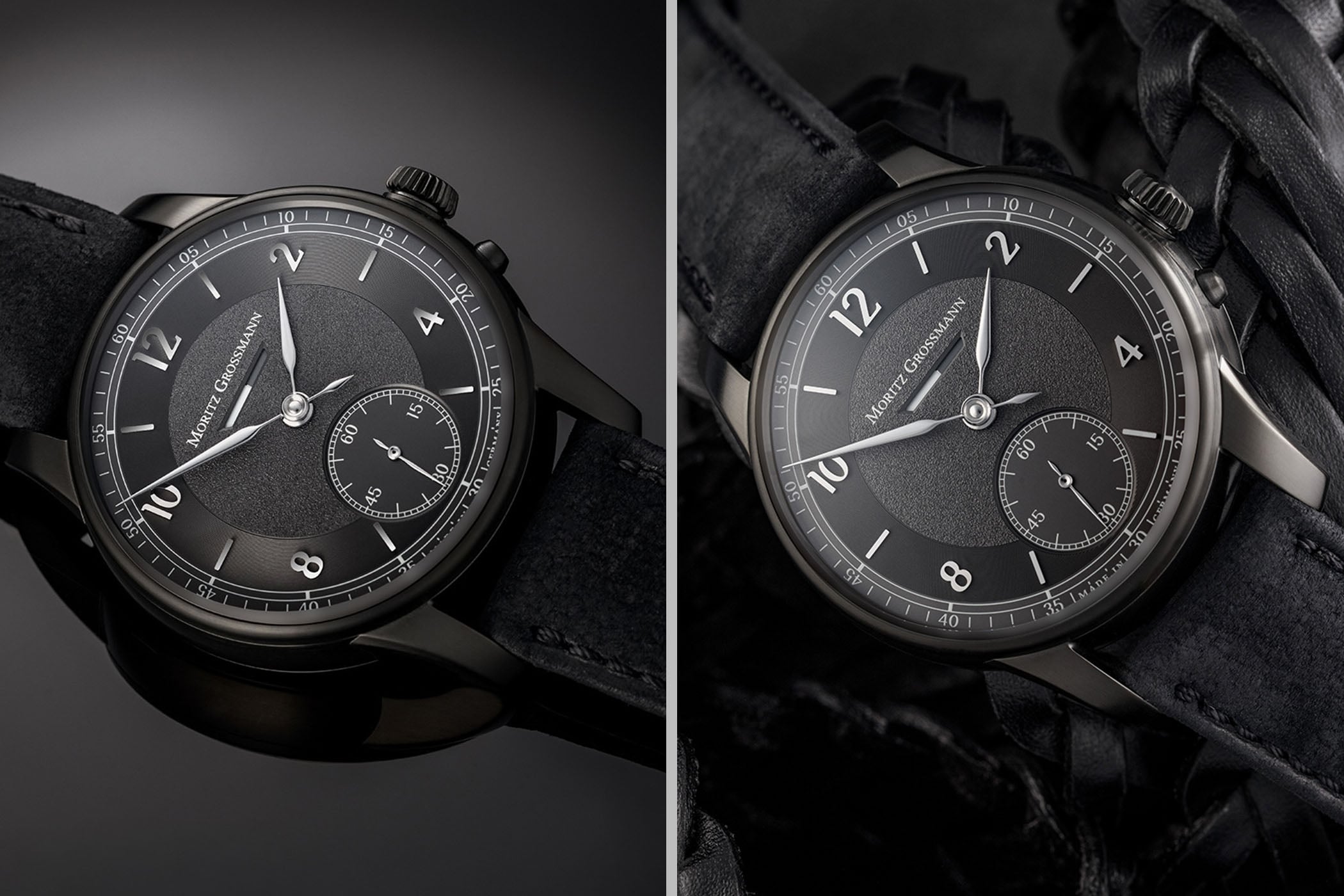
- The Periphery: A smooth outer minutes track featuring crisp white printed numerals.
- The Chapter Ring: A wider, snailed chapter ring decorated with concentric circular grooves, punctuated by applied Arabic numerals at 12, 2, 4, 8, and 10 o’clock, alongside minimalist index markers.
- The Center: A matte, grained central area that hosts the brand’s proprietary linear power reserve indicator and a recessed, smooth small-seconds sub-dial situated at 6 o’clock.
The Linear Power Reserve Complication
Breaking away from the traditional, curved fan-shaped arcs ubiquitous across the industry, the Benu line features a discreet, two-tone linear power reserve indicator strategically positioned between noon and the central axis of the hands.
Housed in an elongated trapezoid window, the 42-hour power reserve indicator employs a clever color-coding system. When the in-house manual-winding movement is fully tensioned, a stark white bar fills the aperture. As the mainspring expends its energy over the course of 42 hours, the bar gradually recedes, replaced by a dark grey backdrop that seamlessly integrates into the dial’s nocturnal aesthetic.
Hand-Crafted Masterpieces
No Moritz Grossmann timepiece is complete without a masterclass in hand-crafted componentry, and these limited editions showcase some of the finest hands in contemporary watchmaking. Wider, more domed, and rounder than those found on traditional Benu models, the polished and bevelled steel hands terminate in wafer-thin tips. Notably, the minute hand features a closed rhomboid counterweight—a subtle, poetic nod to classical pocket watch design language executed with ultra-modern precision.
Chronology: Tracing the Evolution of the Benu Lineage
To understand the weight of these new releases, one must trace the evolutionary arc of the Benu collection, which serves as the lifeblood of Moritz Grossmann’s modern renaissance.
- 2010 – The Revival and the Original Benu: Following decades of dormancy, the Moritz Grossmann brand was triumphantly revived. The Benu served as the foundational launchpad, introducing the world to the brand’s maiden in-house manual-winding movement: Calibre 100.0.
- 2013 – The Birth of the Power Reserve: Expanding upon the success of the base Benu, the brand introduced Calibre 100.2, seamlessly integrating the unique linear power reserve indicator. This layout established a signature design code that prioritized architectural asymmetry and understated elegance over conventional aesthetics.
- Anniversary Milestones & Sector Dial Evolution: Over the subsequent decade, Moritz Grossmann experimented with various case metals and commemorative editions (such as the 12th-anniversary steel models). In 2025, the brand introduced sector-style dials, injecting a dynamic, tool-watch texture into its dressier collections.
- Present Day – The Bicentennial Editions: Synthesizing the dark-case philosophy of the anniversary lines with the textured sector layouts of 2025, the brand releases the Benu Power Reserve Black Steel Limited Editions to honor the 200th birthday of Moritz Grossmann himself.
Supporting Data: Technical Specifications at a Glance
For the discerning collector, the architectural integrity beneath the dial is every bit as compelling as the exterior styling. Powering these timepieces is the proprietary Calibre 100.2, a marvel of traditional German watchmaking geometry combined with modern mechanical ingenuity.
| Feature | Specification |
|---|---|
| Case Dimensions | 41mm diameter x 11.65mm height |
| Case Materials | Brushed matte stainless steel OR dark grey DLC-coated stainless steel |
| Crystal & Caseback | Anti-reflective sapphire crystal; sapphire exhibition caseback |
| Dial Architecture | Anthracite sector-style dial, linear dark grey/white power reserve aperture, snailed chapter ring with applied Arabic numerals, recessed small-seconds at 6 o’clock |
| Hands | Manually crafted, polished and bevelled tempered steel (hour, minute, small seconds) |
| Movement | In-house Calibre 100.2, manual-winding |
| Movement Dimensions | 36.4mm x 5.4mm |
| Component Count | 227 components |
| Jewels & Chatons | 26 jewels, with 3 screwed gold chatons |
| Frequency | 18,000 vibrations per hour (2.5 Hz / Slow-beat architecture) |
| Power Reserve | 42 hours (driven by an additional differential gear) |
| Special Mechanisms | Patented Grossmann winder with pusher (stops dust ingress upon crown extraction); Grossmann balance wheel |
| Strap & Buckle | Soft black kudu leather strap paired with a matching steel prong buckle |
| Limited Edition | Strictly limited to 18 pieces per version worldwide |
| Retail Price | EUR 40,800 (excluding local taxes, applicable to both editions) |
The Calibre 100.2 and the Patented Winder System
Turn the watch over, and the exhibition sapphire caseback reveals a breathtaking landscape of traditional Glashütte craftsmanship. Built as a classic pillar movement derived from the Calibre 100.1, the 100.2 incorporates an ingenious additional differential gear solely dedicated to driving the linear power reserve display.
The movement is dominated by a classic two-thirds plate adorned with immaculate Glashütte ribbing. Prominent screw-mounted gold chatons hold ruby bearings in place, while the hand-engraved balance cock secures the slow-beating, highly regulated Grossmann balance wheel operating at a hypnotic 18,000 vph.
Furthermore, the watch features Moritz Grossmann’s signature patented winder-and-pusher system. When a traditional watch has its crown pulled out to set the time, microscopic gaps open up, inviting dust and moisture into the movement cavity. Grossmann’s system solves this by utilizing a pusher at the 4 o’clock position; pulling the crown only temporarily engages the hand-setting mechanism, while pushing the 4 o’clock button restarts the movement and seals the crown assembly against particulate intrusion.
Official Responses and Manufacturing Philosophy
While mass-market luxury brands rely on high-volume production and aggressive marketing campaigns, independent manufacturers like Moritz Grossmann operate on a philosophy of deliberate scarcity and uncompromising artisanal dedication.
Representatives for the Glashütte-based manufacture emphasize that these bicentennial pieces are not merely commercial novelties, but a dialogue between historical horological reverence and contemporary design sensibilities. In official communications surrounding the launch, the brand noted that the decision to merge the tactical dark-steel aesthetic with the intricate sector dial architecture was driven by a desire to cater to collectors who appreciate "understated technical mastery wrapped in an uncompromisingly modern silhouette."
By capping production at a mere 18 pieces for each reference, Moritz Grossmann ensures that these watches remain exceptionally rare collector’s items, designed not for the masses, but for the hyper-knowledgeable cognoscenti of independent watchmaking.
Implications: What This Release Means for Independent Haute Horlogerie
The introduction of the Moritz Grossmann Benu Power Reserve Black Steel Limited Editions carries several notable implications for the broader landscape of independent mechanical watchmaking:
1. The Blurring Lines Between Dress and Sport
Traditionally, high-end Glashütte watchmaking was synonymous with precious metals, grand feu enamel, and strictly formal dress aesthetics. By utilizing brushed matte steel, dark DLC coatings, and tactical sector dials, Moritz Grossmann is actively validating a new genre: the high-complication daily wearer with an edge. These watches can effortlessly transition from a boardroom to a casual weekend setting without compromising their horological pedigree.
2. The Power of Absolute Independence
At EUR 40,800 (excluding taxes), these limited editions occupy a fiercely competitive price segment dominated by conglomerates and established legacy houses. However, the sheer volume of hand-finishing—ranging from the hand-engraved balance cock to the painstakingly bevelled steel hands and proprietary winder mechanisms—proves that independent manufactures offer a level of tactile human touch that automated industrial production simply cannot replicate.
3. Cementing the Legacy of a Master
As the watch world reflects on the bicentennial of Moritz Grossmann’s birth, these 18-piece limited editions serve as a fitting tribute. They prove that the spirit of innovation that defined 19th-century German pocket watch production is not trapped behind museum glass, but is actively breathing, ticking, and evolving in the workshops of Glashütte today.
For the fortunate 36 collectors worldwide who manage to secure one of these dark-steel marvels, the Benu Power Reserve represents the pinnacle of independent watchmaking: rare, mechanically brilliant, and defiantly unique.